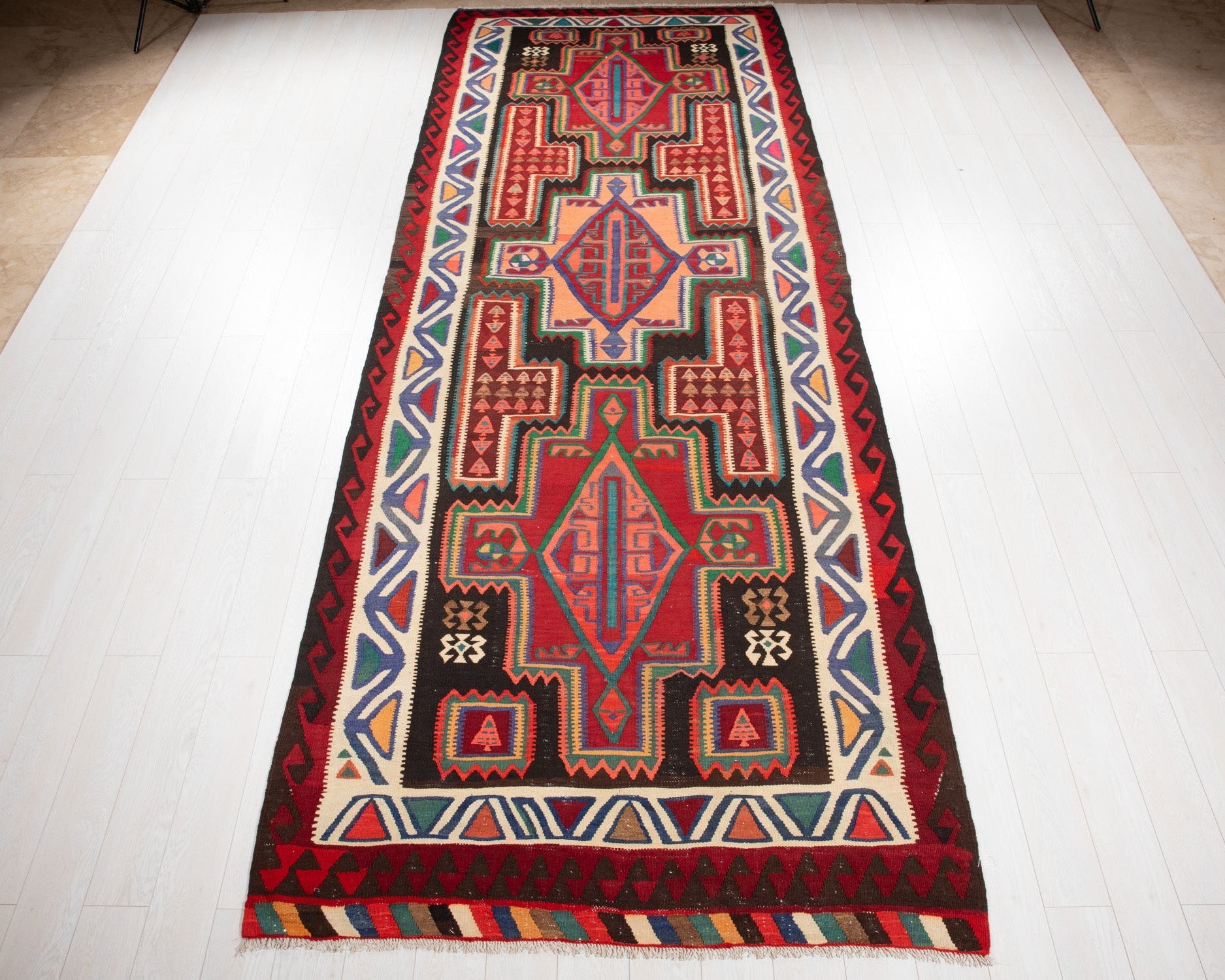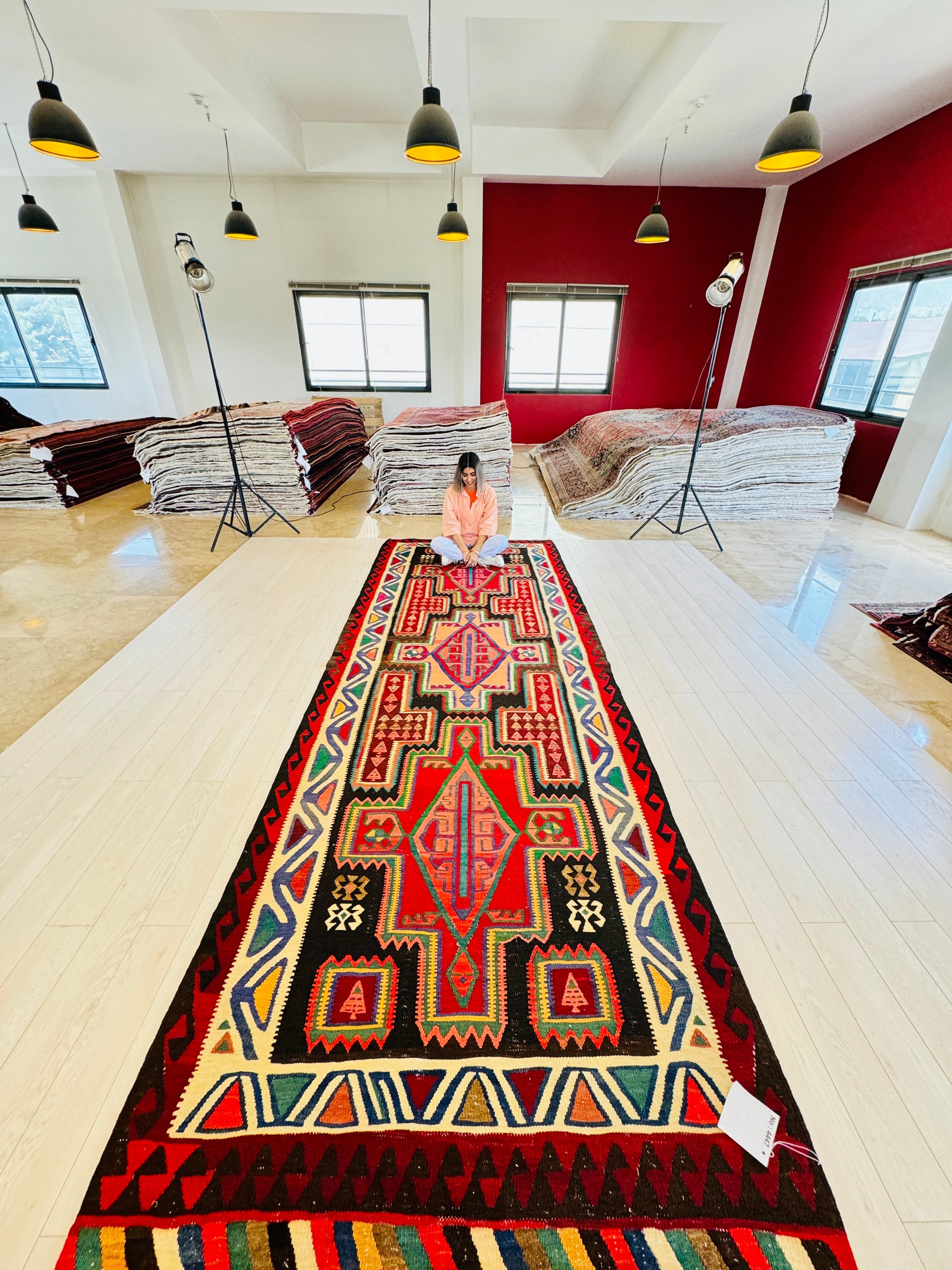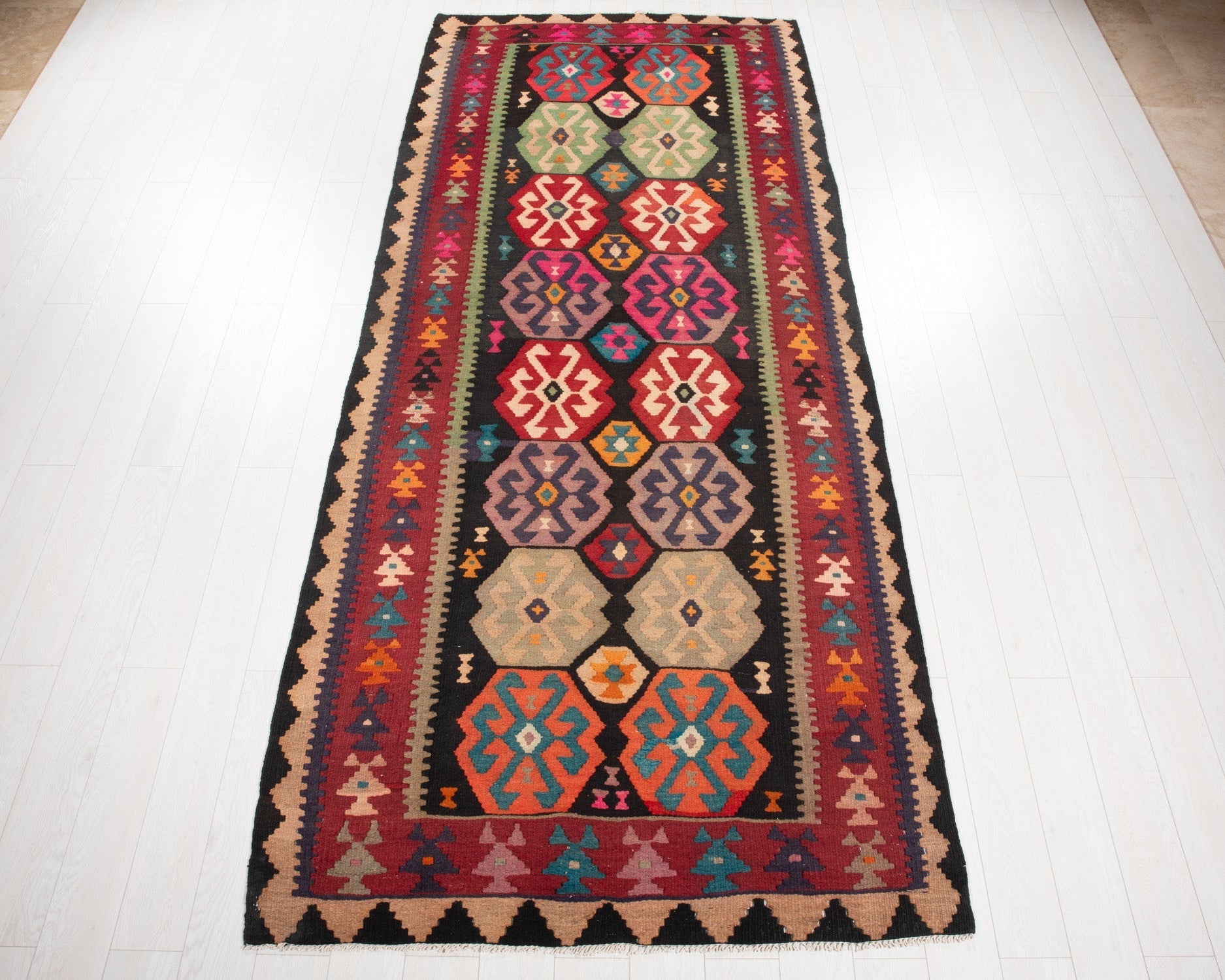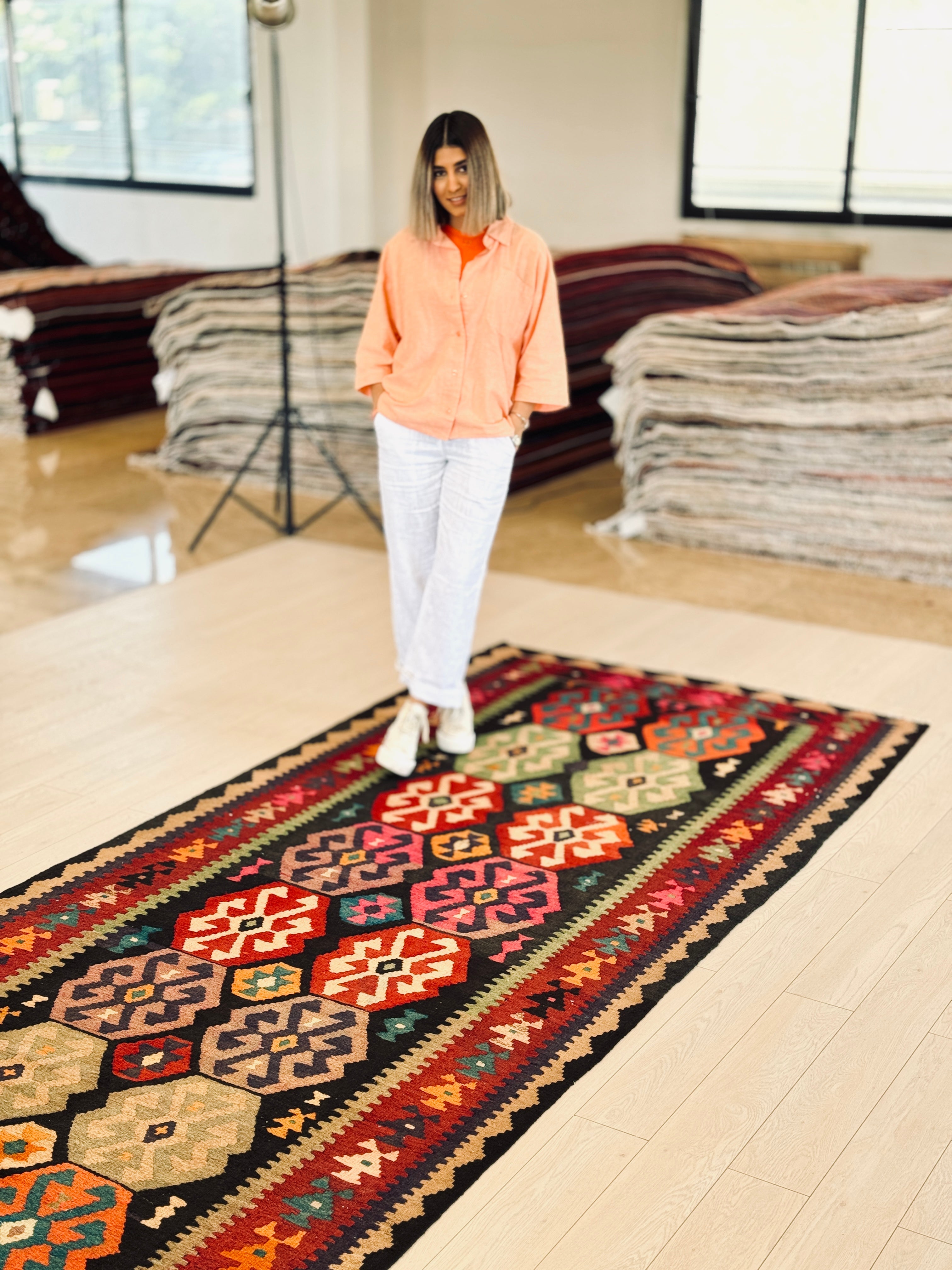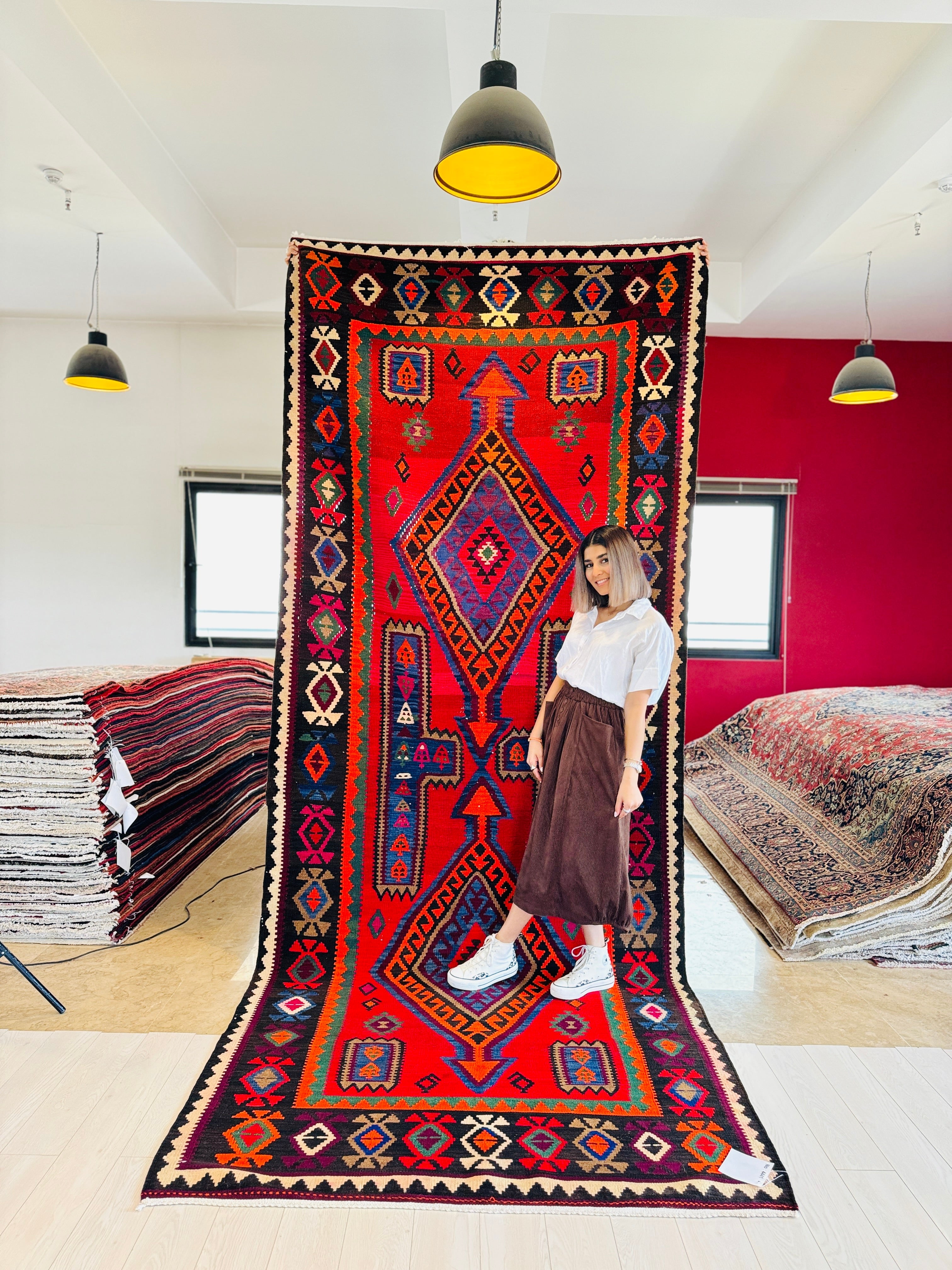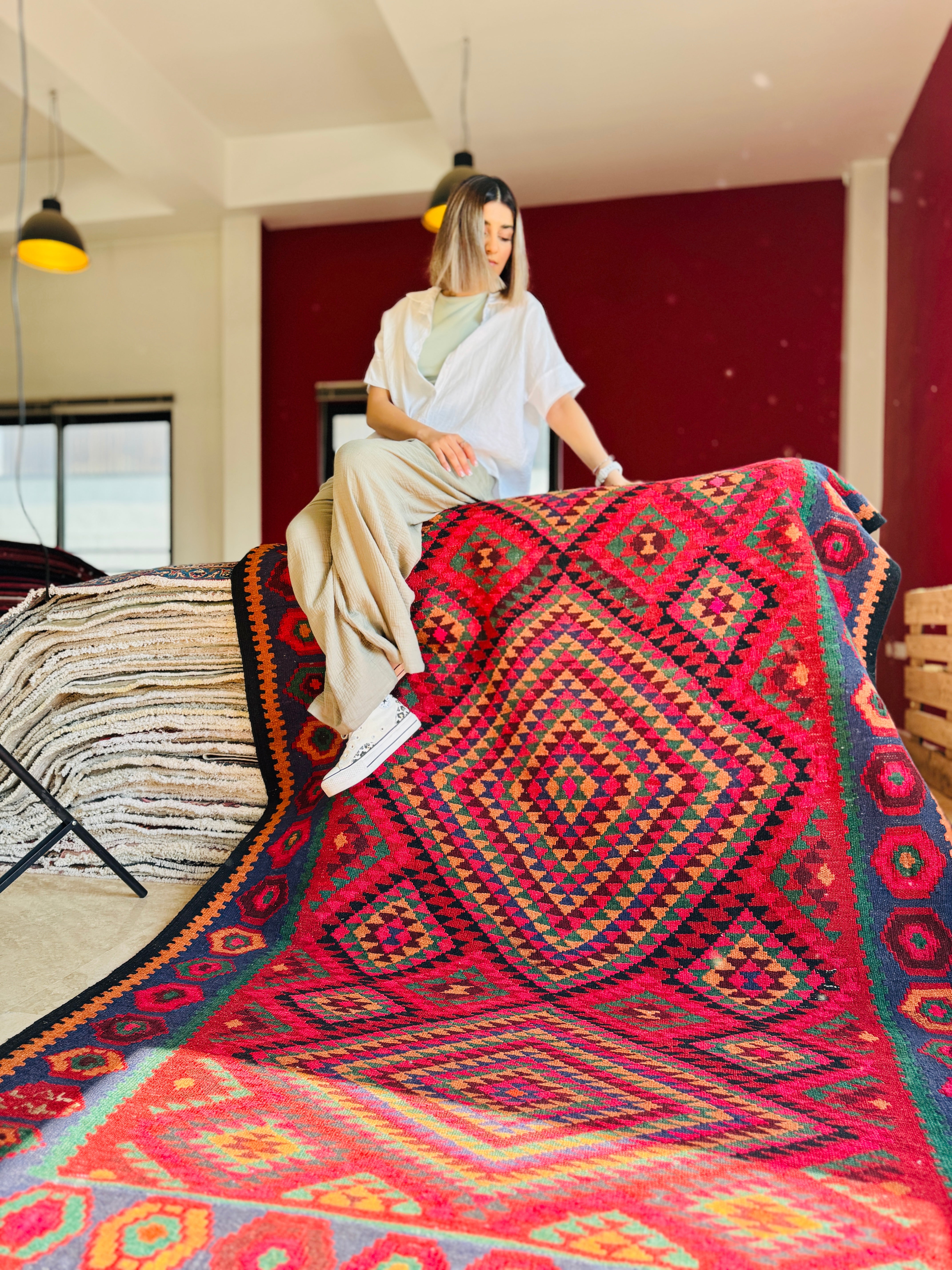
Persian Kilim Rugs – Vintage Handwoven Shiraz Kilims
Vintage handwoven kilims made by nomadic tribal weavers using traditional flat-weave techniques passed down through generations.
Shiraz & Lori Nomadic Kilims
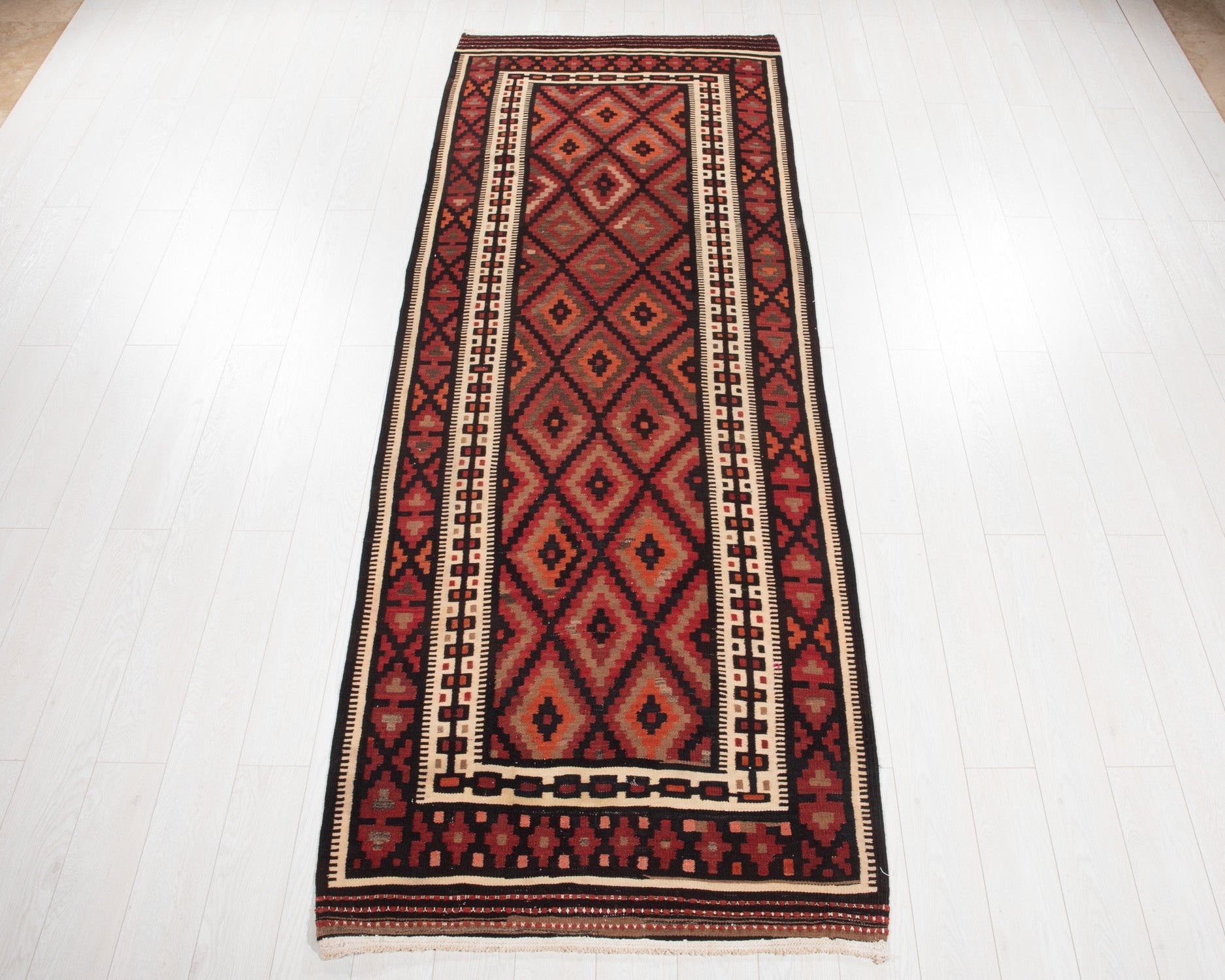
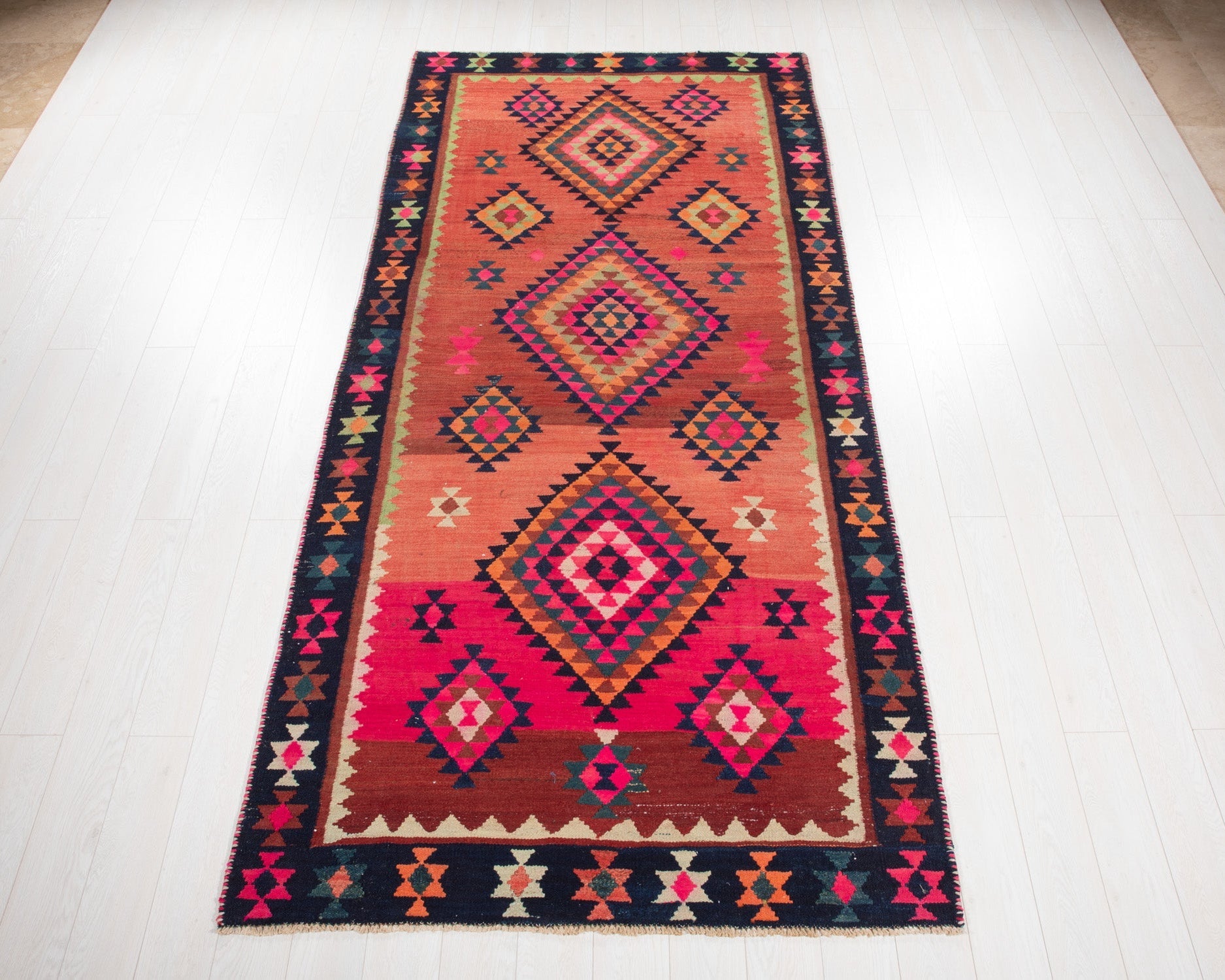
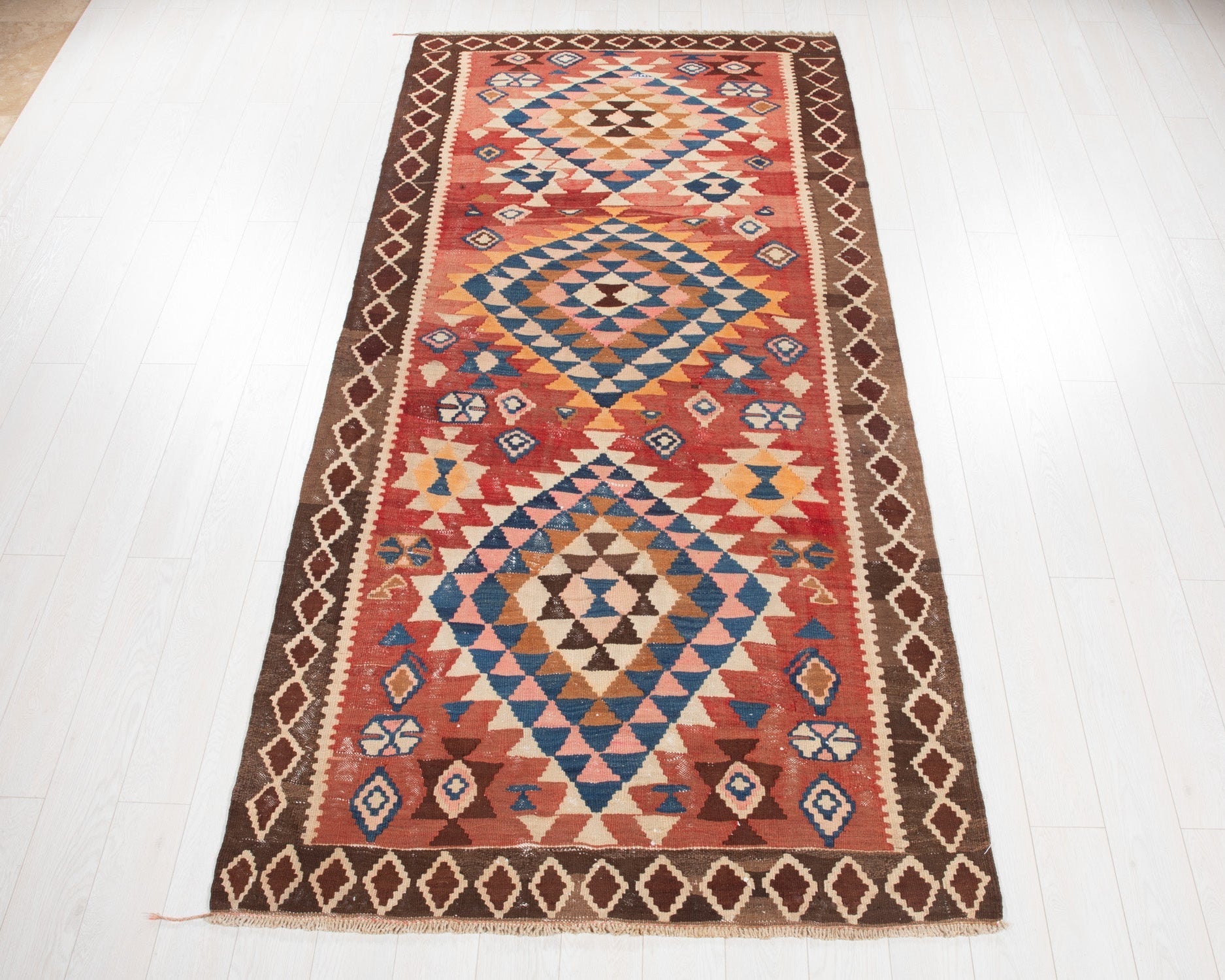
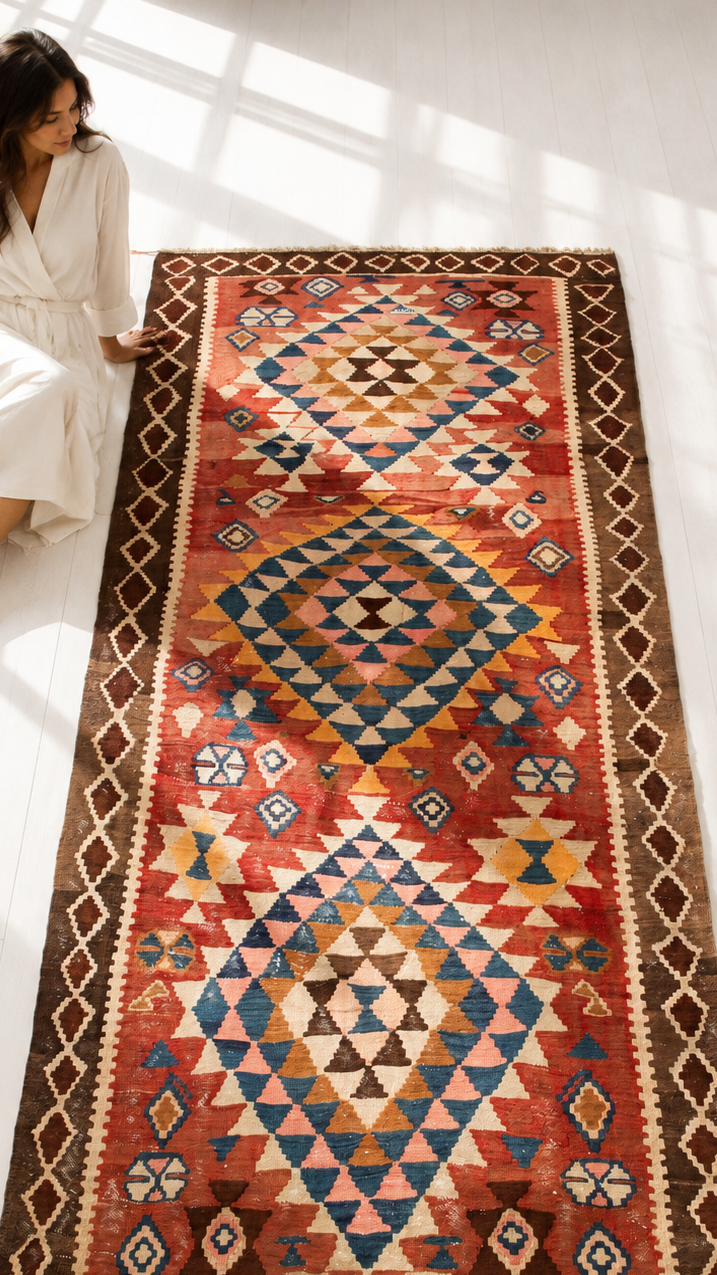
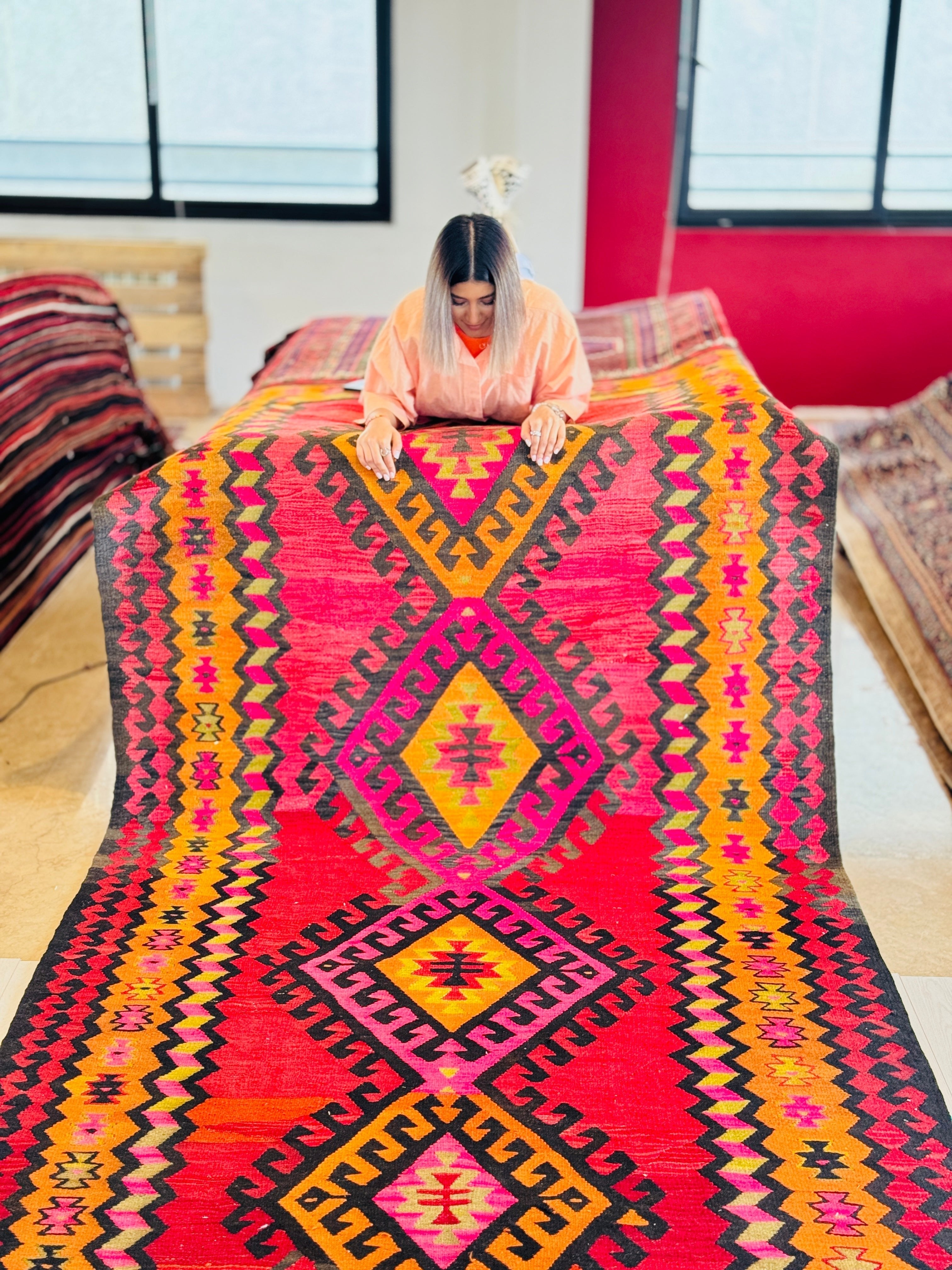
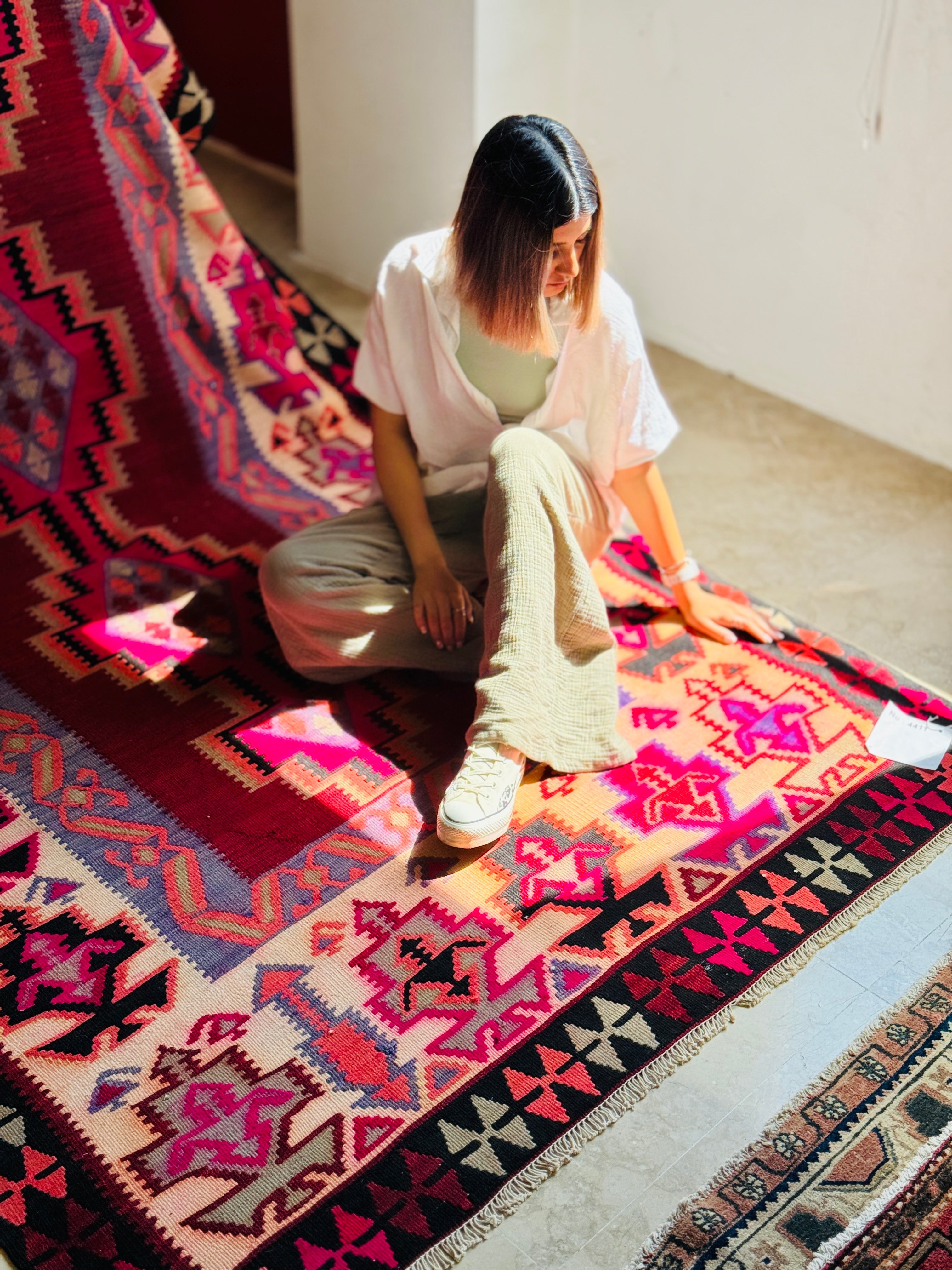
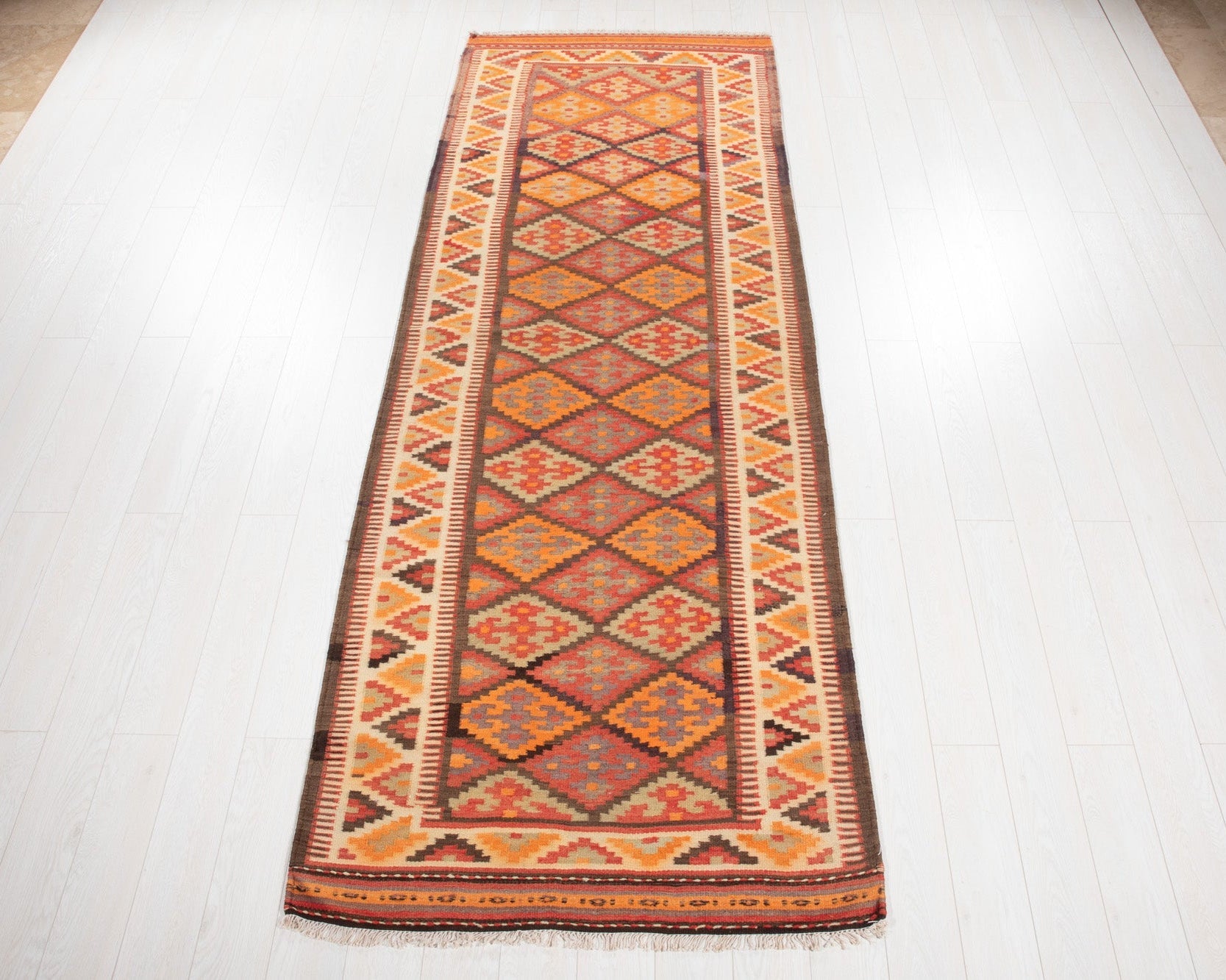
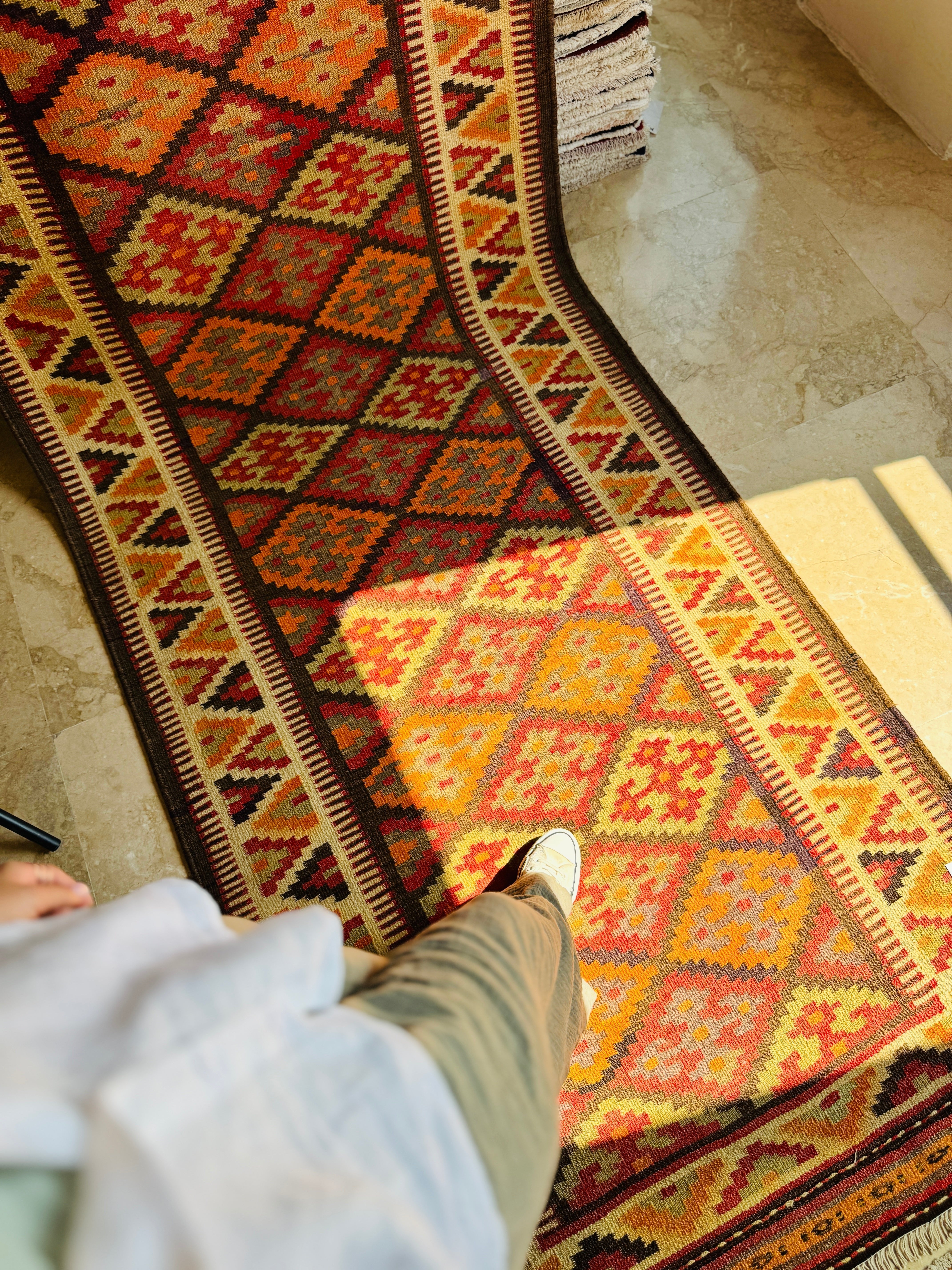
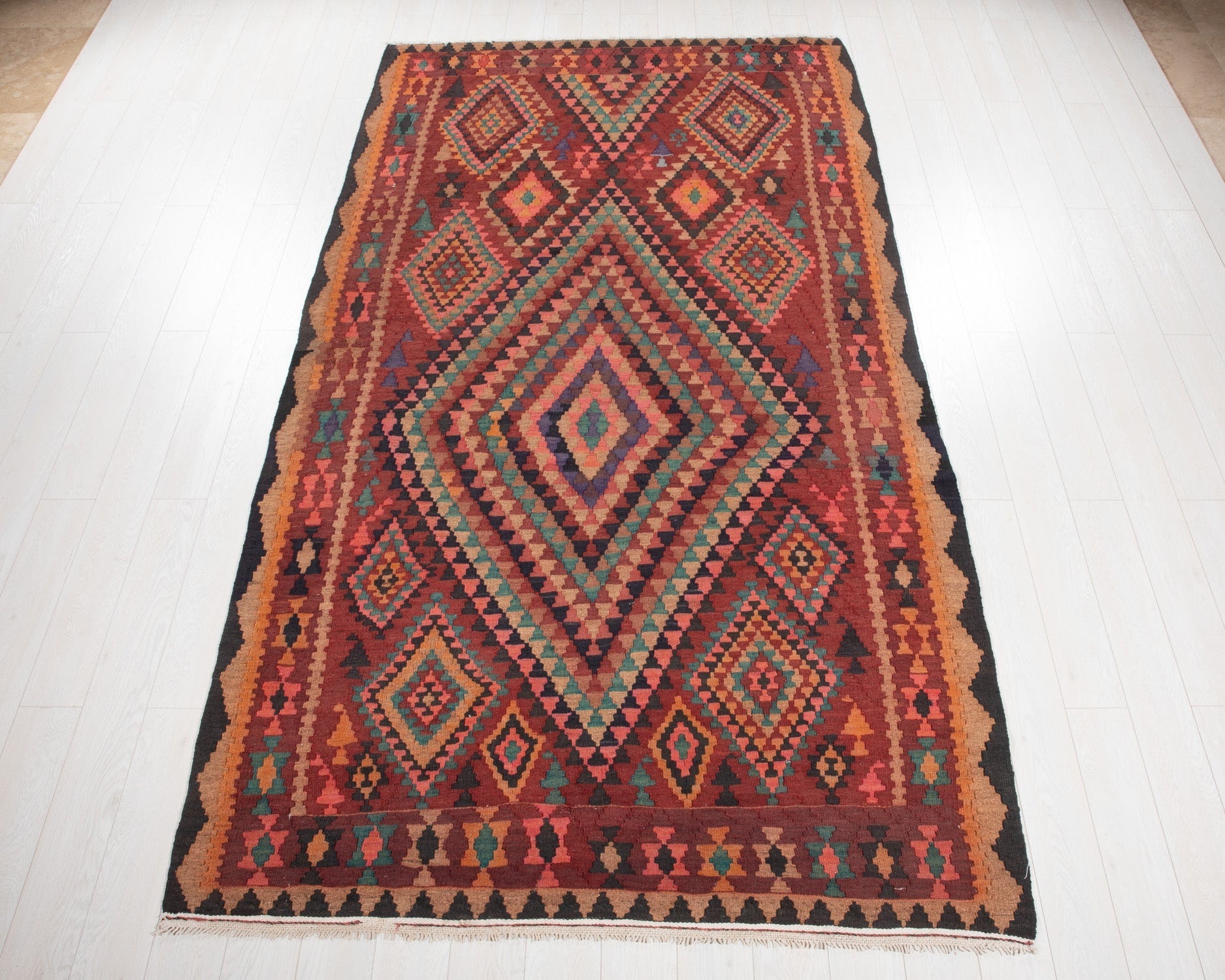
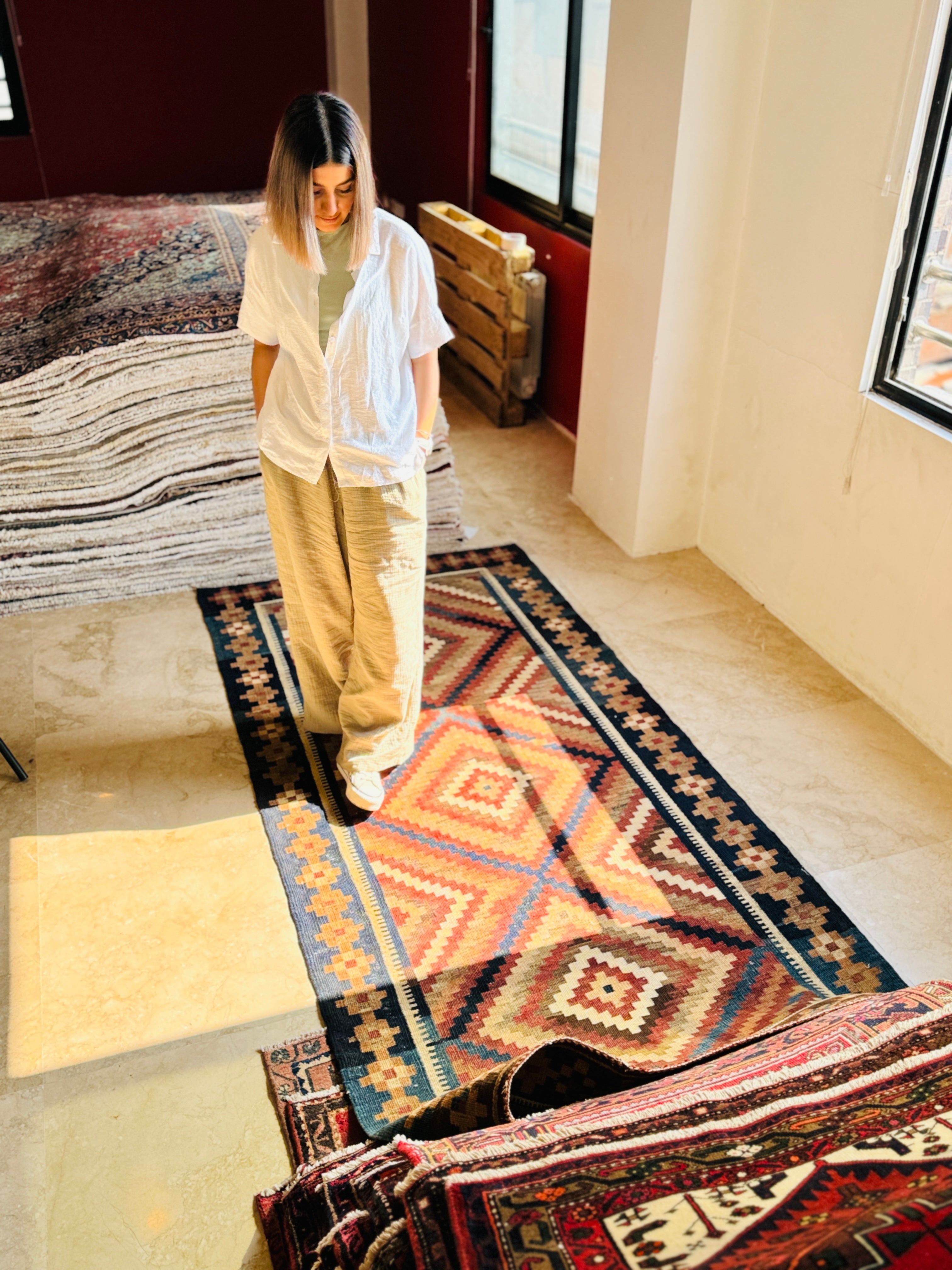
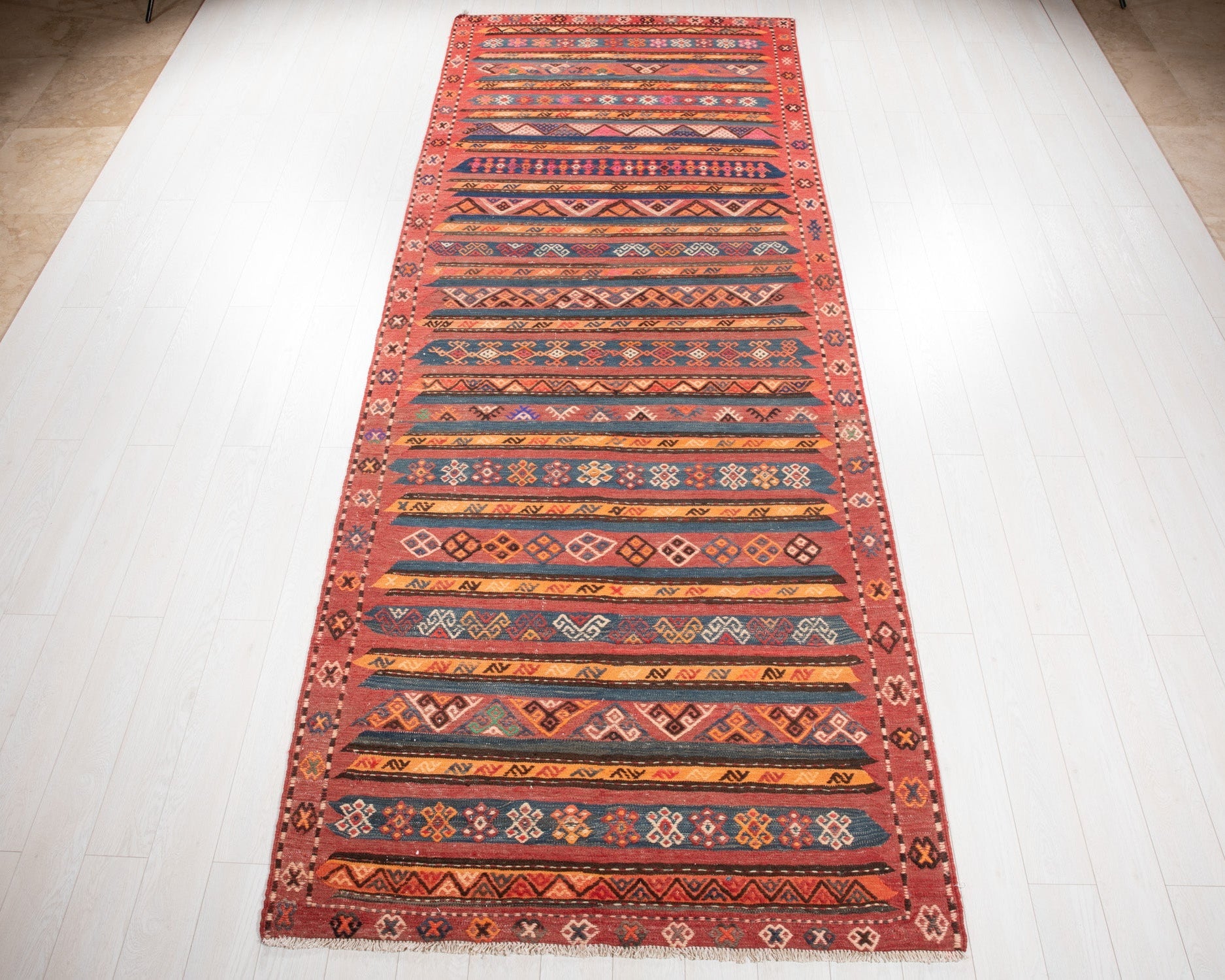
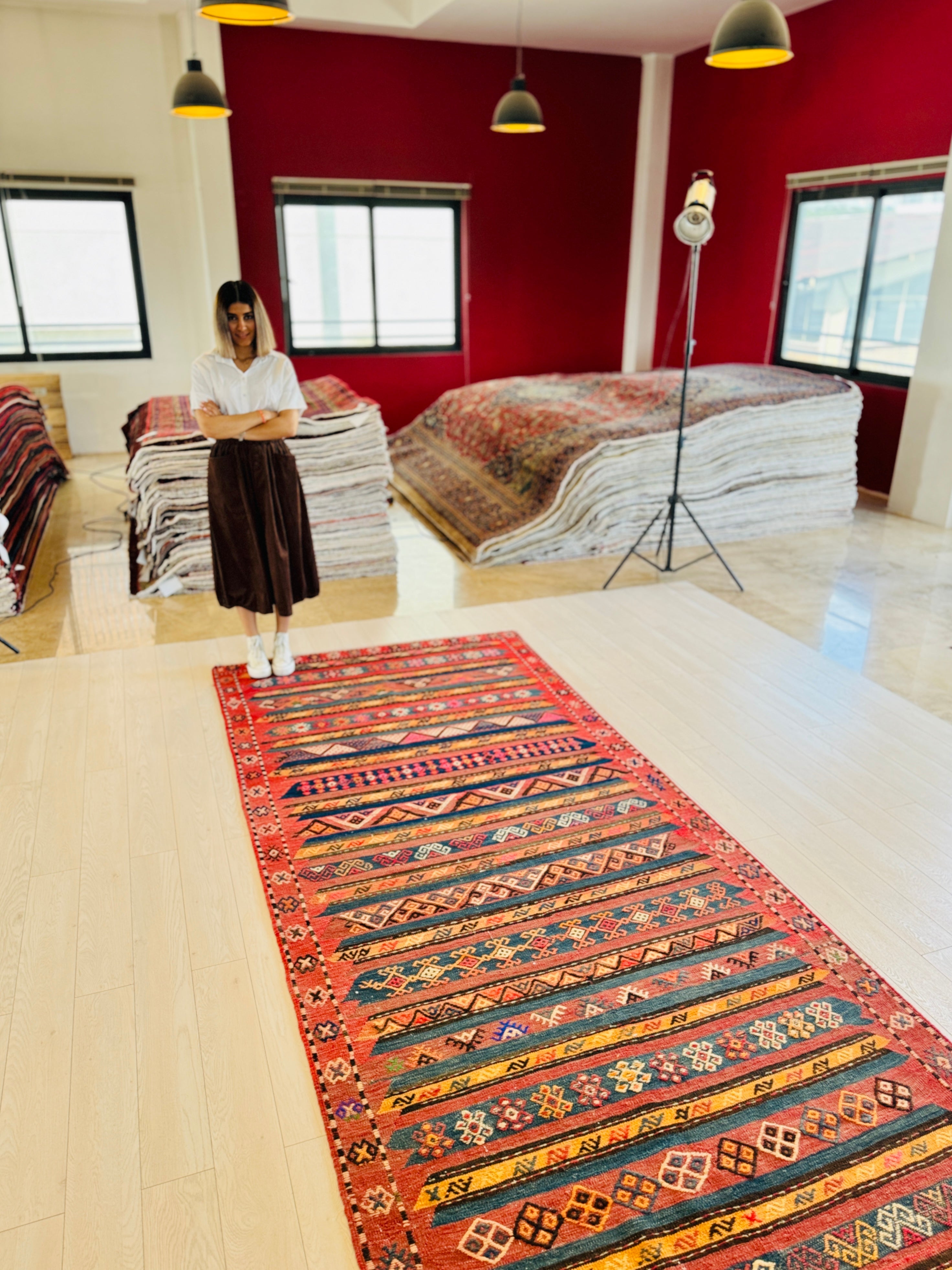
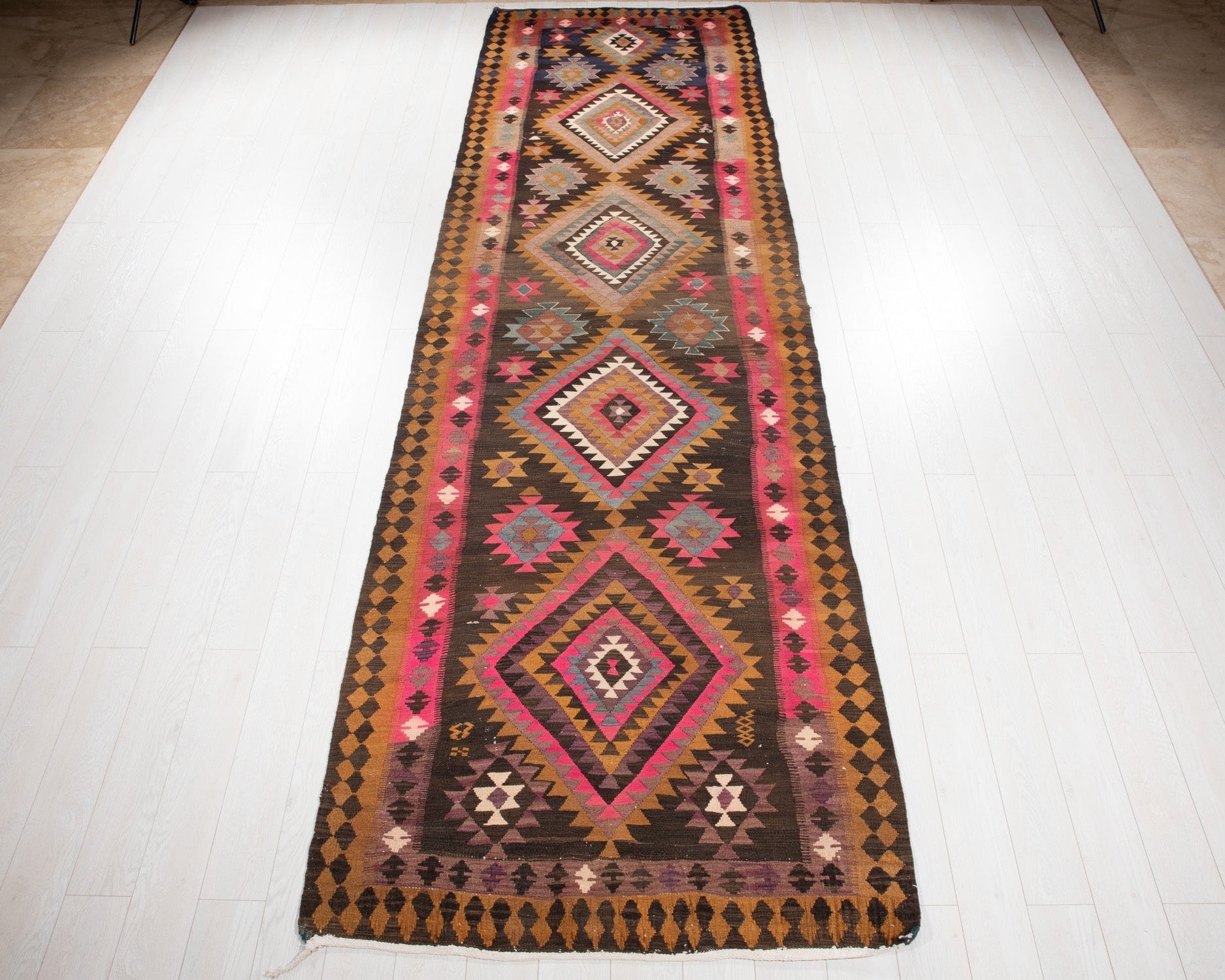
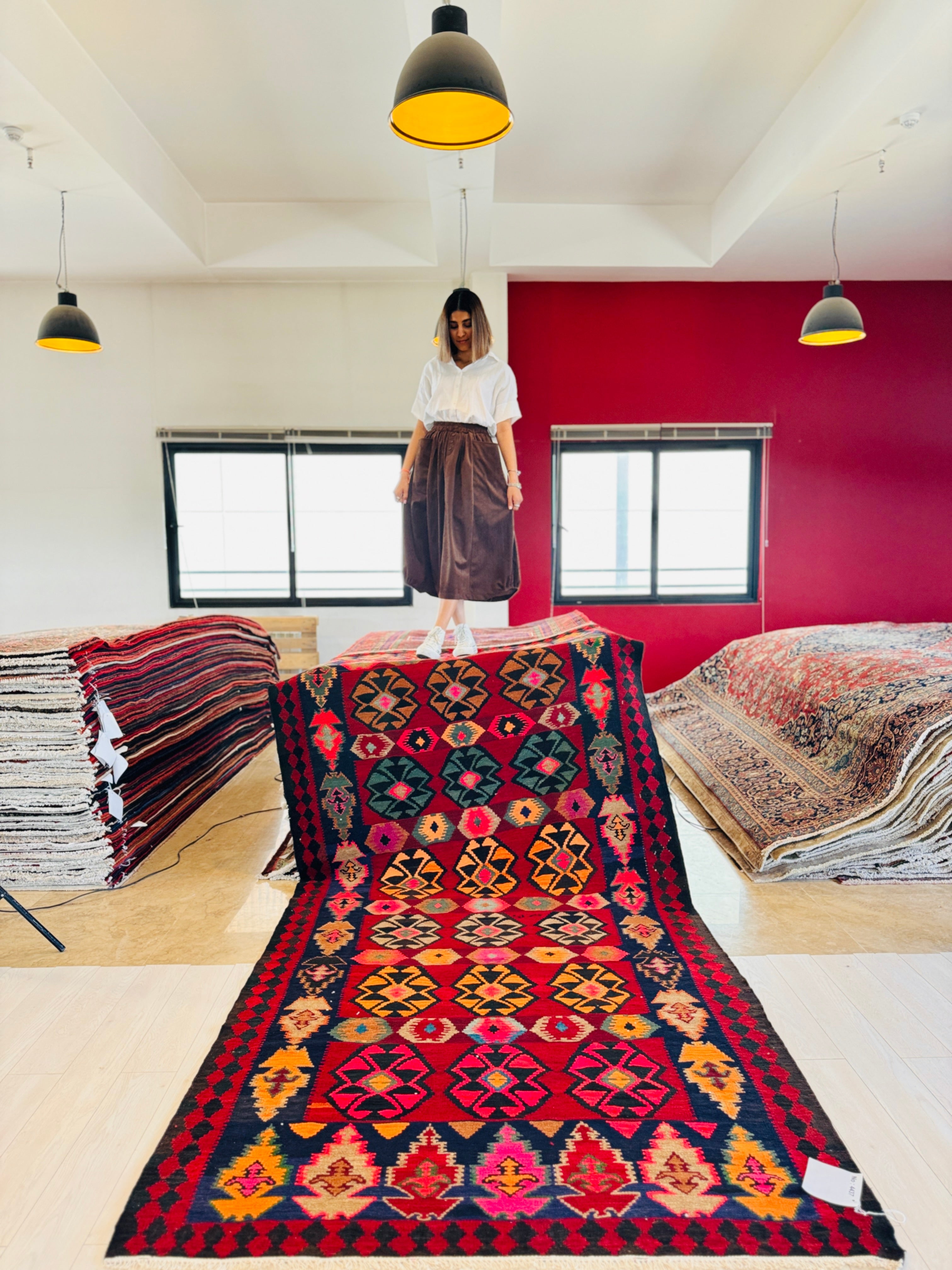
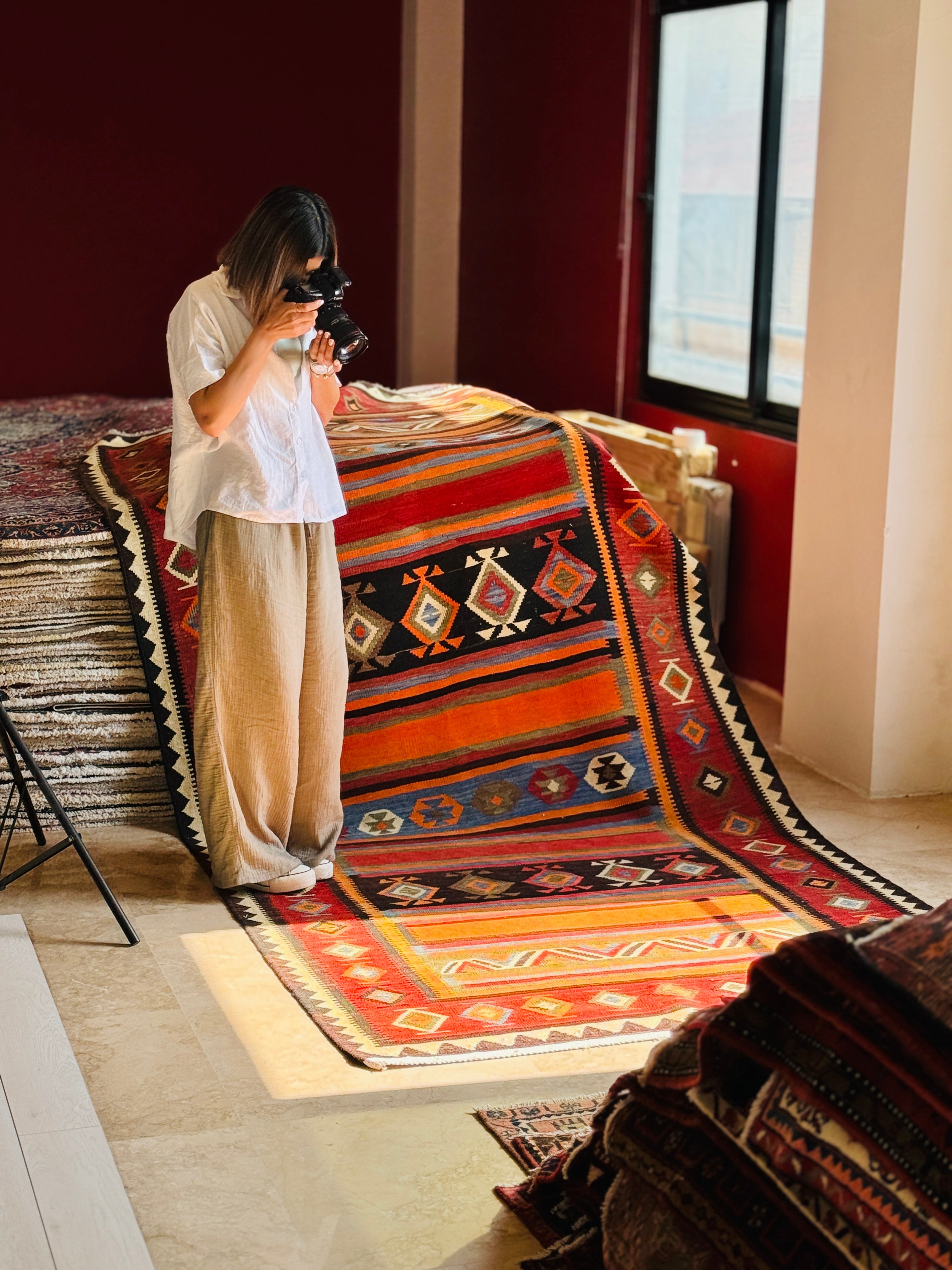
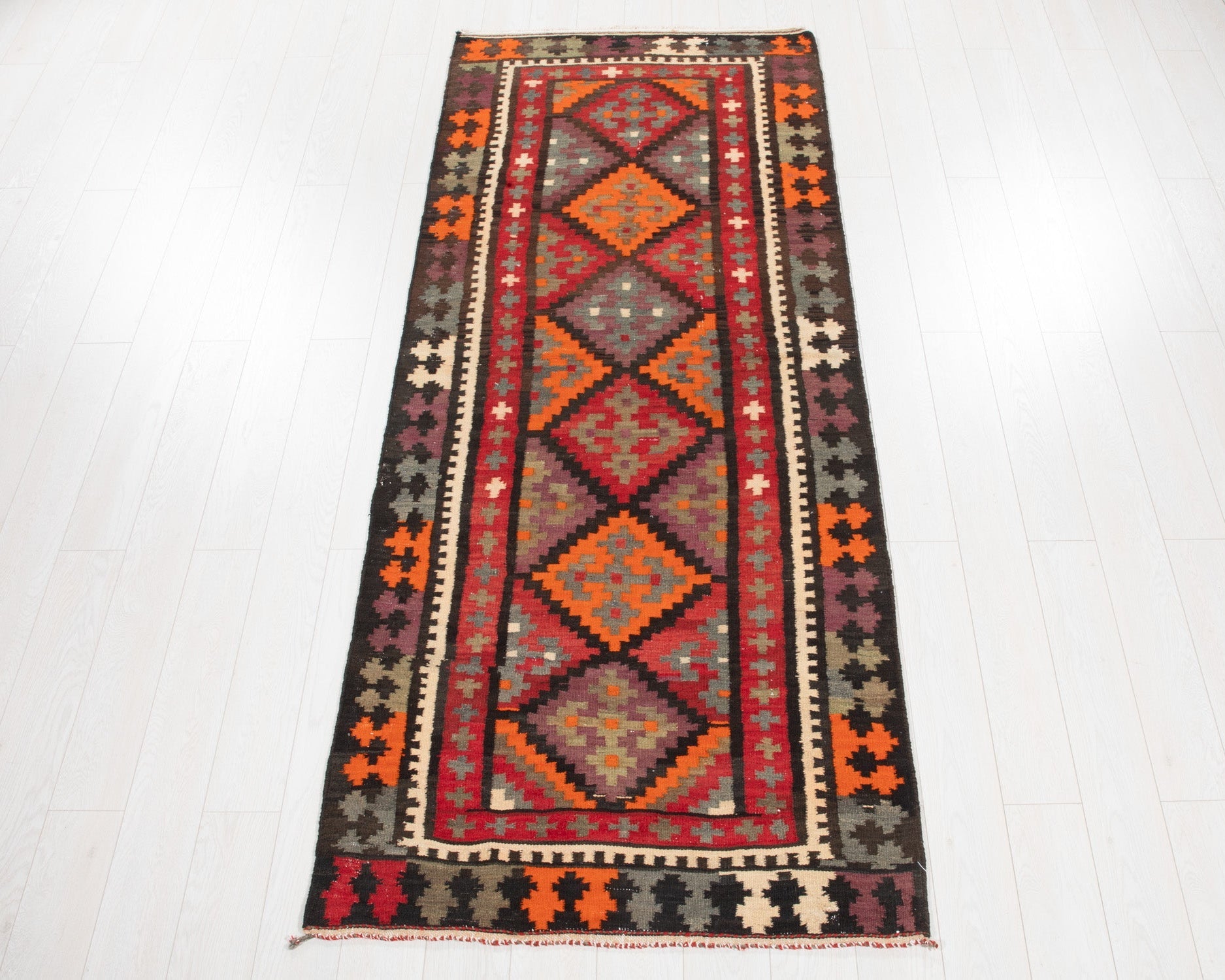
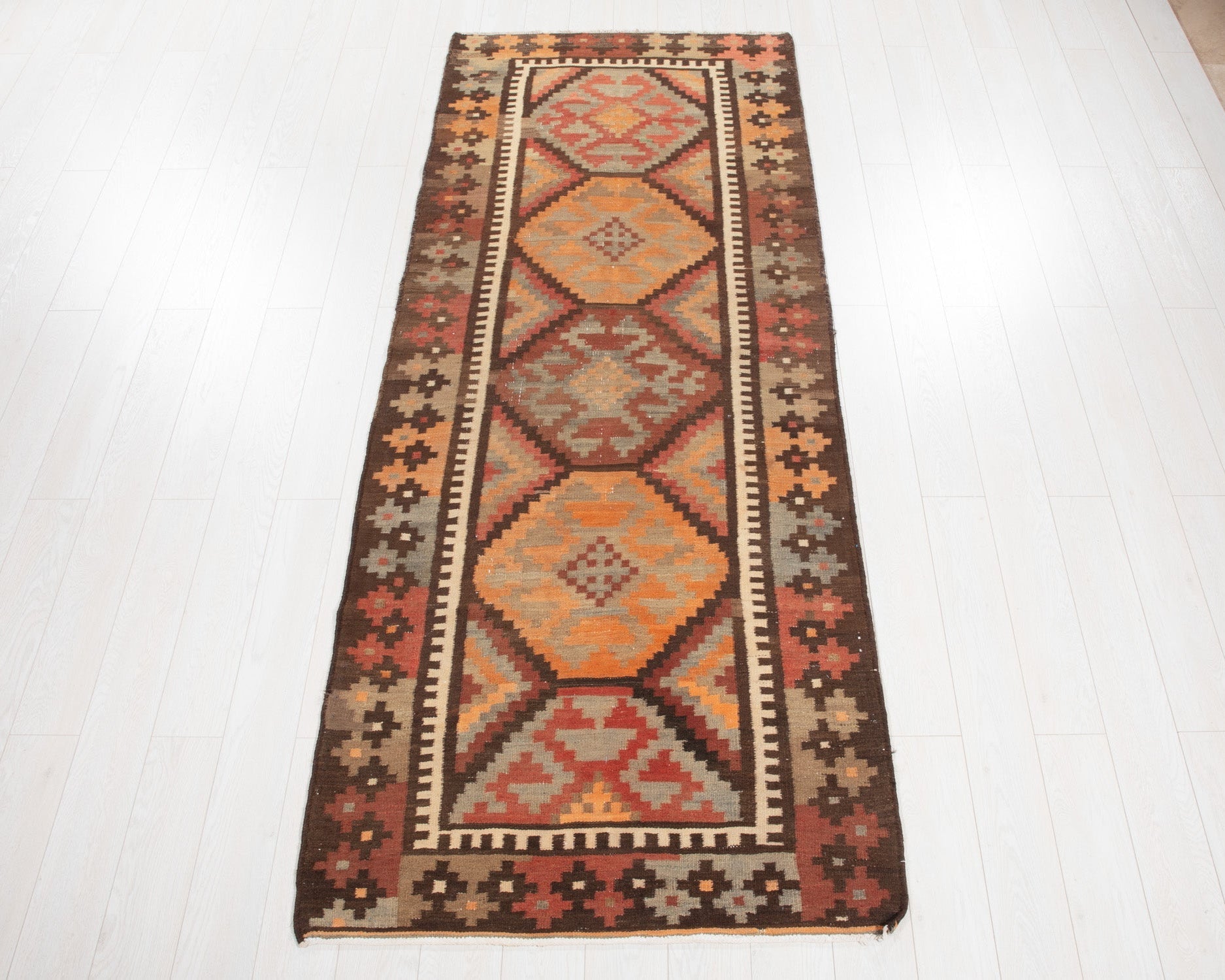
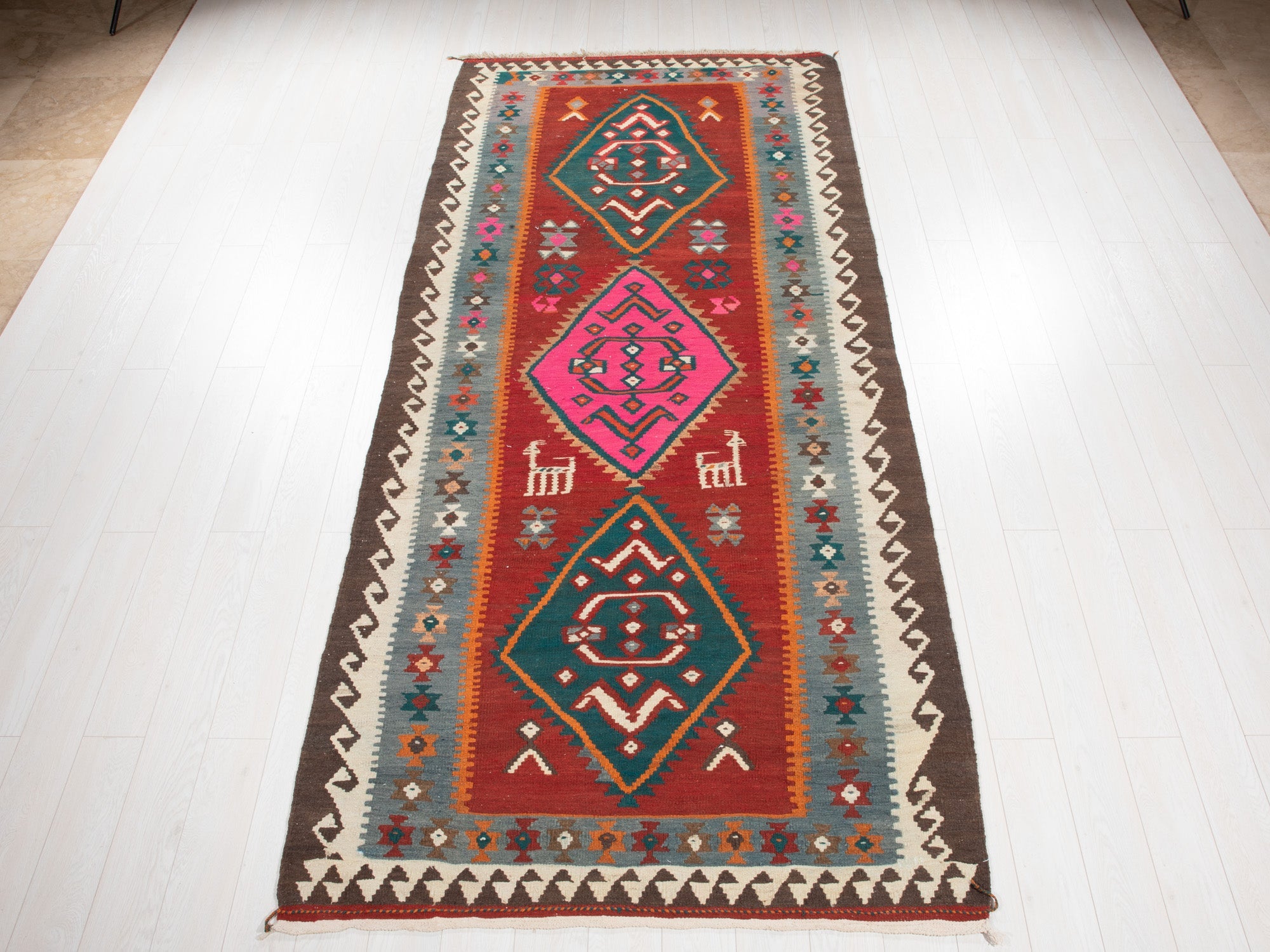
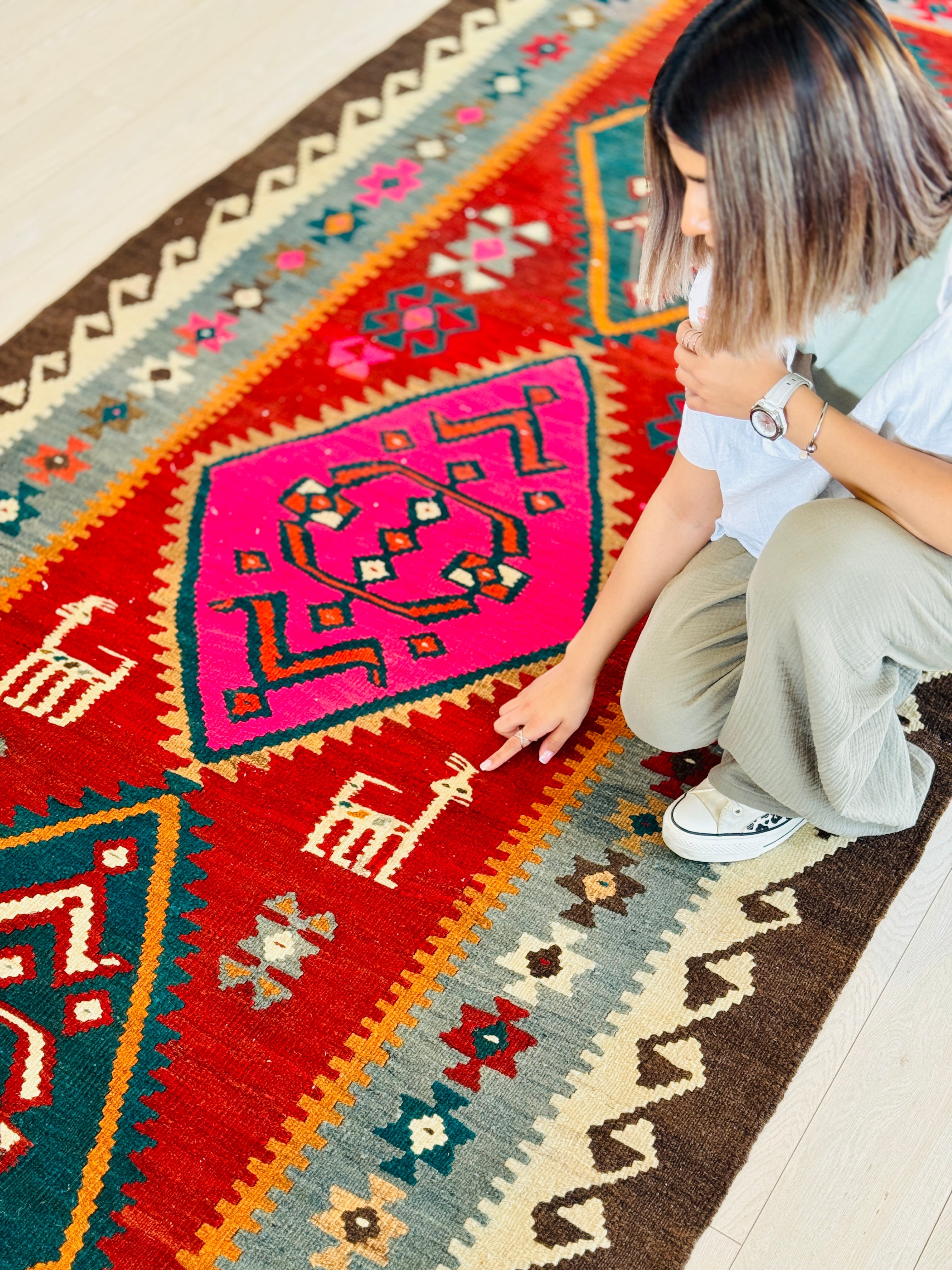
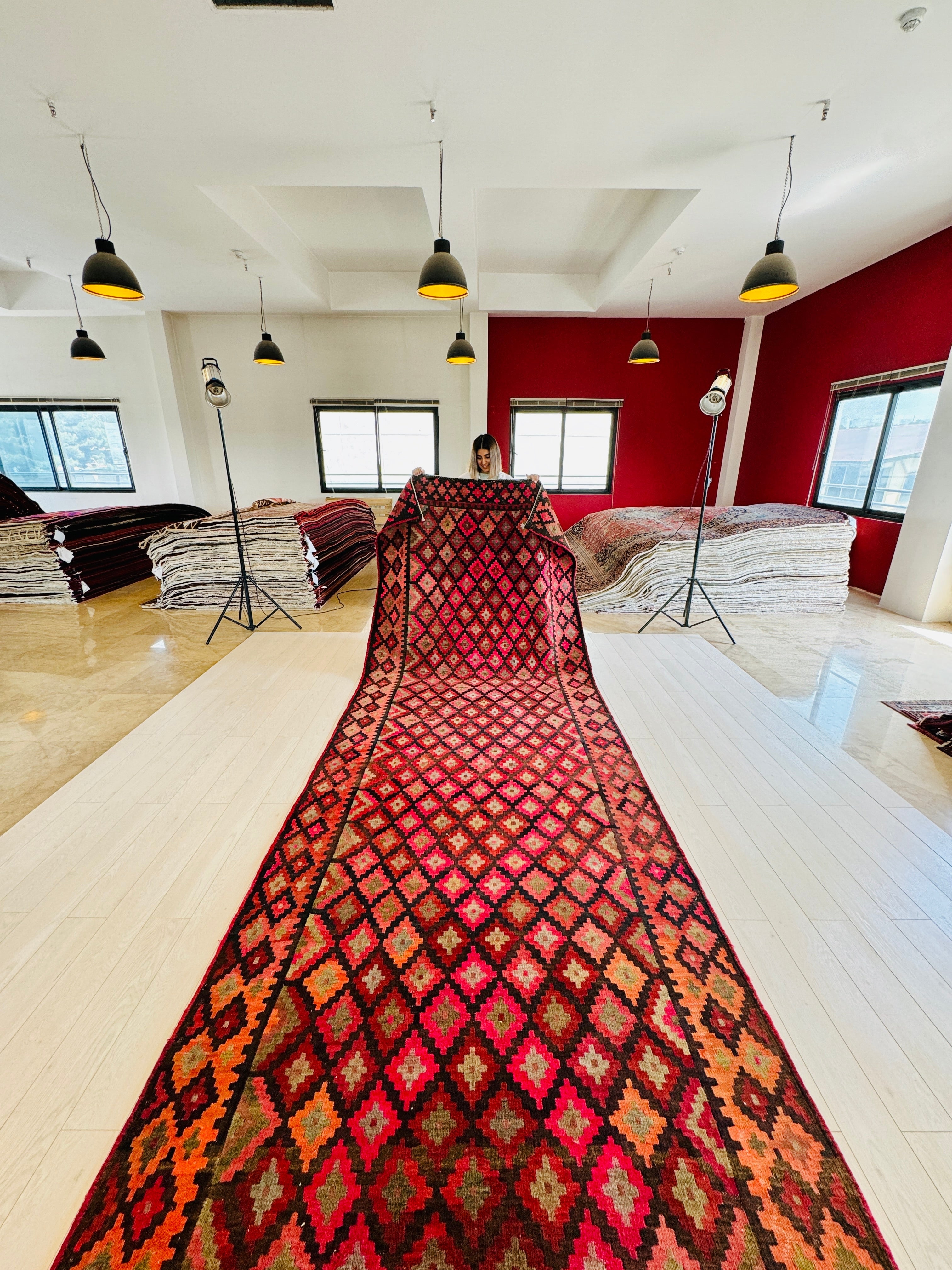
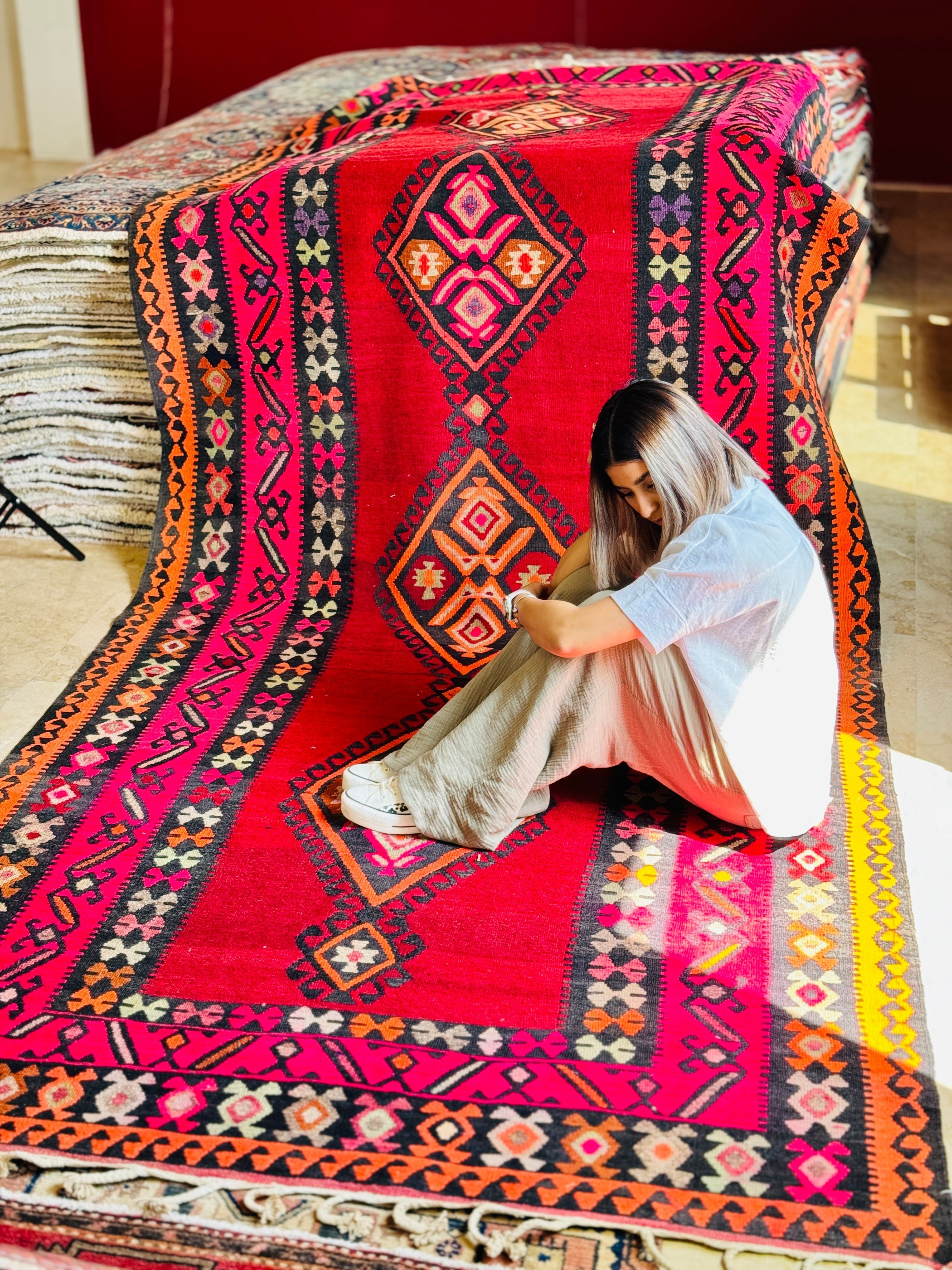
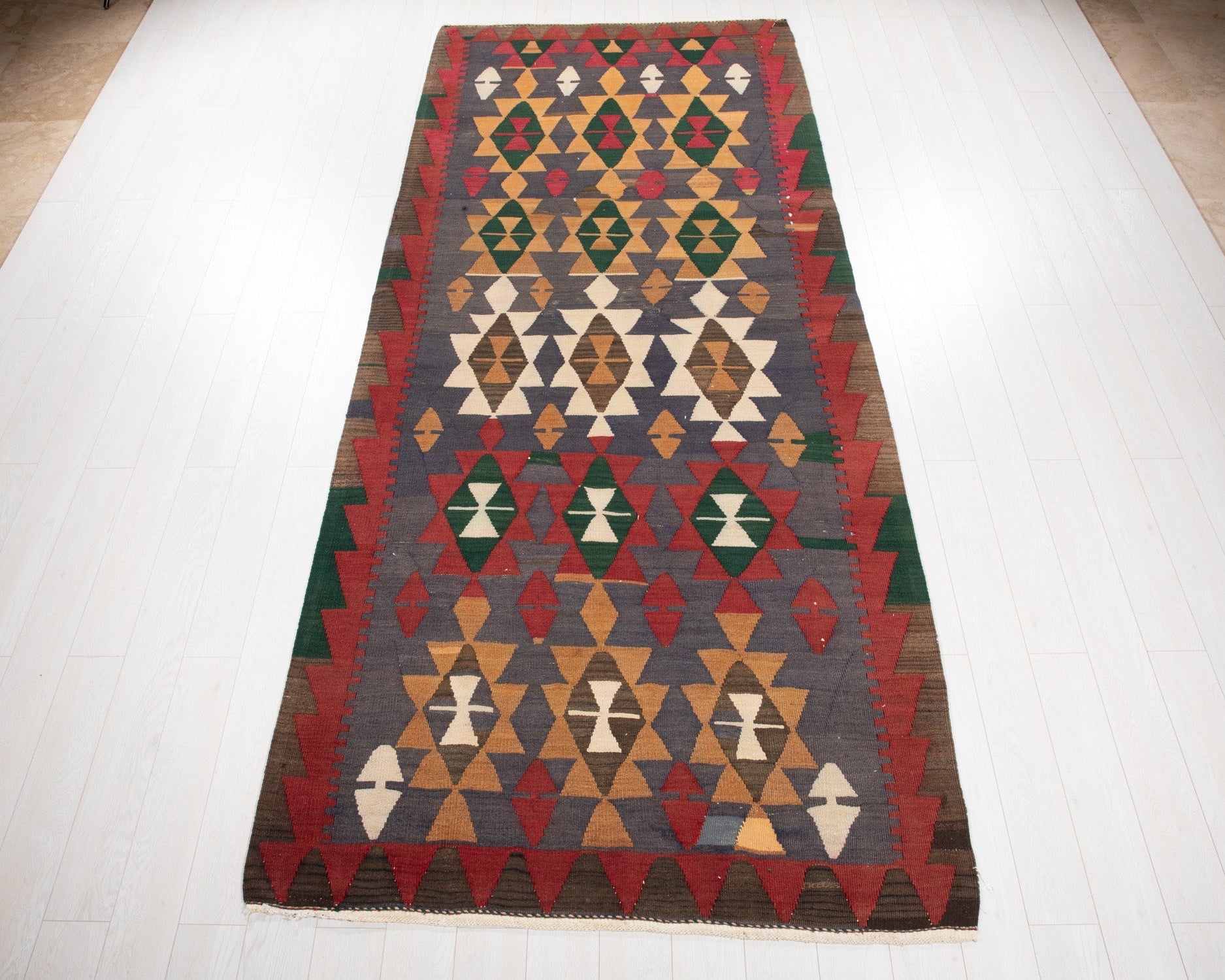
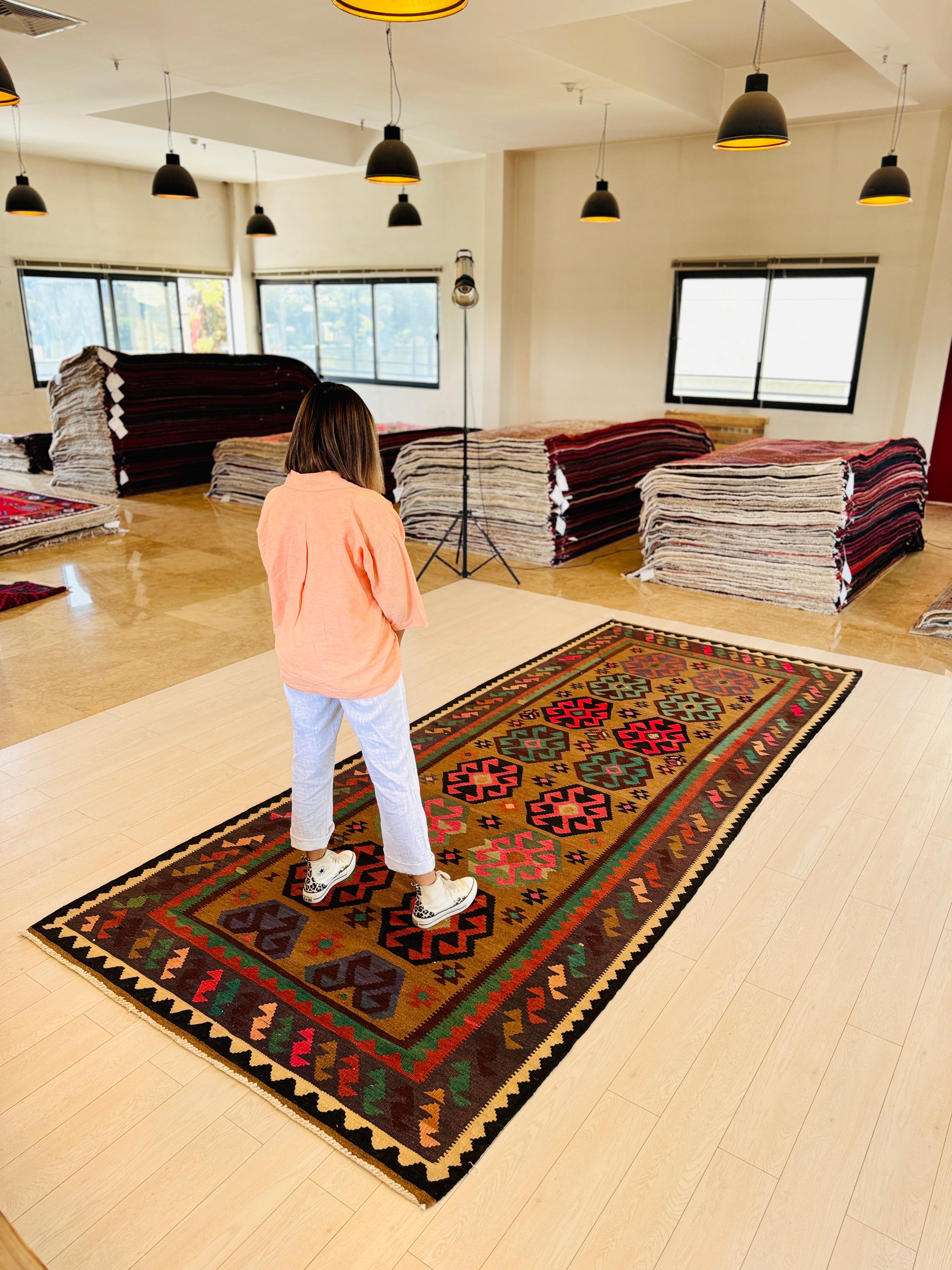
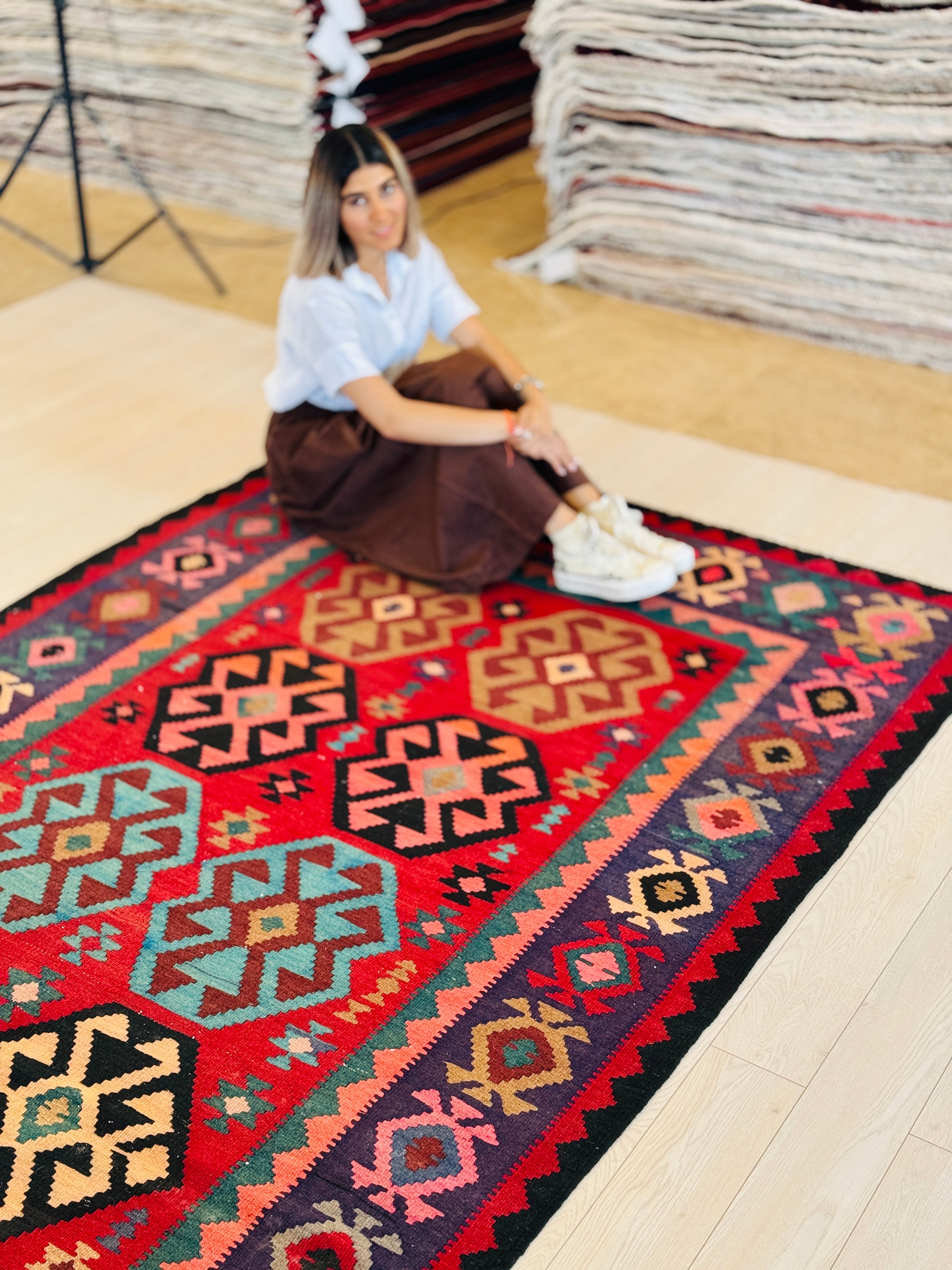
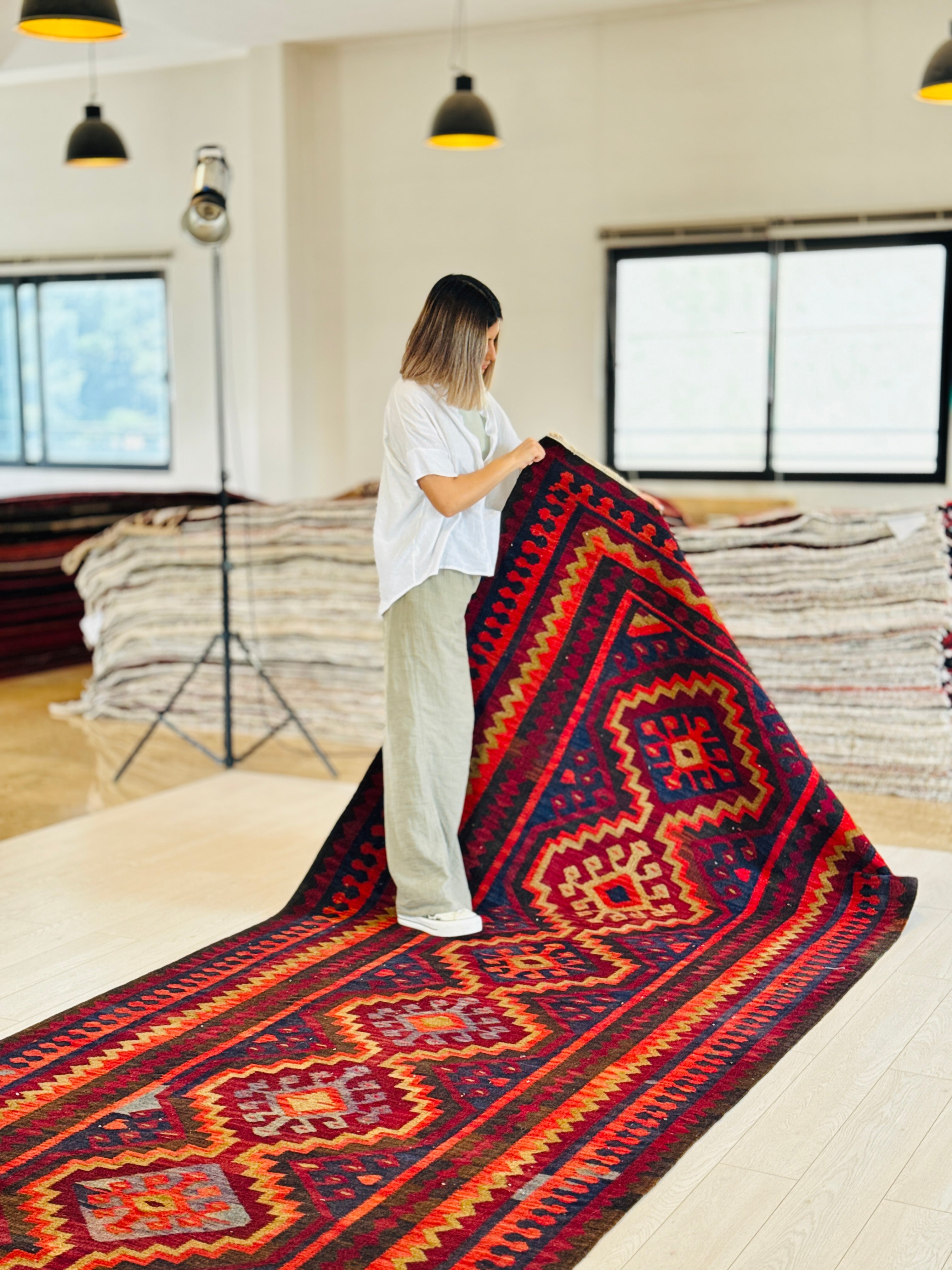
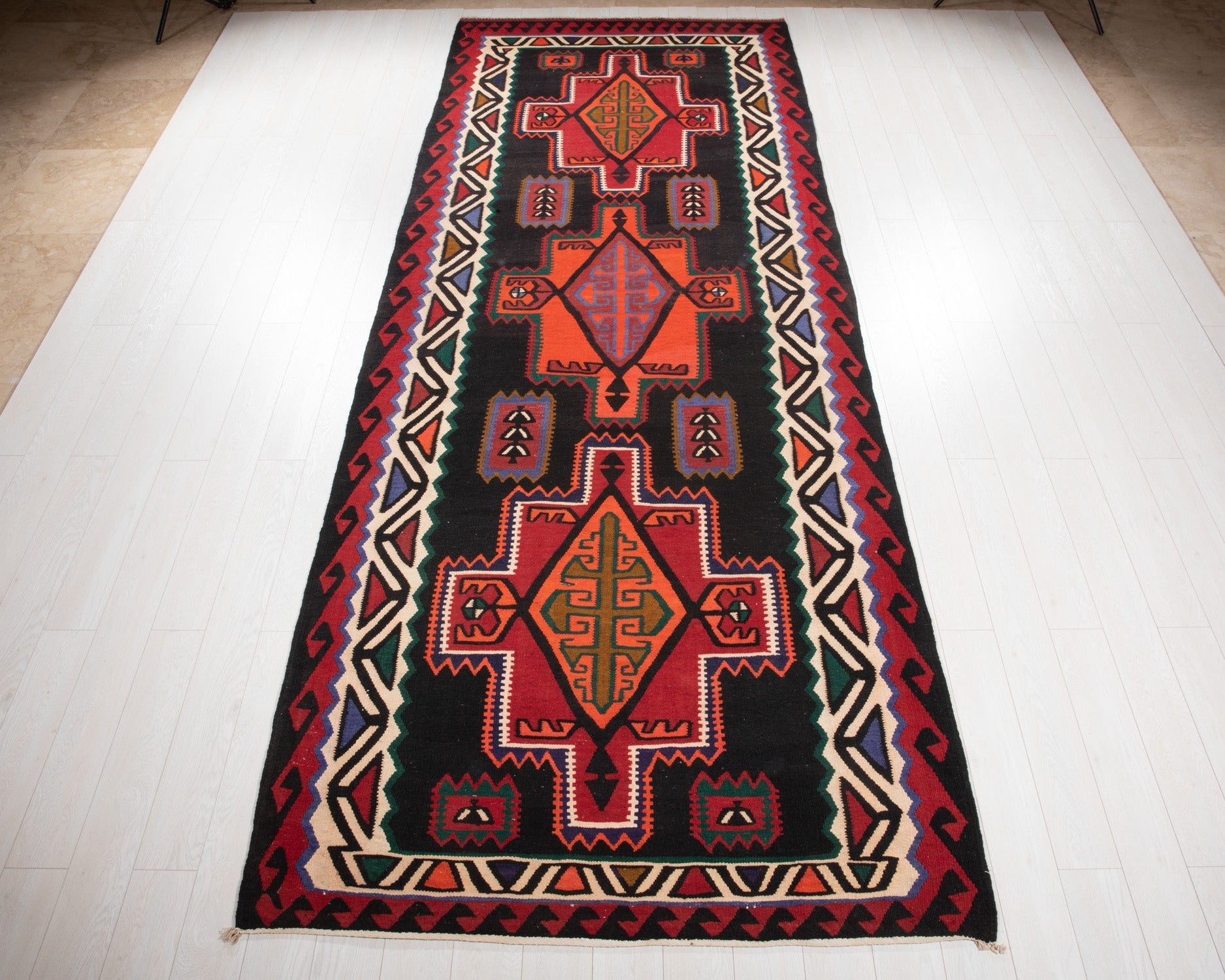
Kilims are flat-woven rugs, structurally different from the knotted-pile rugs found elsewhere on this site. Rather than tying individual knots to build a pile, kilim weavers interlock colored weft threads directly into the warp, producing a flat, reversible textile with no pile at all — a technique that's faster to weave but demands more precision in the color changes, since every shift in the pattern is a structural seam, not a knot swapped for another color. The kilims in this collection come from nomadic weavers of the Shiraz region in Fars province, particularly the Lori tribal people, one of the nomadic and semi-nomadic groups whose traditional grazing routes moved through the mountains and plains surrounding Shiraz. Lori weaving is defined by bold, high-contrast geometric motifs — stepped diamonds, hooked medallions, and striped fields — worked in a vivid, saturated palette that reads as much bolder and more graphic than the finer curvilinear designs of city workshops. Because kilims were woven for daily nomadic life — as floor coverings, tent dividers, and storage bags — durability was built into the weave itself: dense, tightly packed wool wefts that hold their structure and color for generations, while remaining light enough to be practical to fold, pack, and move as part of a migratory household. Every piece in this collection is a genuine vintage kilim, hand-selected for structural soundness and authentic craftsmanship — no two are alike.