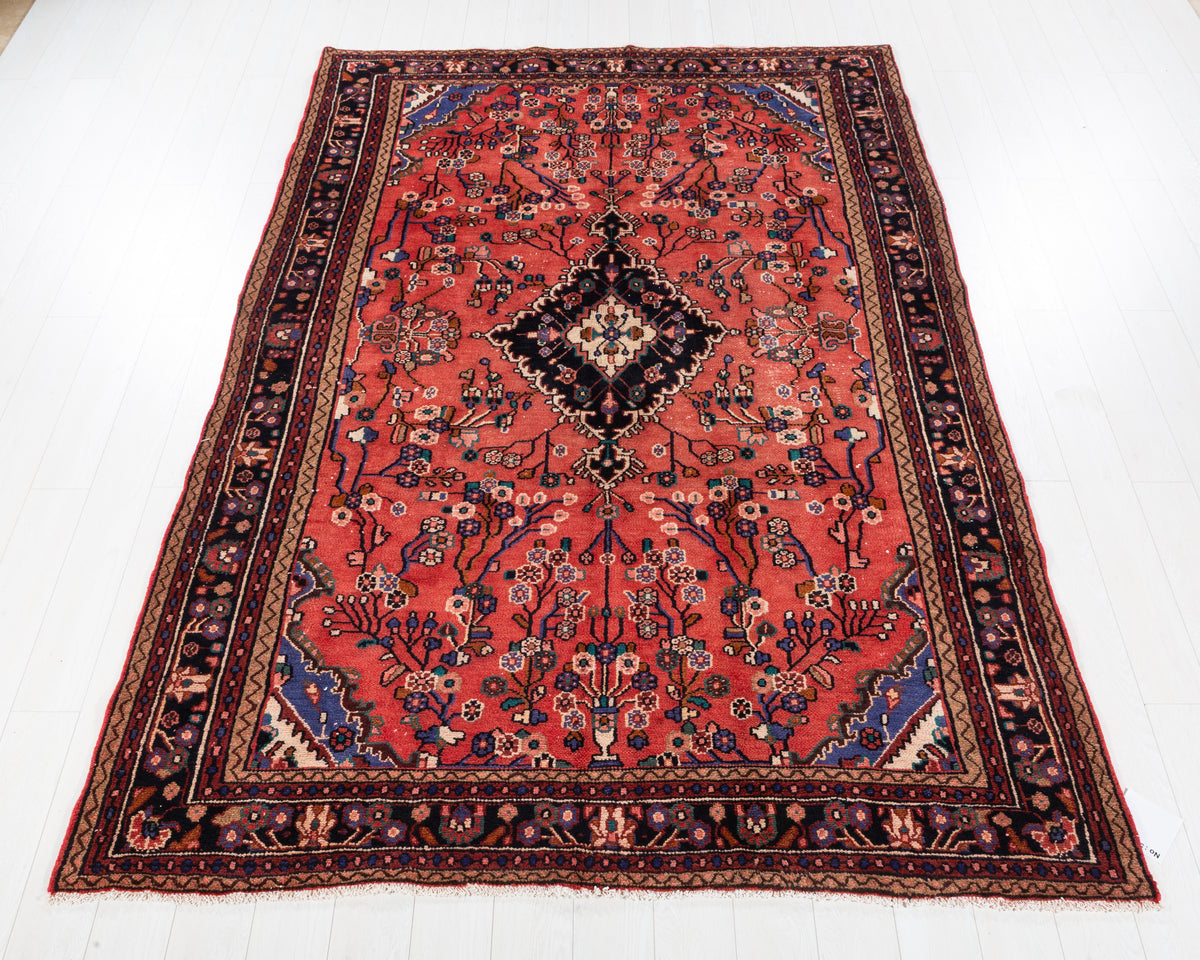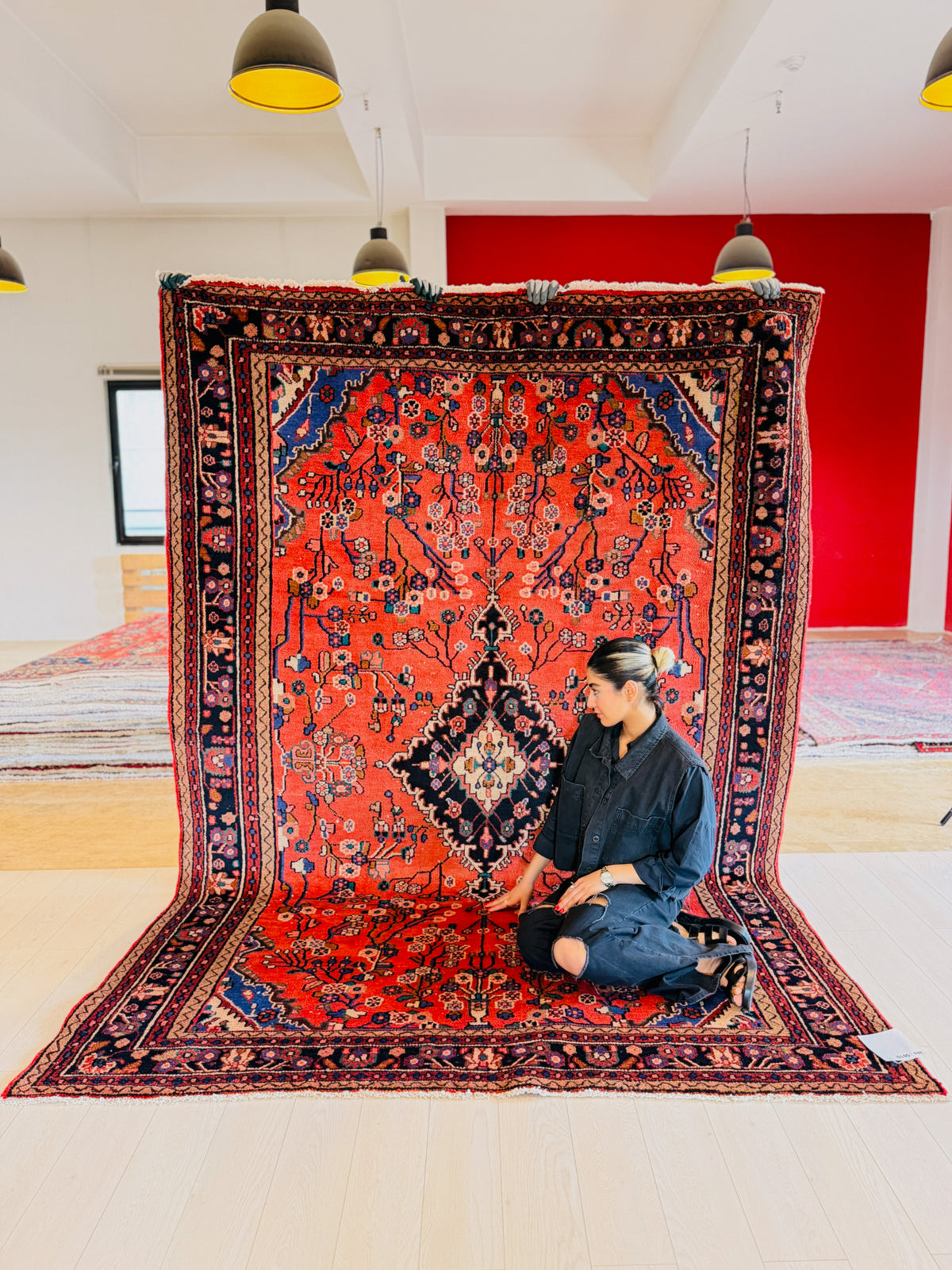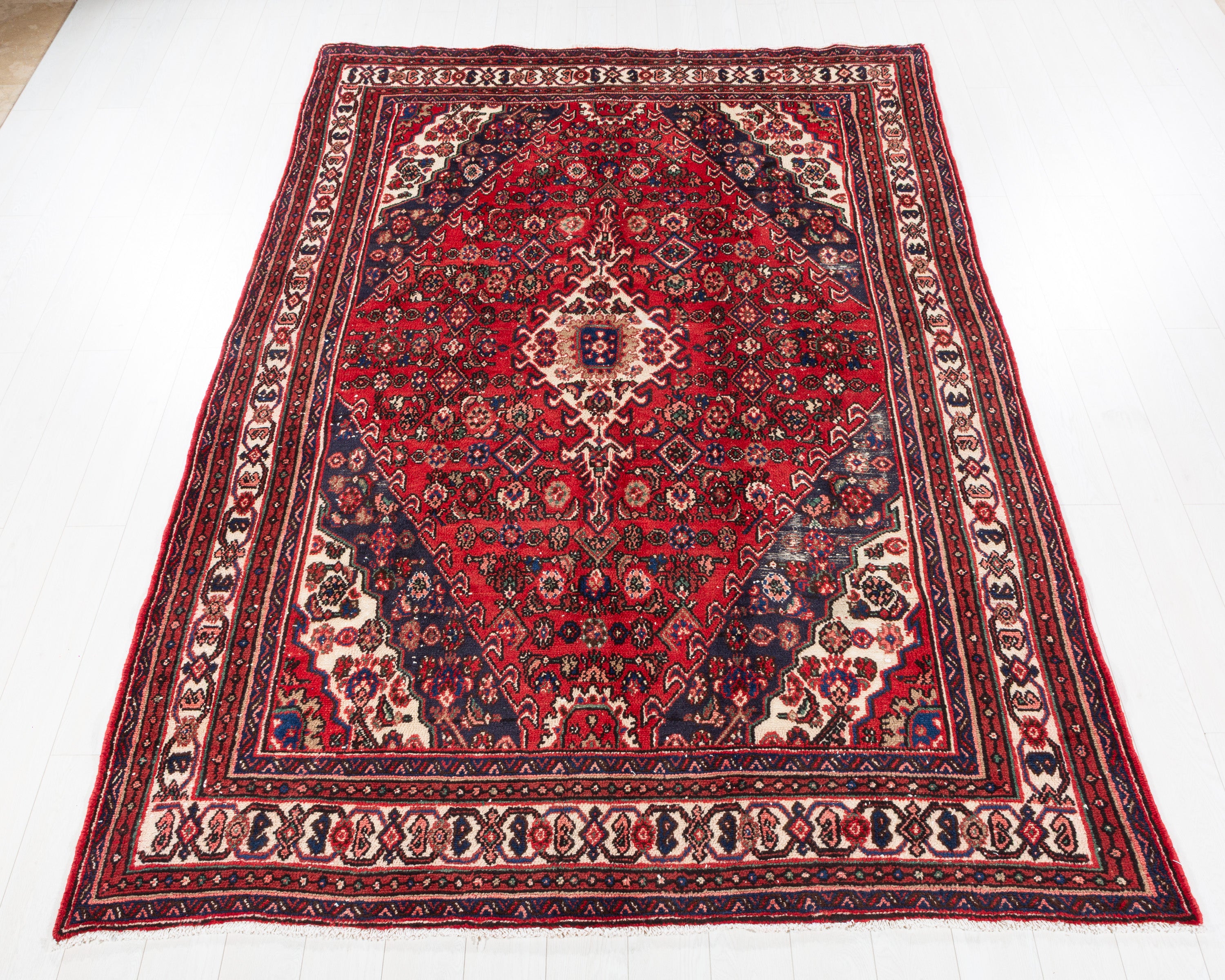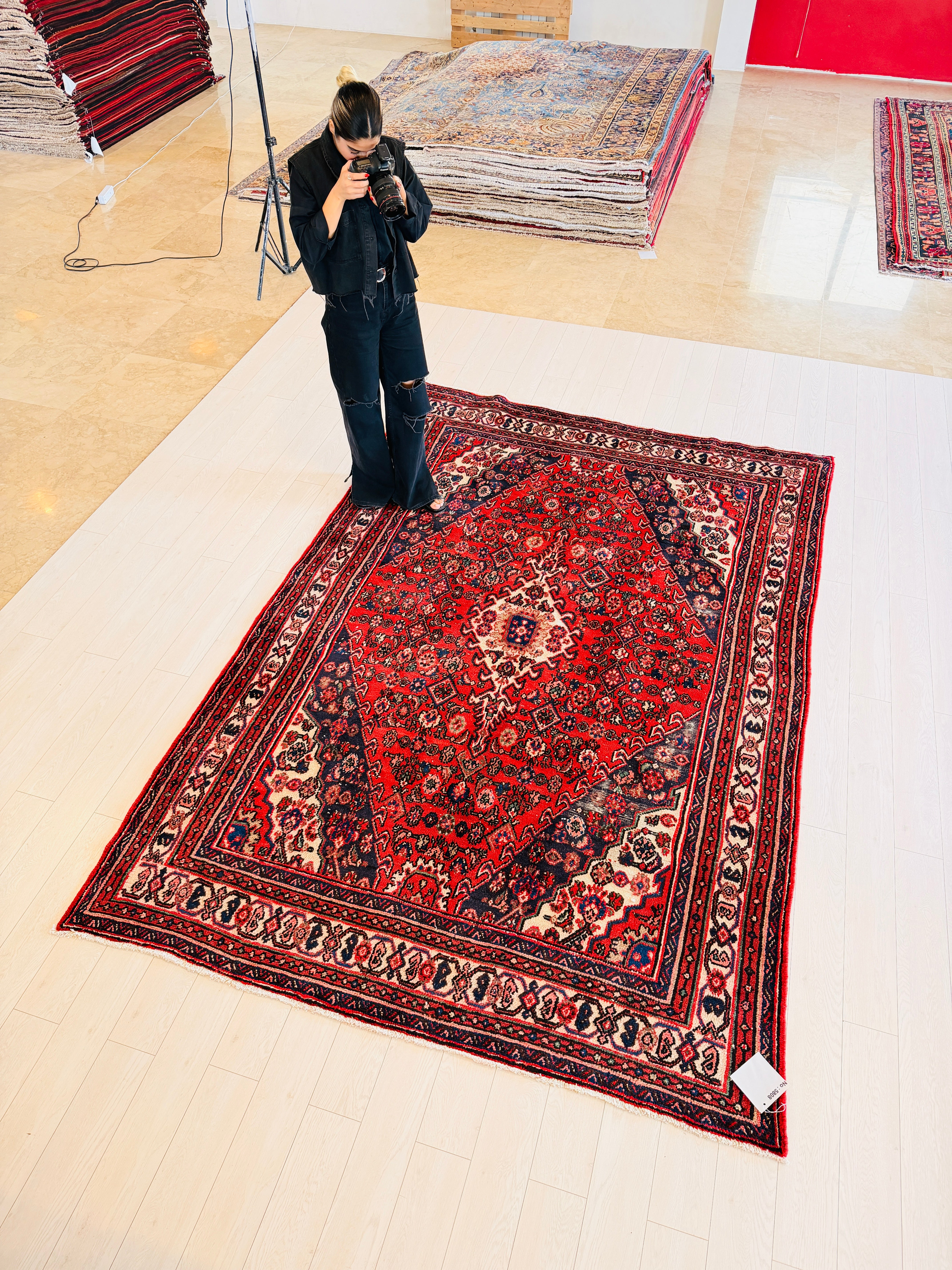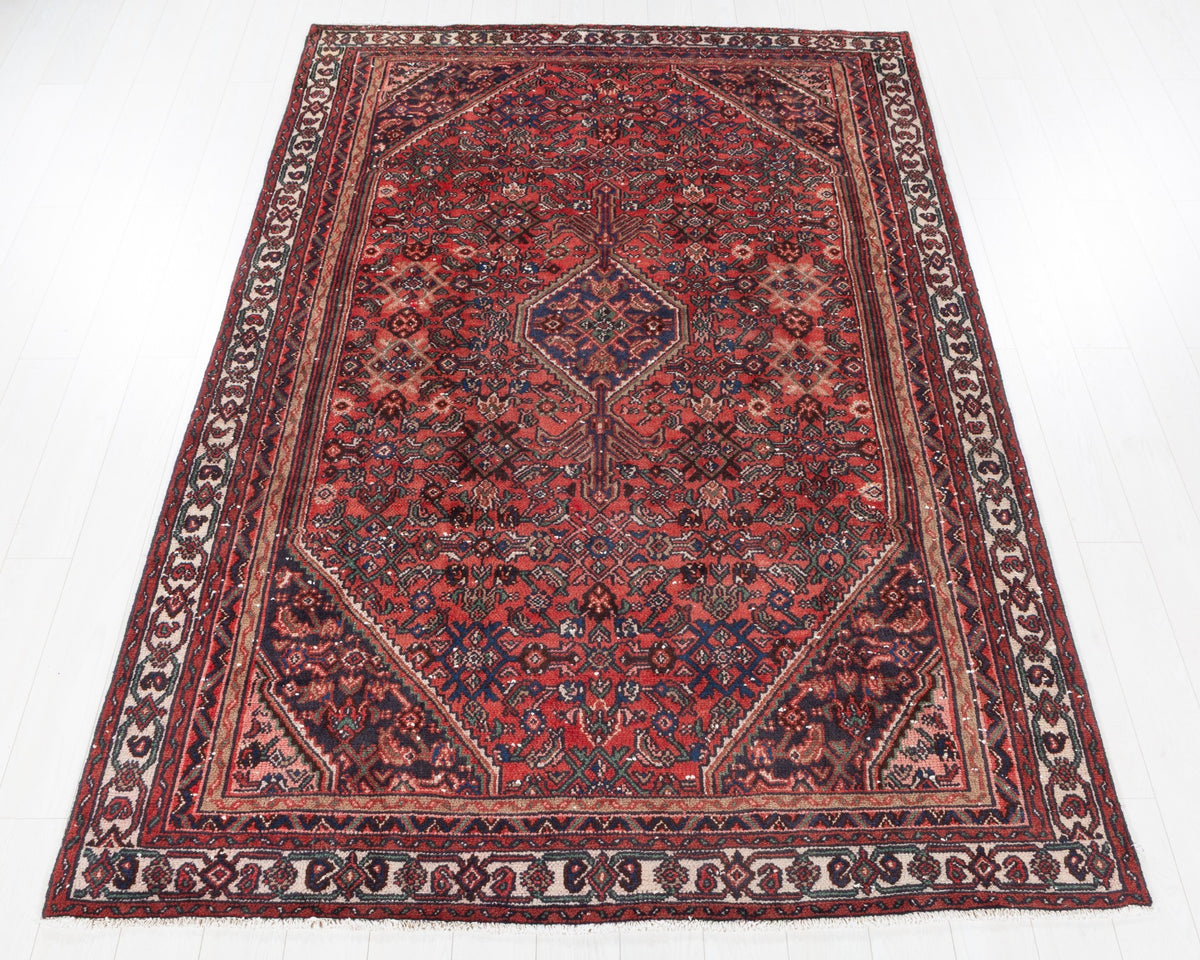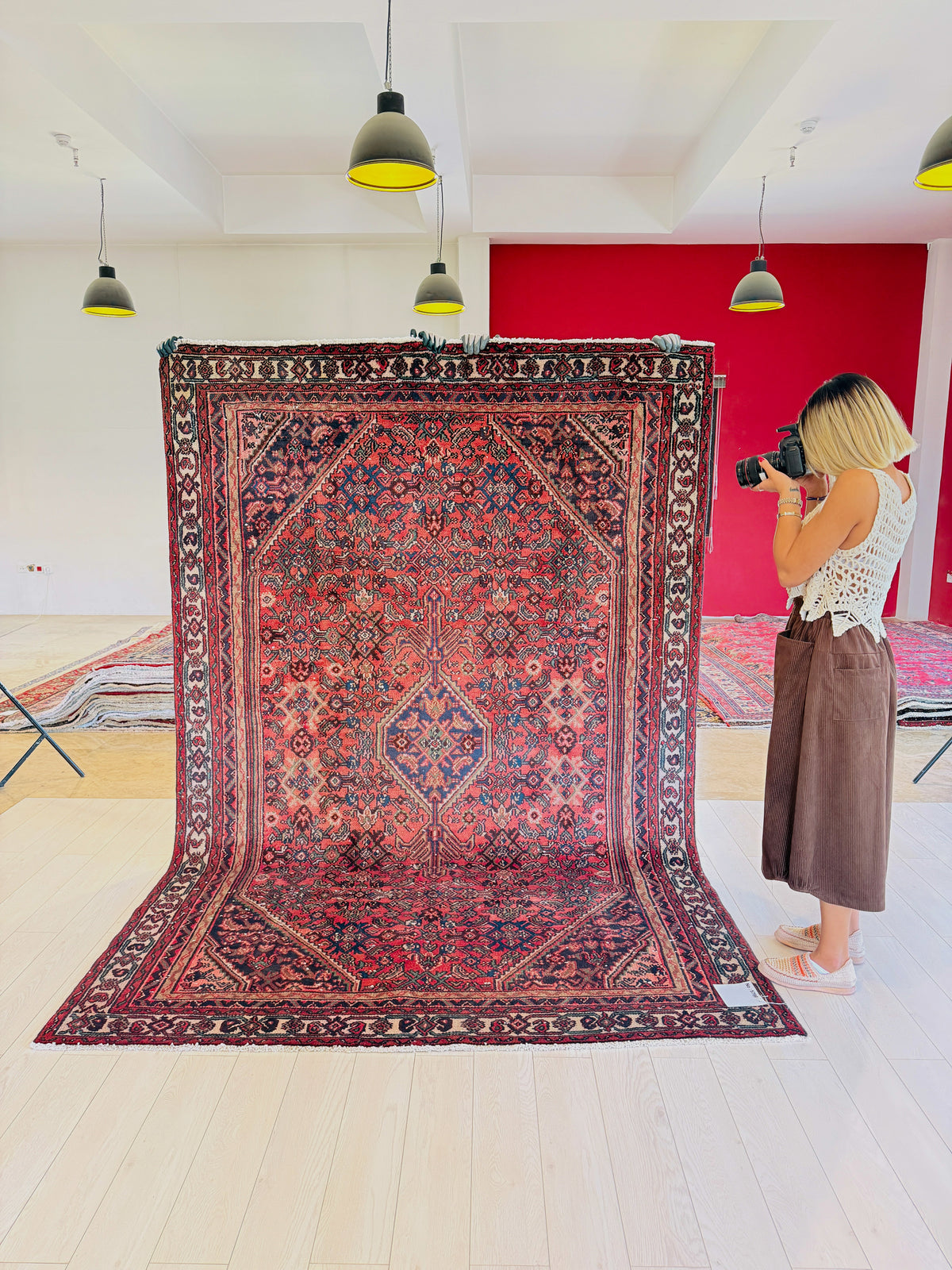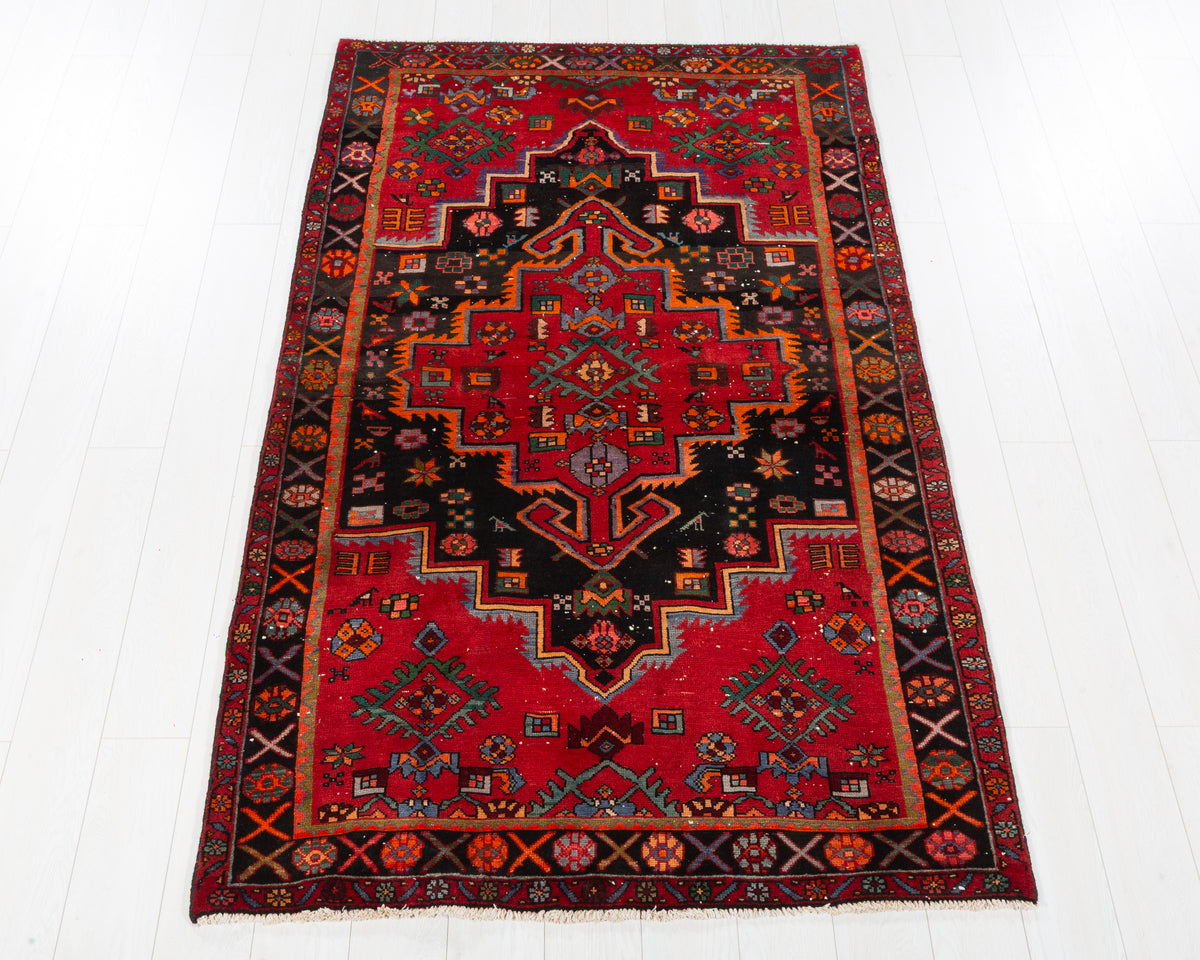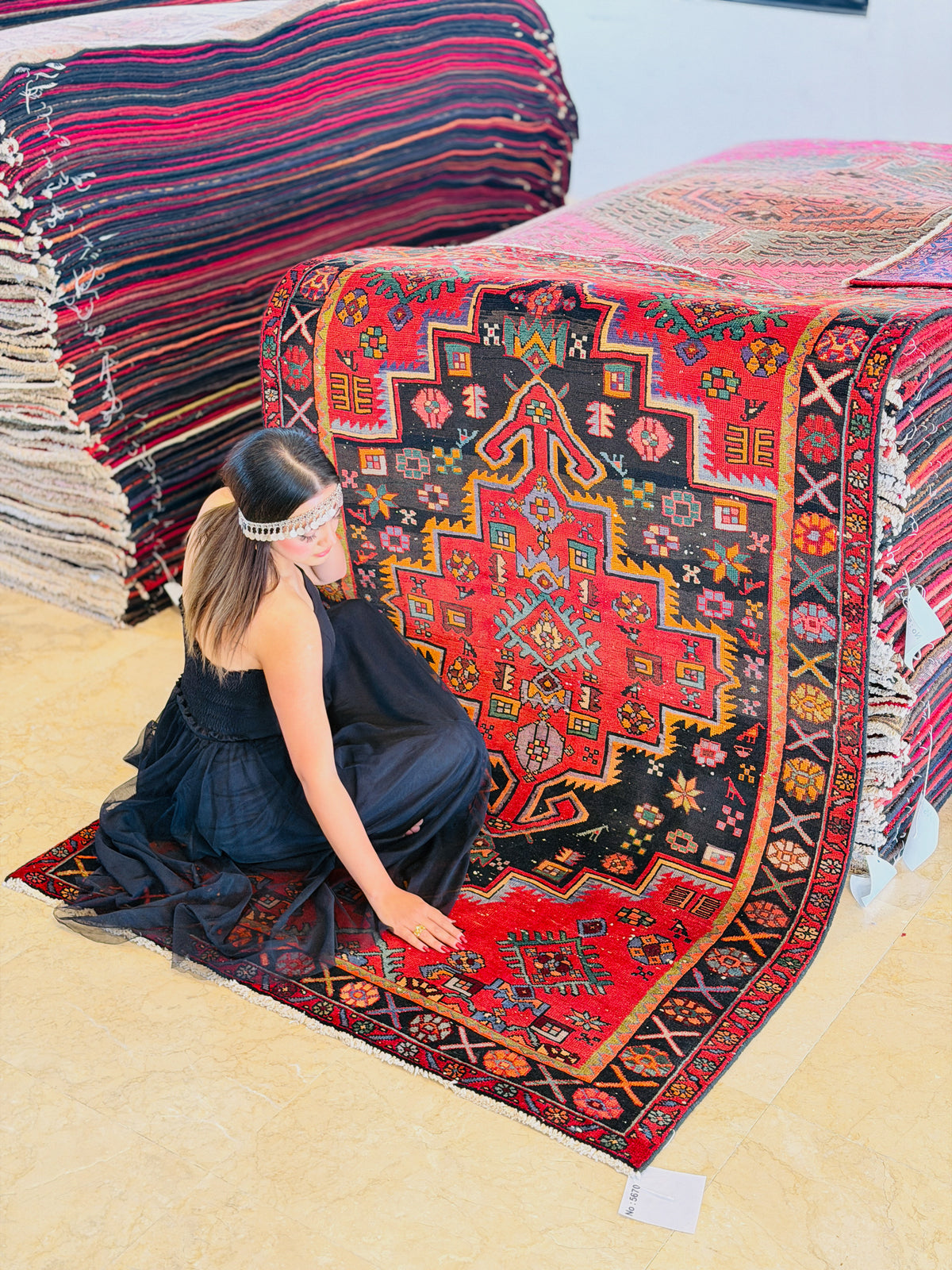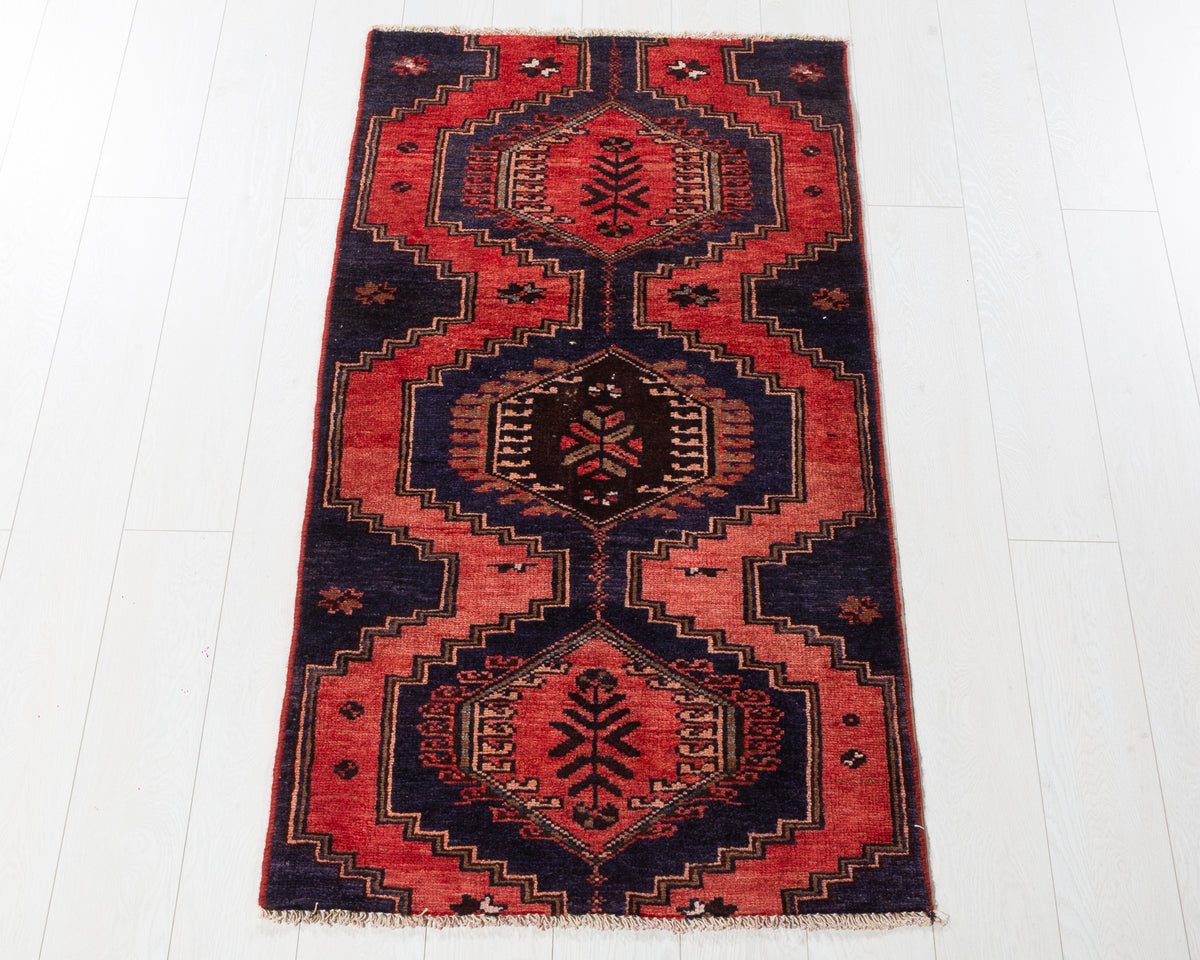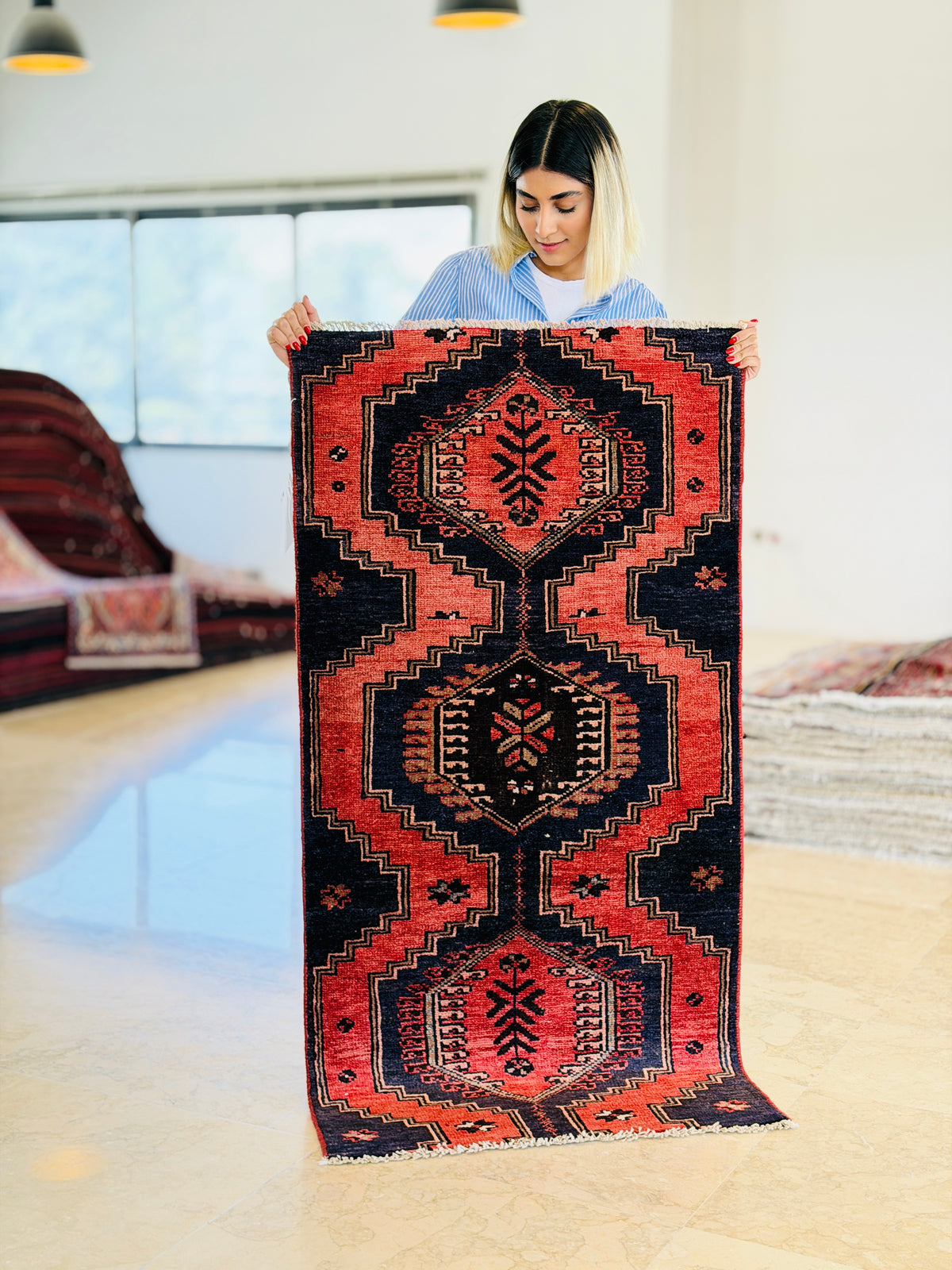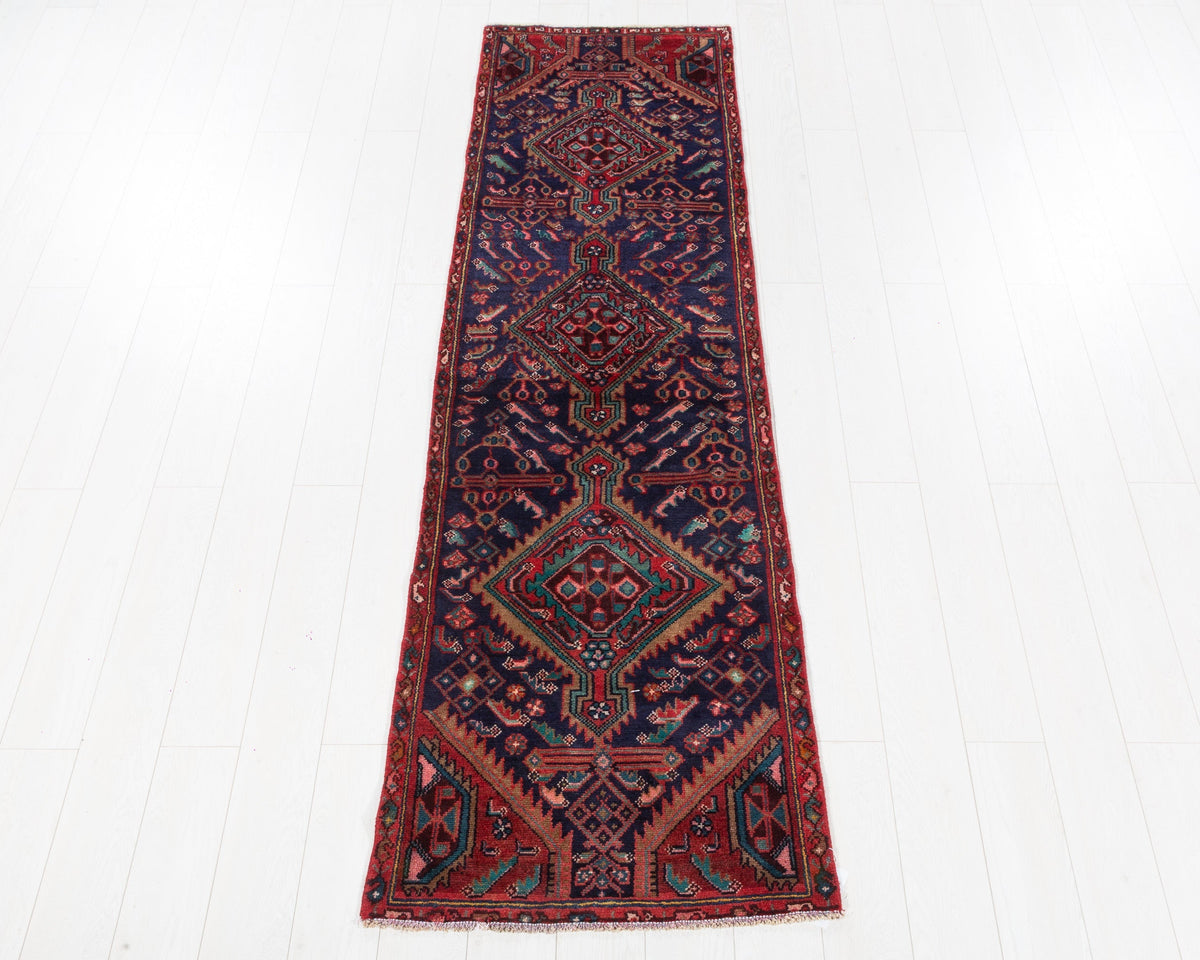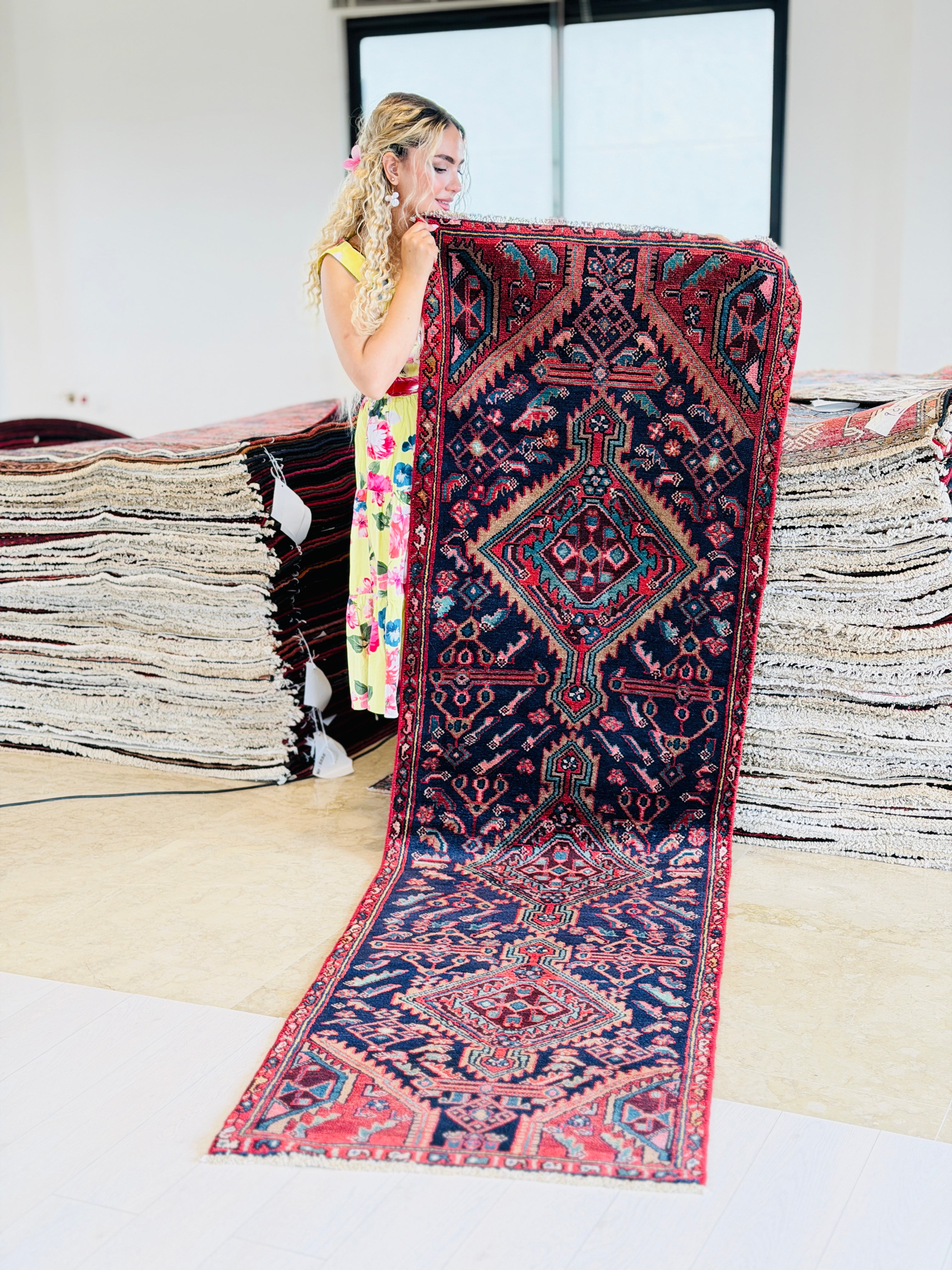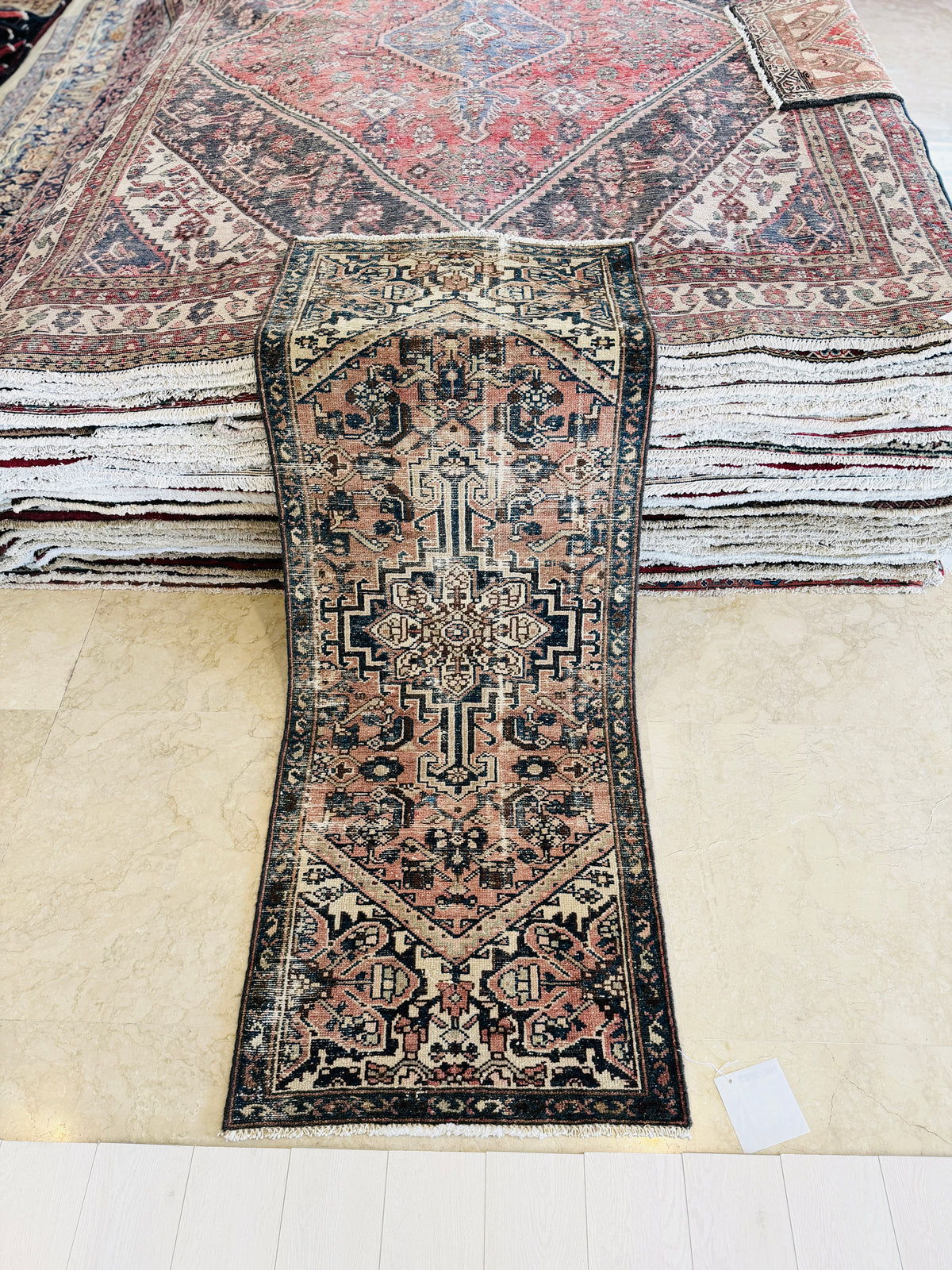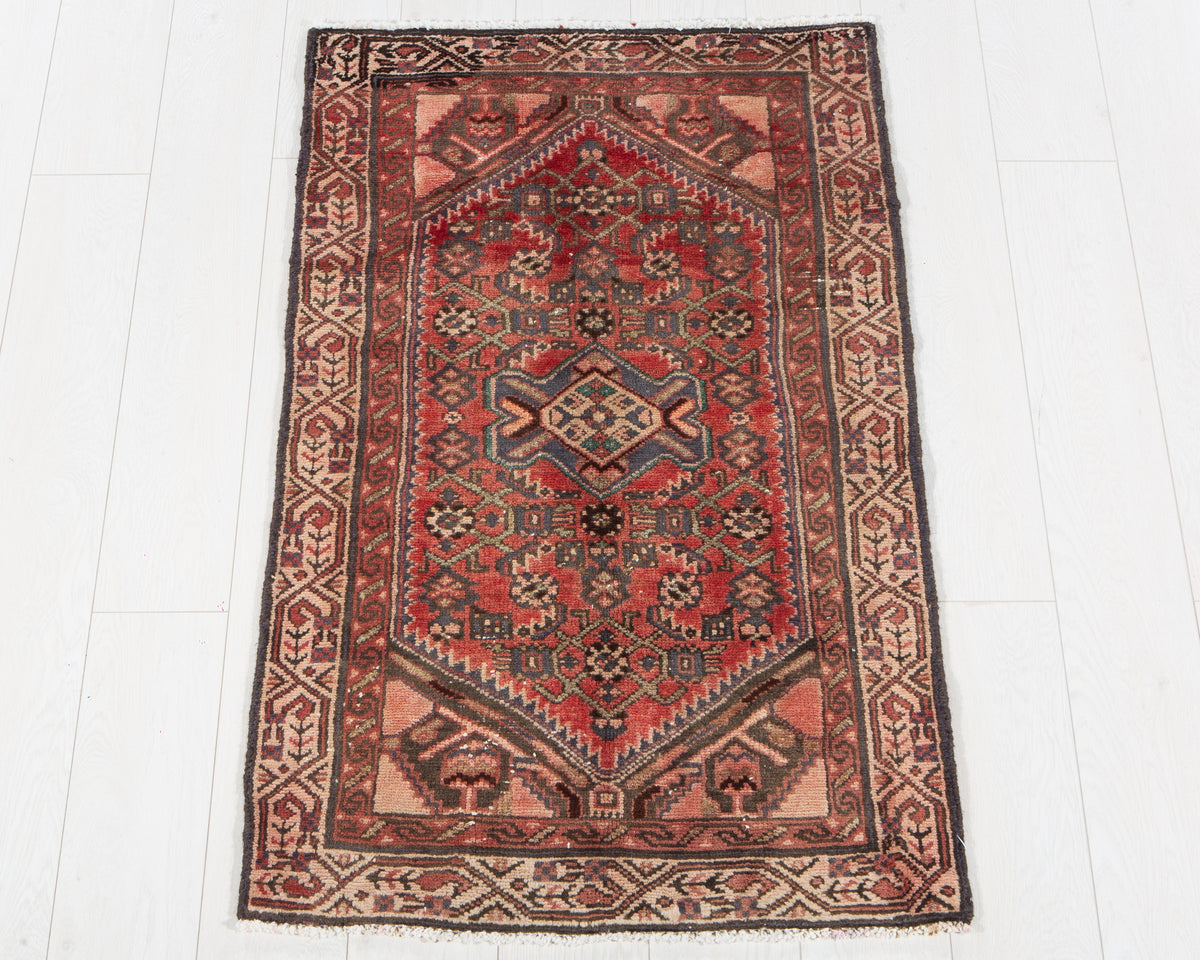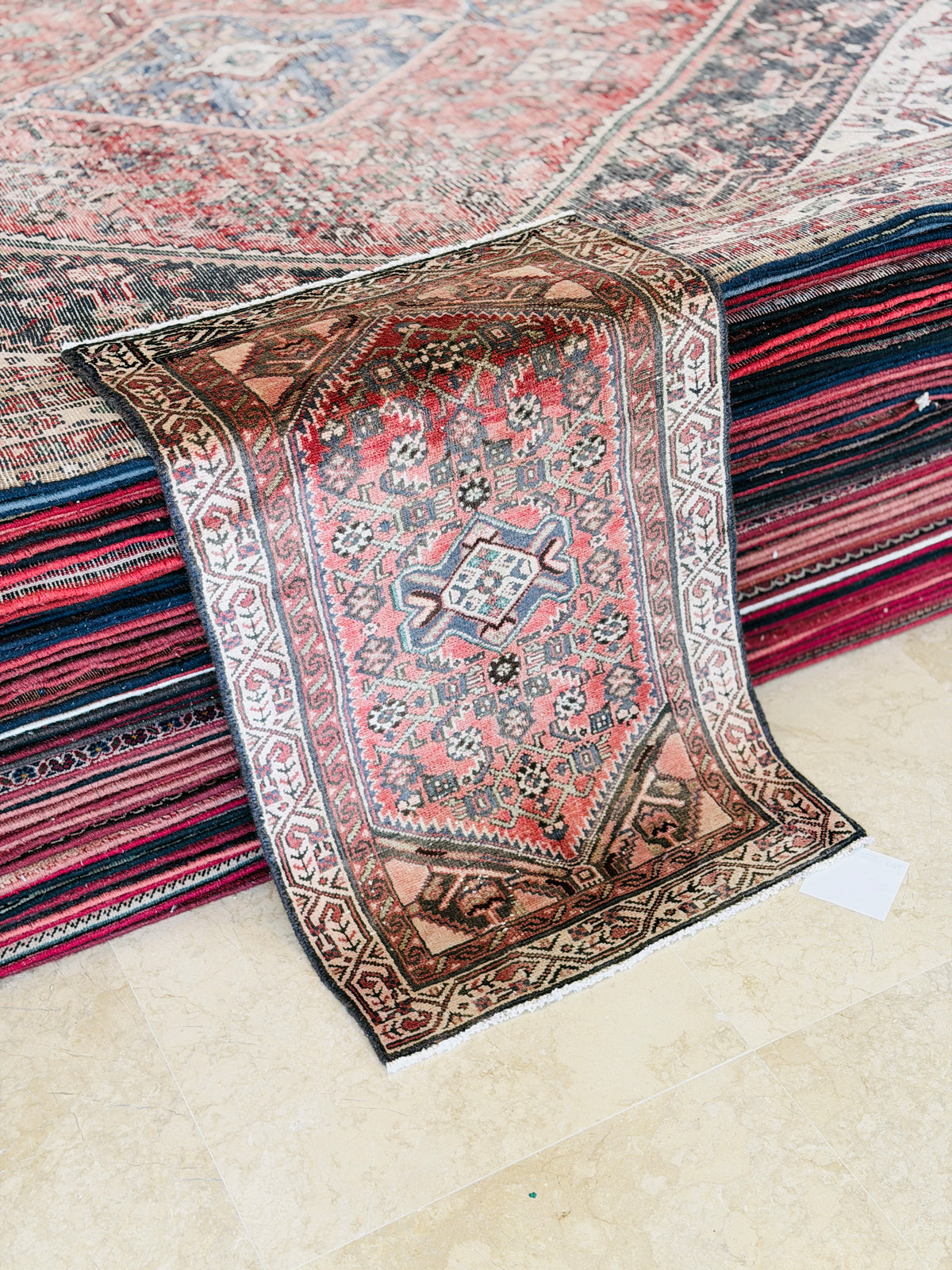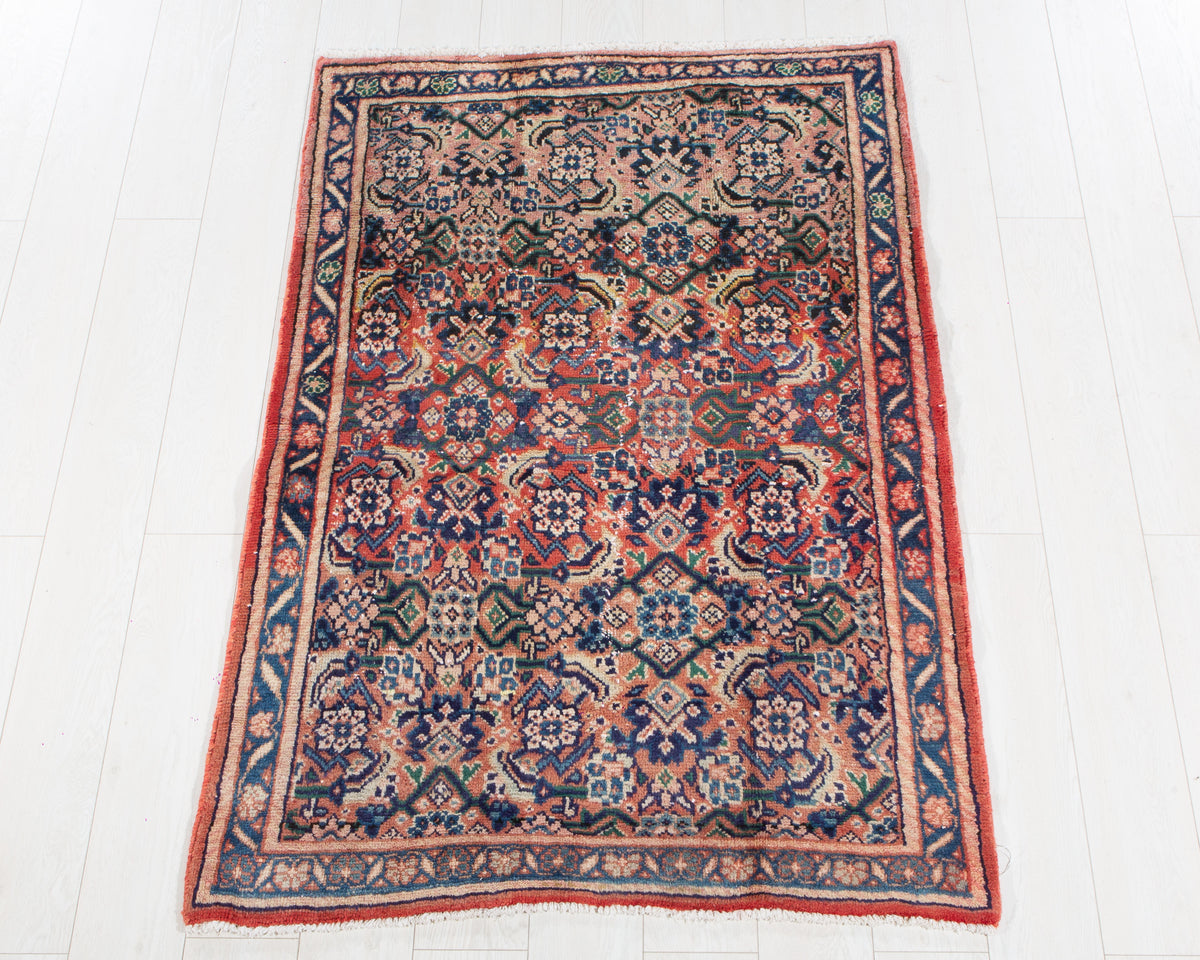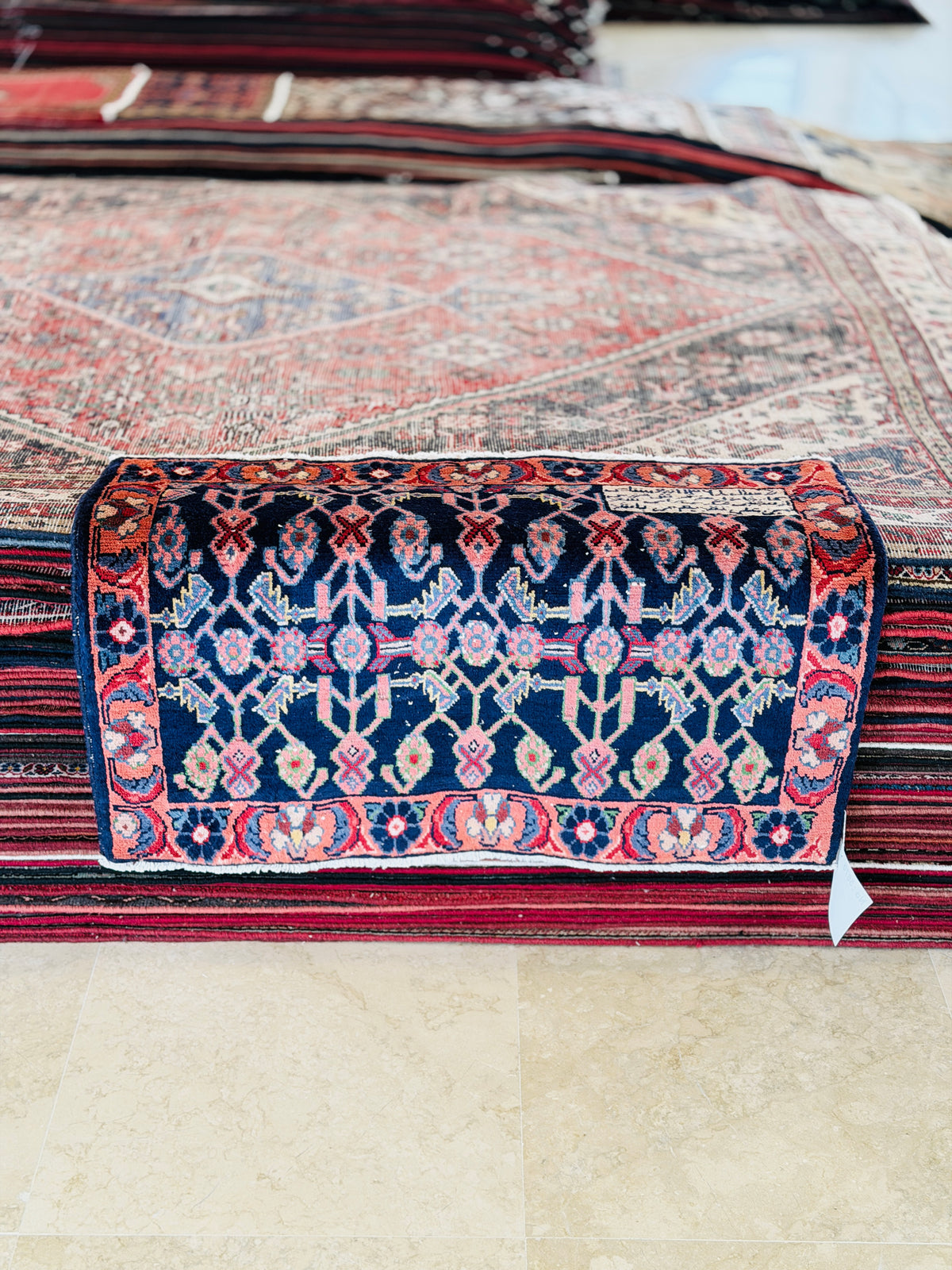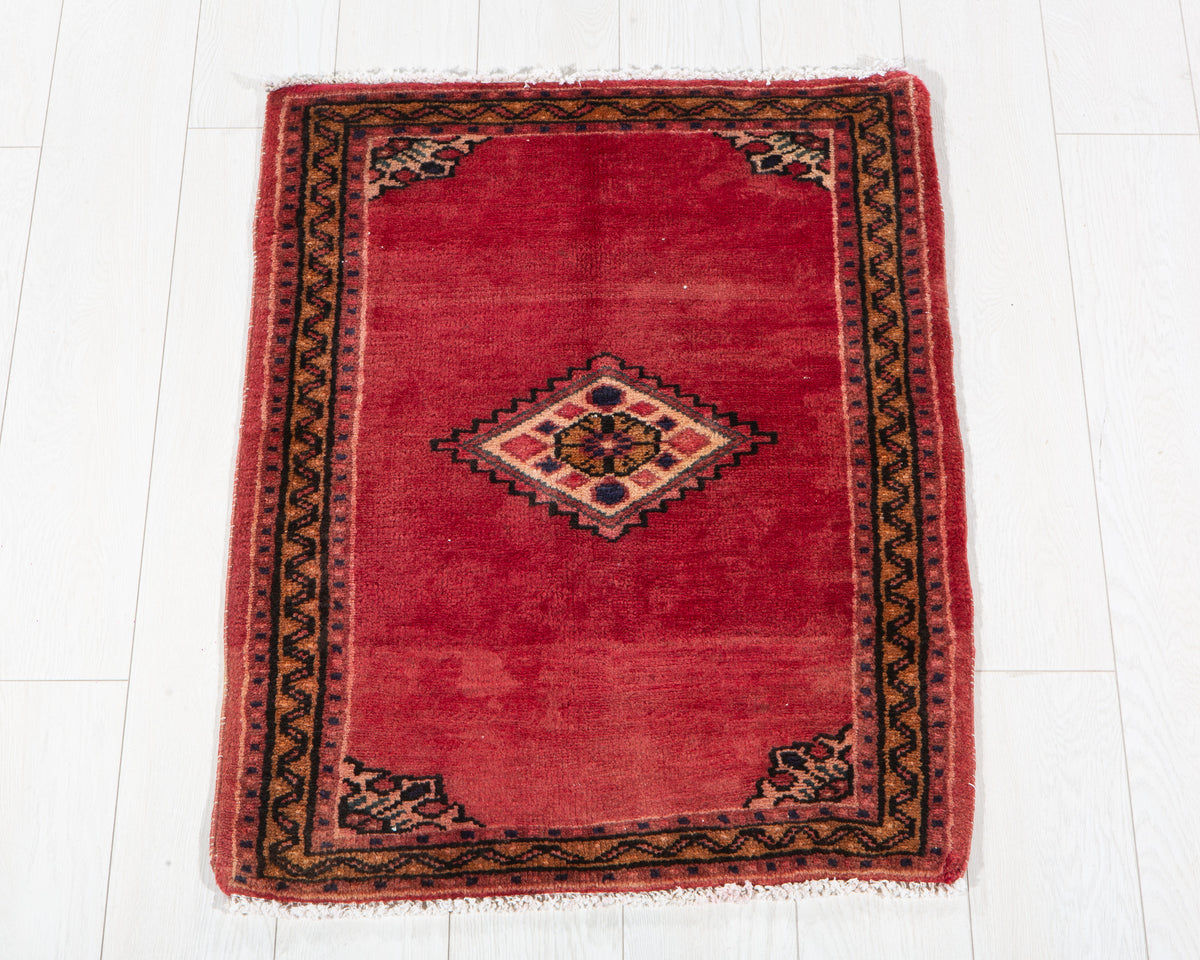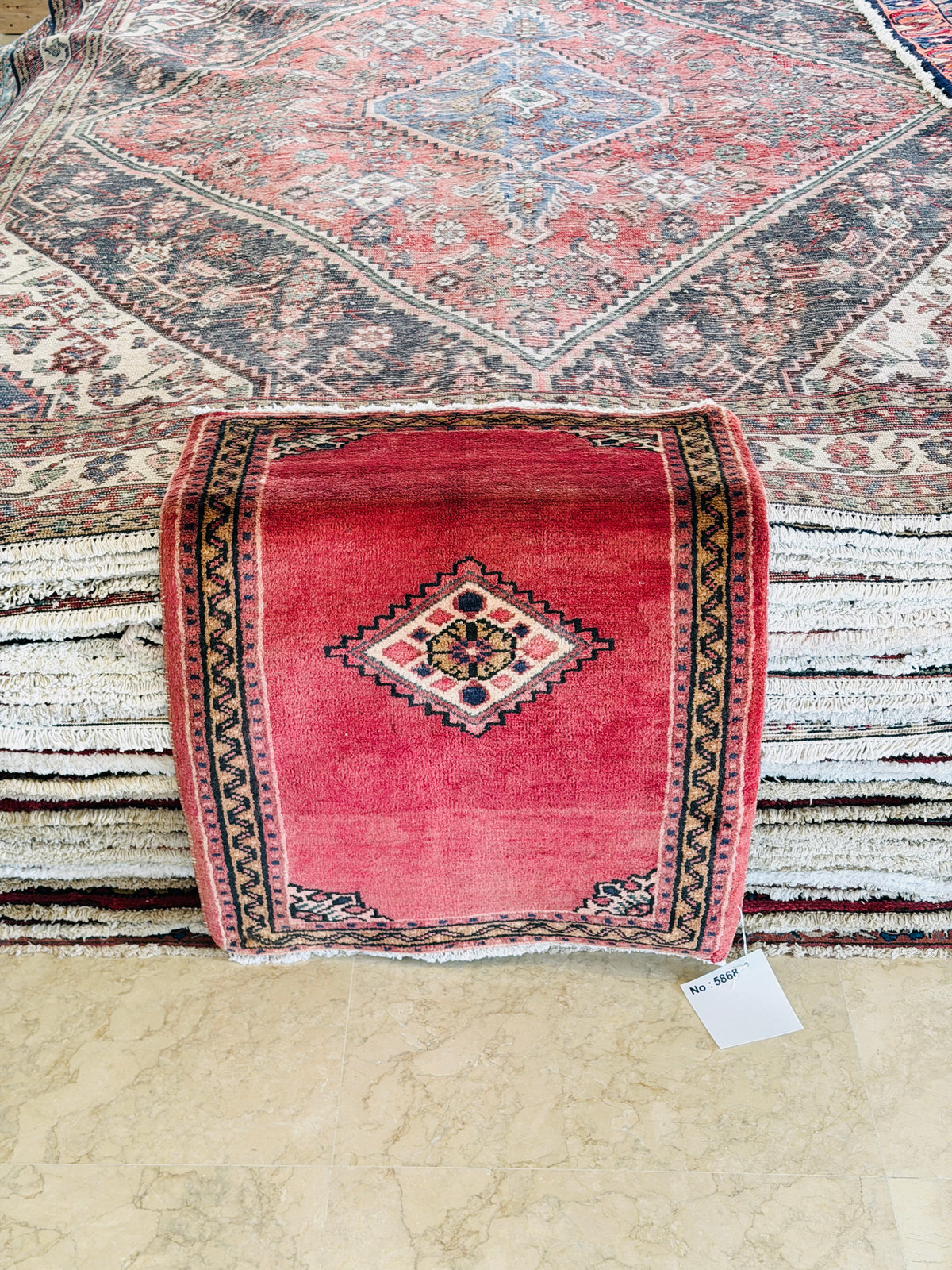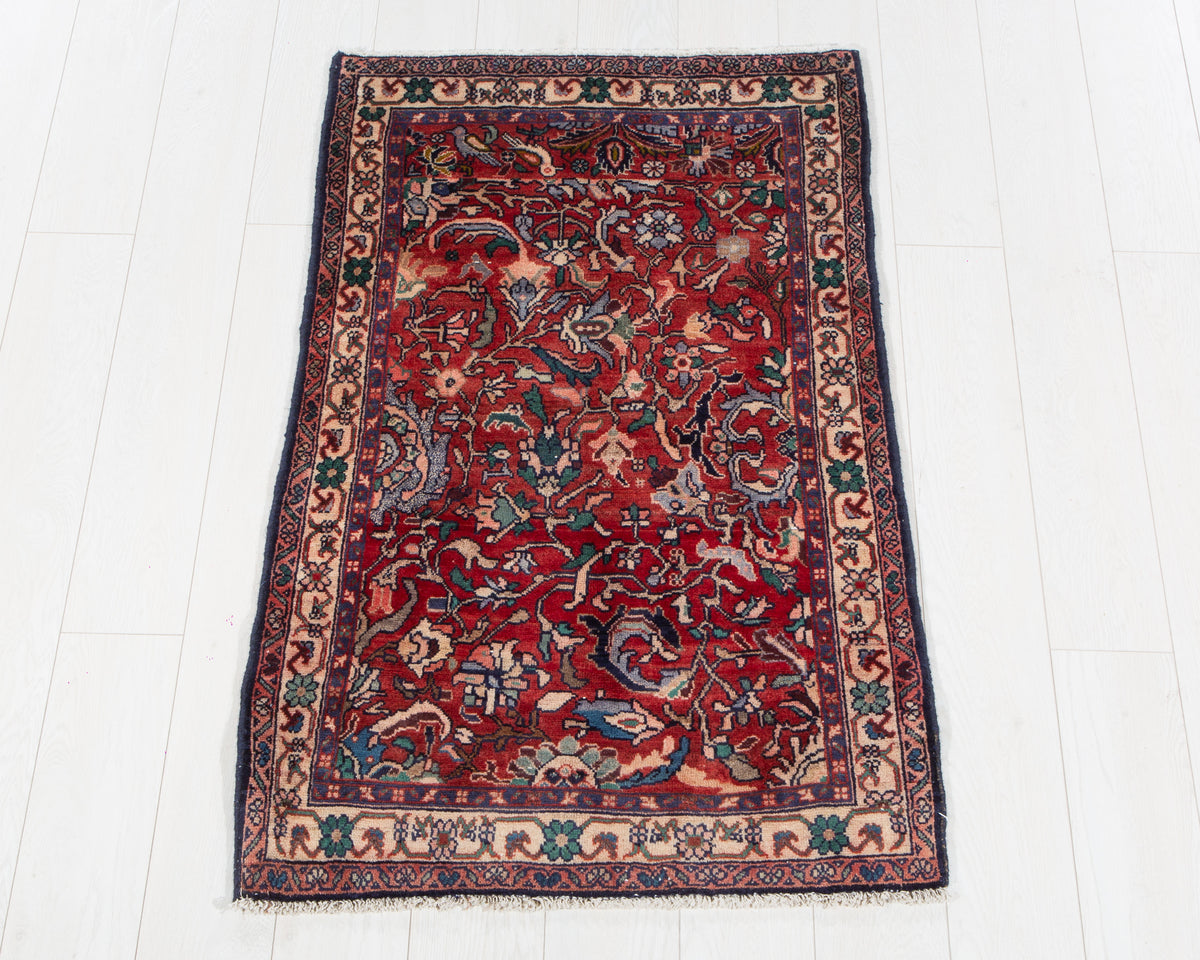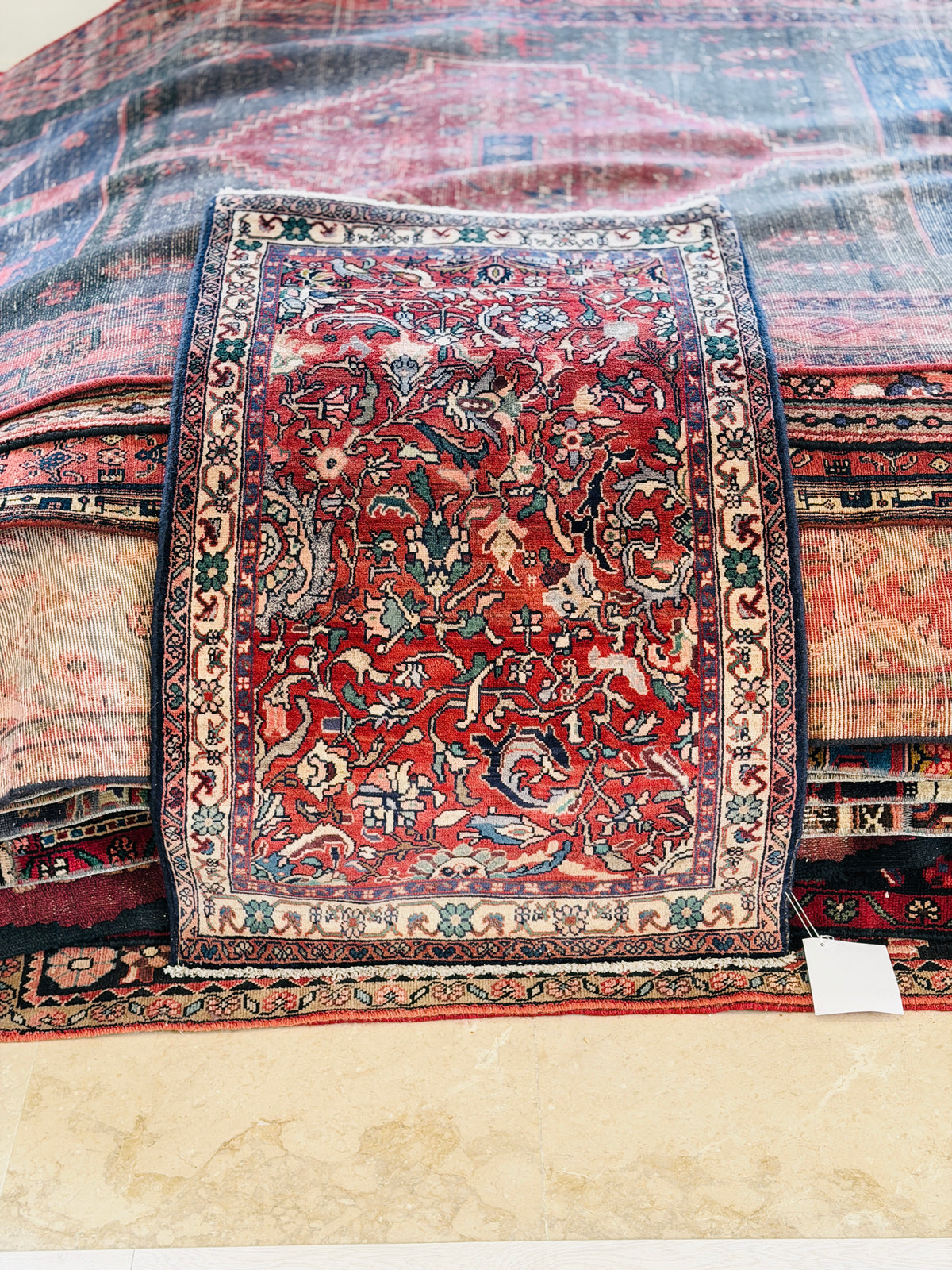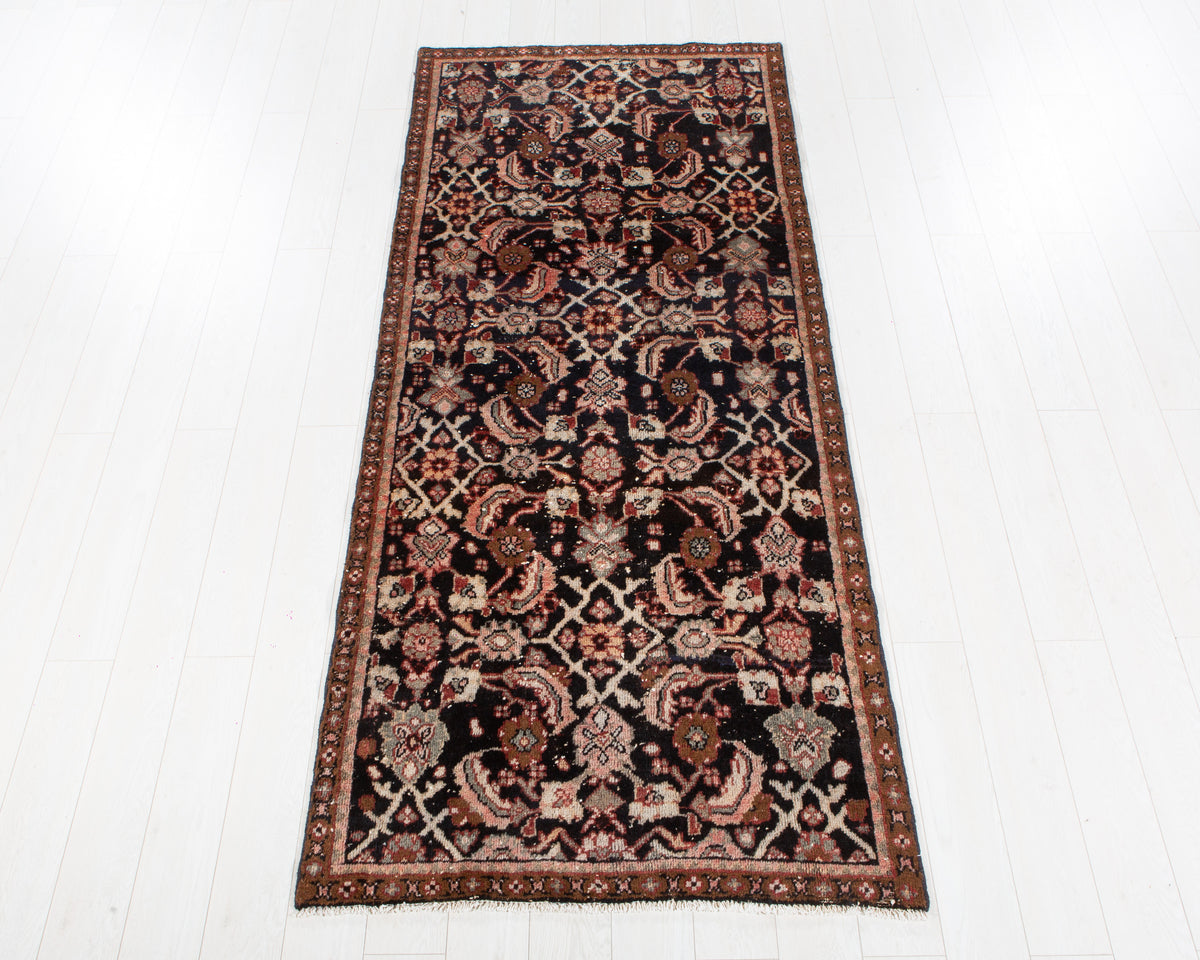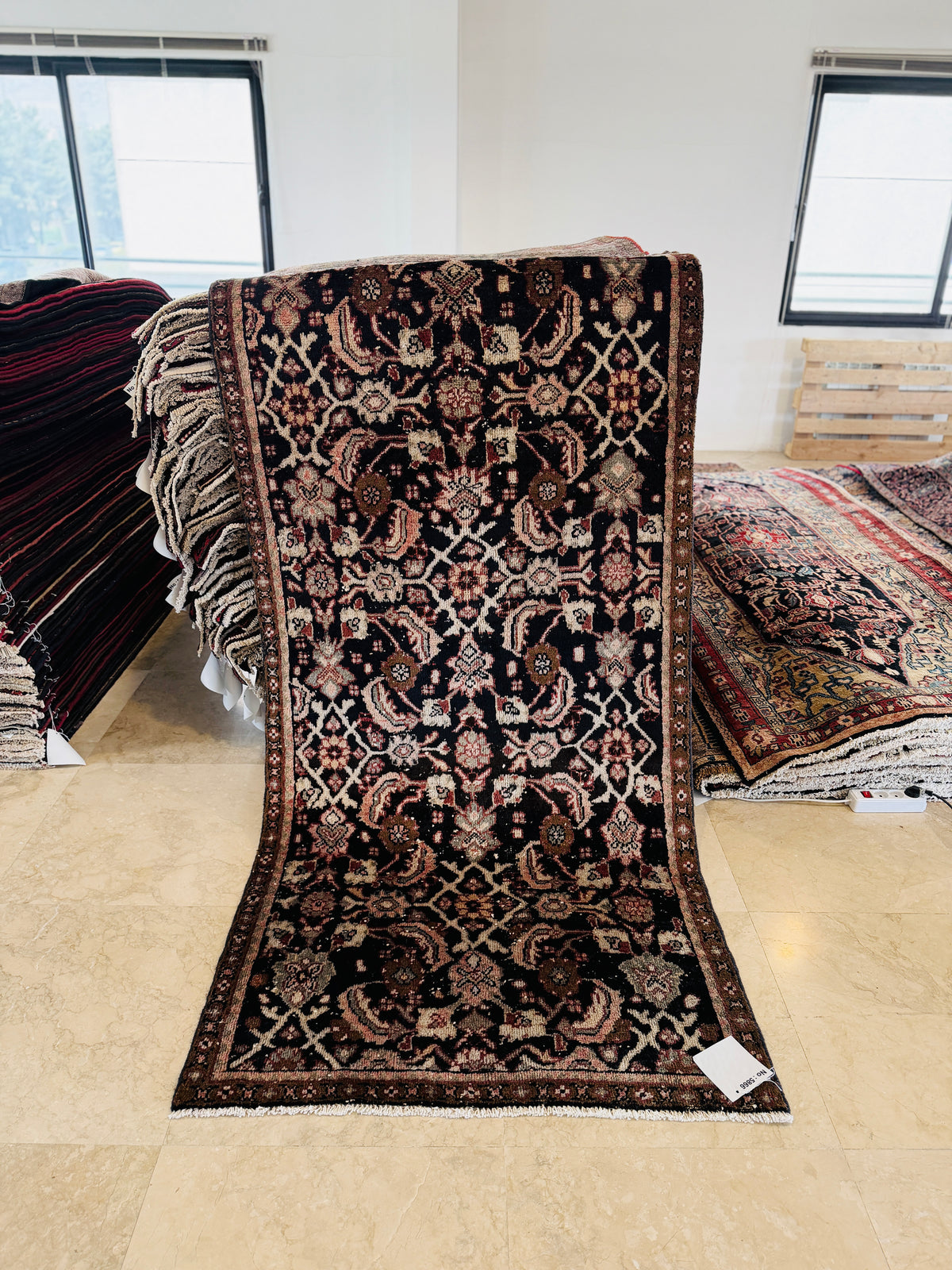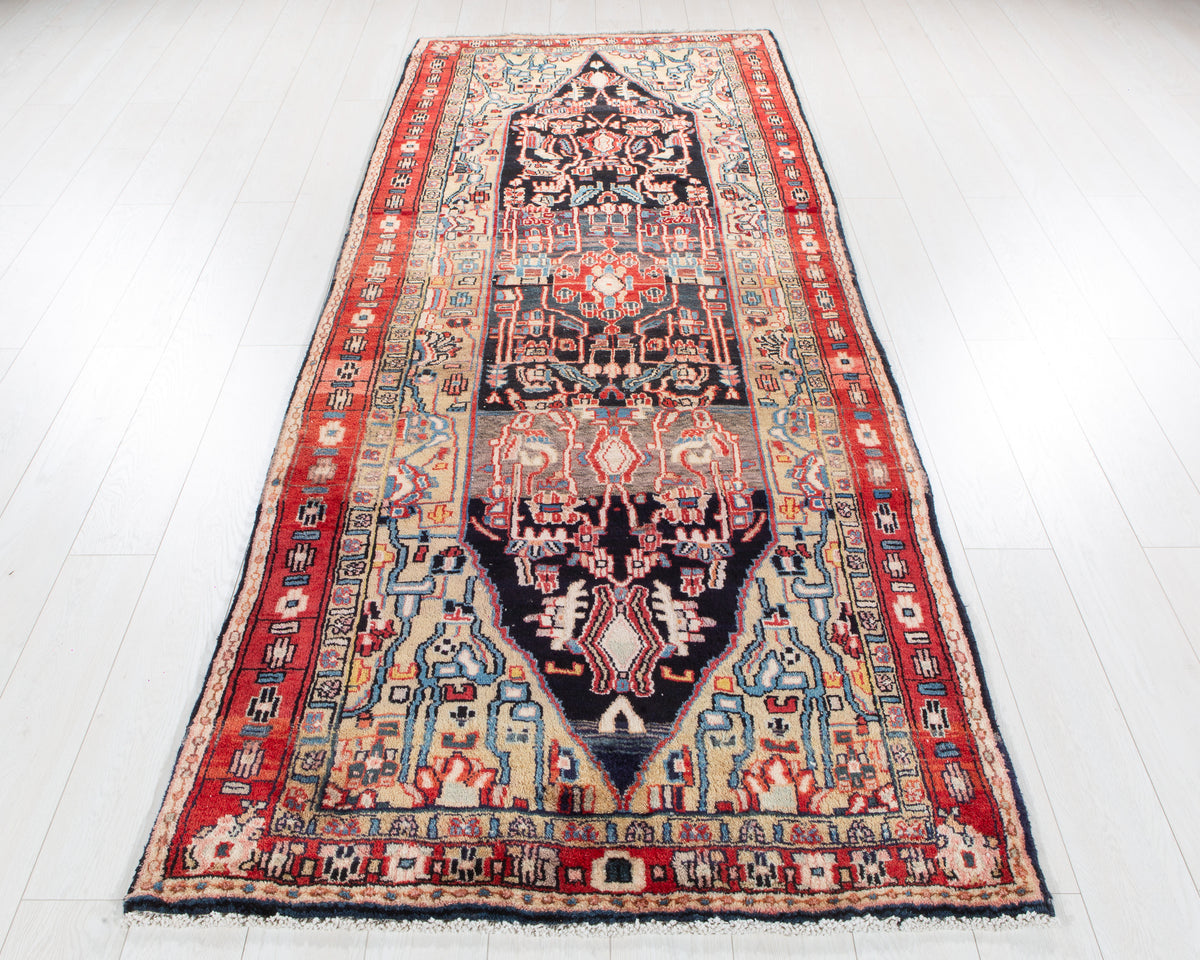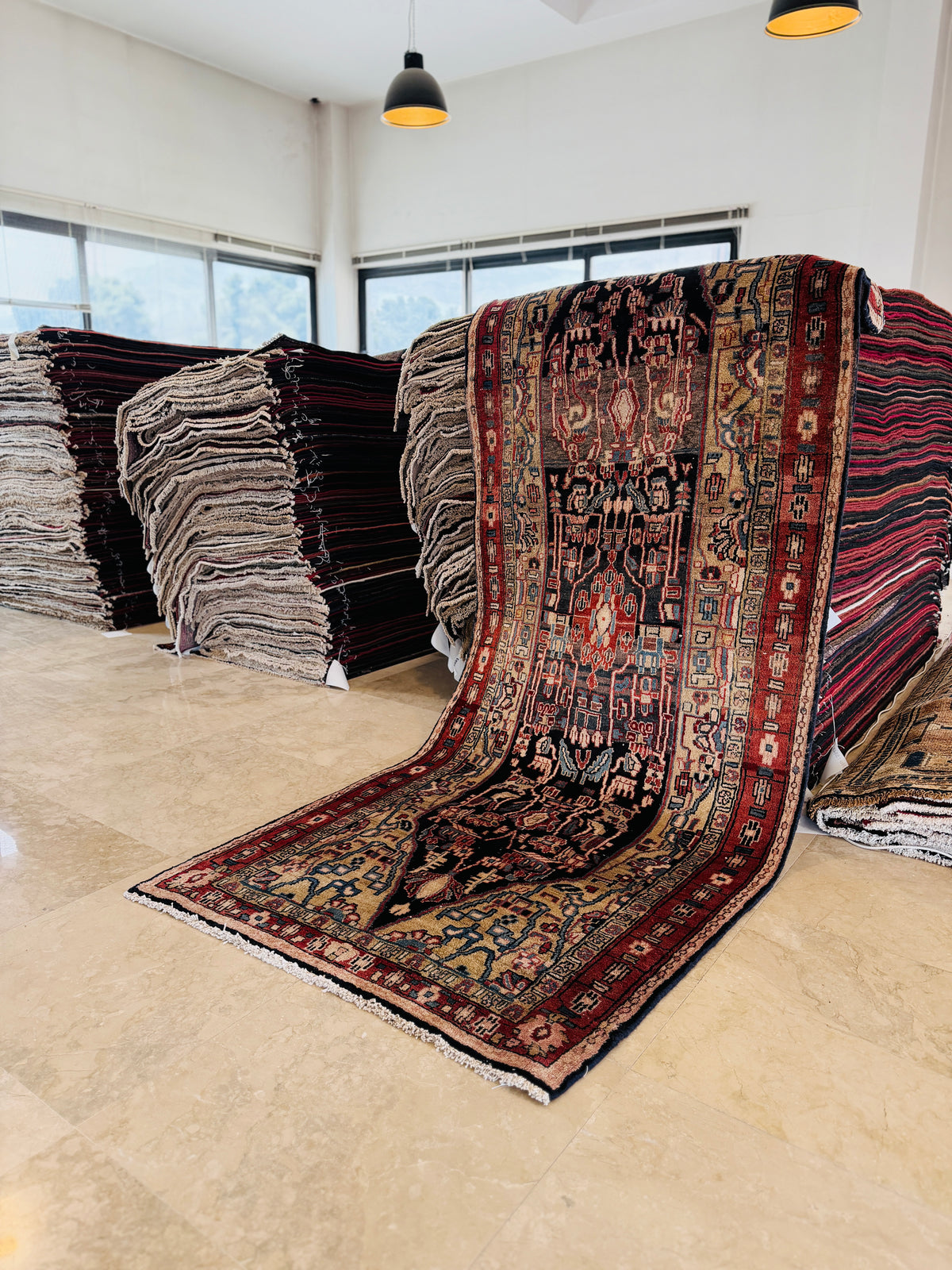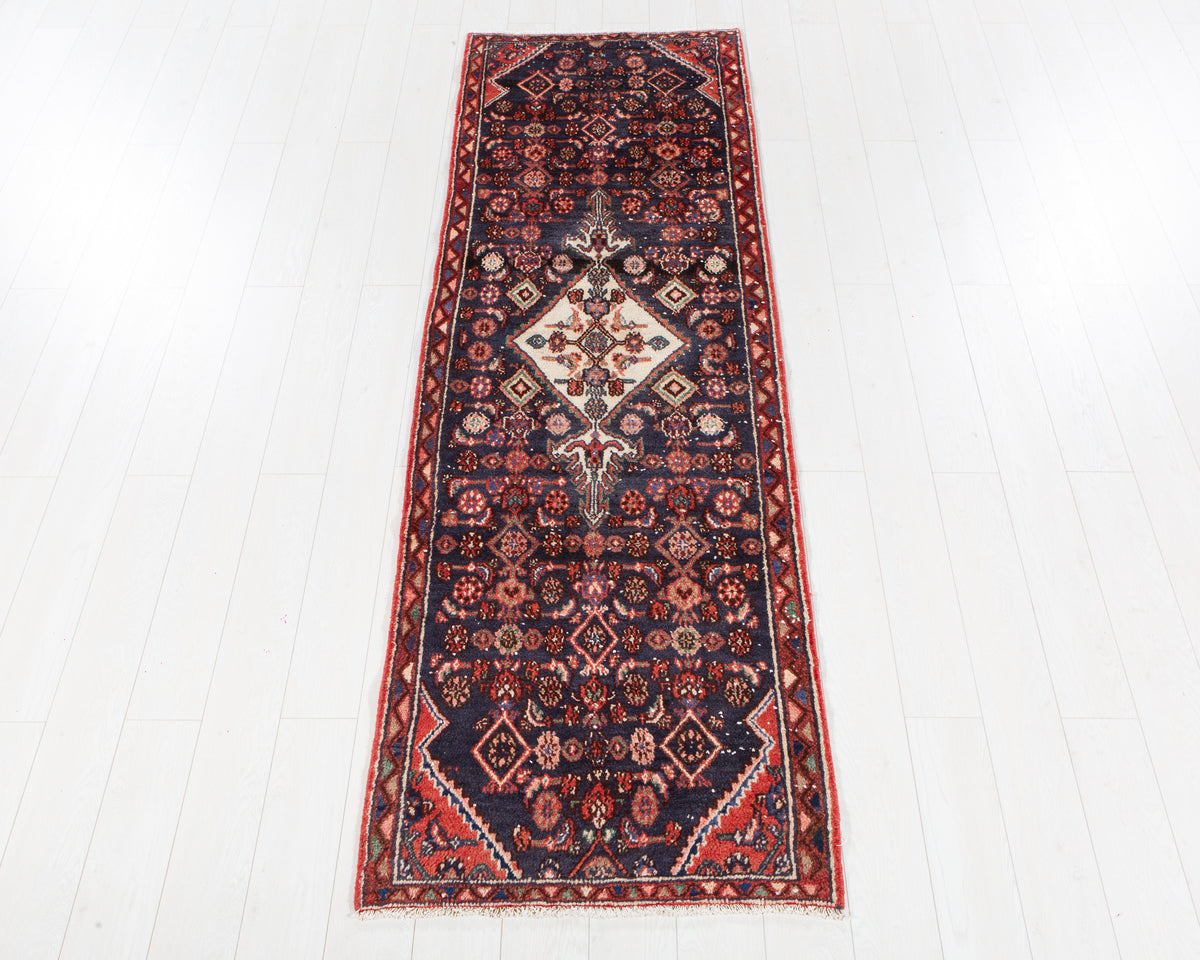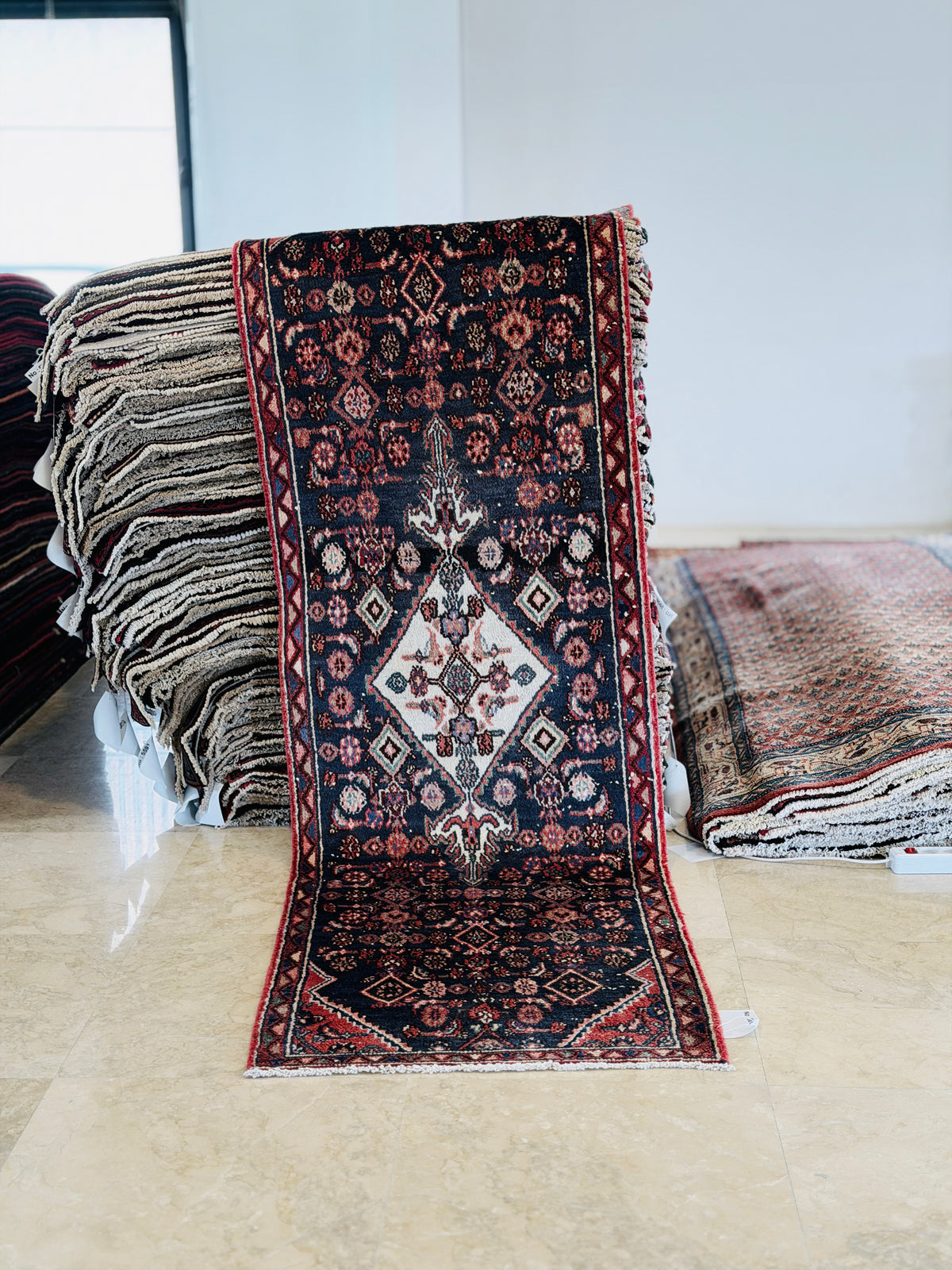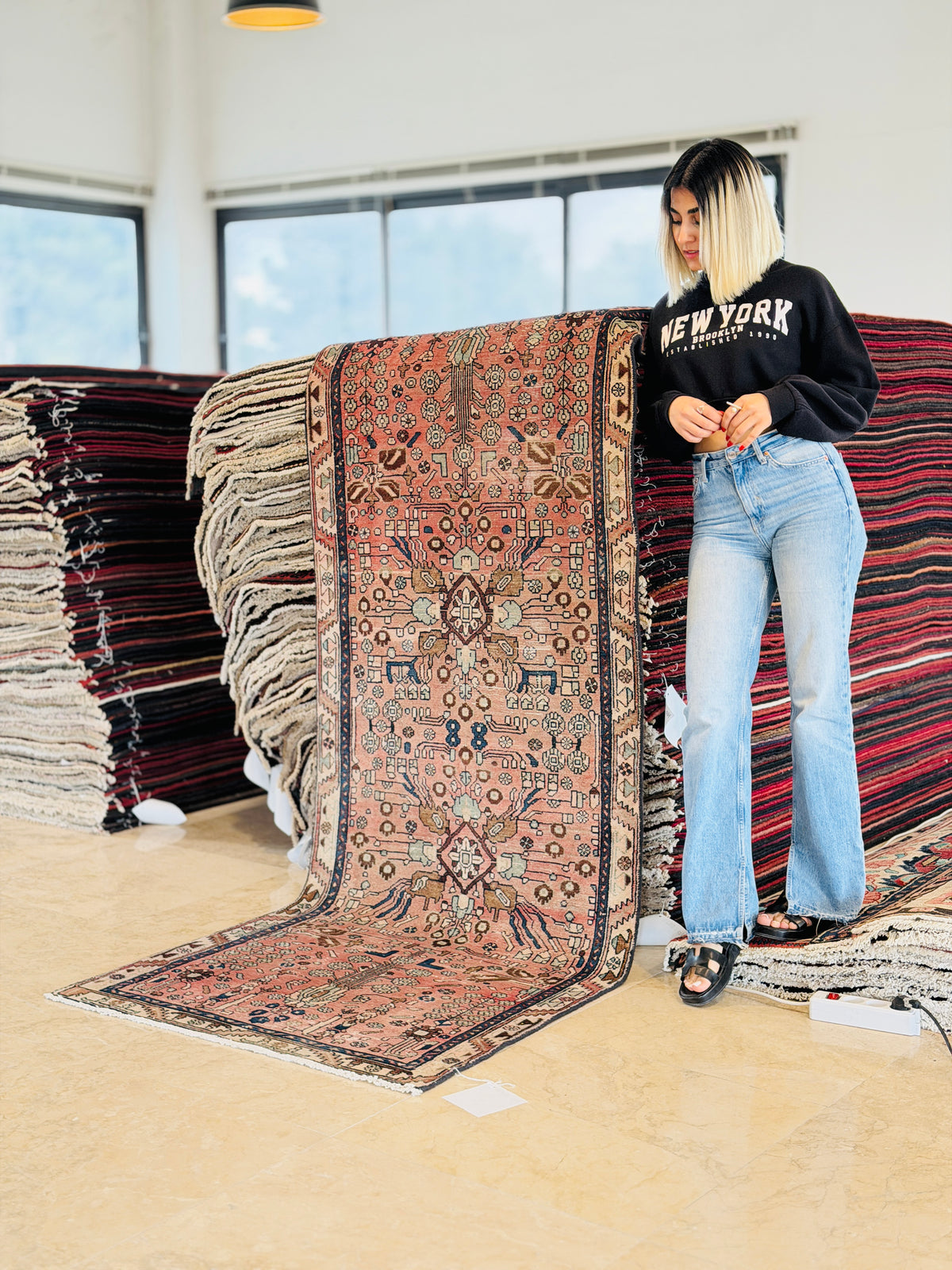
Persian Hamadan Rugs – Vintage Hand-Knotted Wool Rugs
Vintage hand-knotted Hamadan rugs, prized for their durable wool pile and bold tribal geometry from western Iran's weaving villages.
The Hamadan Weaving Region
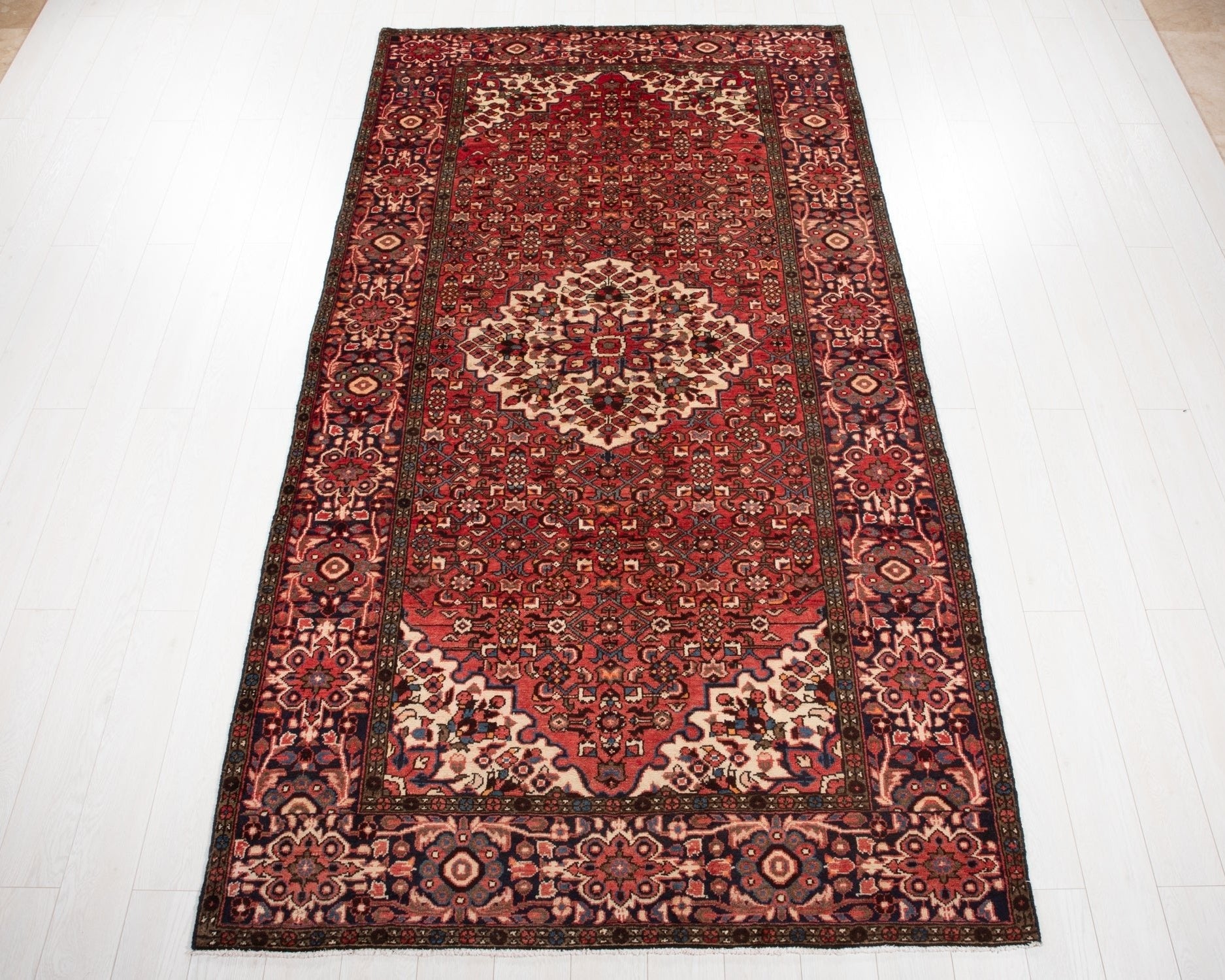
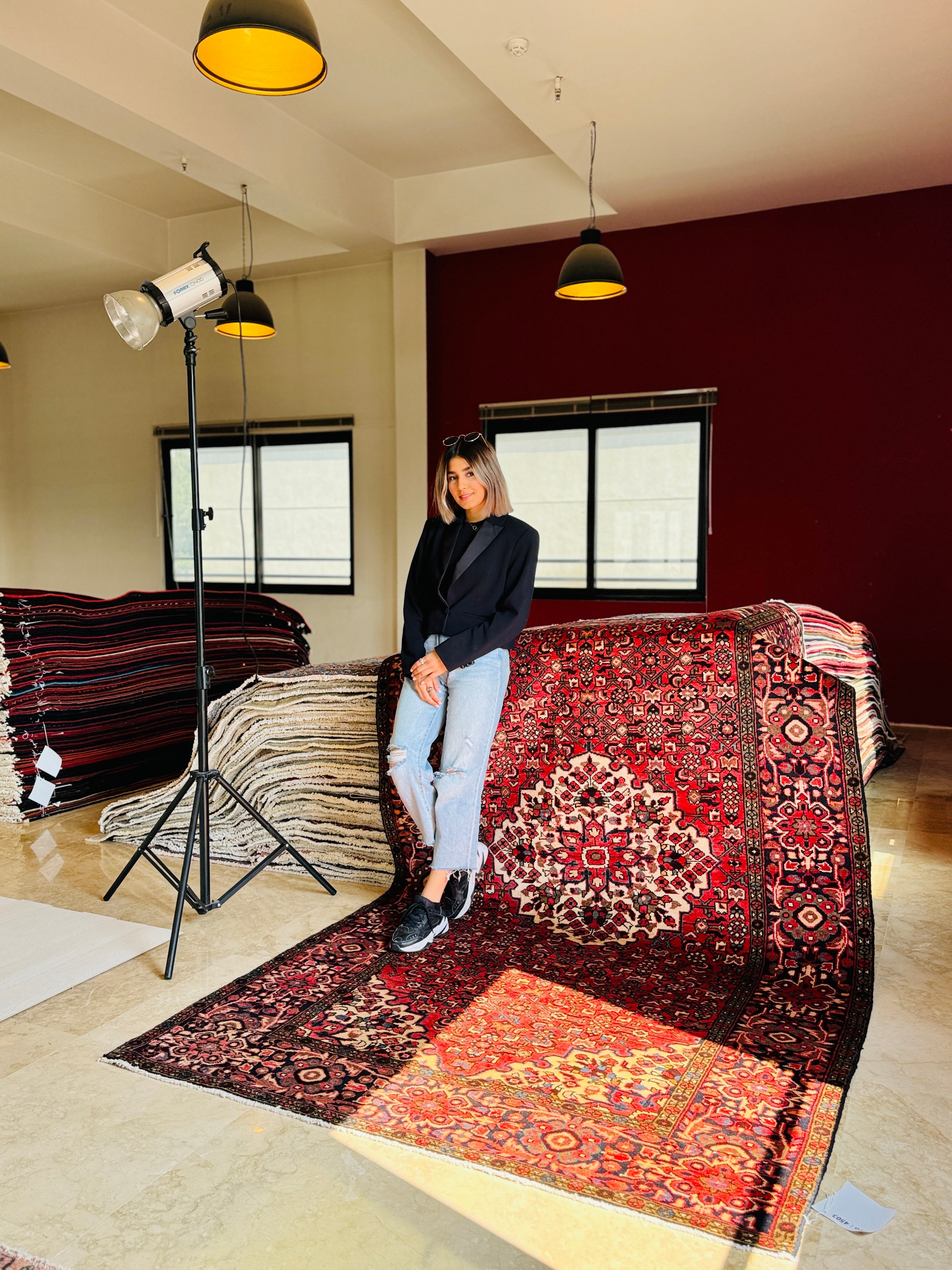
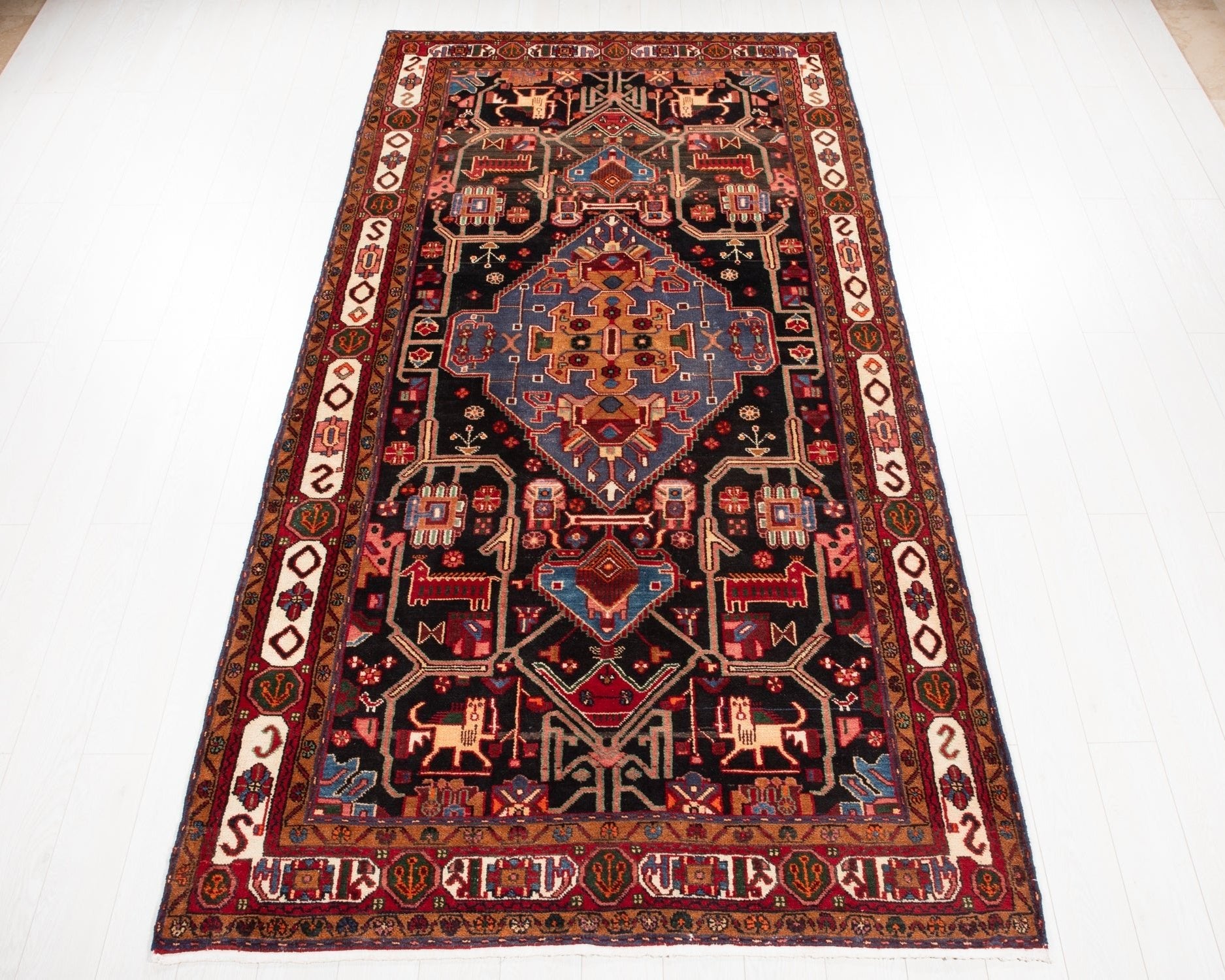
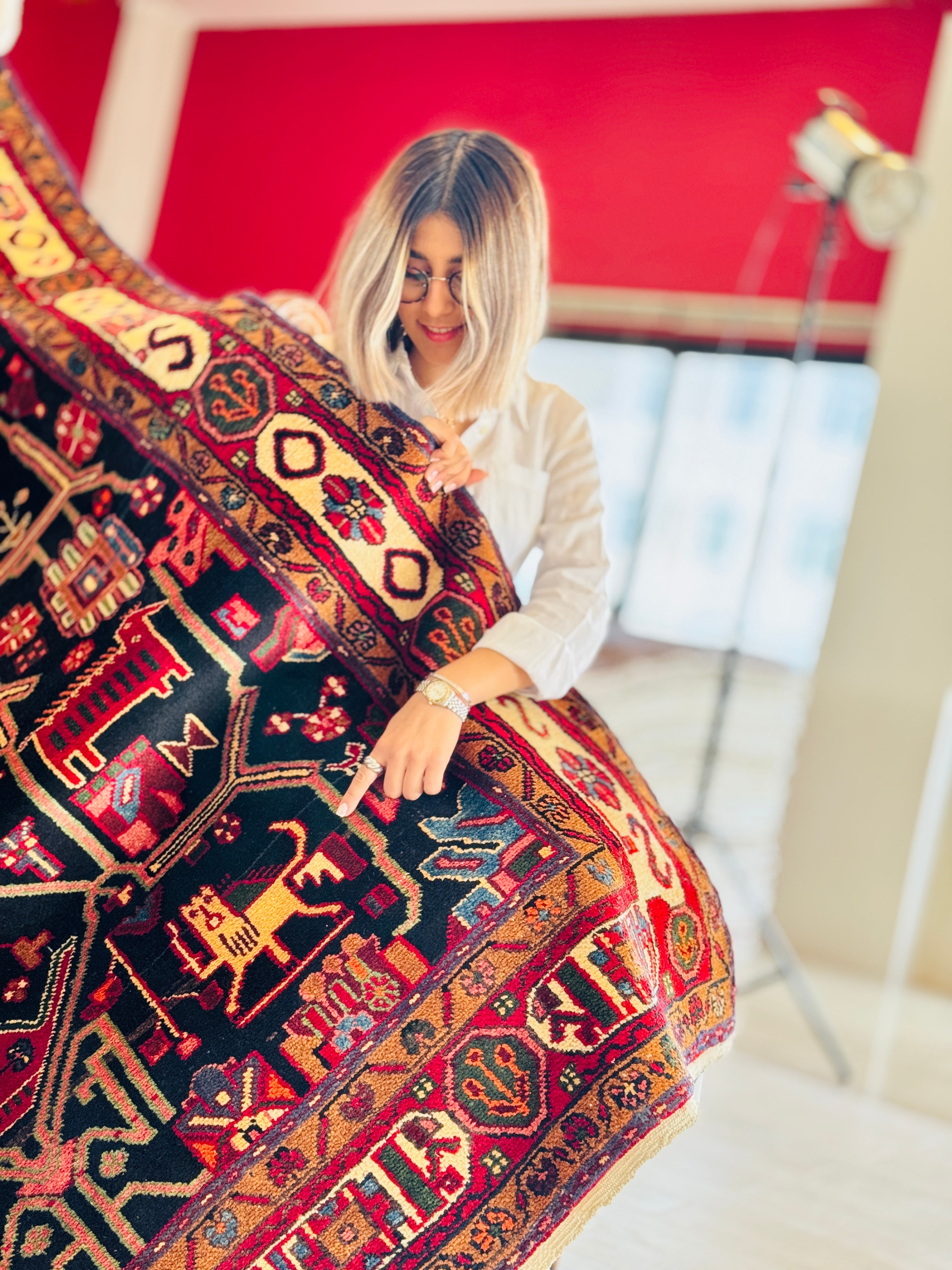
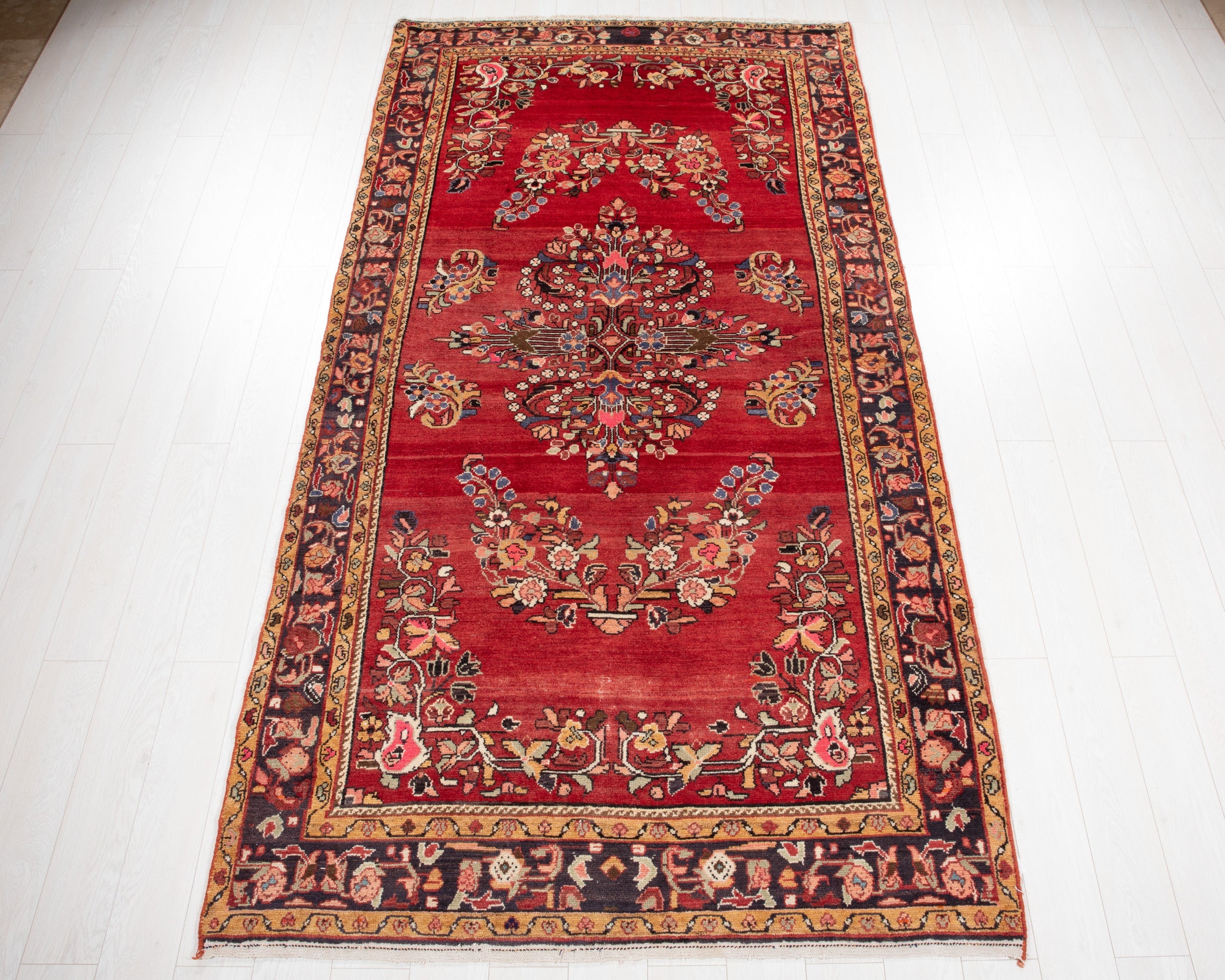
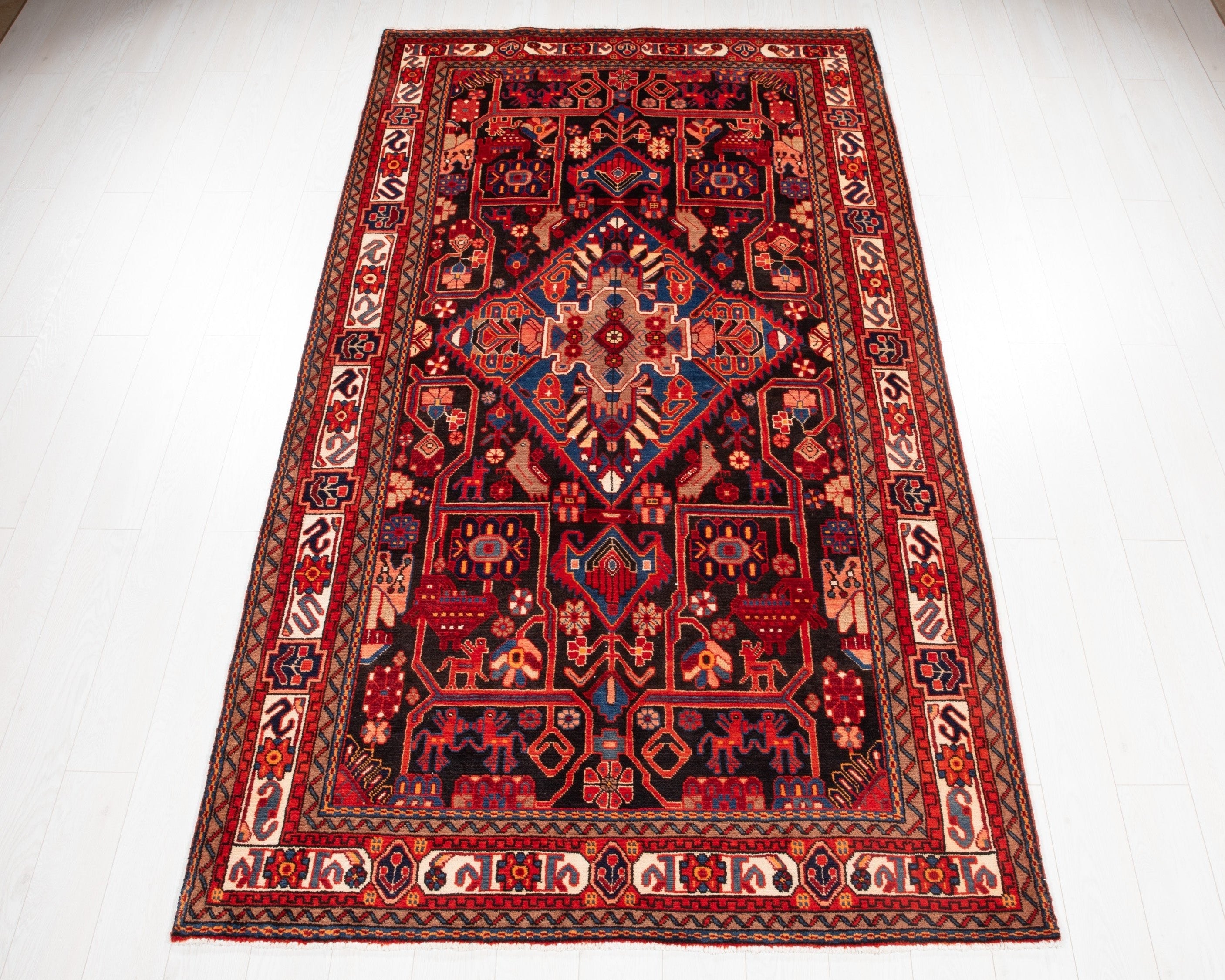
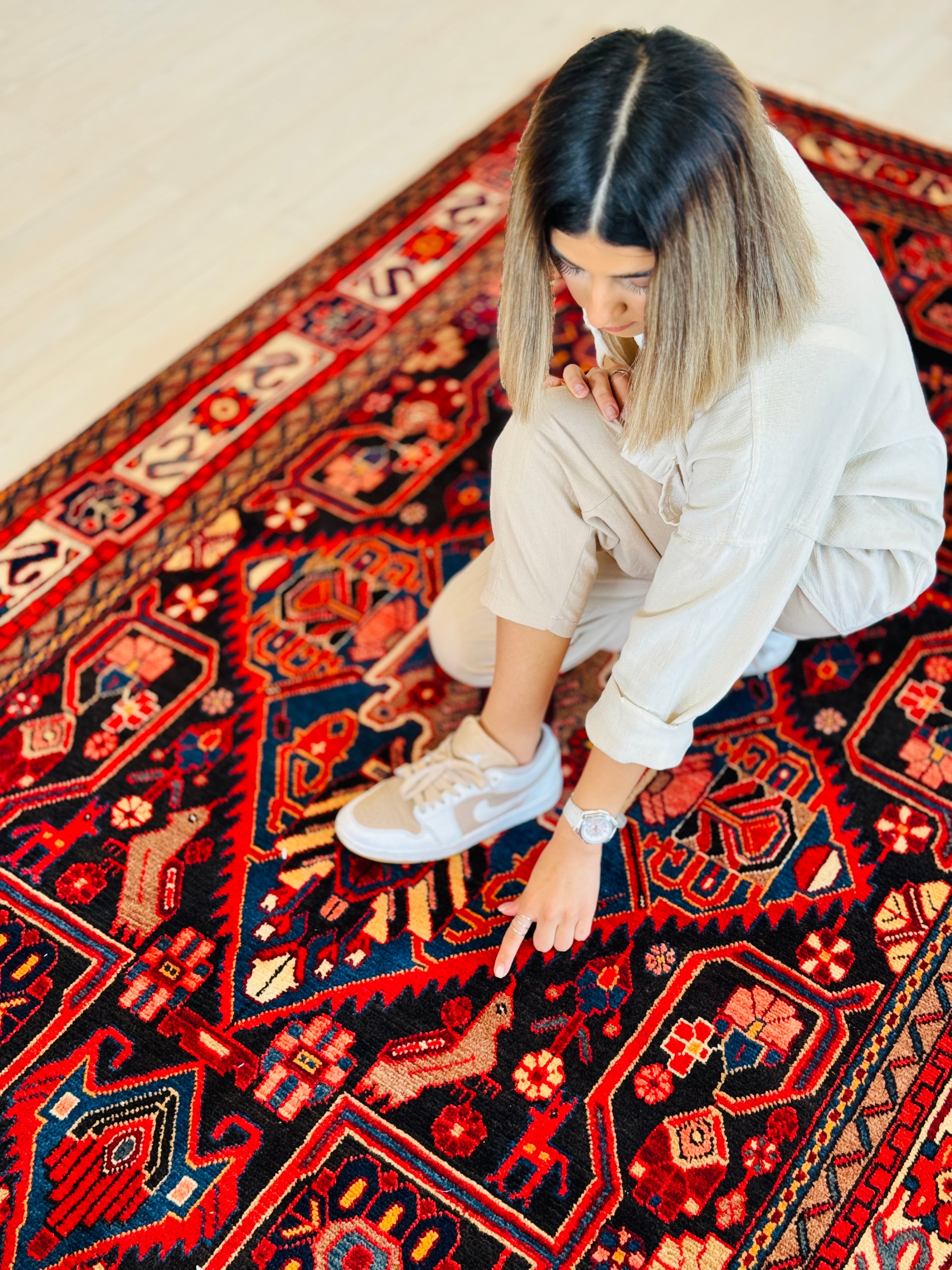
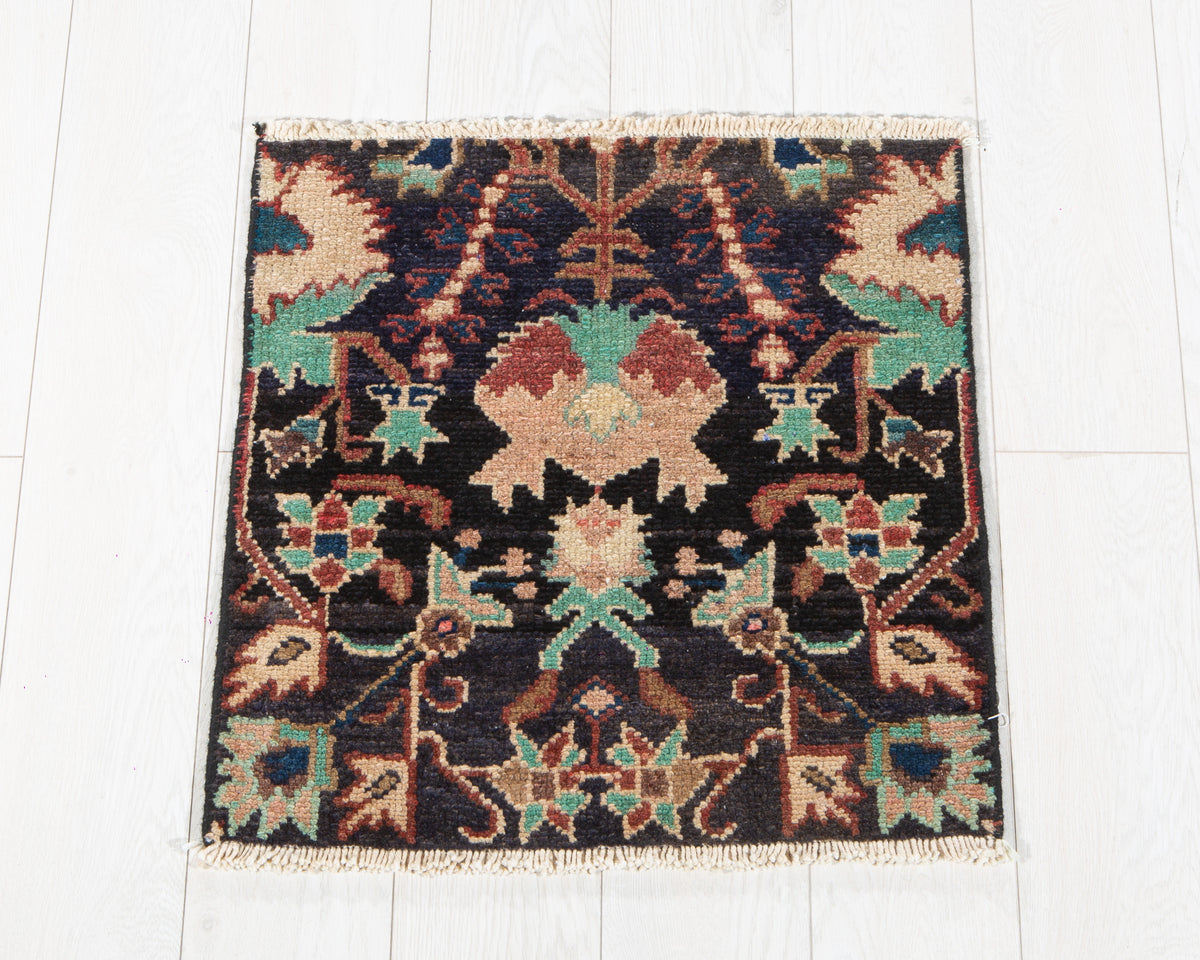
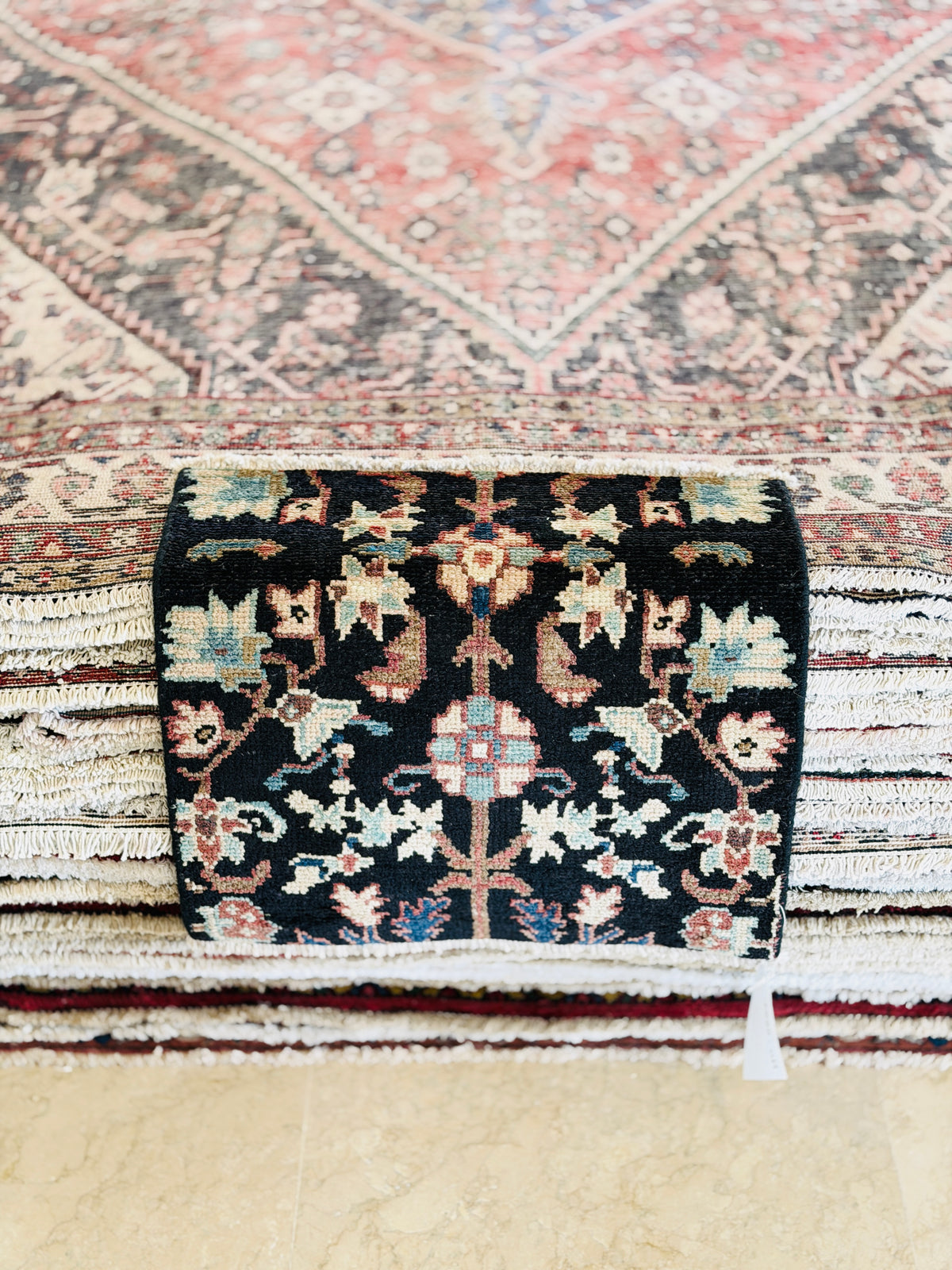
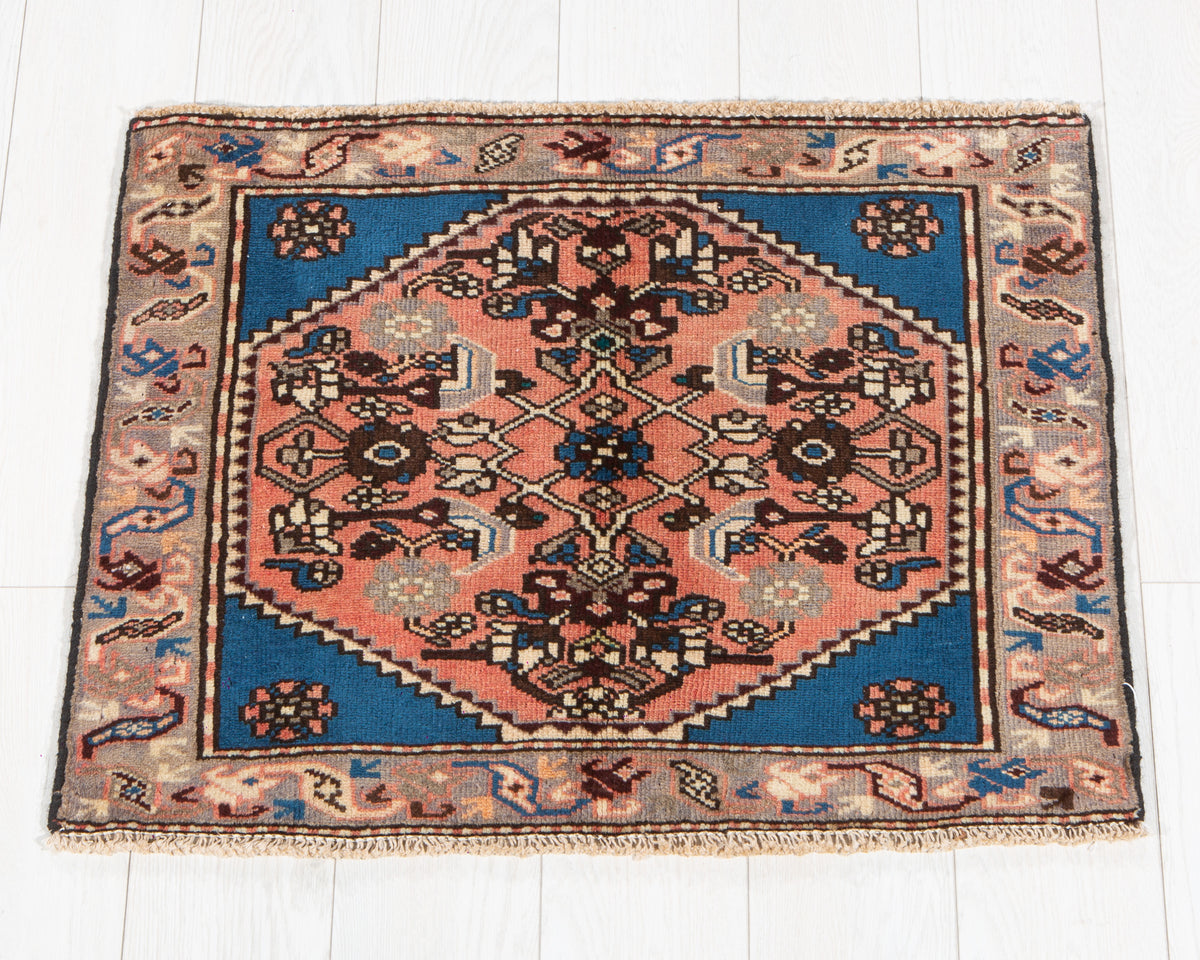
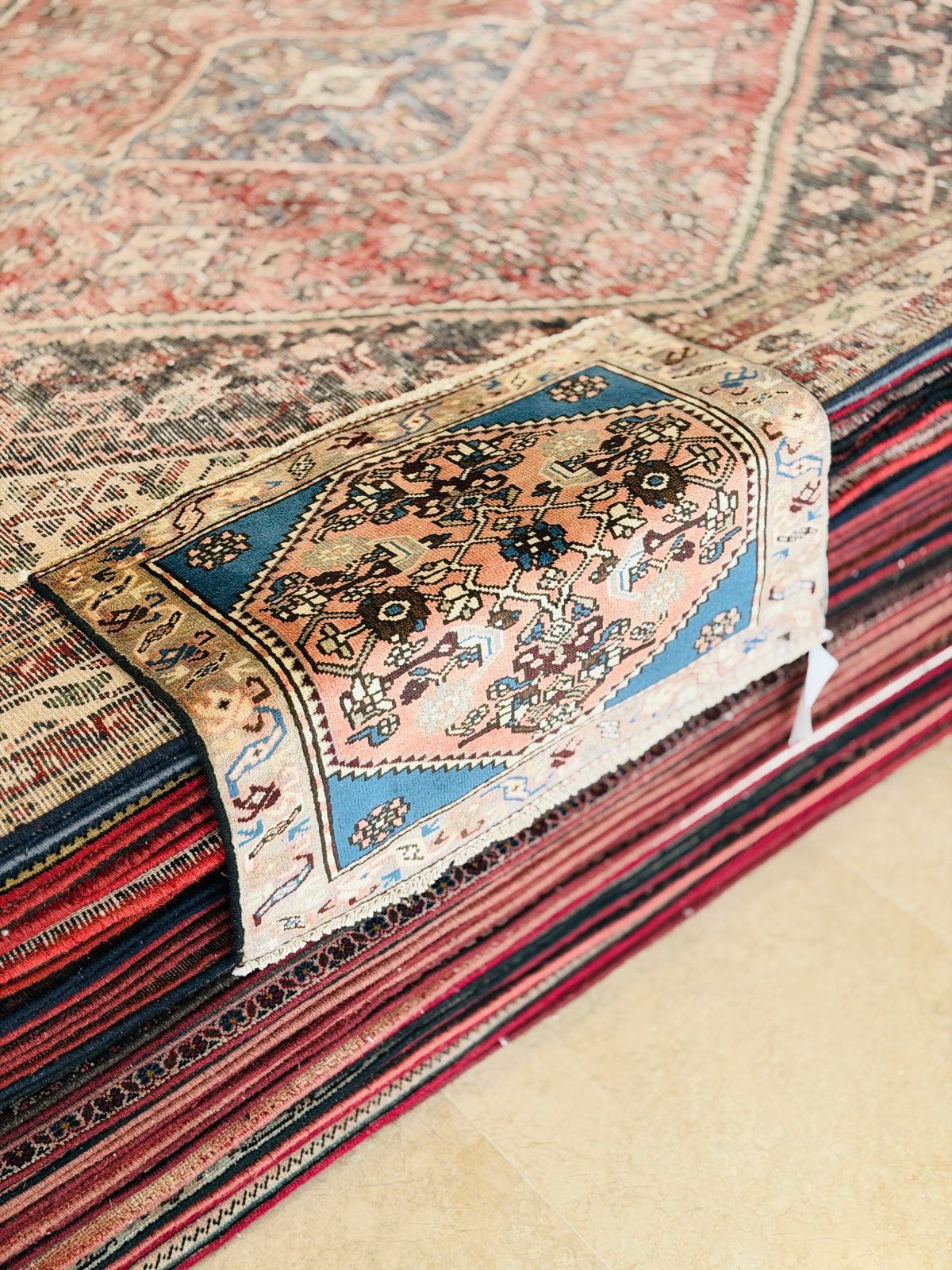
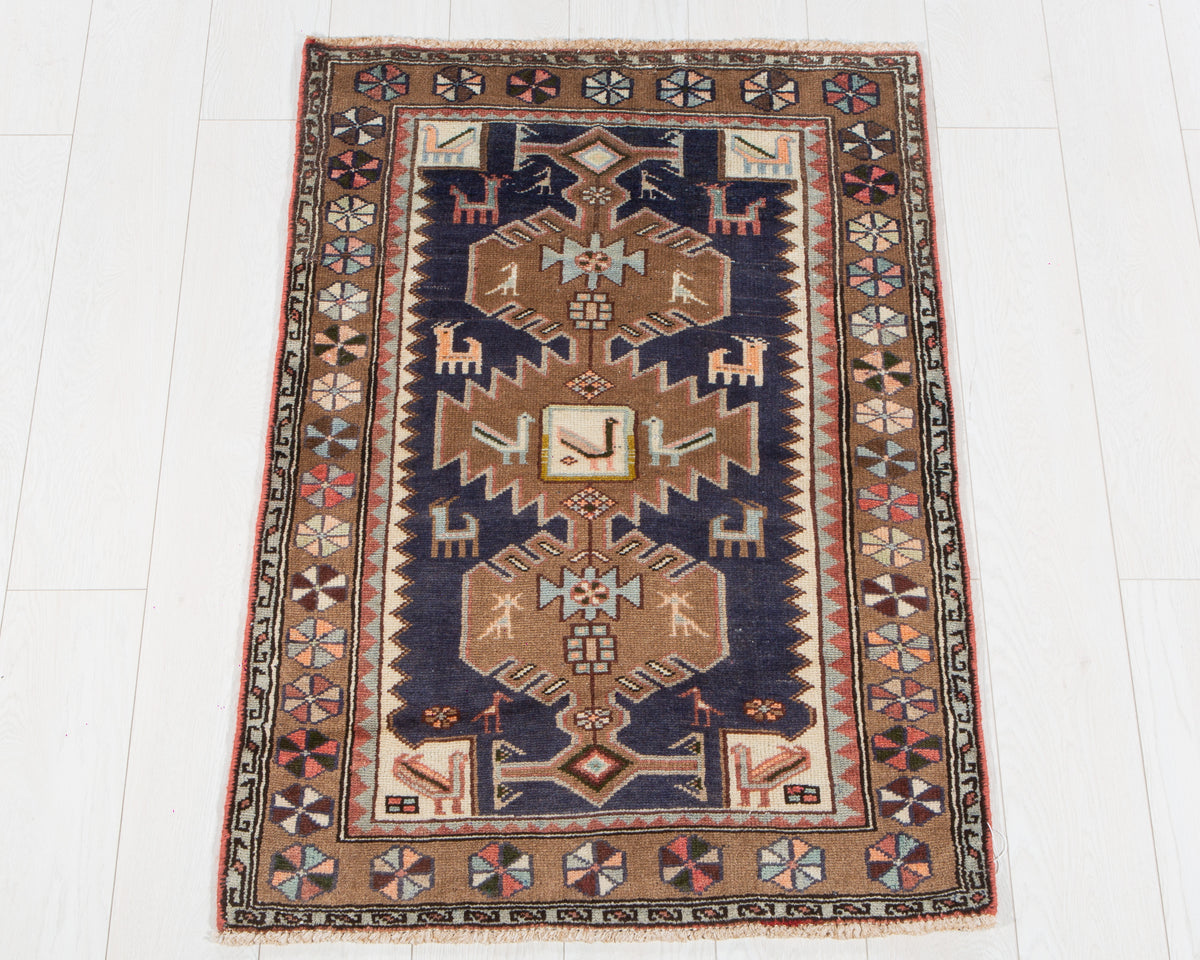
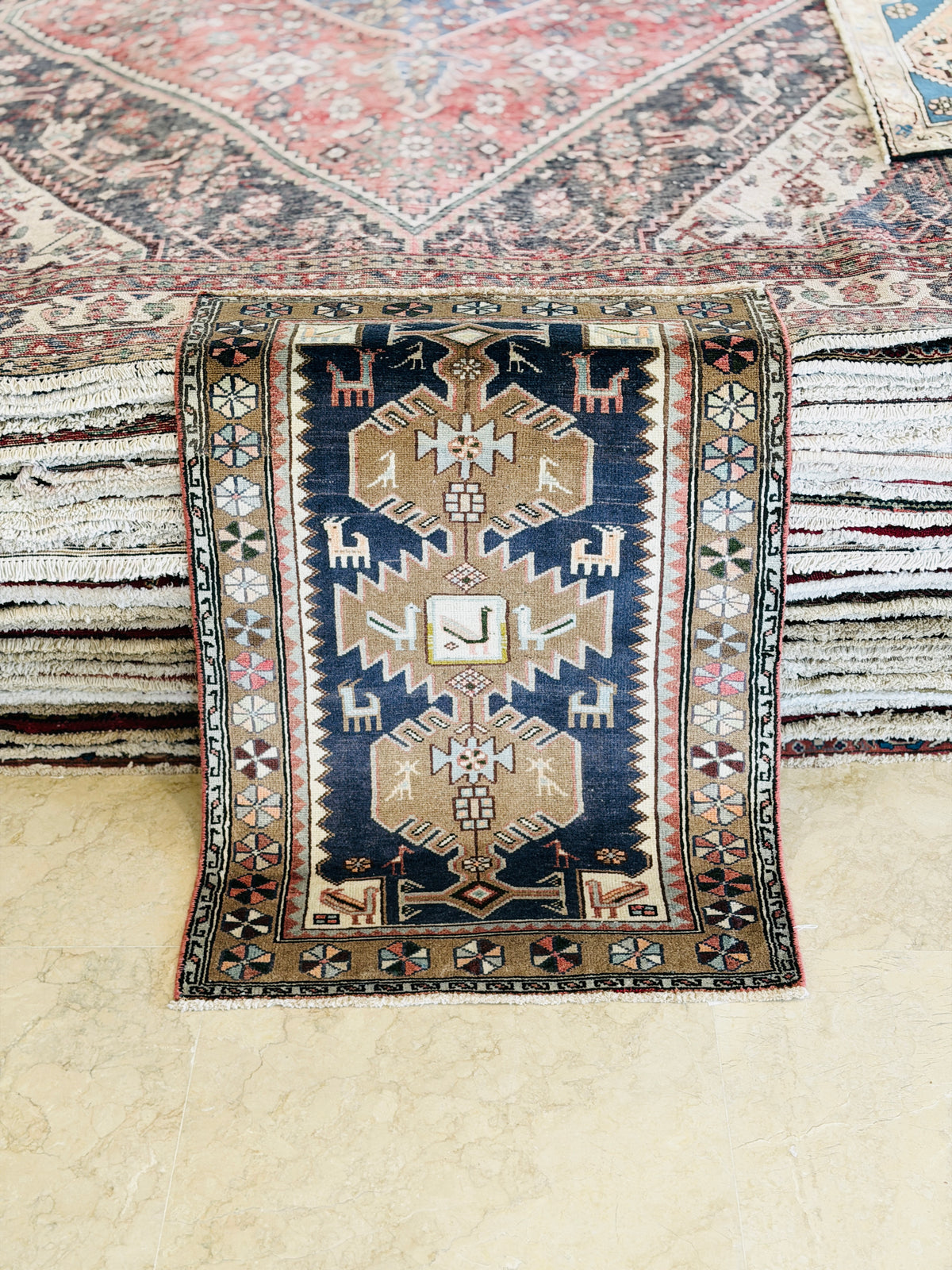
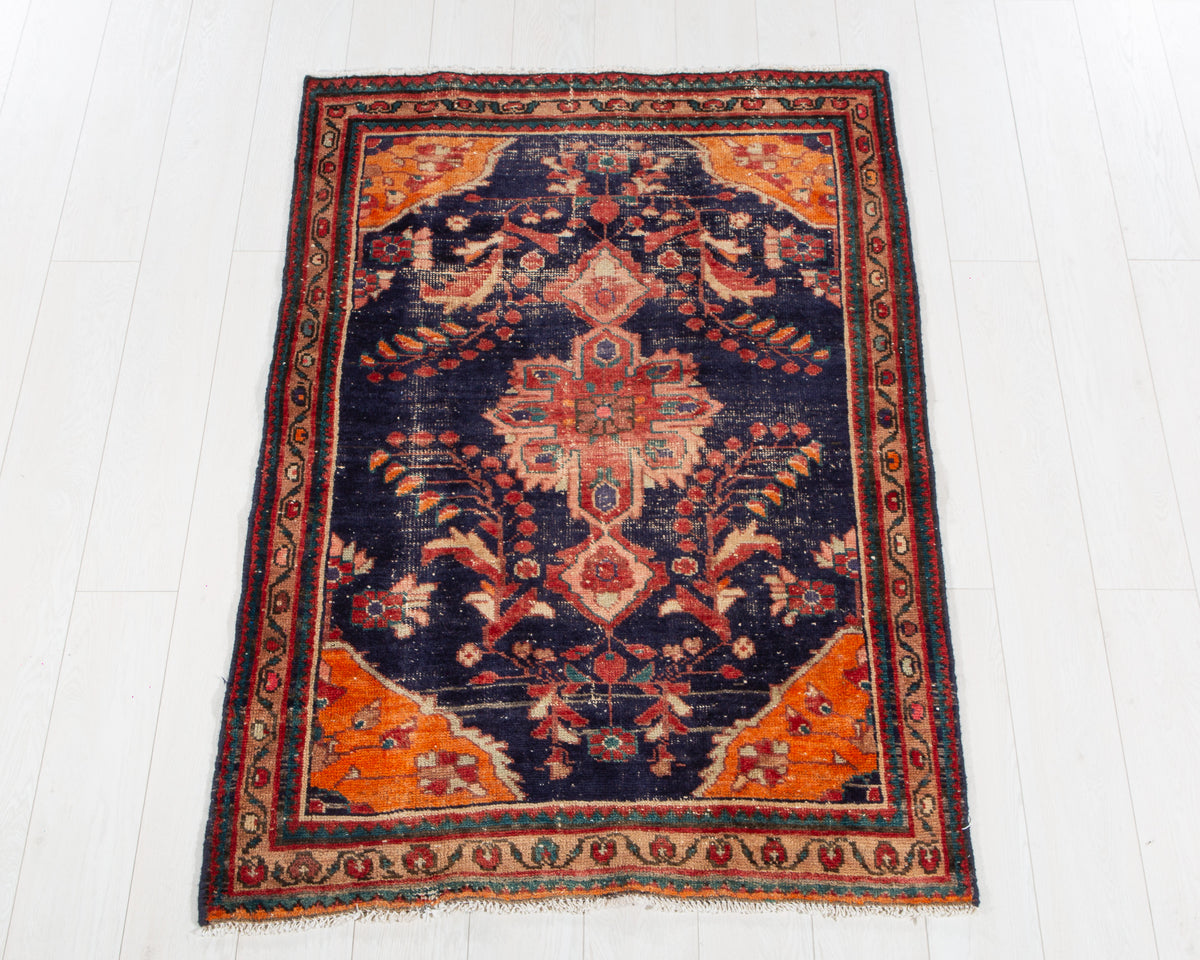
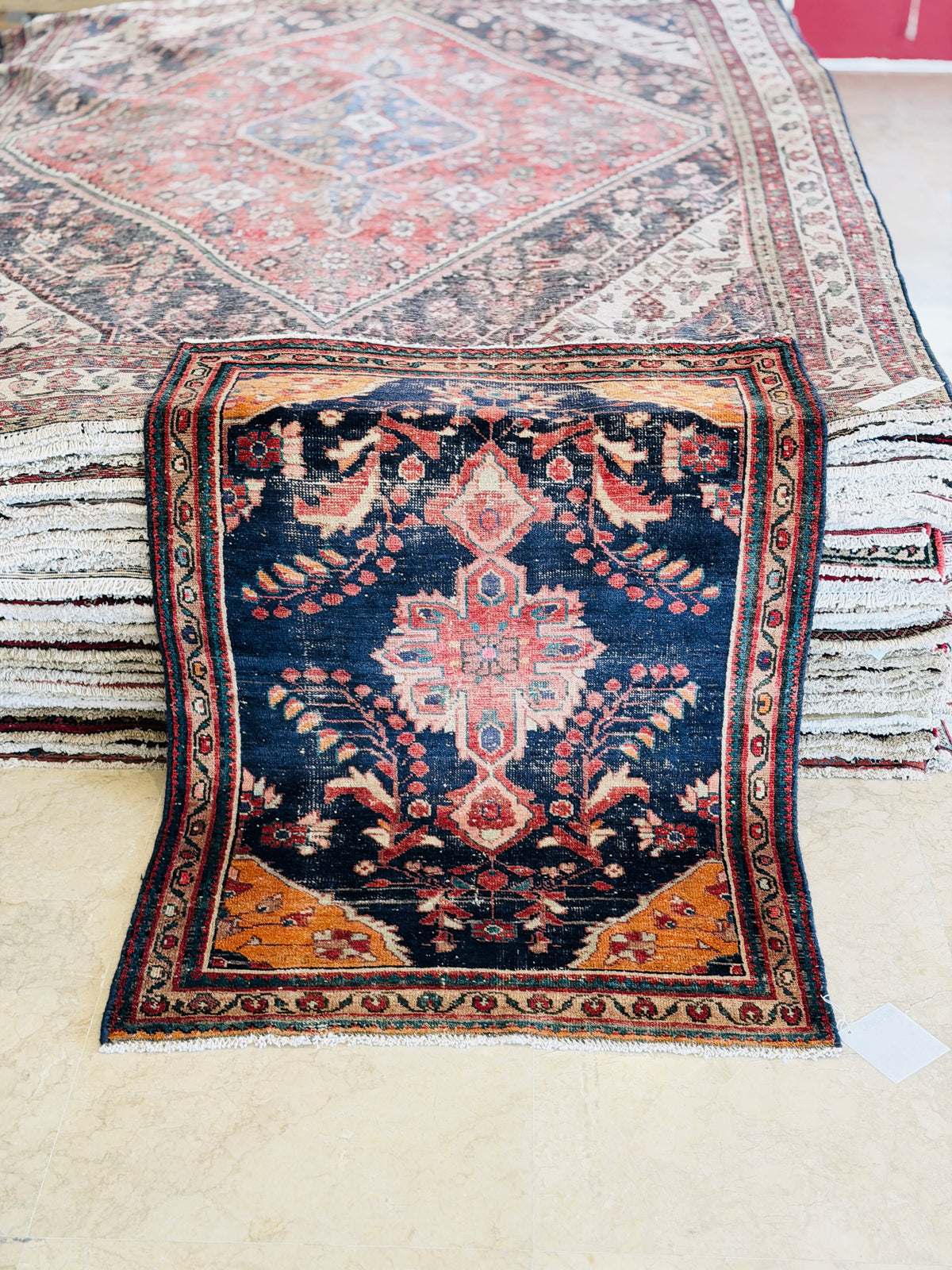
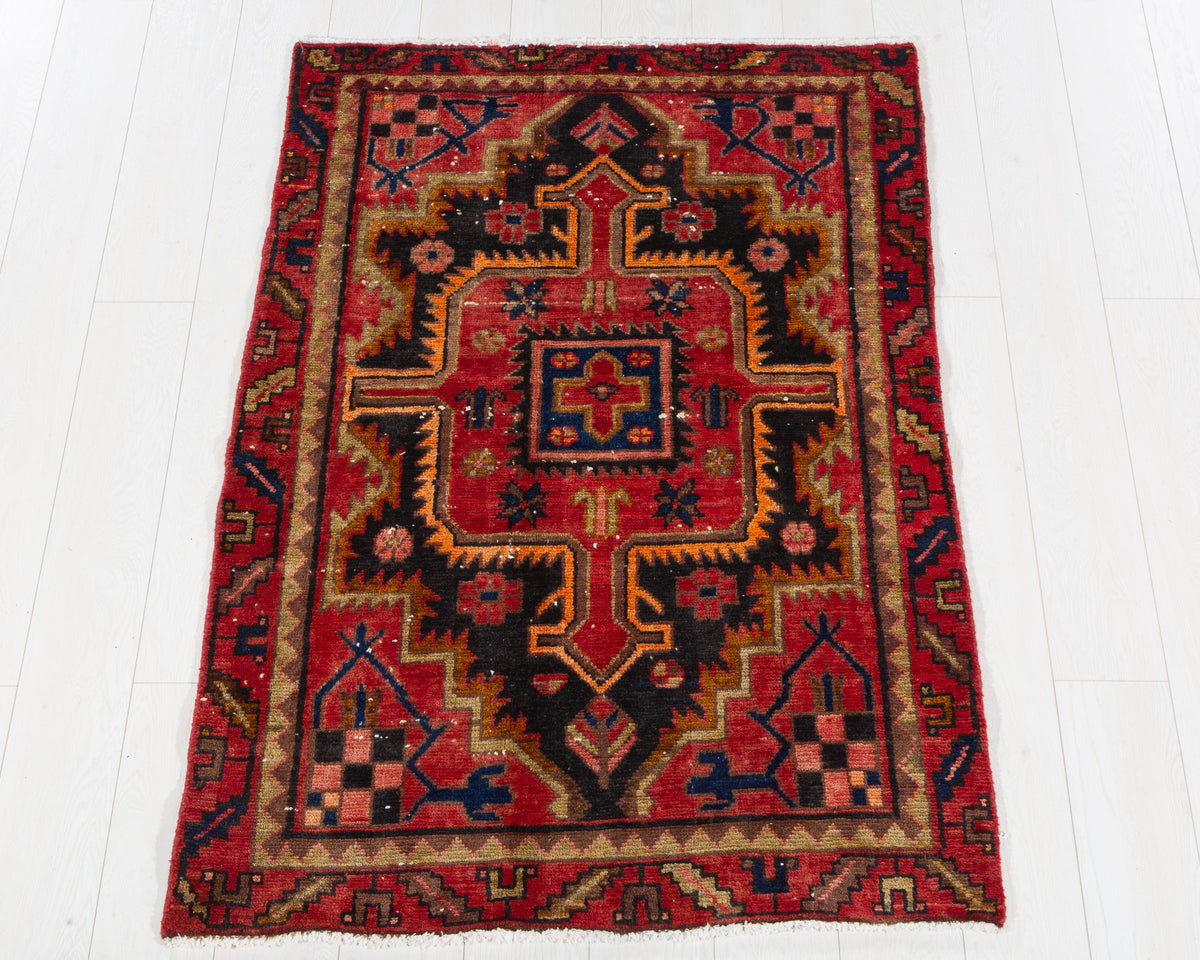
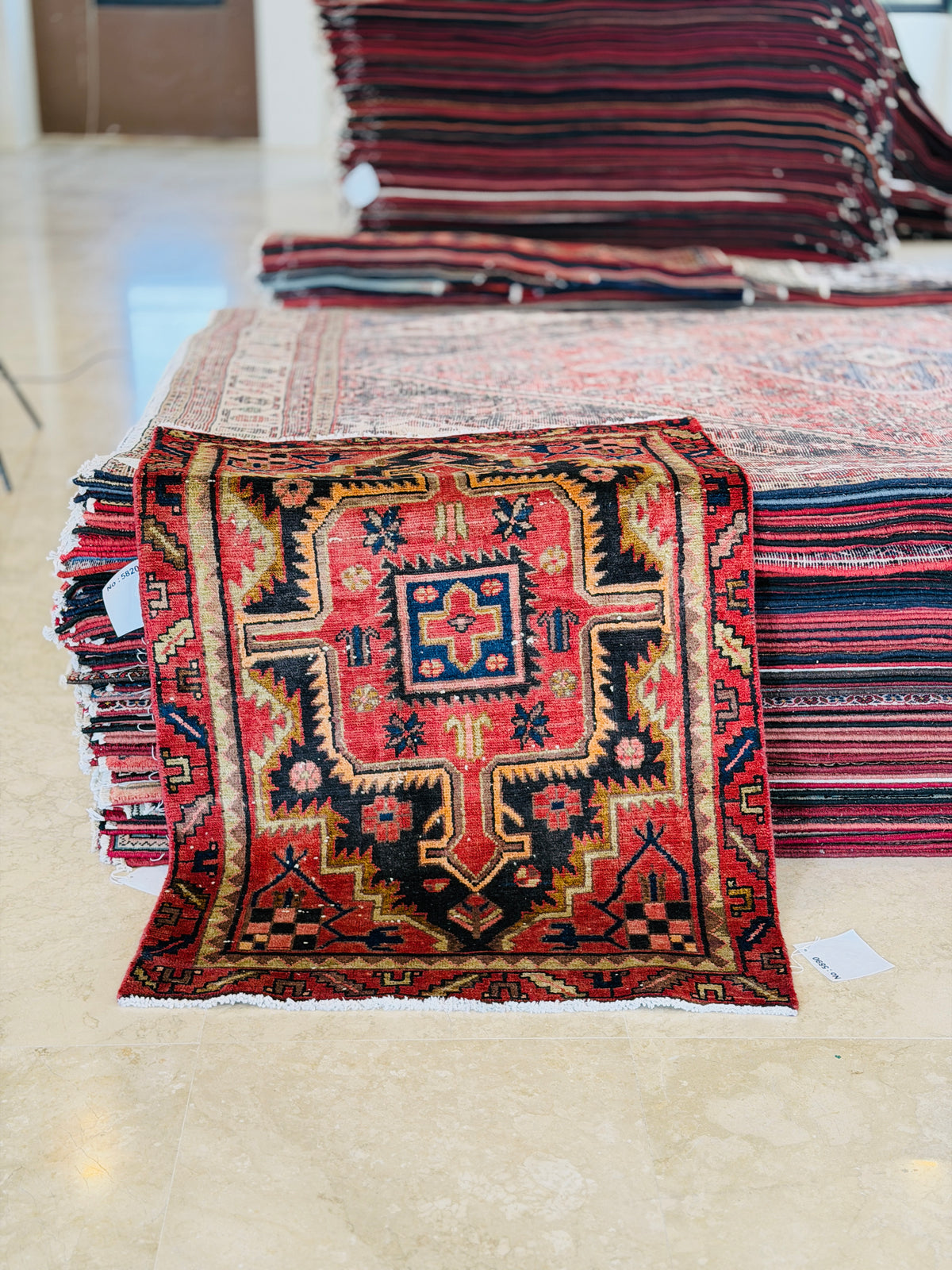
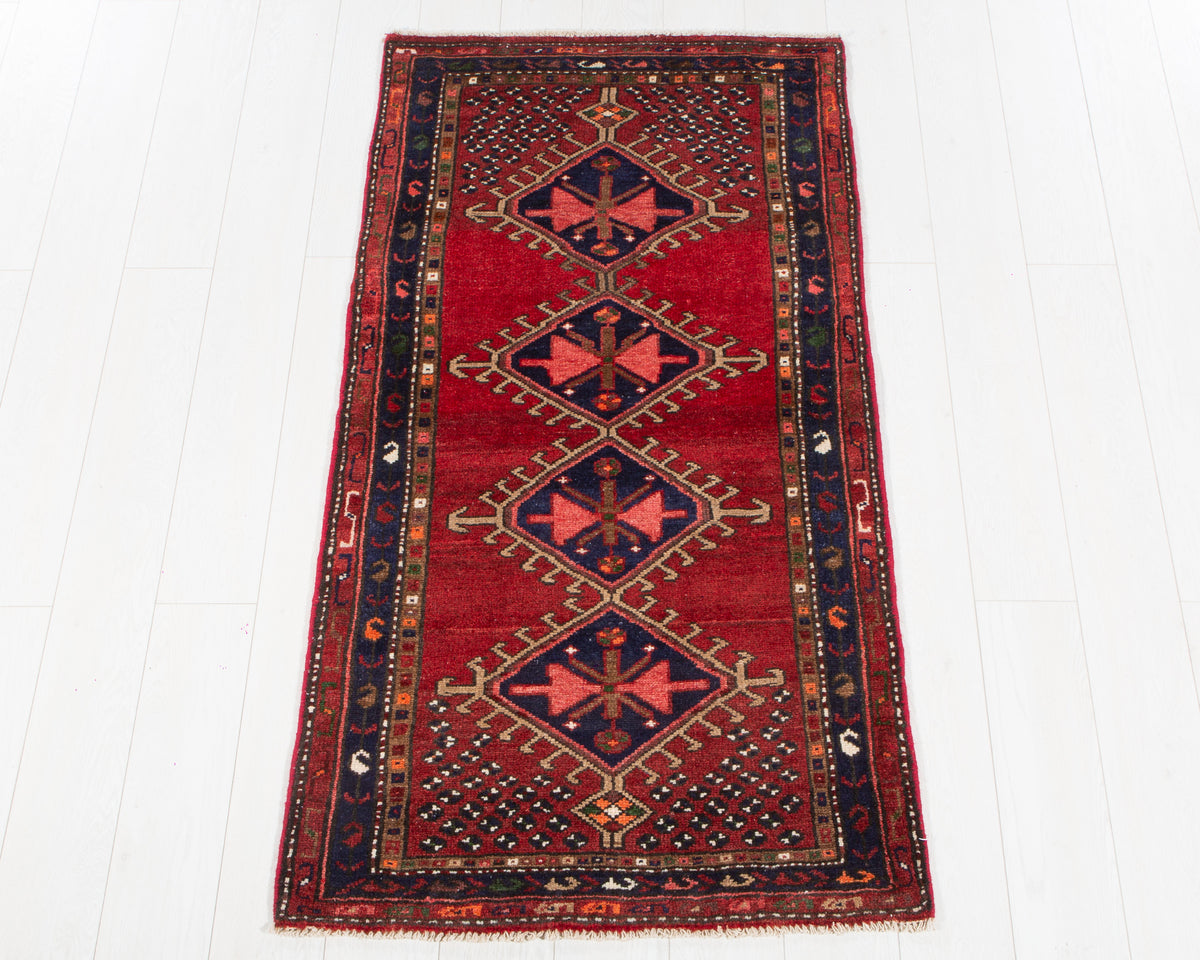
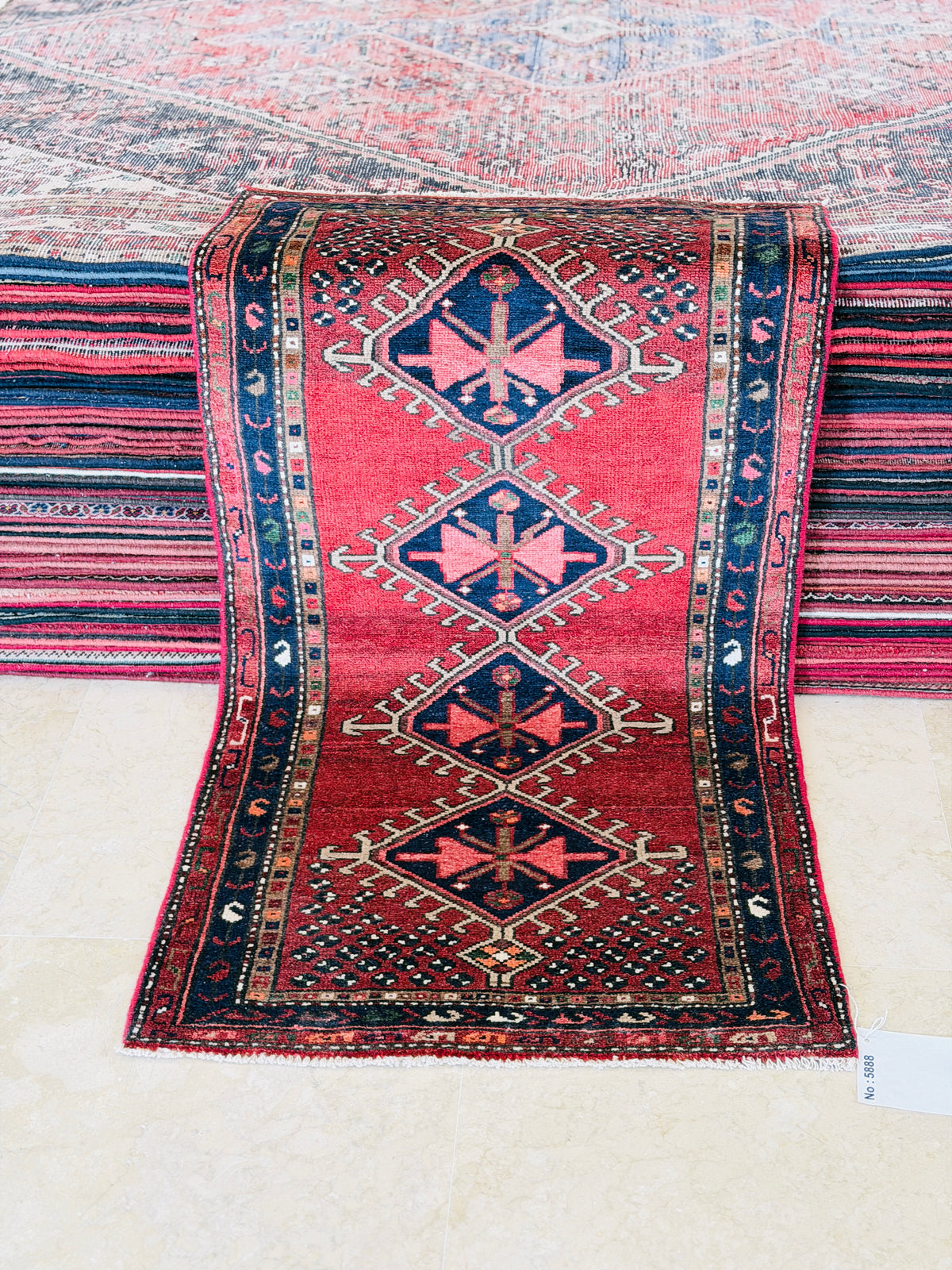
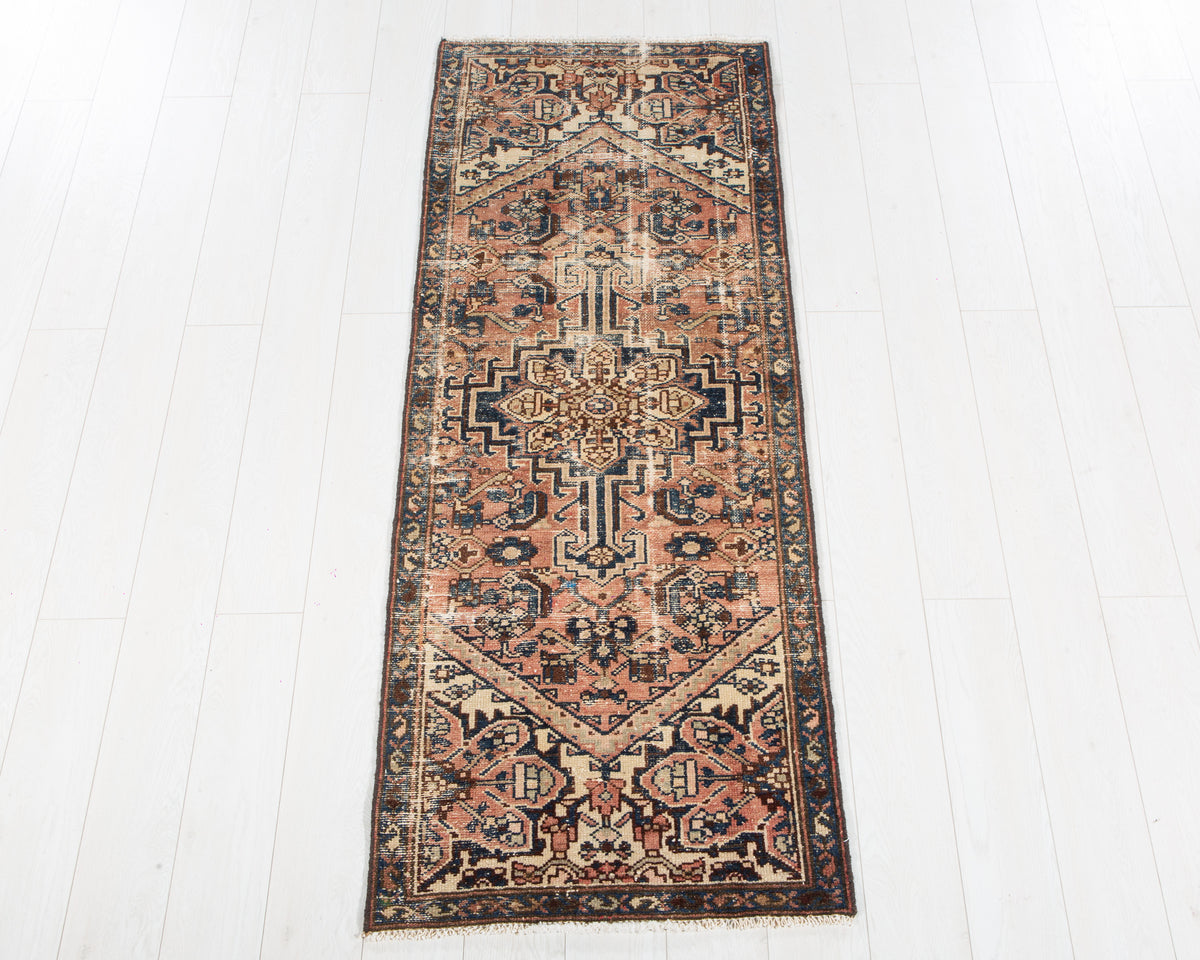
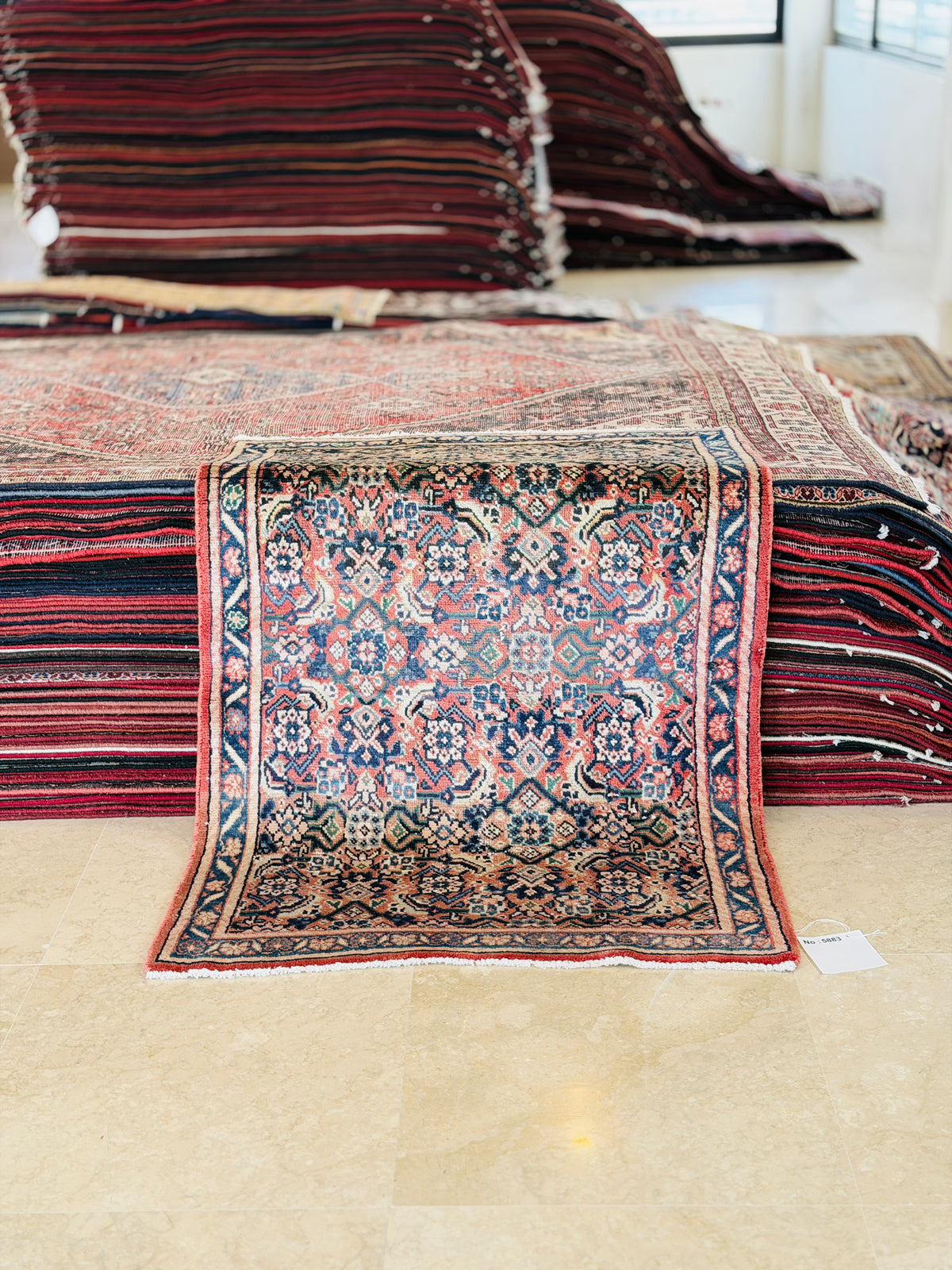
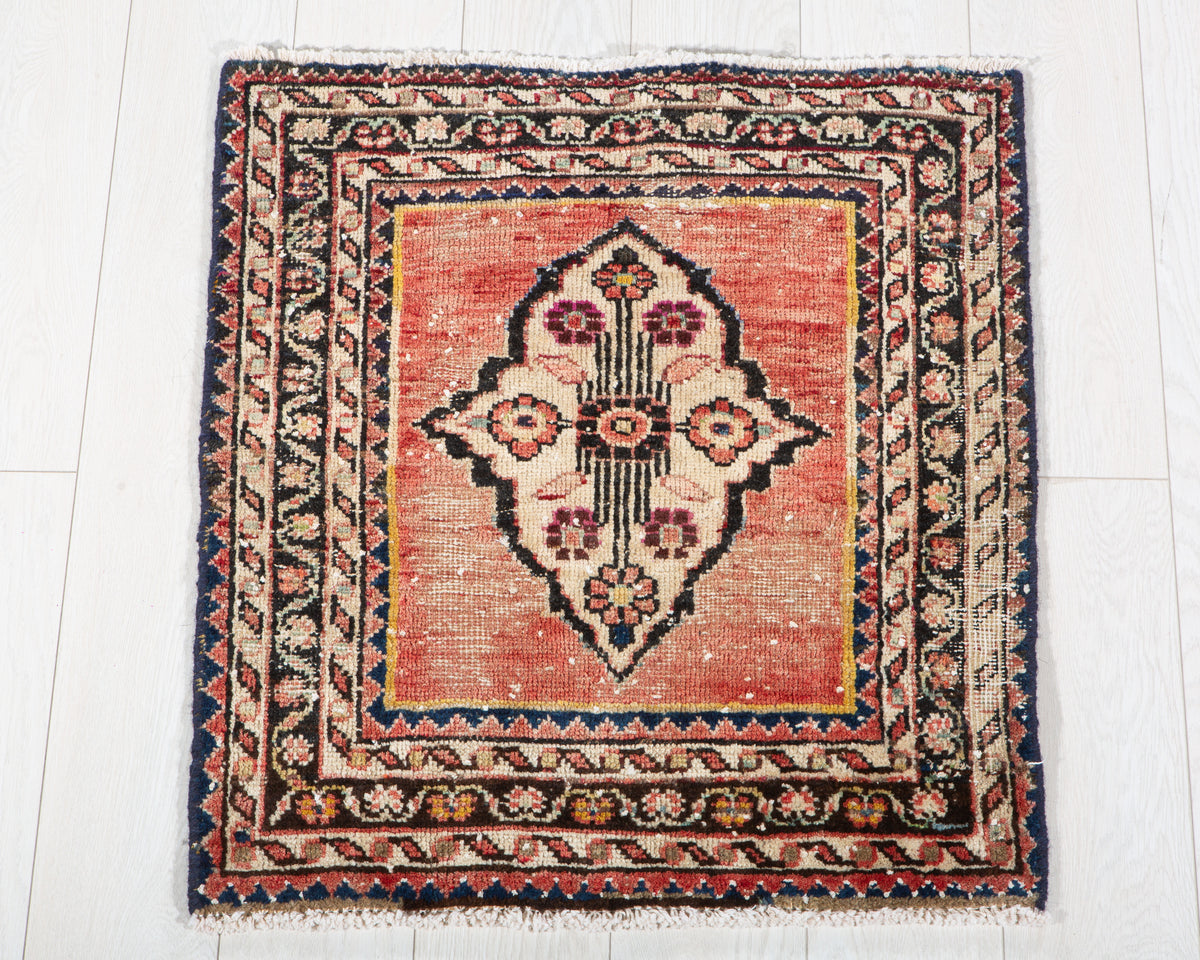
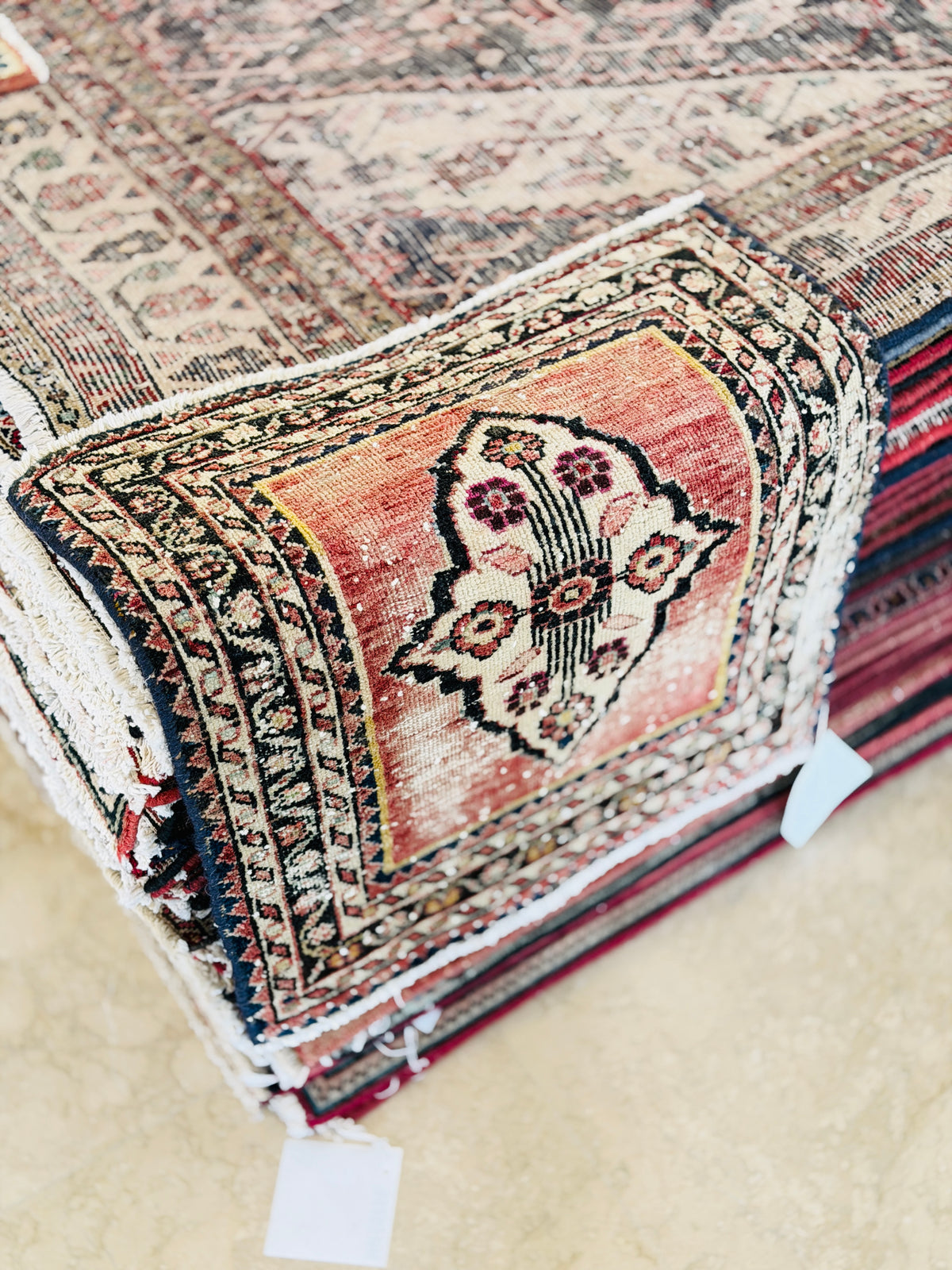
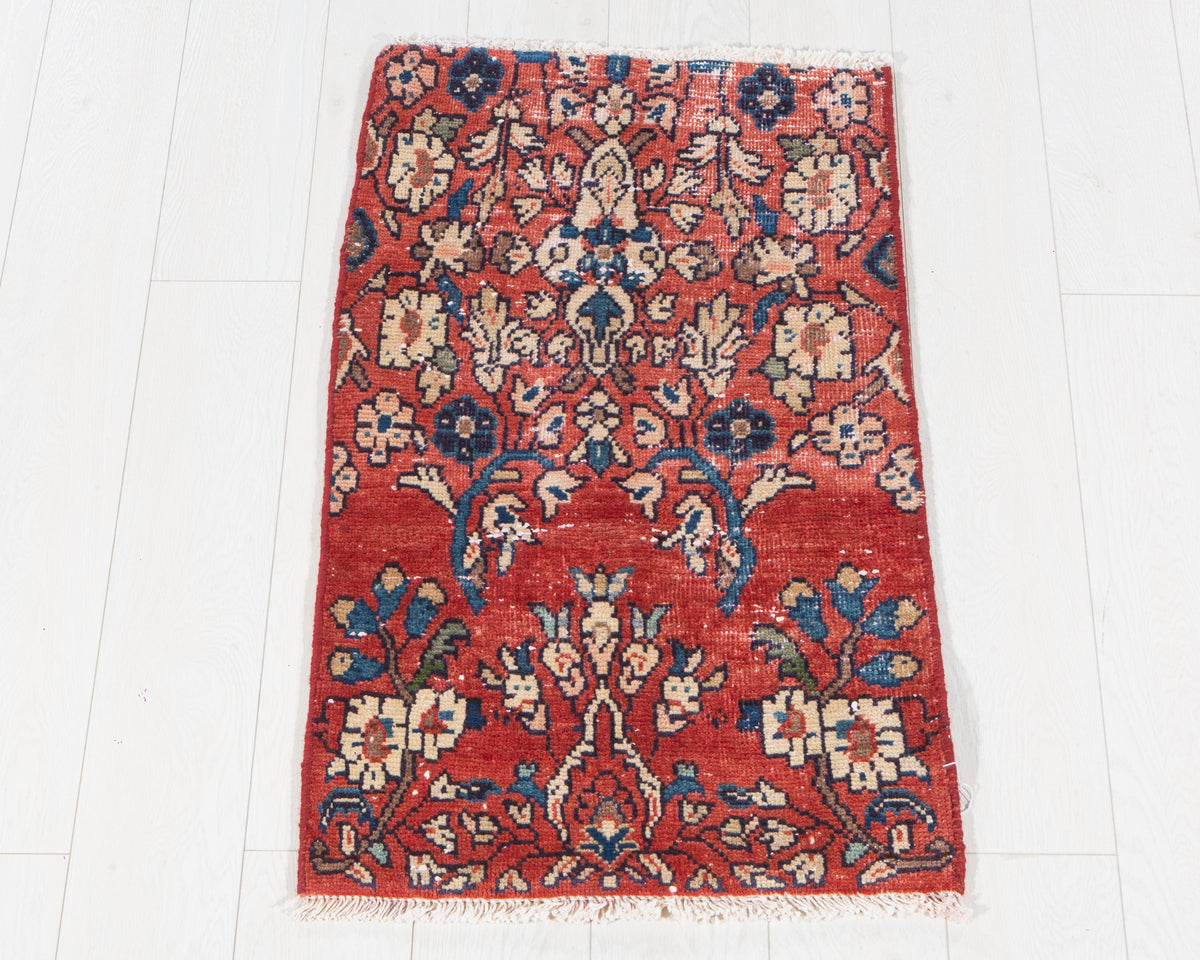
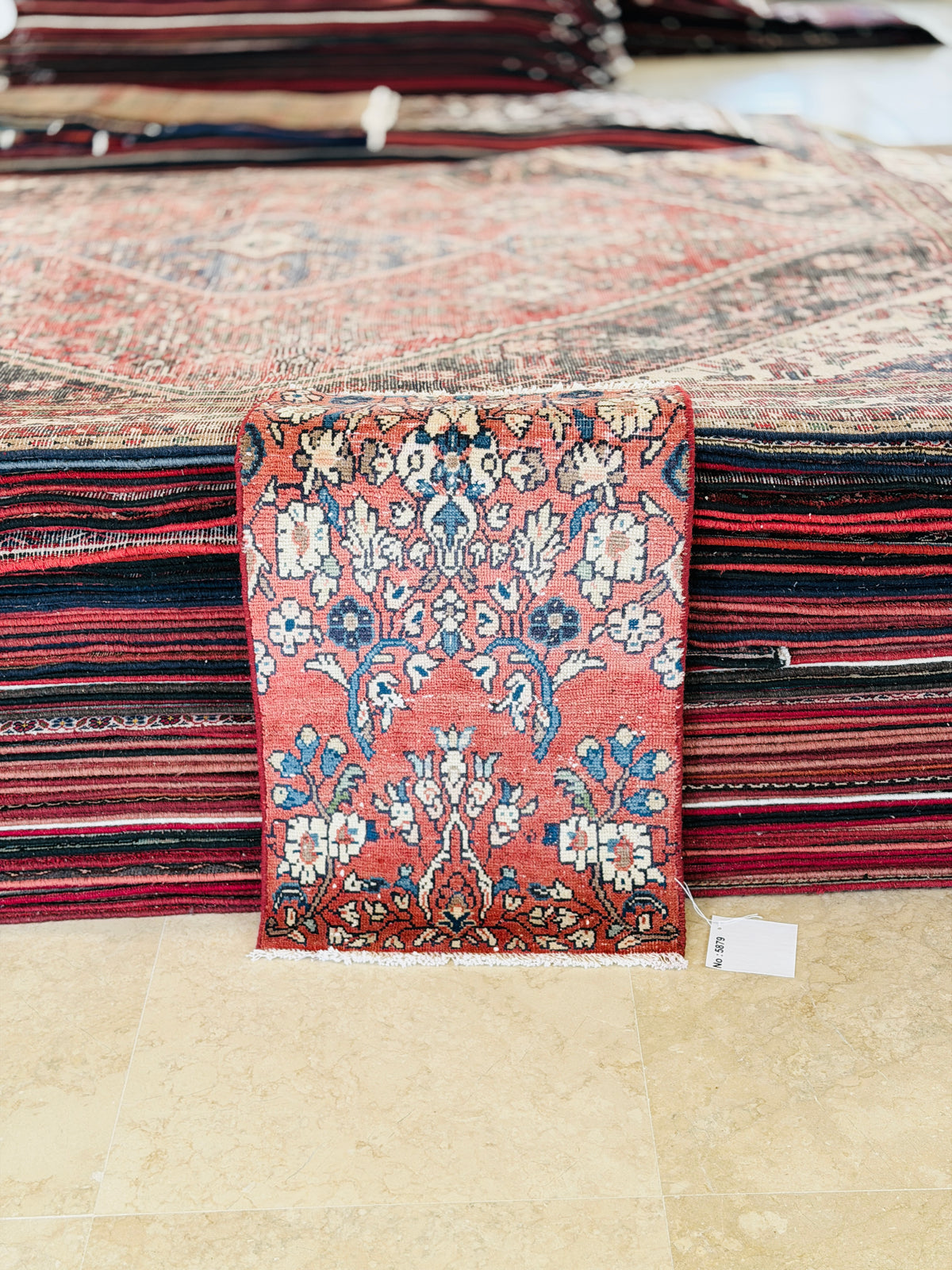
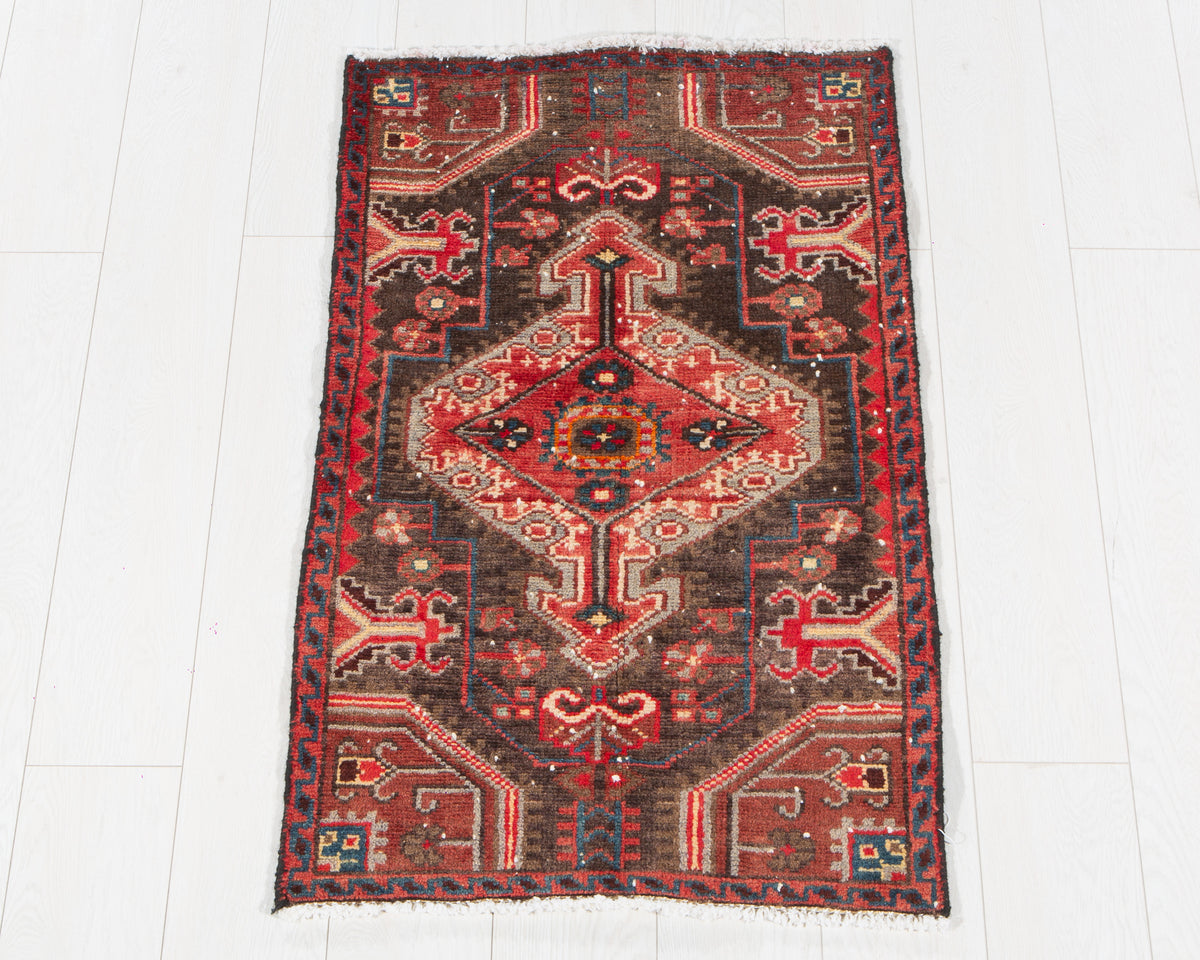
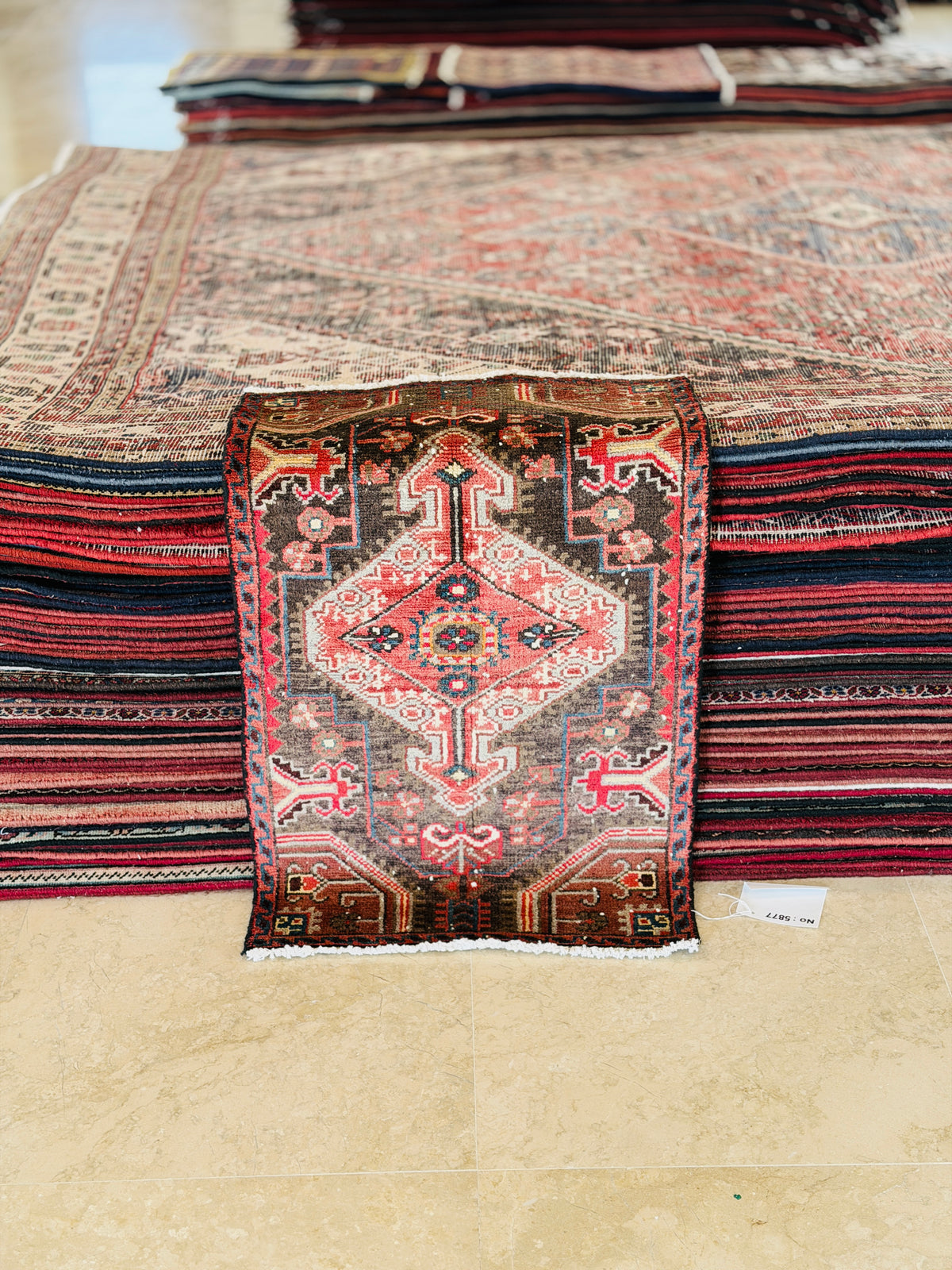
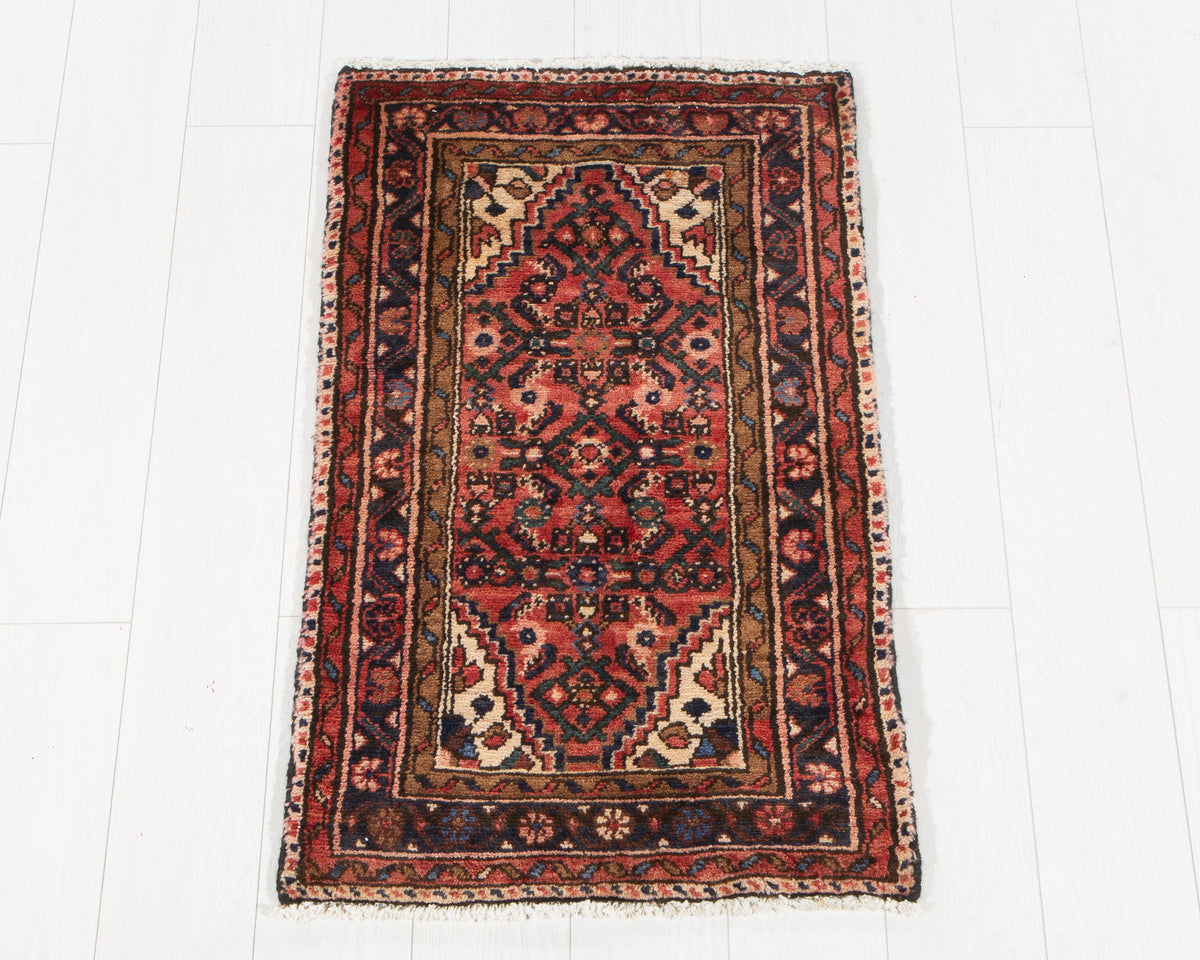
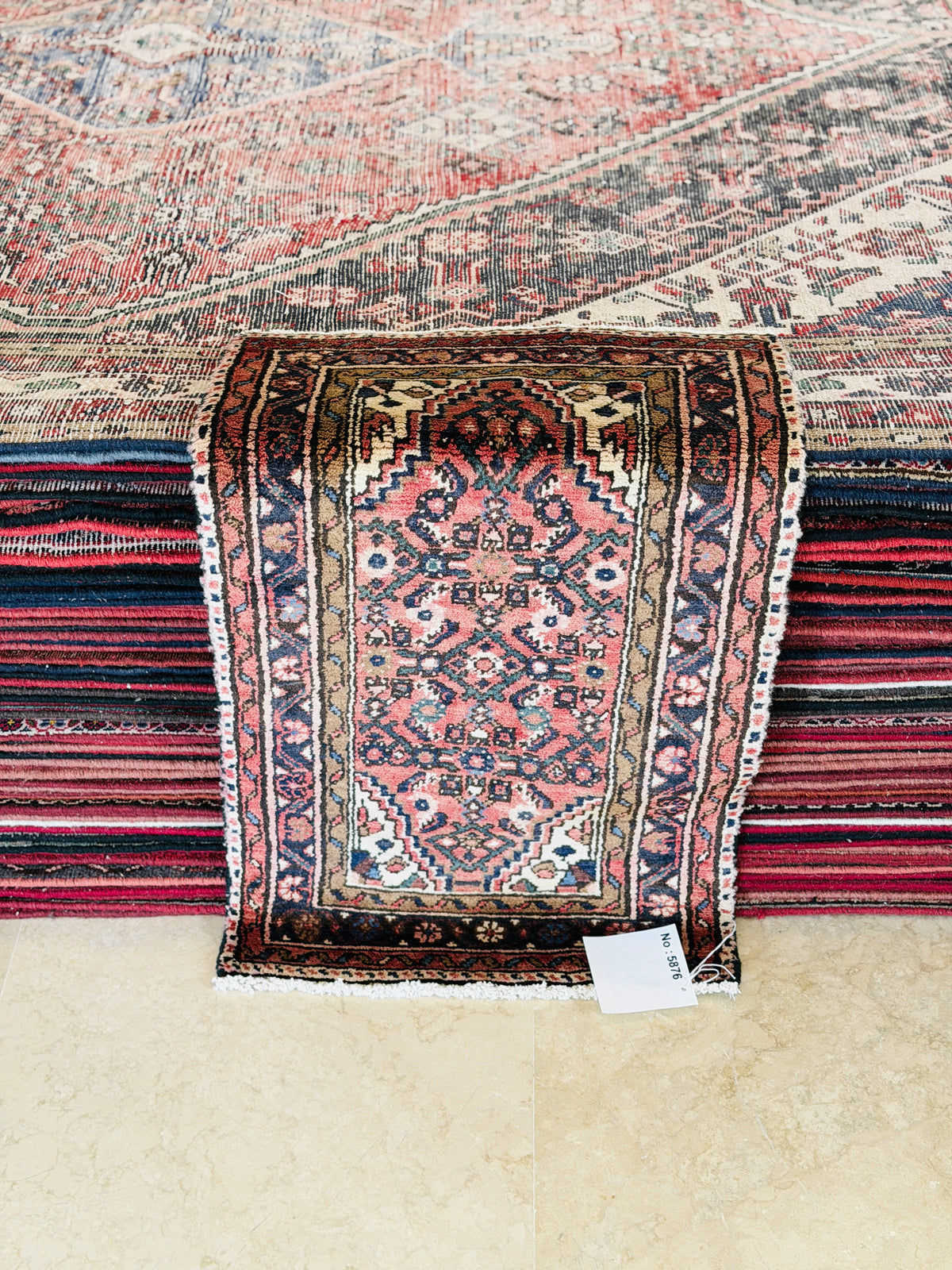
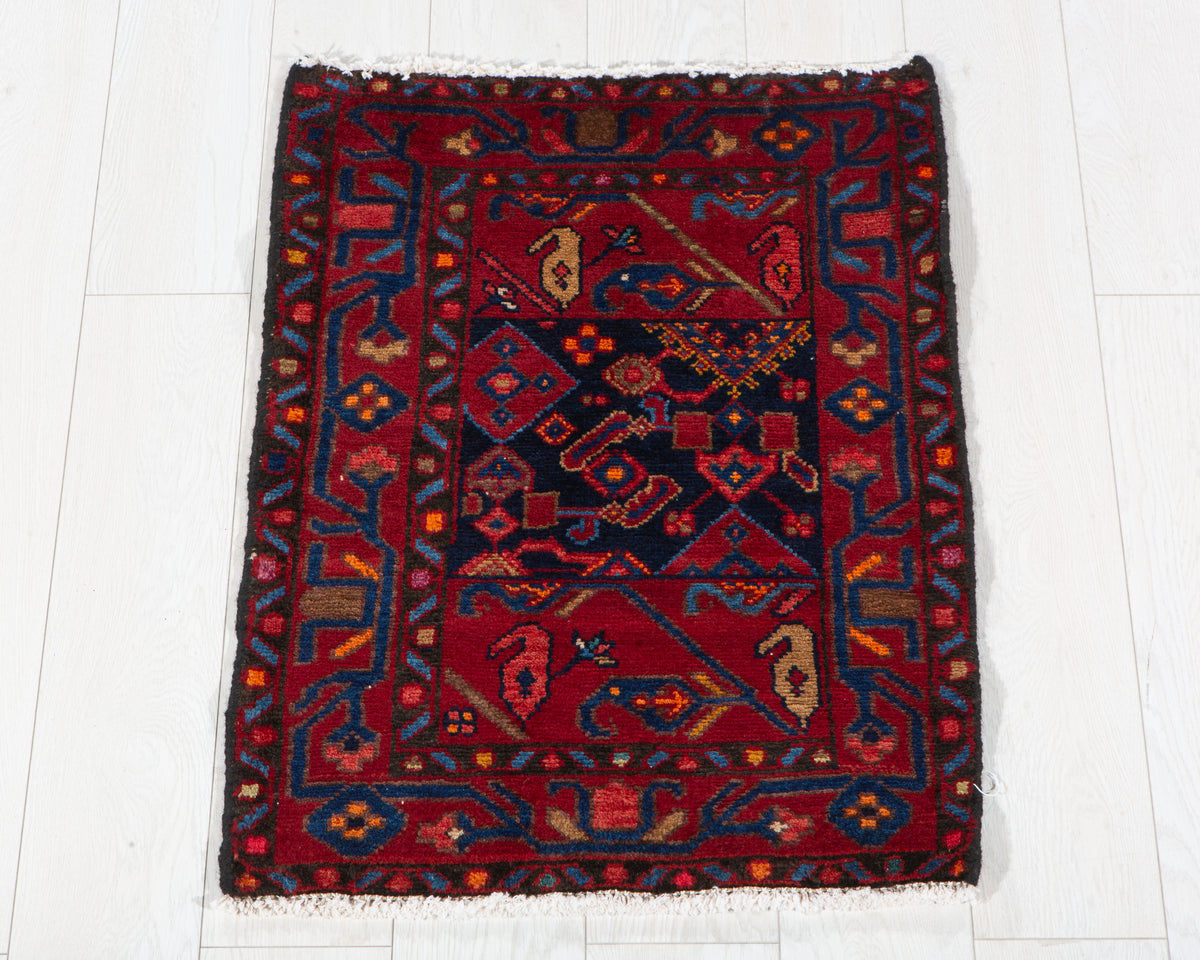
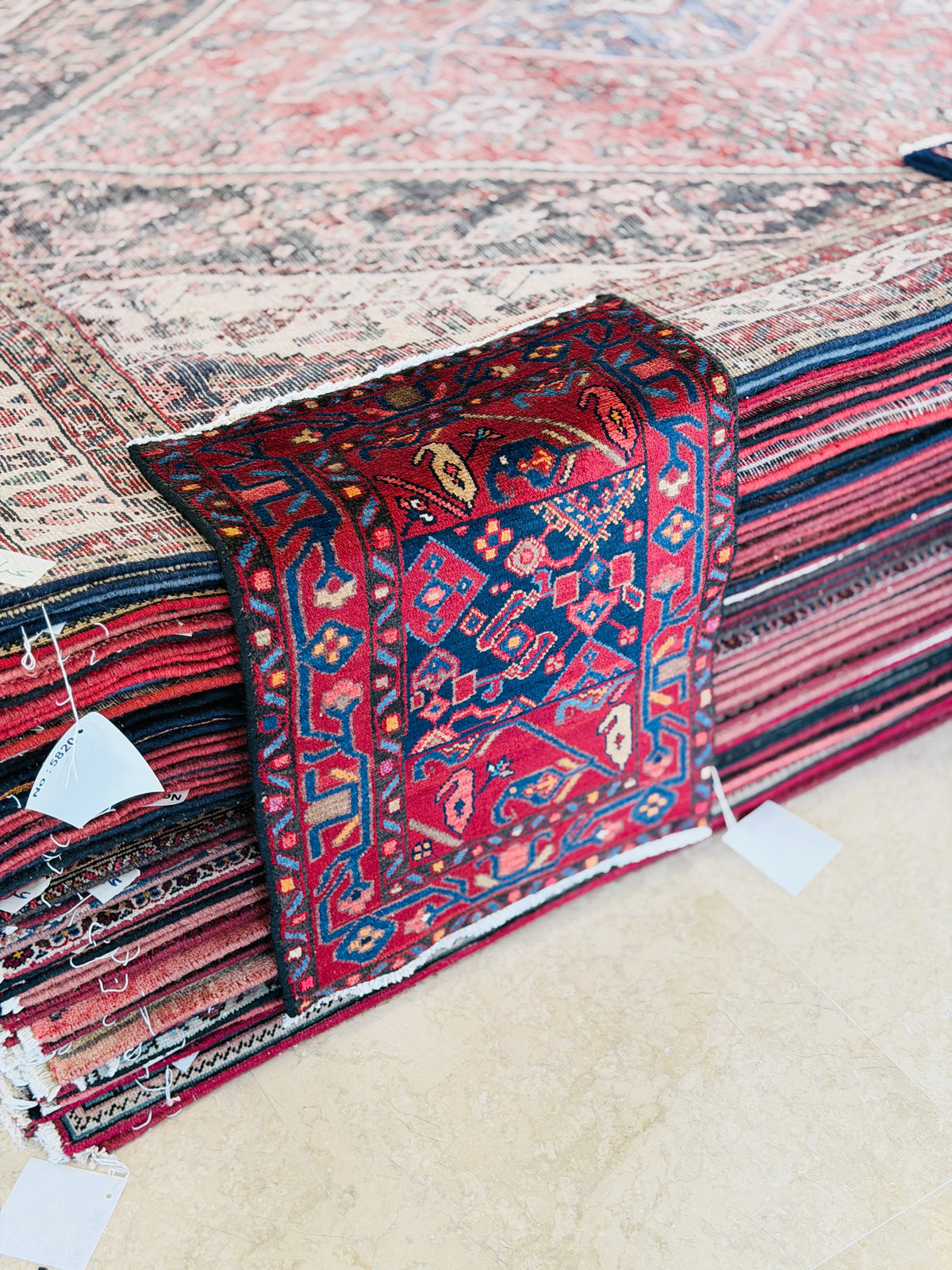
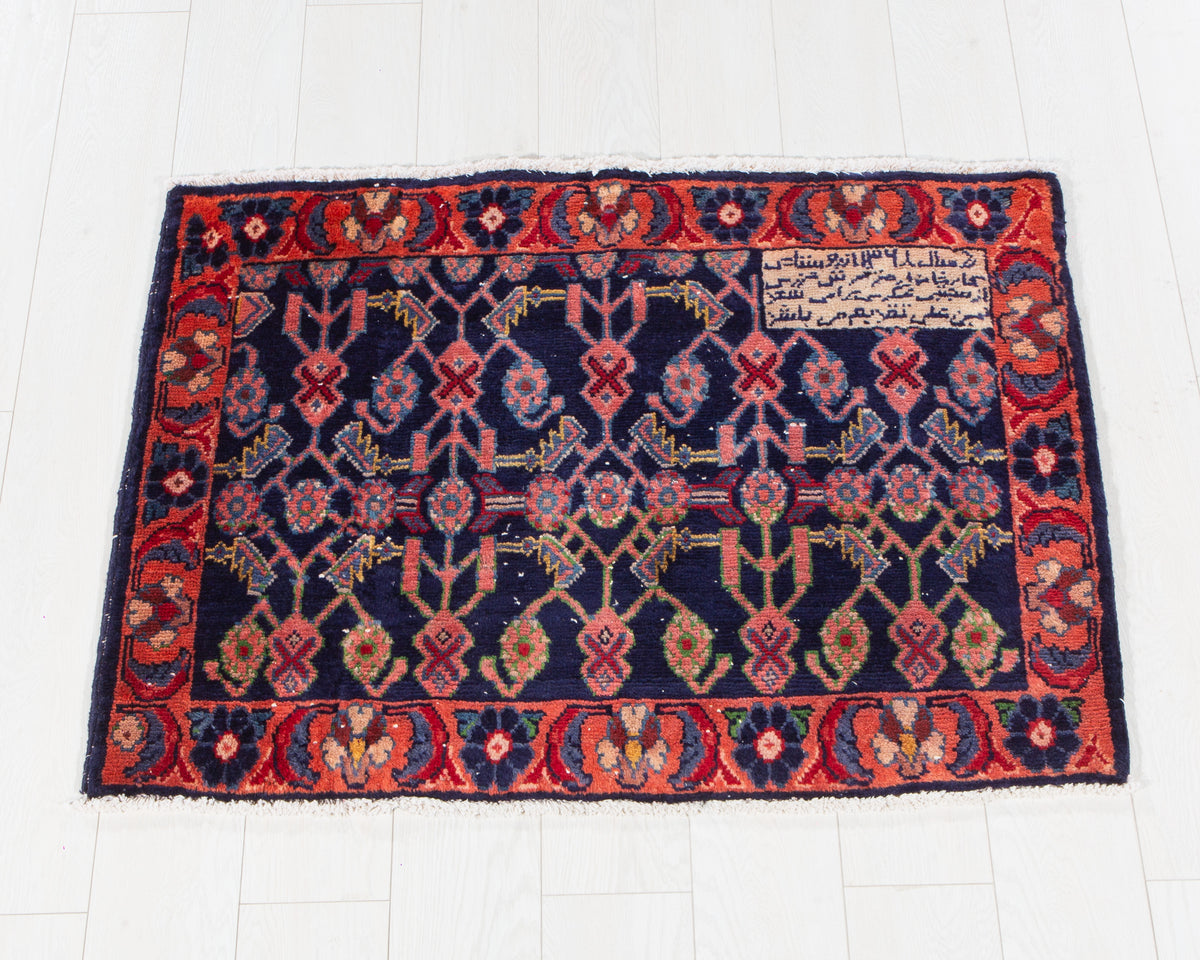
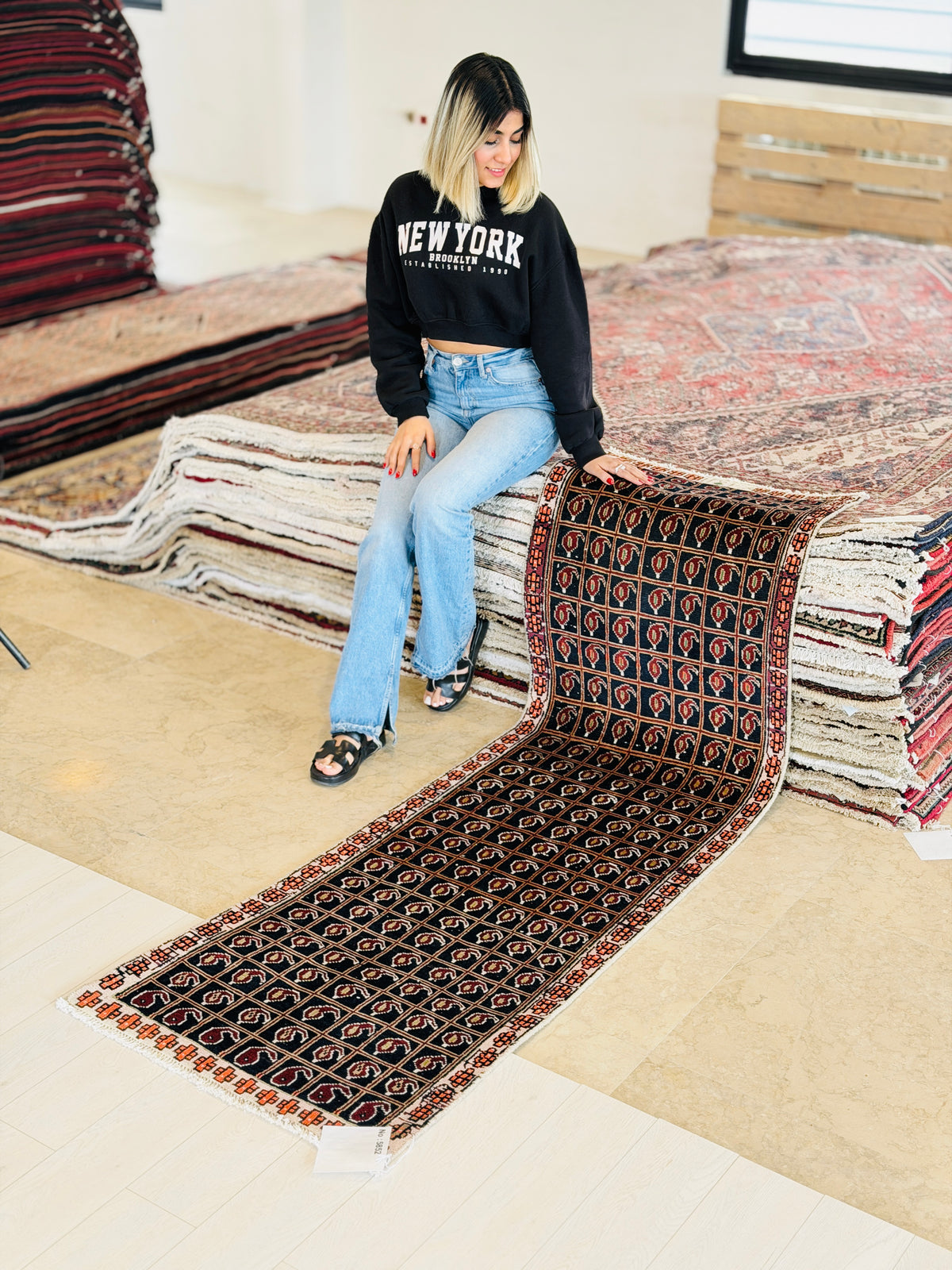
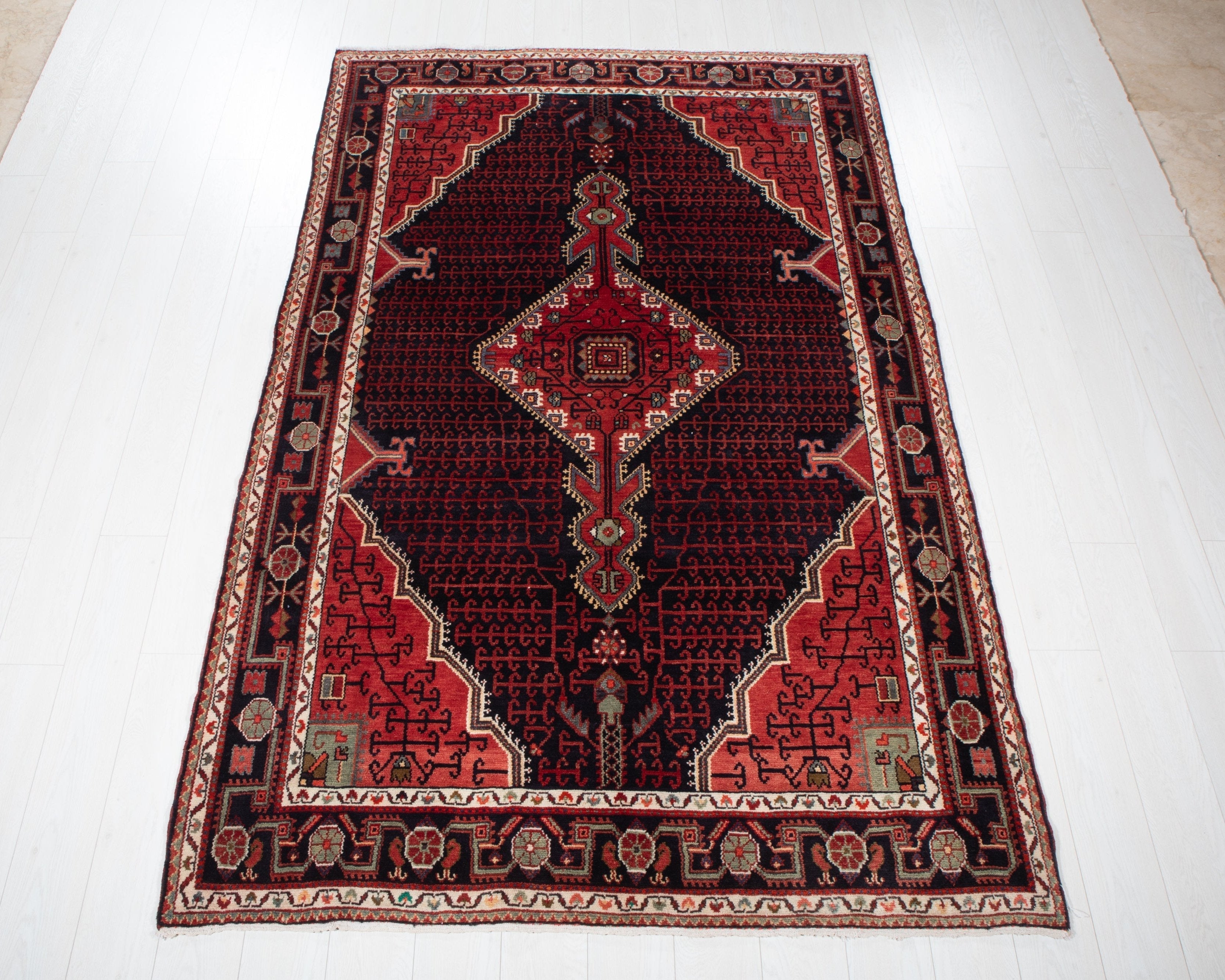
Hamadan is both a city and a province in western Persia, and in the Persian rug trade its name has come to serve as an umbrella term — not because every rug called "Hamadan" comes from one workshop, but because the city itself was historically the trading hub where Persian rugs from dozens of surrounding weaving villages were gathered and sold onward. What ties them together technically is construction: Hamadan Persian rugs are typically single-wefted, giving them a flatter, more supple handle than double-wefted city weaves — a structural signature that's also part of why well-made pieces from this region have survived a century or more without losing their character. Within that broader Hamadan family, individual villages developed their own distinct artistic identity. Malayer and Jozan Persian rugs are prized for their finer weave, often featuring Herati or diamond-lattice patterns in refined, restrained palettes. Mehraban rugs are recognized for their warm camel and ivory grounds. Borchalu weavers are known for a striking light-field floral lattice design still sought after by collectors today. Kabudar Ahang and Tuyserkan (Toiserkan) favor sturdier, more architectural medallion layouts, while Nahavand rugs carry bolder, more overtly tribal motifs. Hosseinabad completes the group with the same hand-knotted integrity found throughout the region. What unites all of them, whichever village they trace to, is genuine hand-knotted Persian wool craftsmanship — the kind that ages into character rather than wearing out. That's exactly why vintage Hamadan Persian rugs remain so sought after today: they were made to be lived with and admired for generations. Every piece in this collection is a genuine vintage Persian rug, hand-selected for structural soundness and authentic craftsmanship — no two are alike.