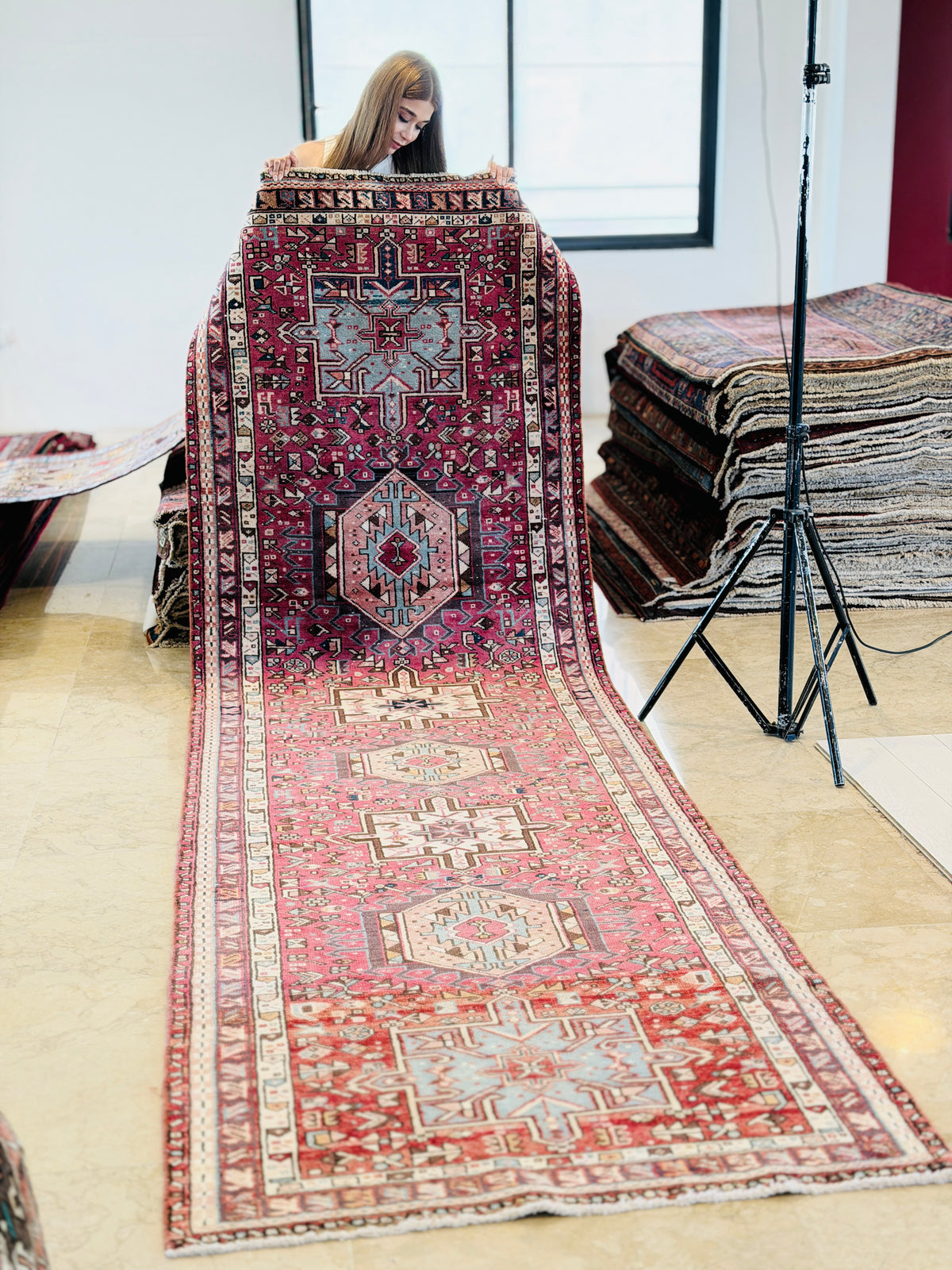
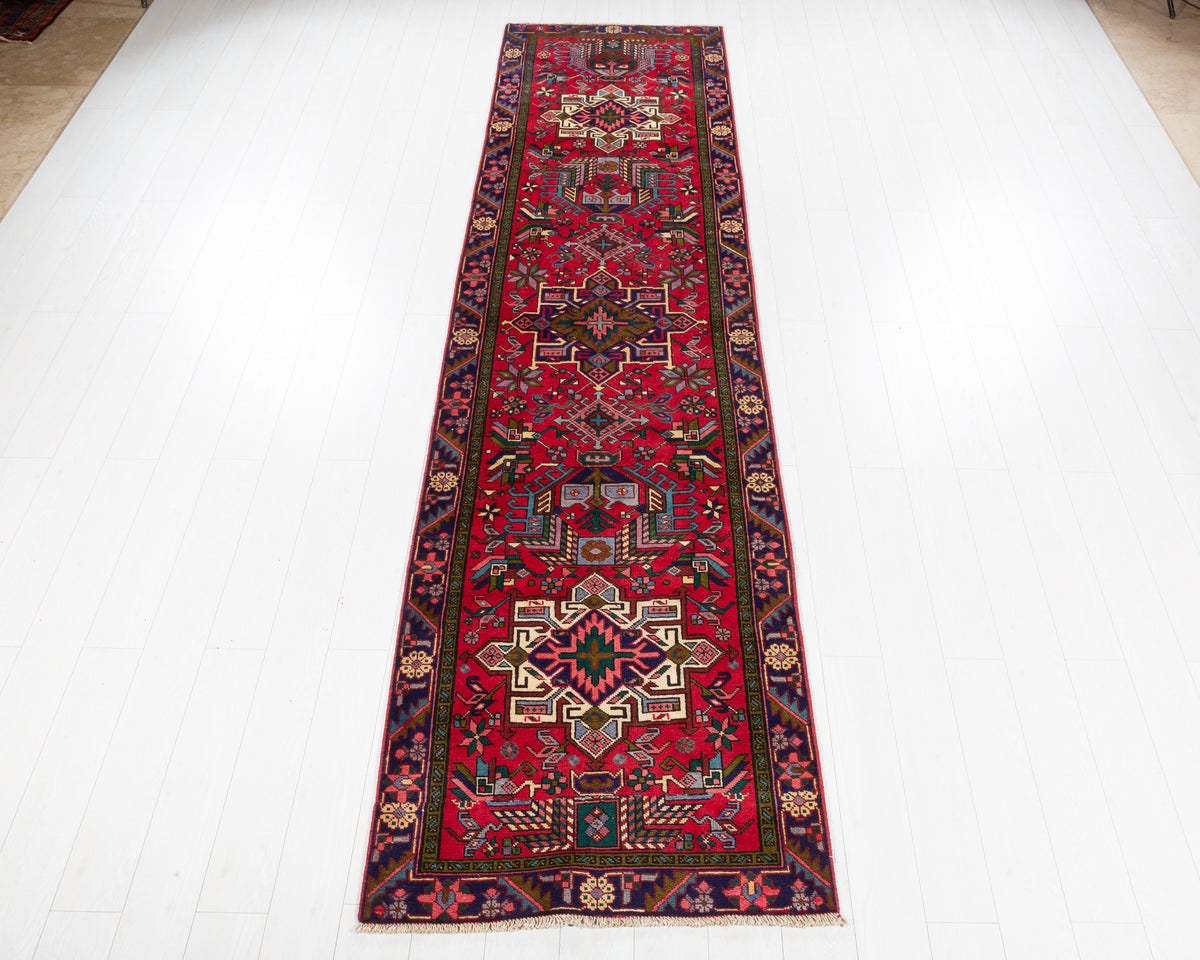
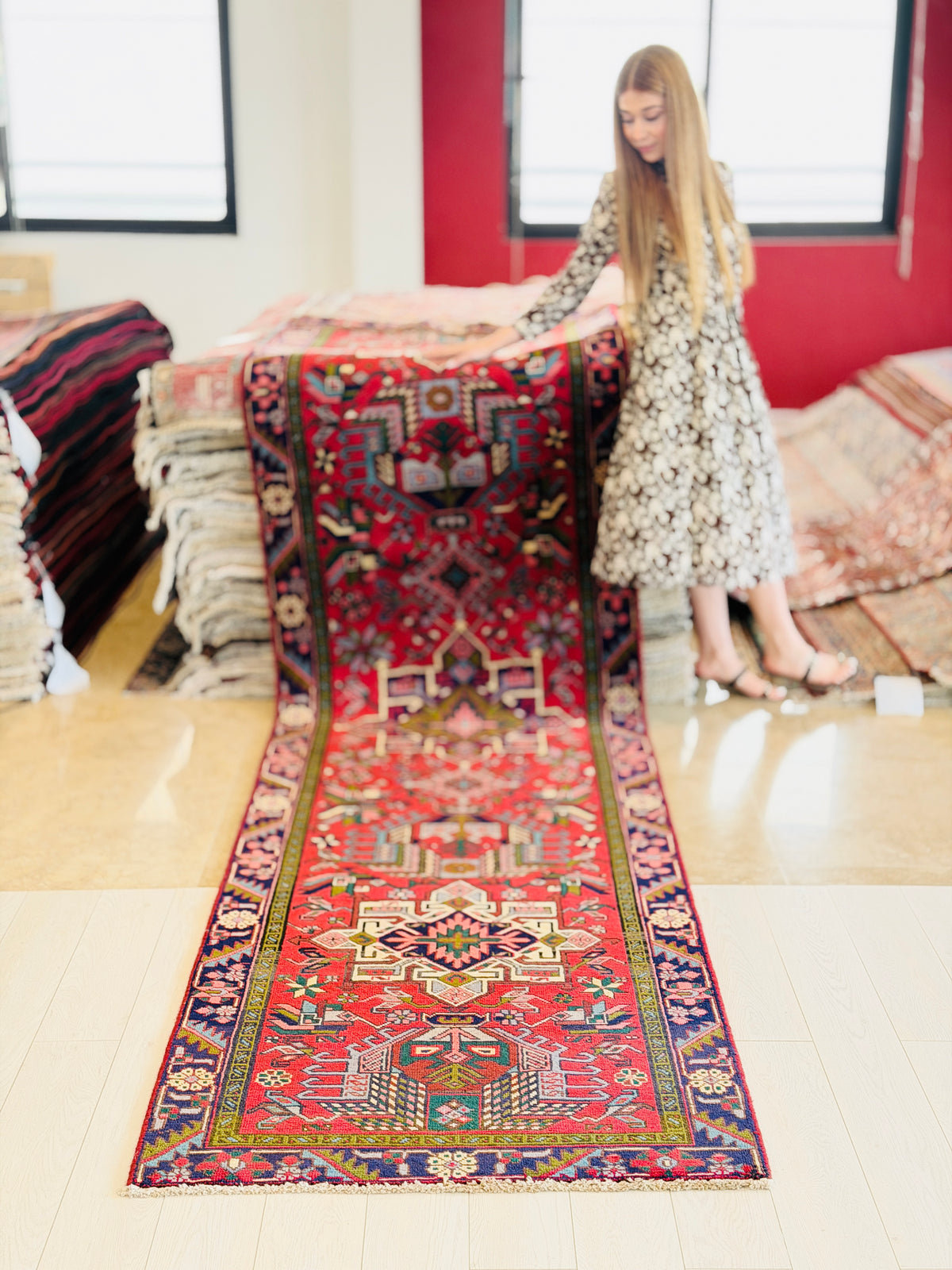
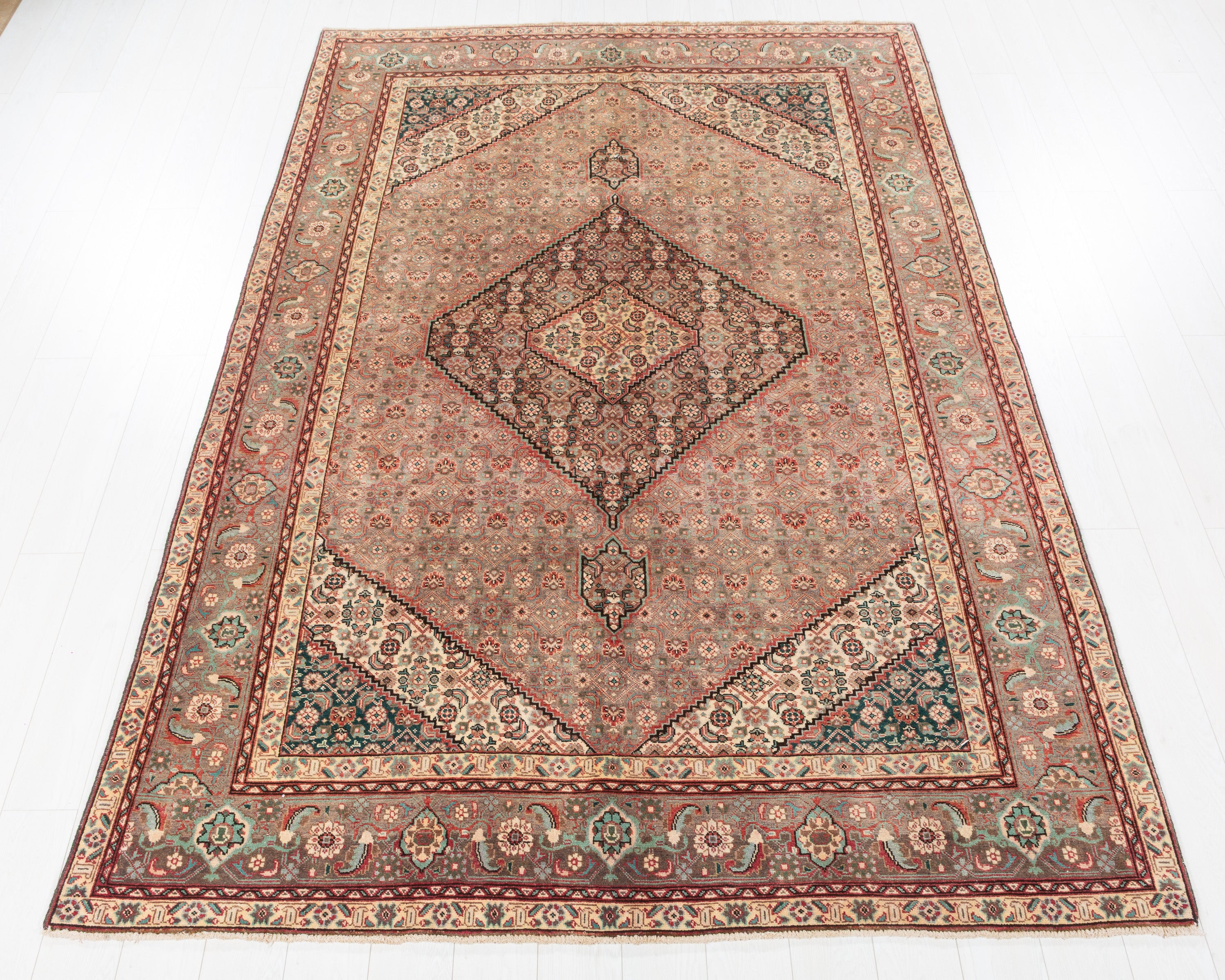
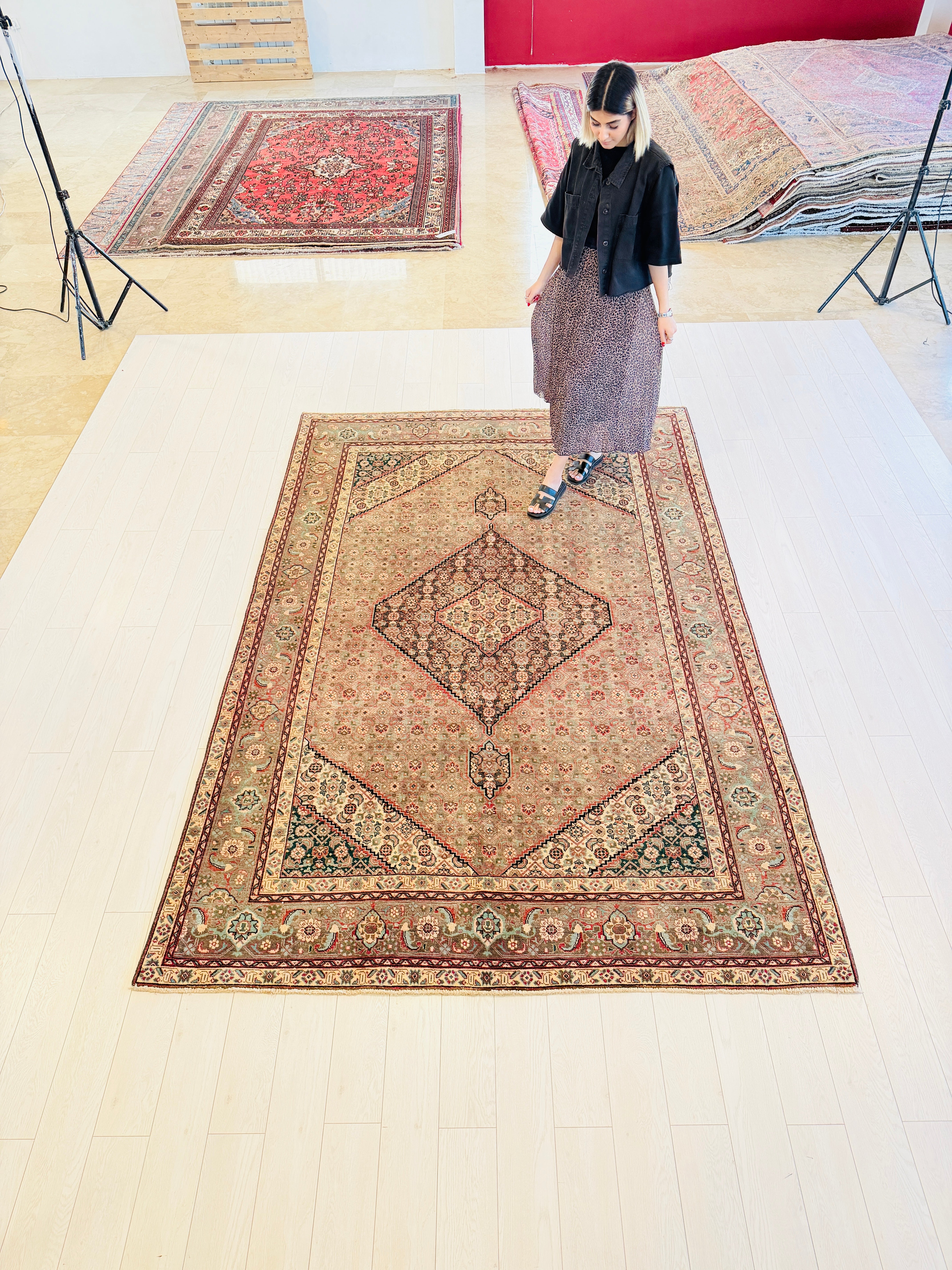
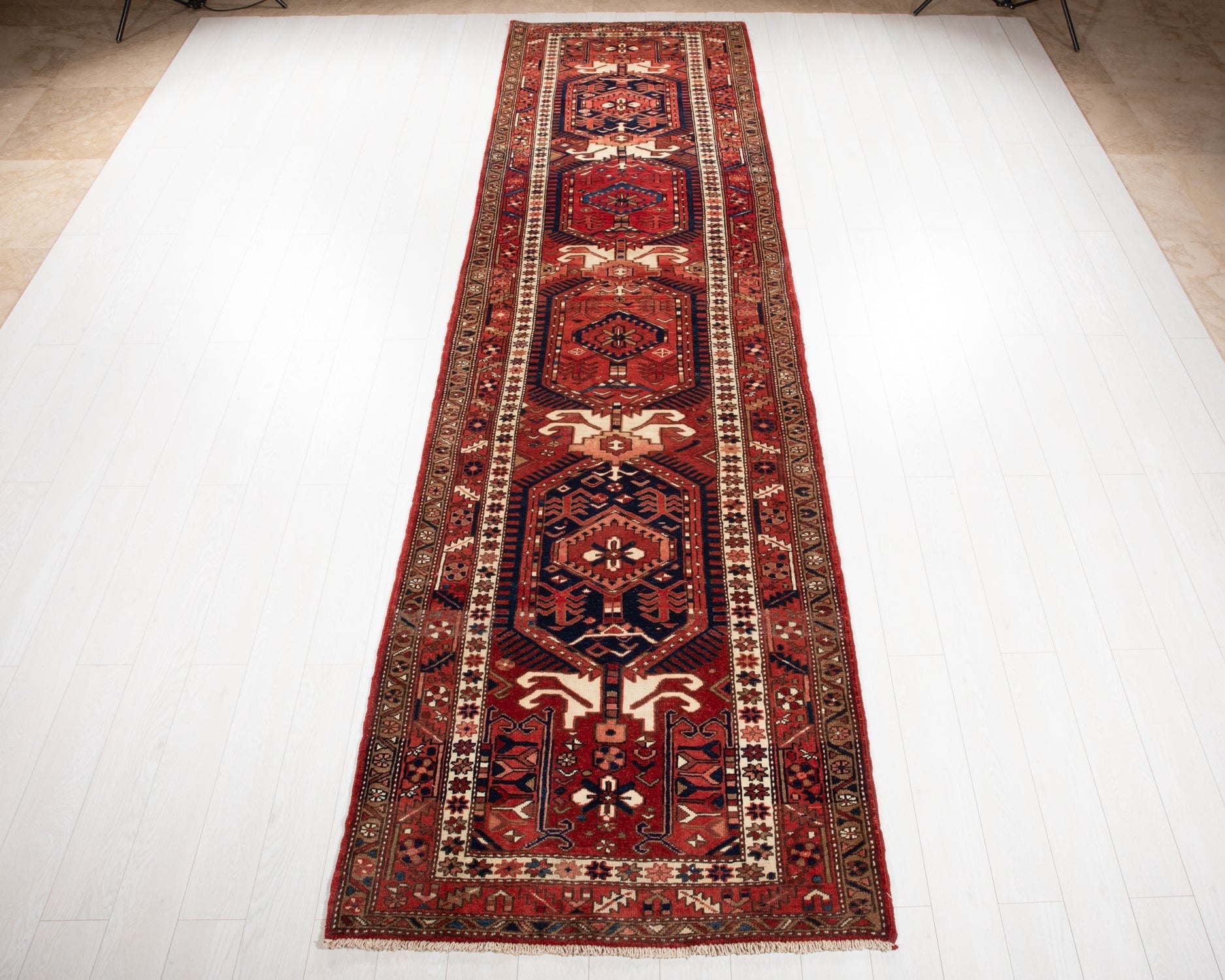
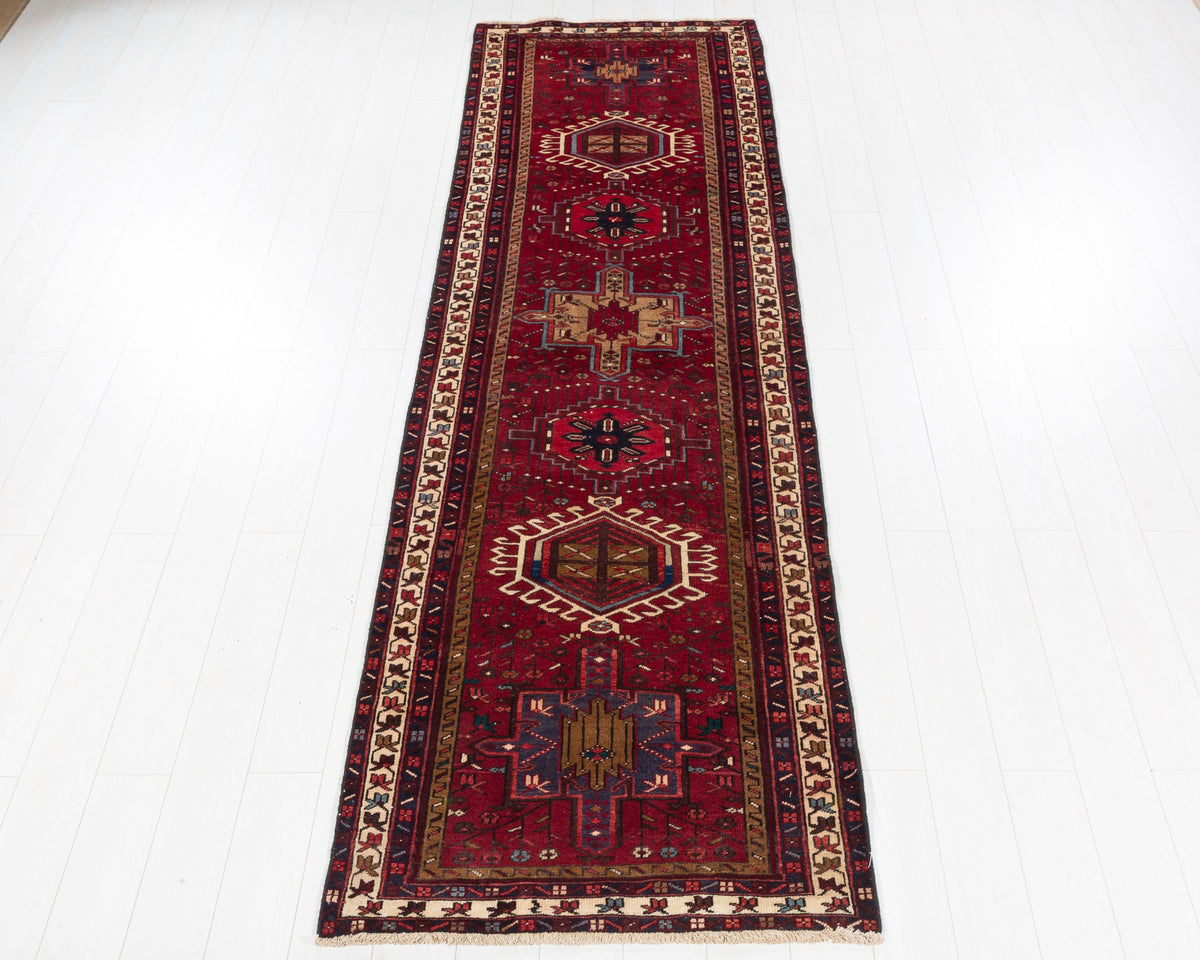
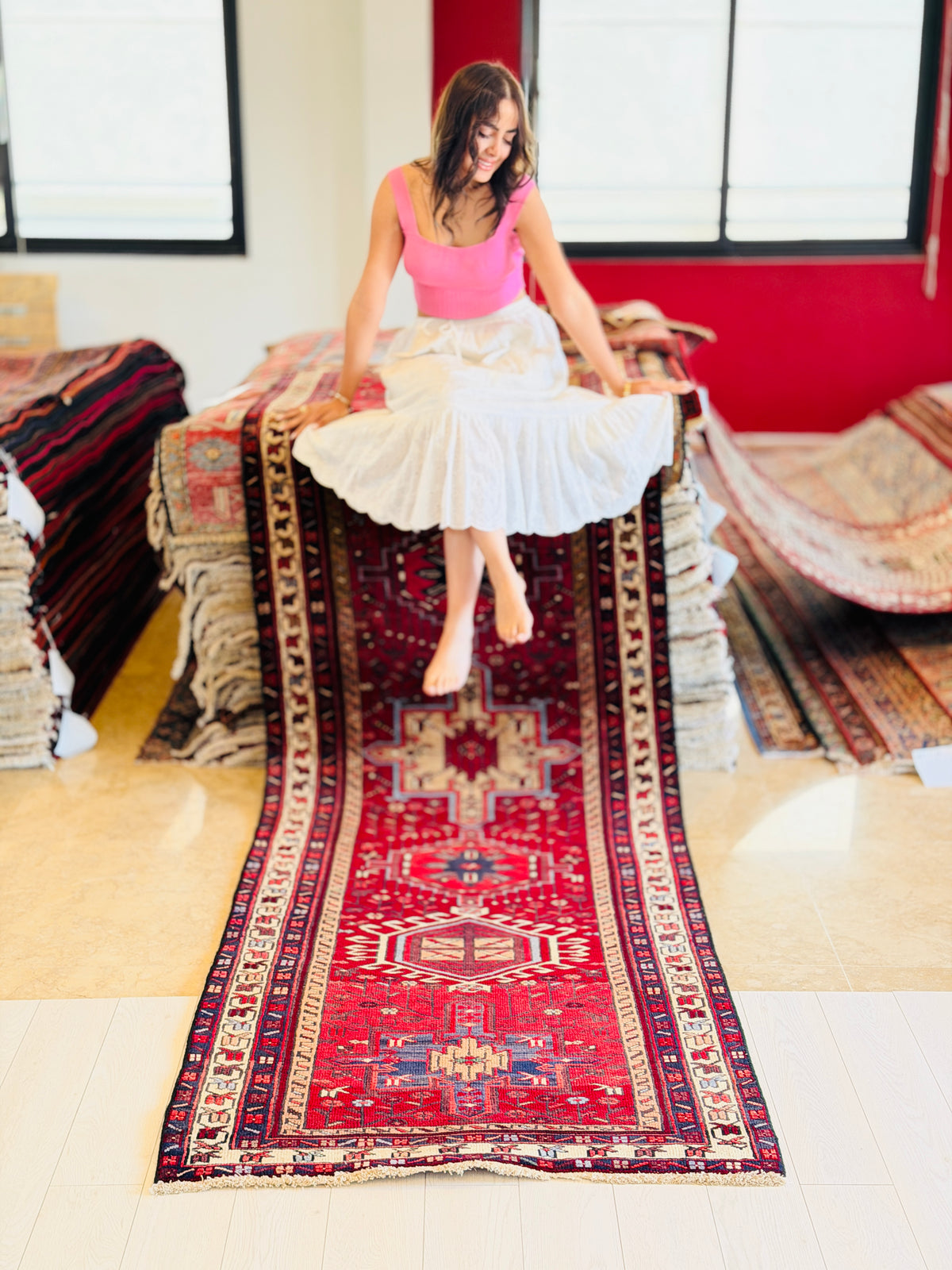
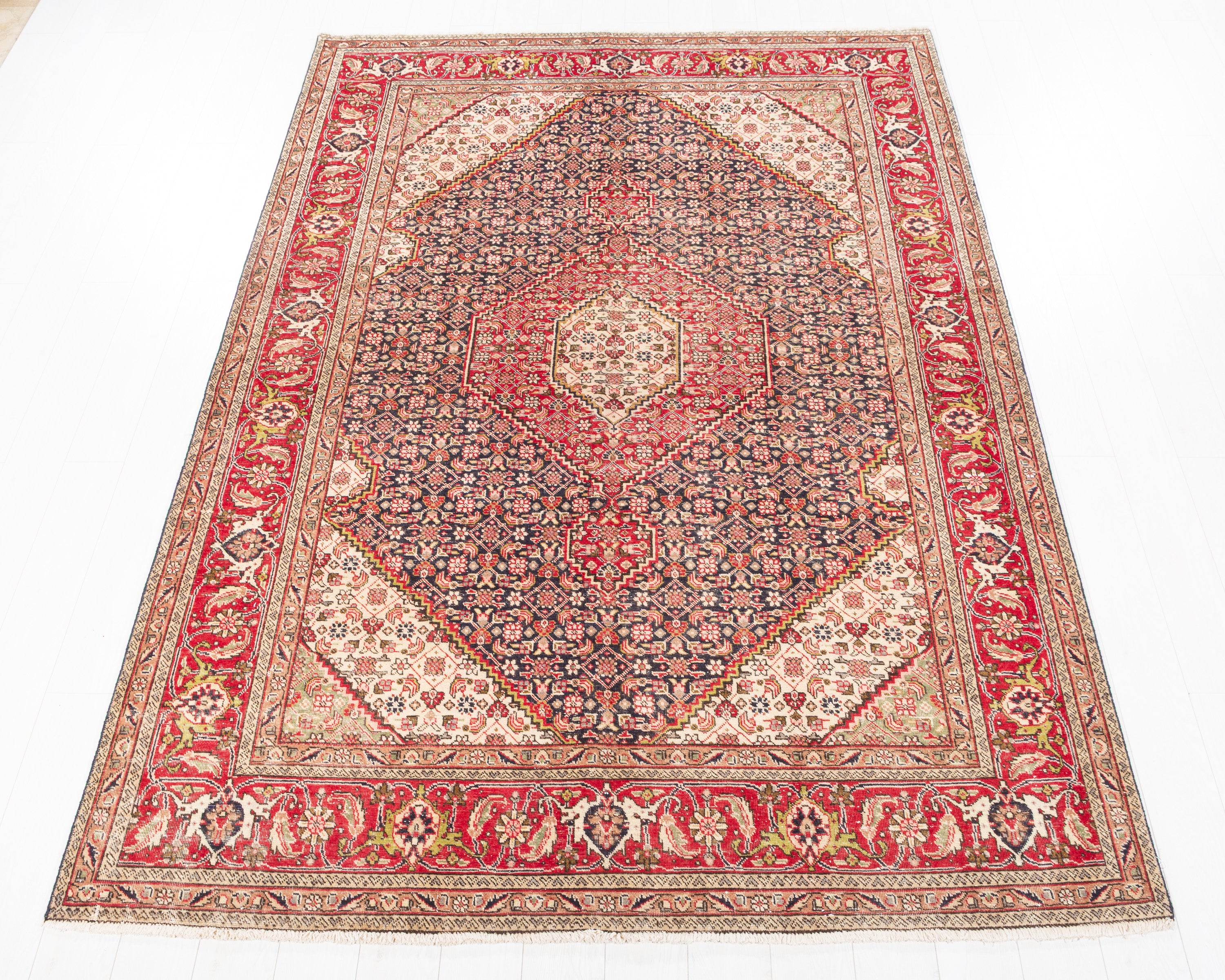
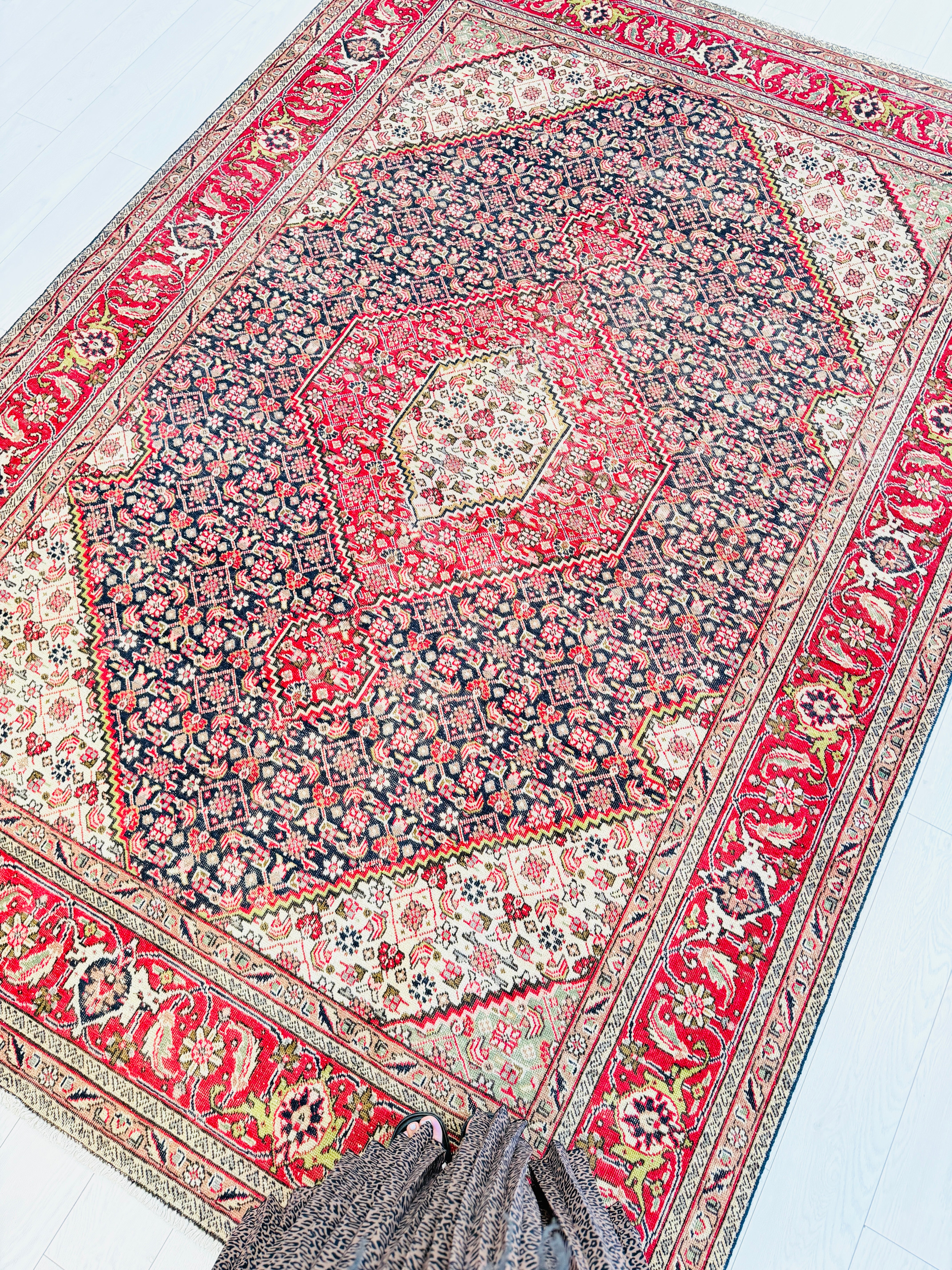
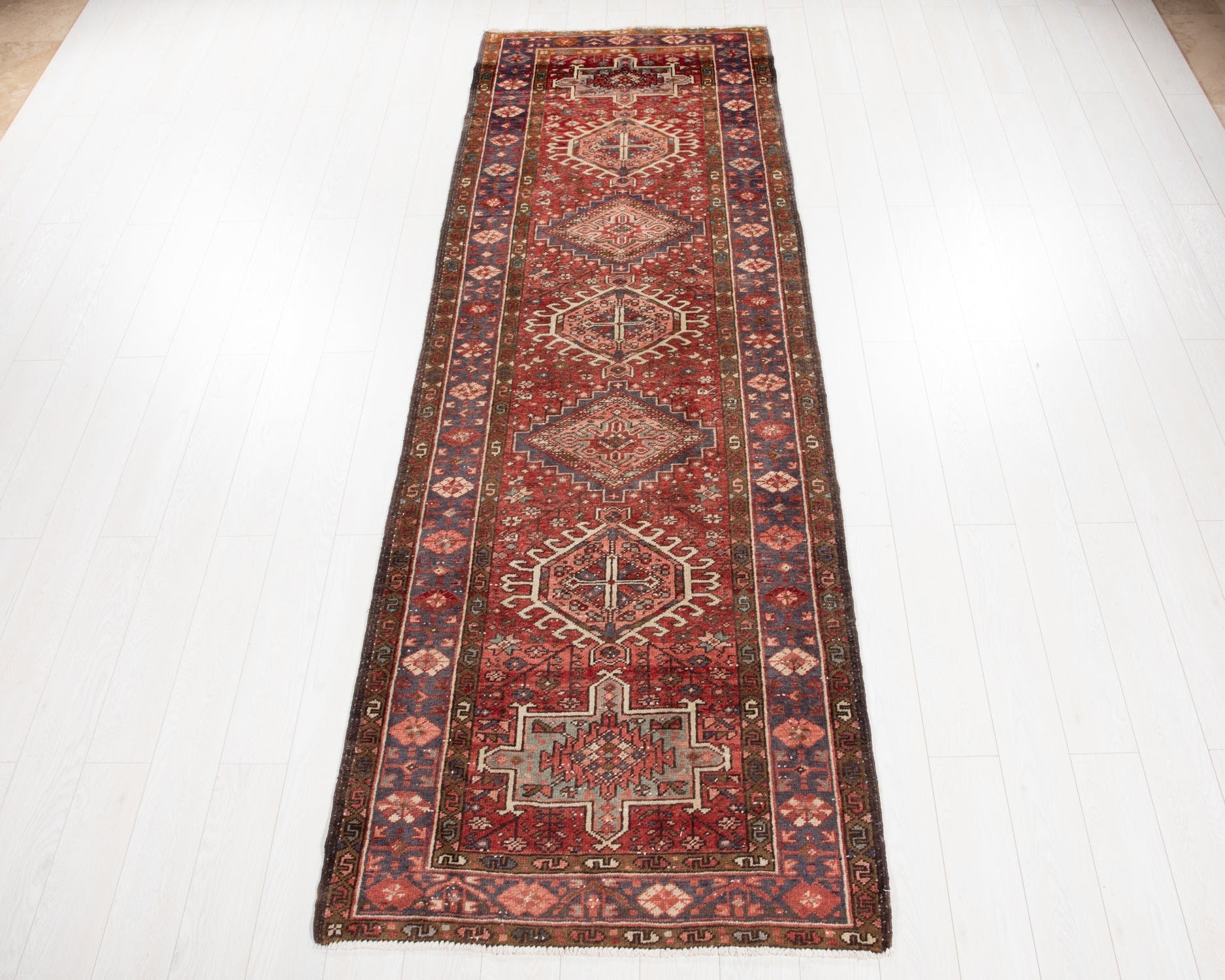
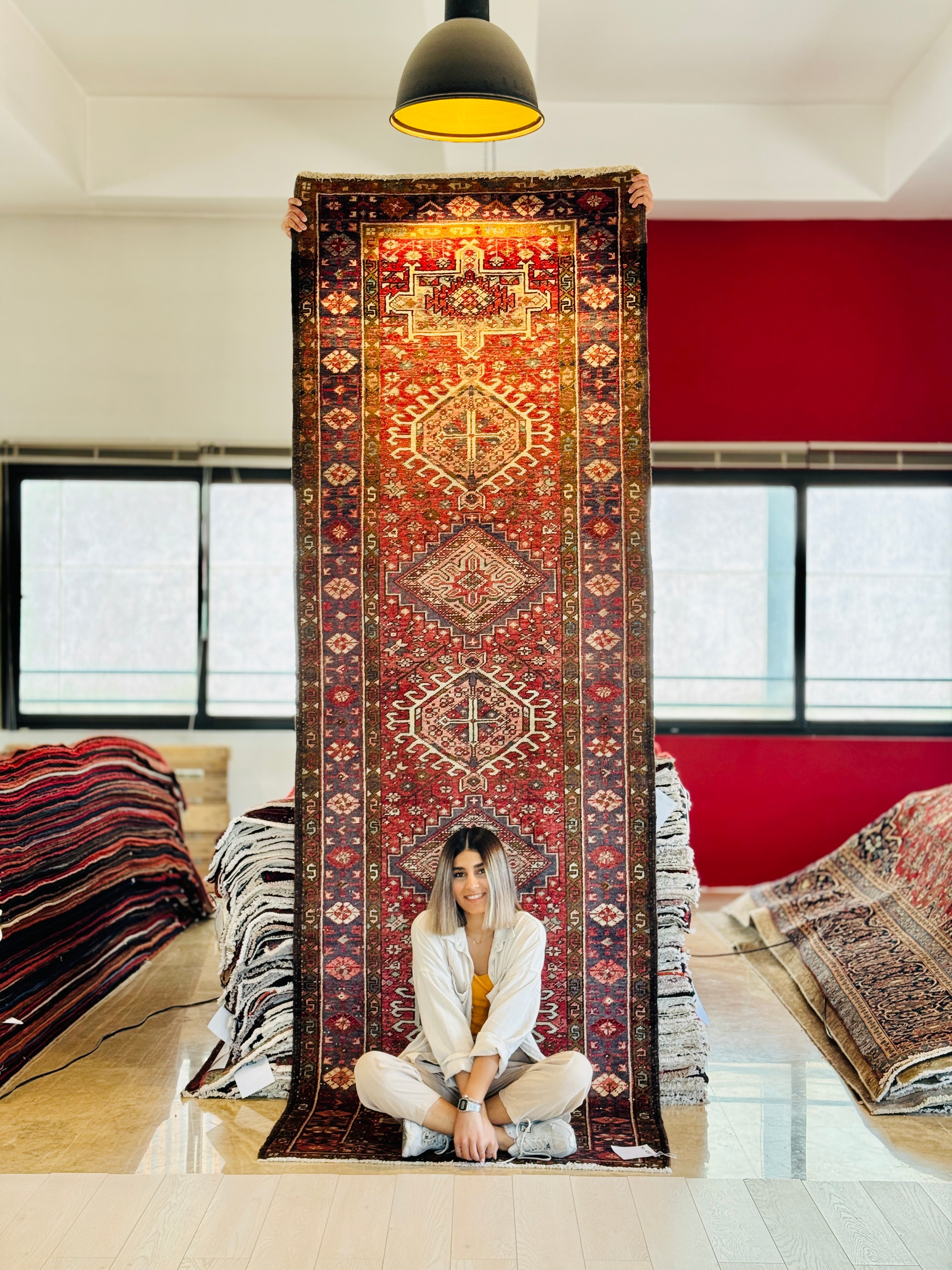
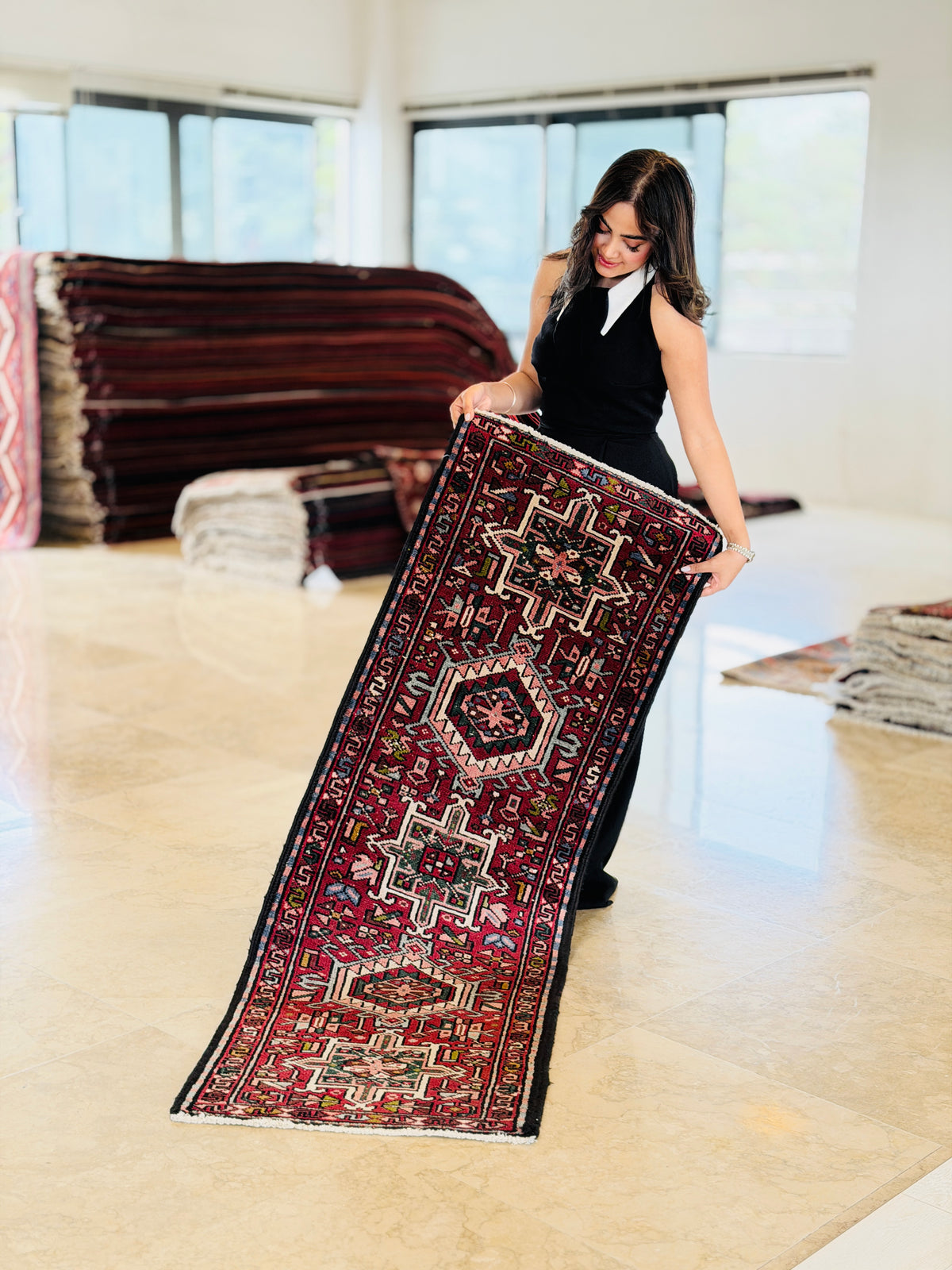
Tapis persans Heriz et Gharajeh – Vintage noués à la main
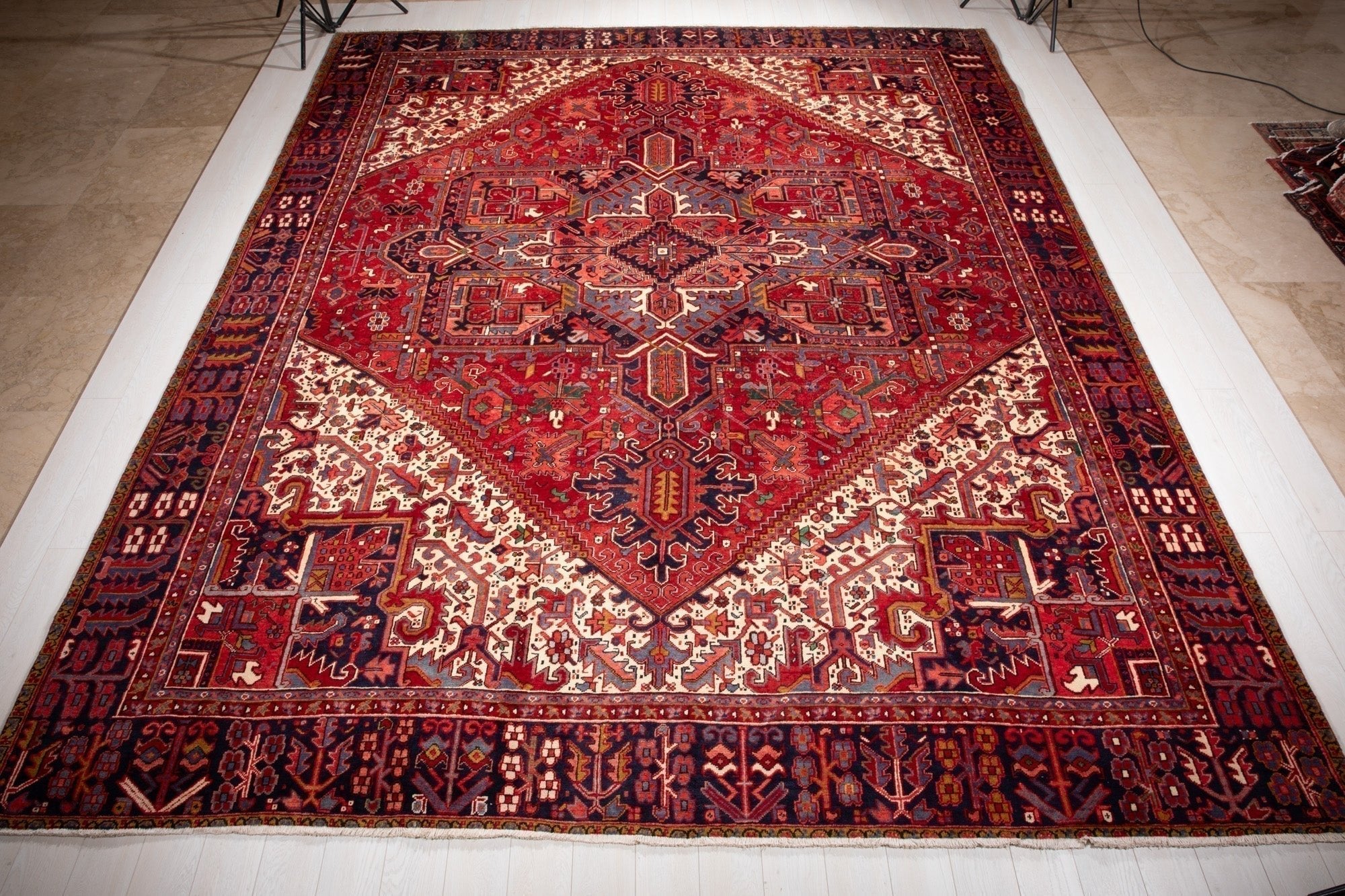
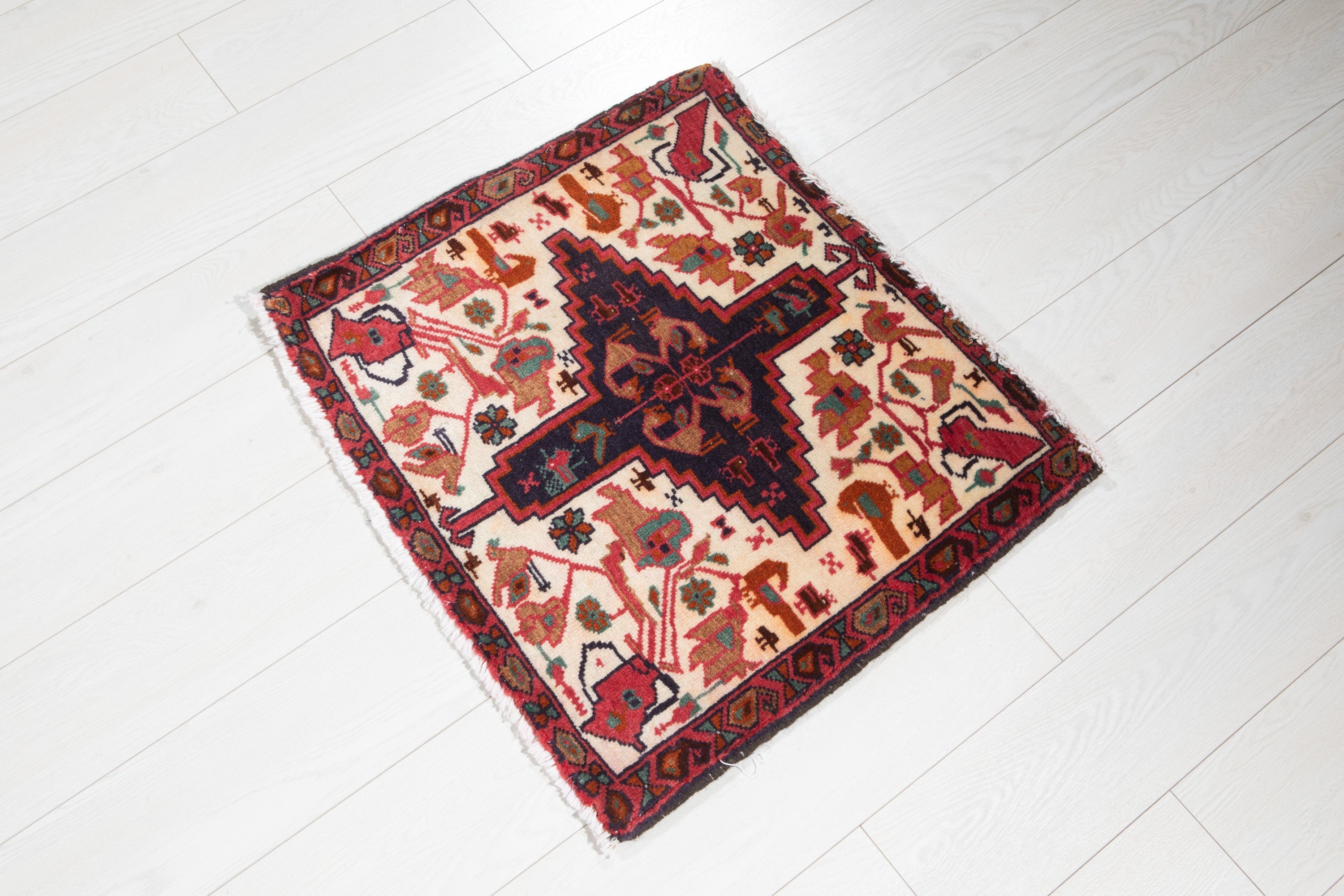
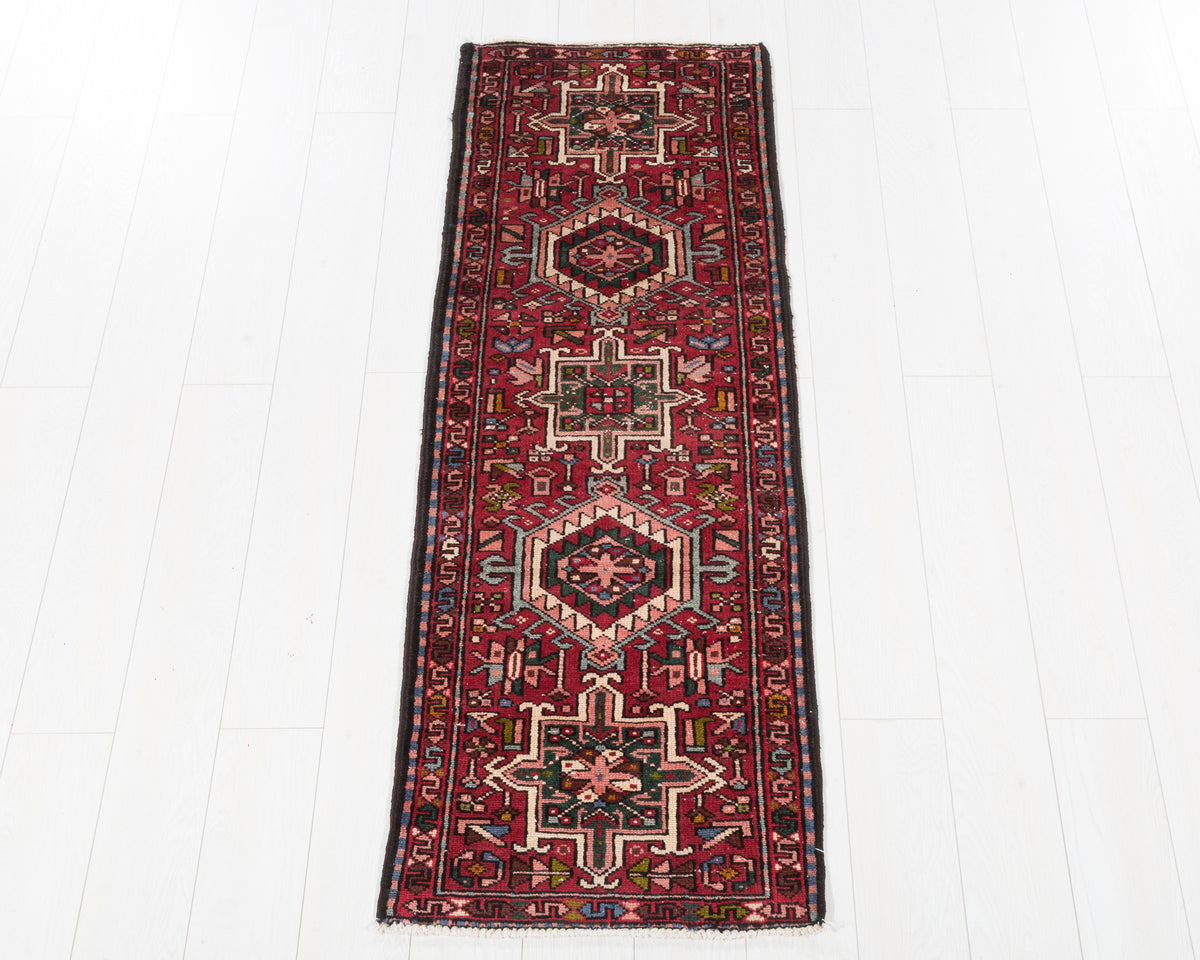
Tapis Heriz et Gharajeh vintage noués à la main — une famille de tissages villageois du nord-ouest de la Perse, reconnue pour ses médaillons angulaires affirmés, ses couleurs saturées et sa laine durable.
The Heriz & Gharajeh Tradition
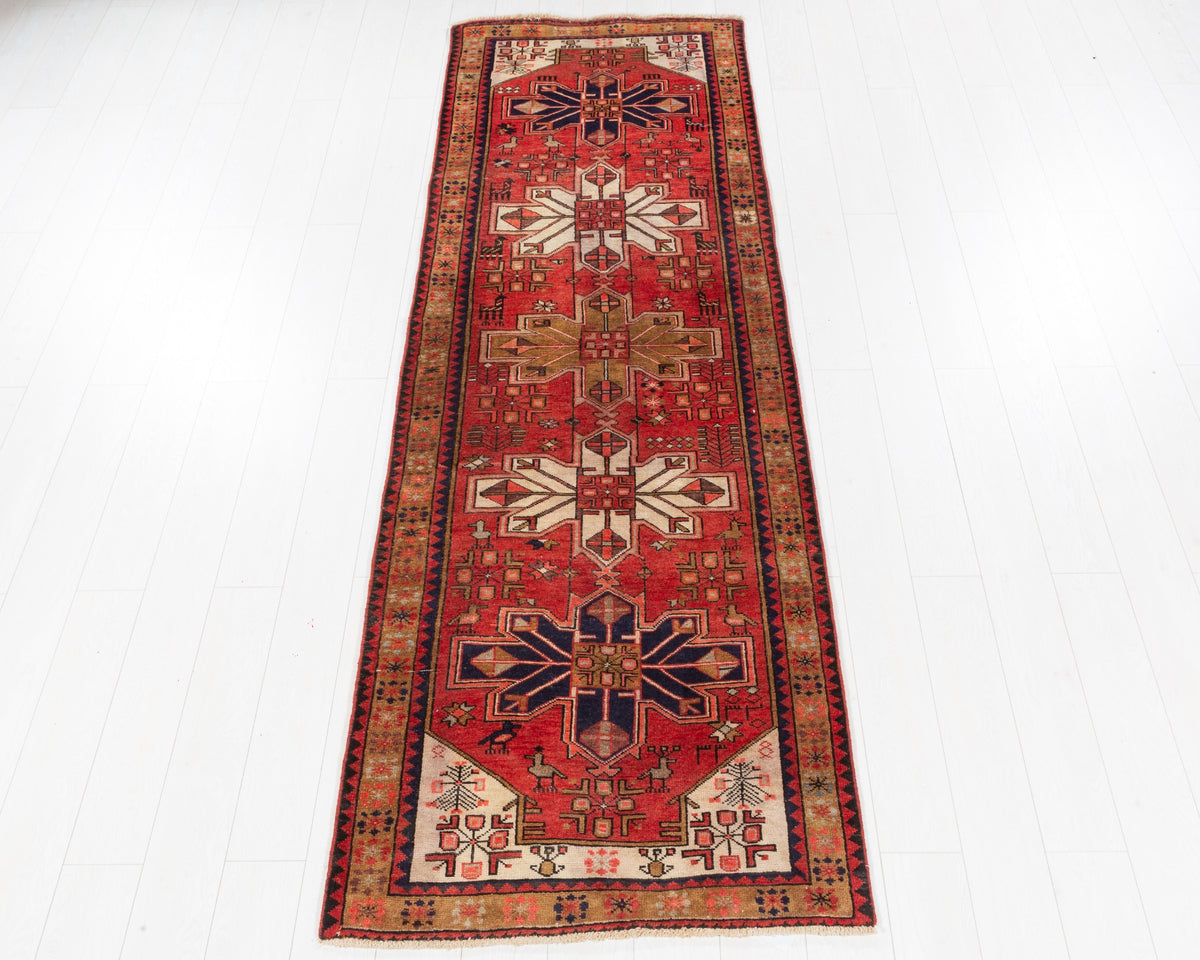
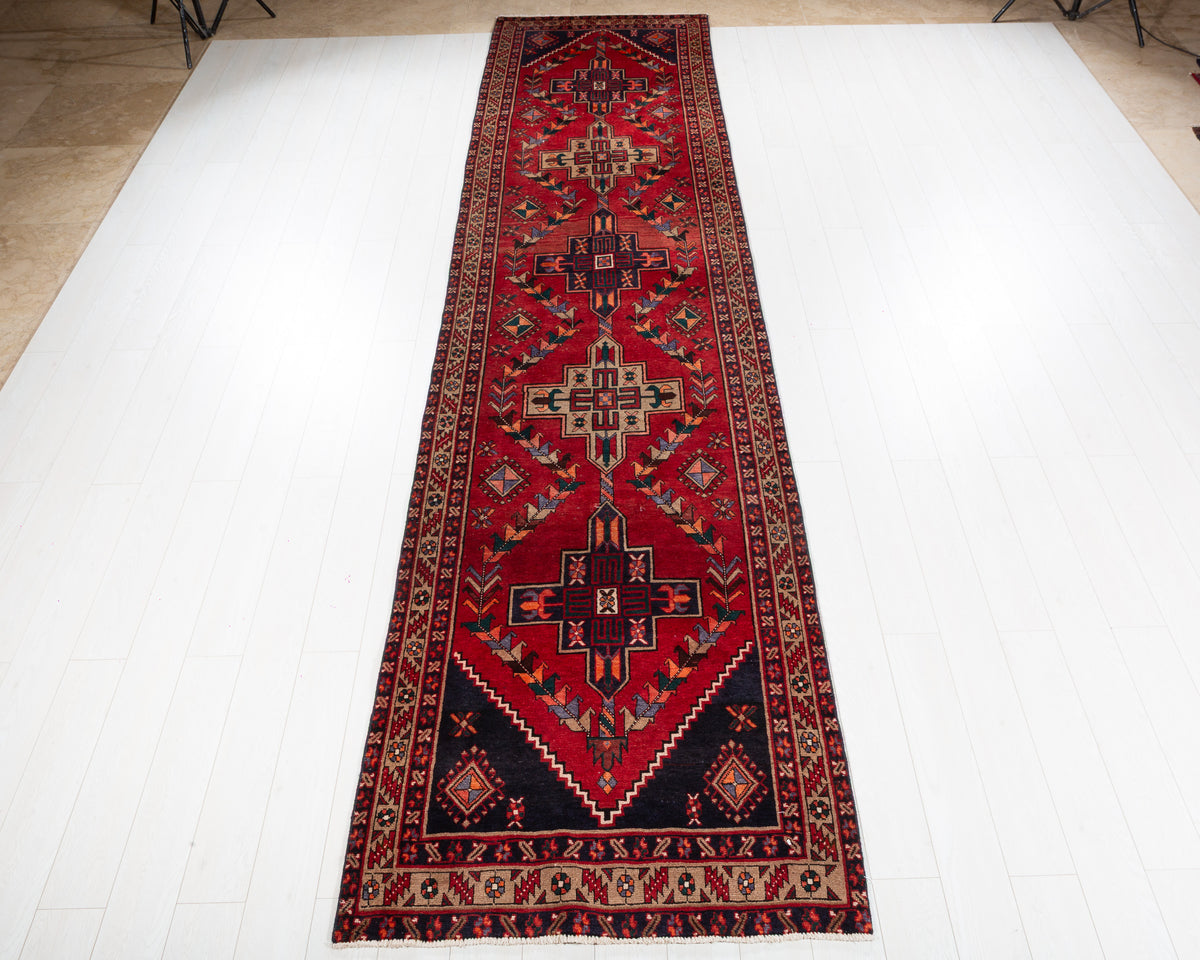
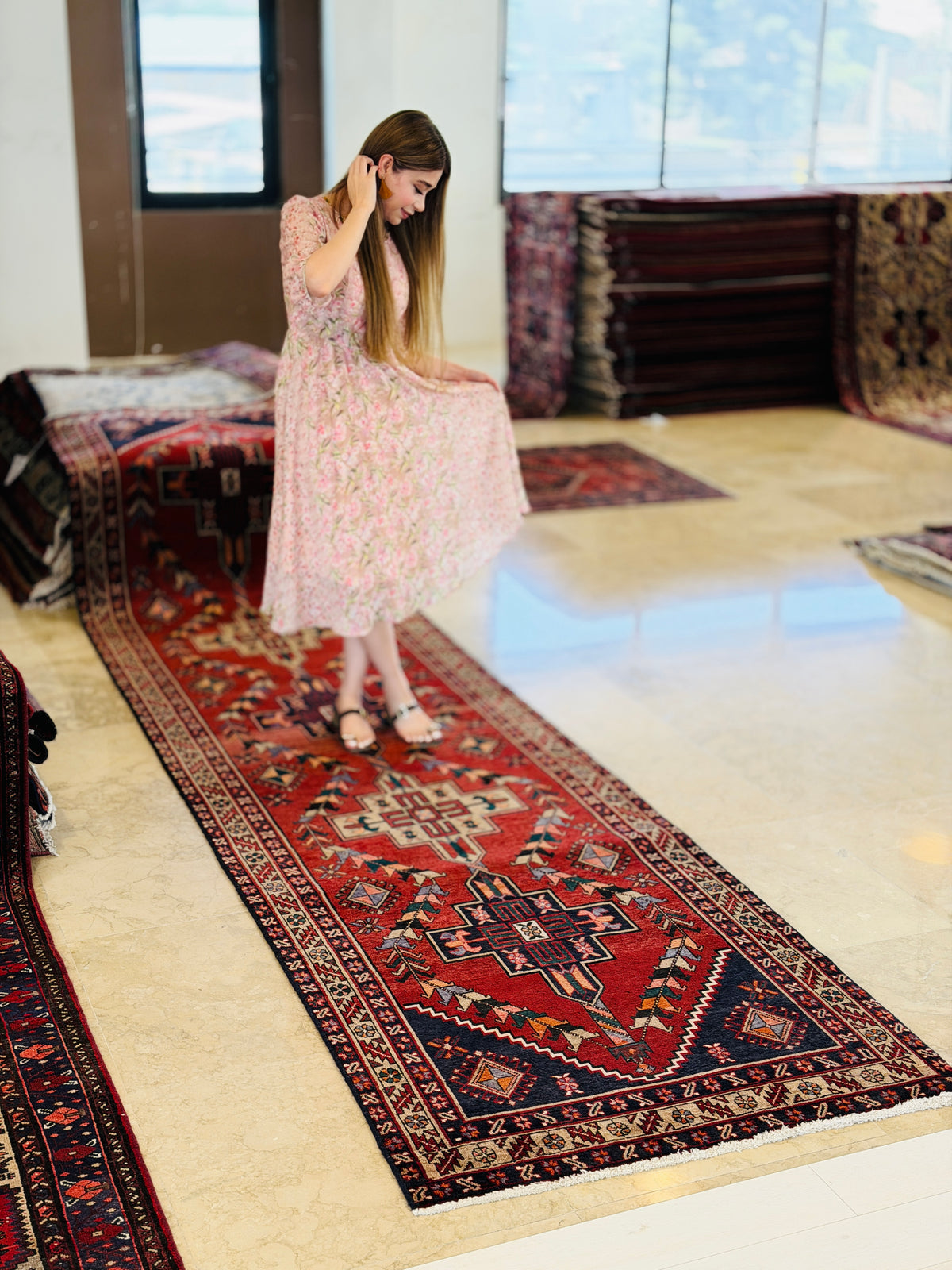
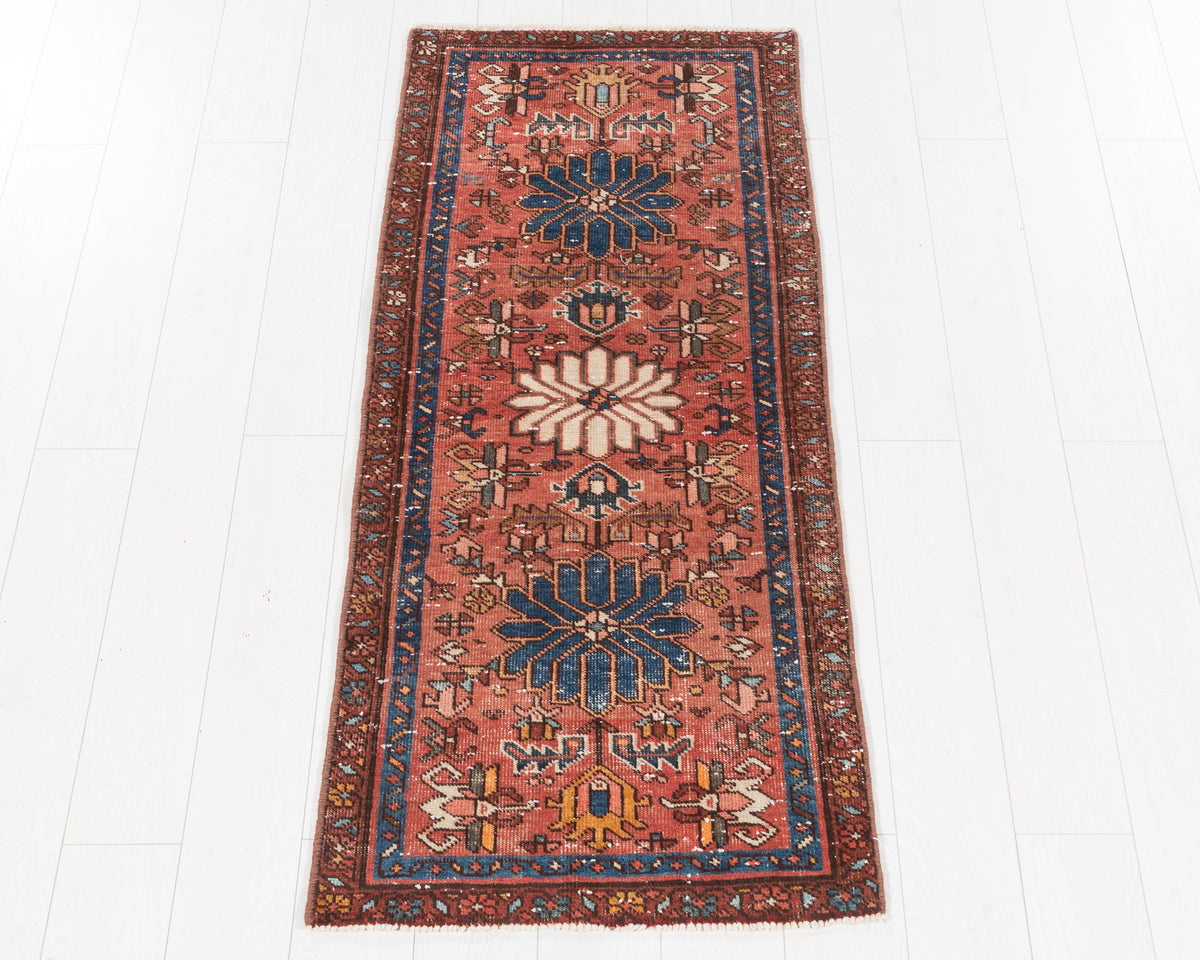
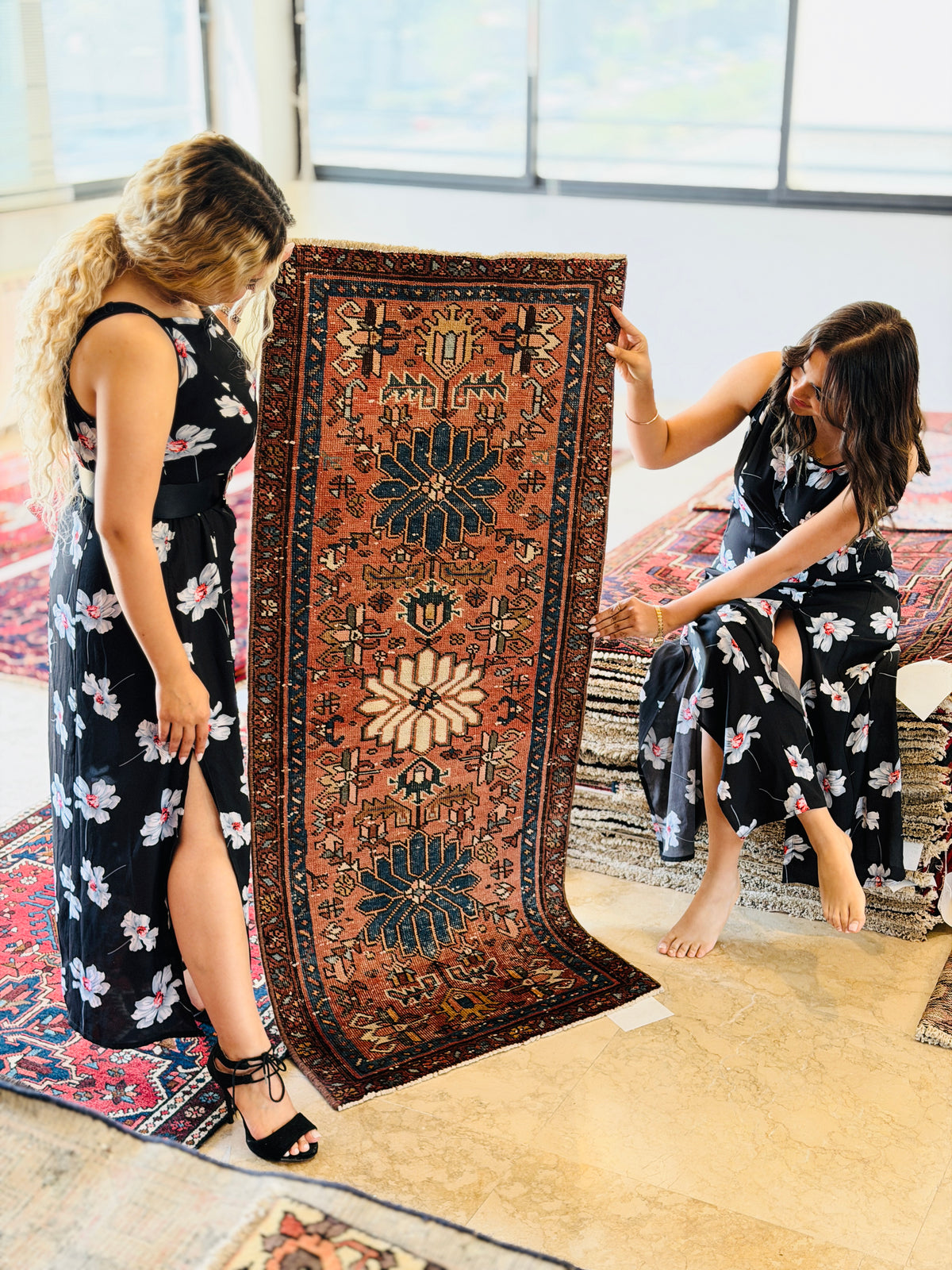
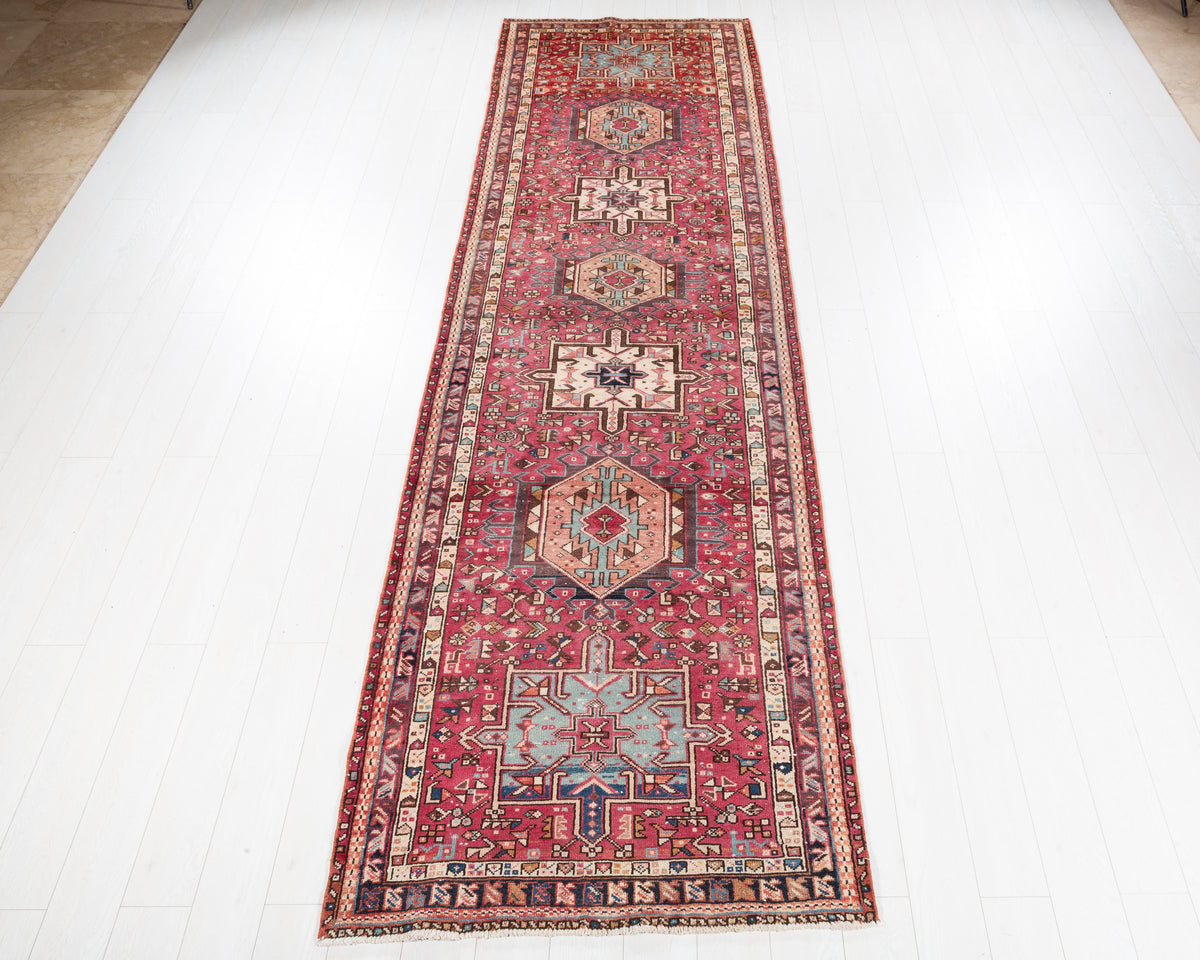
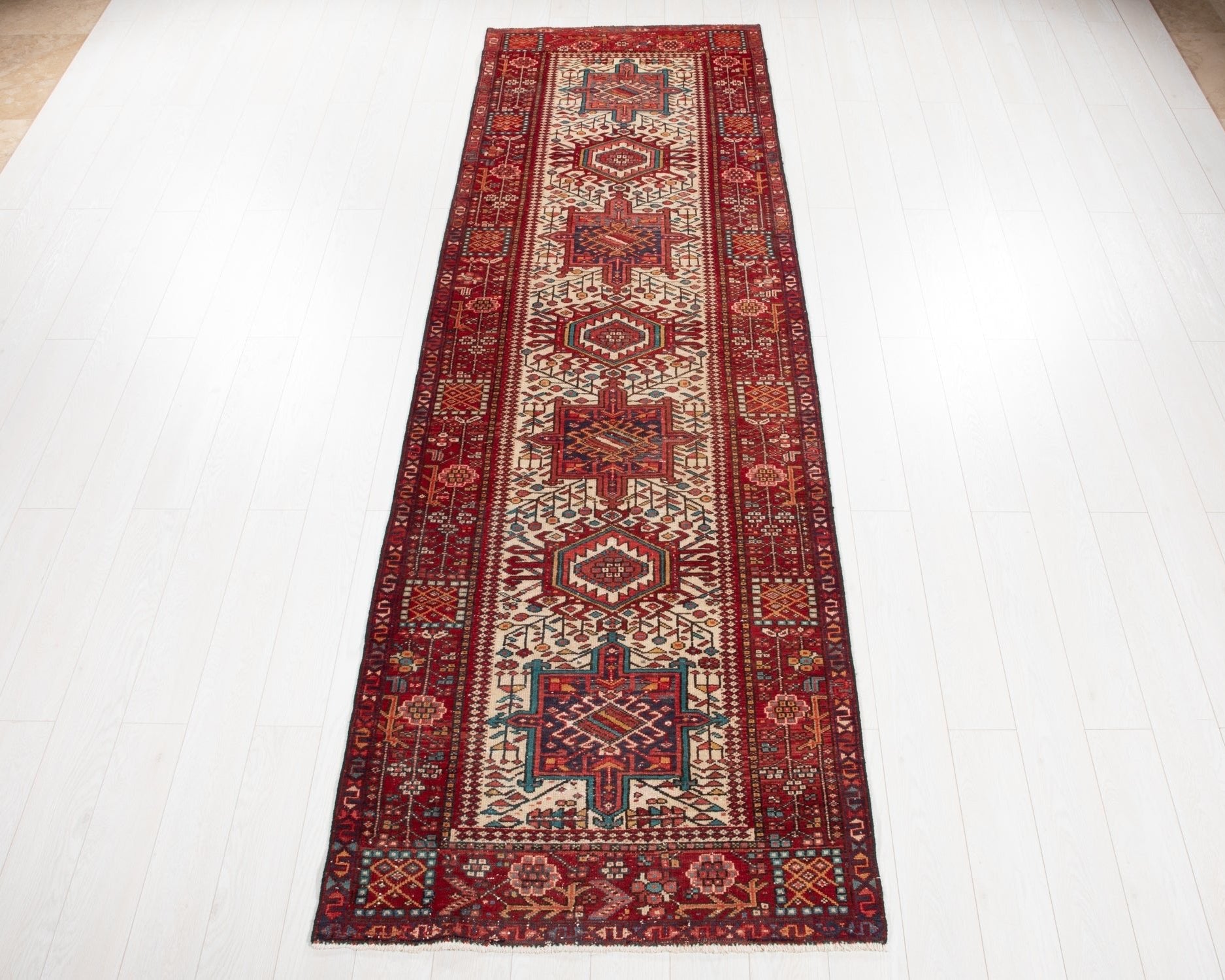
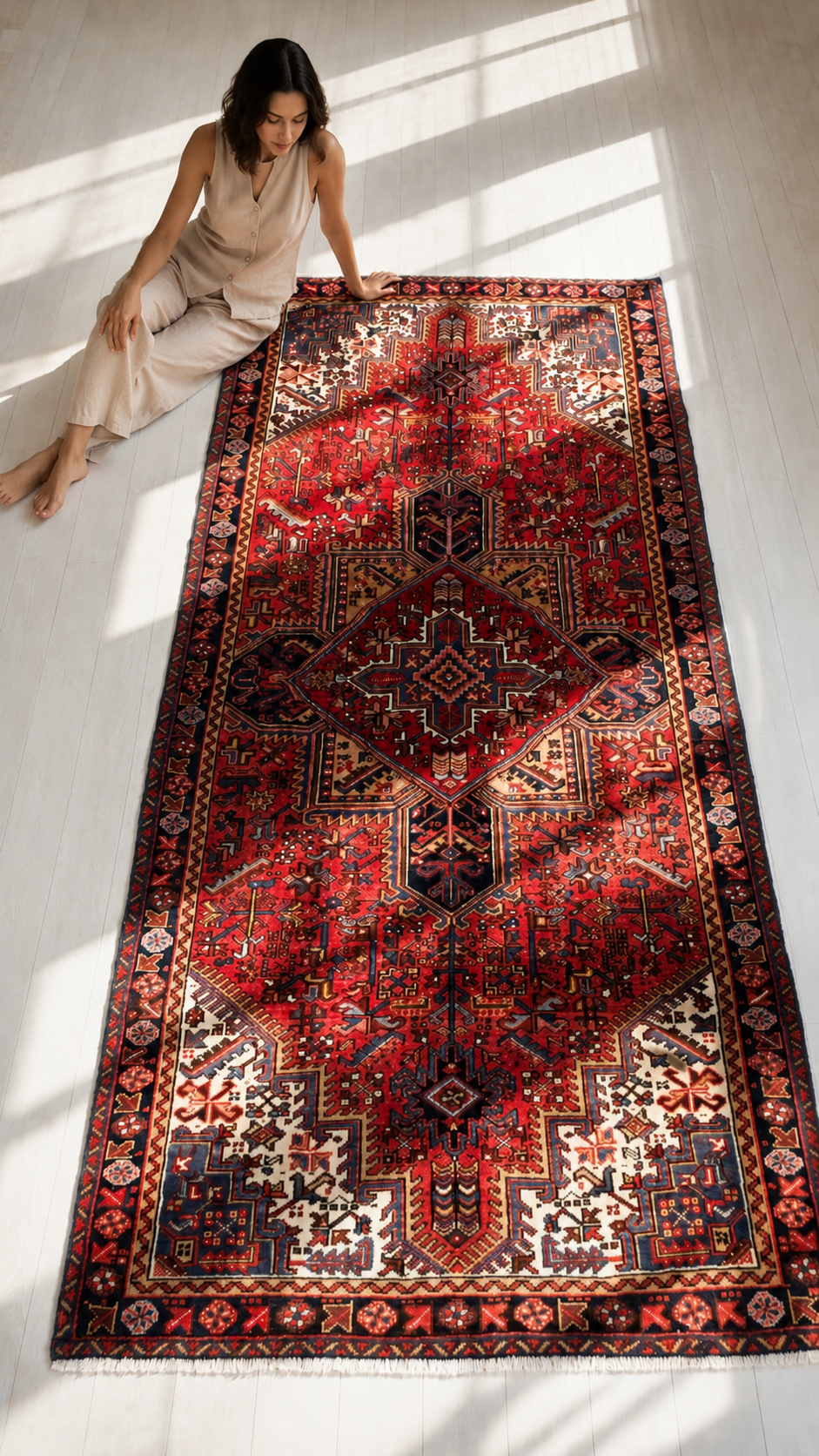
Heriz rugs originate from a cluster of weaving villages in the mountainous Azerbaijan region, where generations of village weavers developed one of Persia's most recognizable rug traditions. Unlike the fine curvilinear designs of nearby city workshops, Heriz weavers favored bold, angular medallions and geometric field patterns — a style shaped as much by practicality as artistry, since the coarser weave and thick, durable wool were built to withstand generations of daily use. Gharajeh — also spelled Karaja or Karaje — is a smaller weaving village within the same Heriz family, producing rugs with a related but distinct character: tighter geometric repeats, often in narrower runner formats, and a slightly more graphic, folk-art sensibility. Collectors often group Heriz and Gharajeh (or Karaja/Karaje) rugs together, since they share the same durable wool, natural dyes, and hand-knotted construction, just at a more intimate village scale. What makes vintage Heriz and Gharajeh rugs enduringly popular today is that same combination: strong graphic presence that holds up in both traditional and modern interiors, paired with a wool pile dense enough to outlast most machine-made alternatives by decades. Every piece in this collection is a genuine vintage rug, hand-selected for structural soundness and authentic craftsmanship — no two are alike.