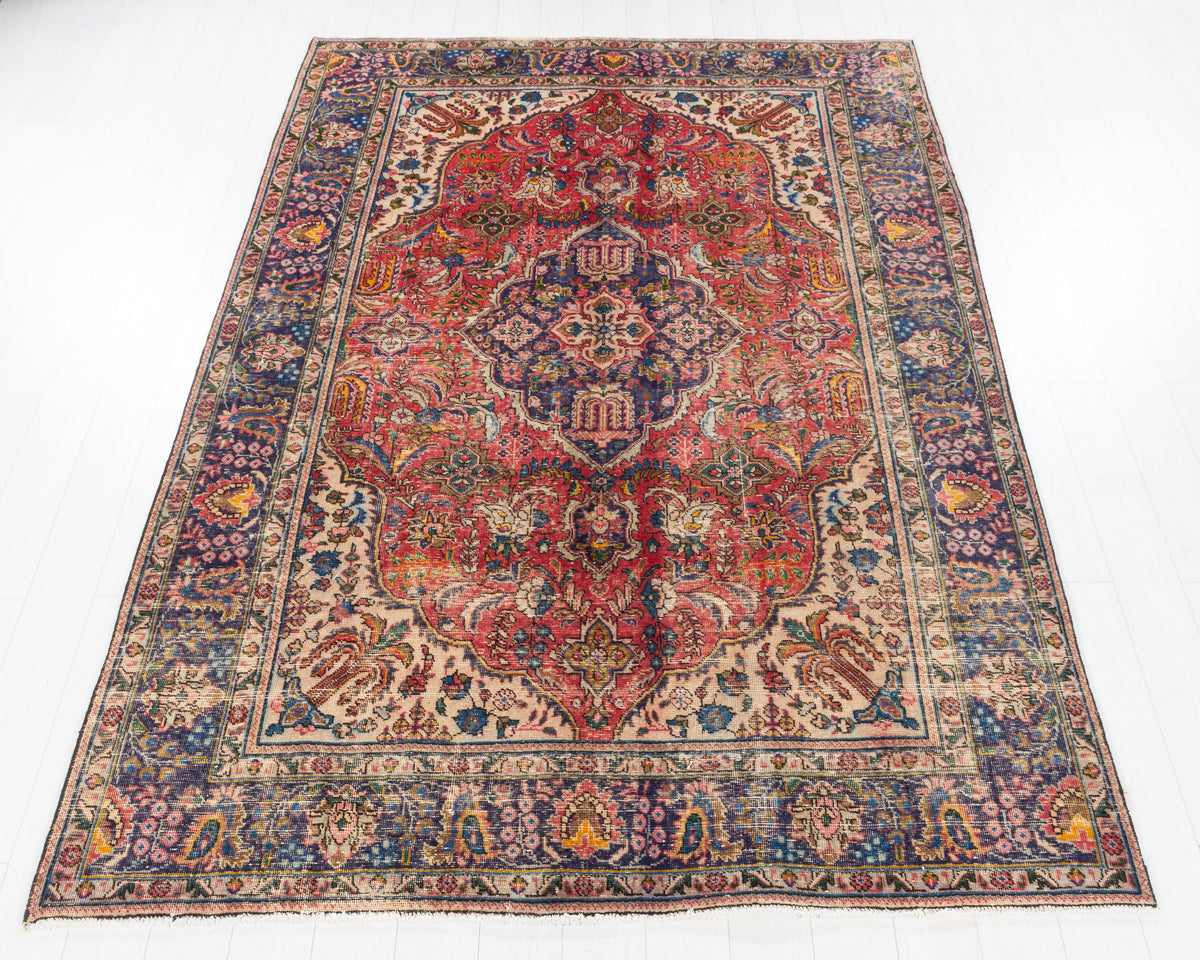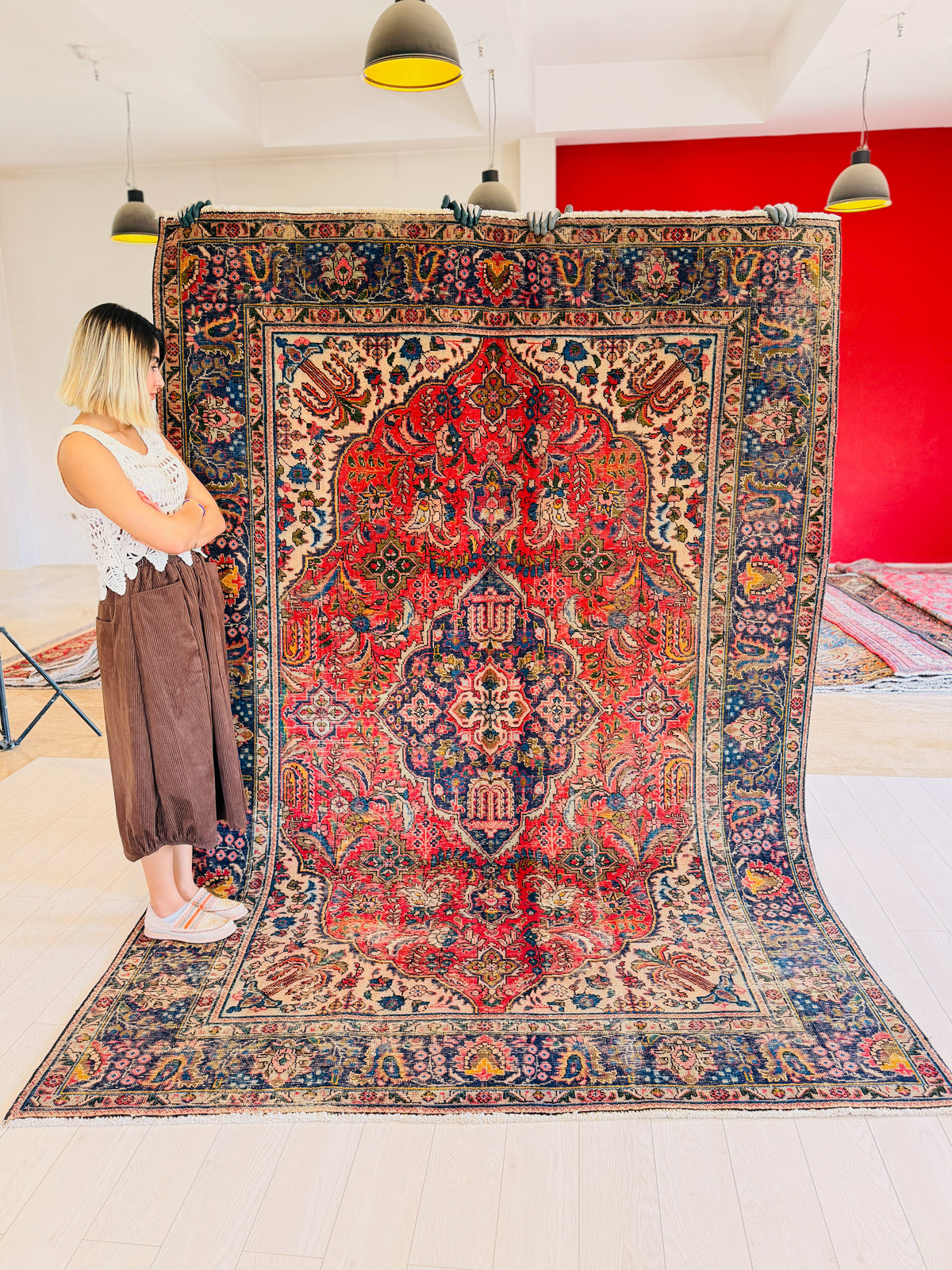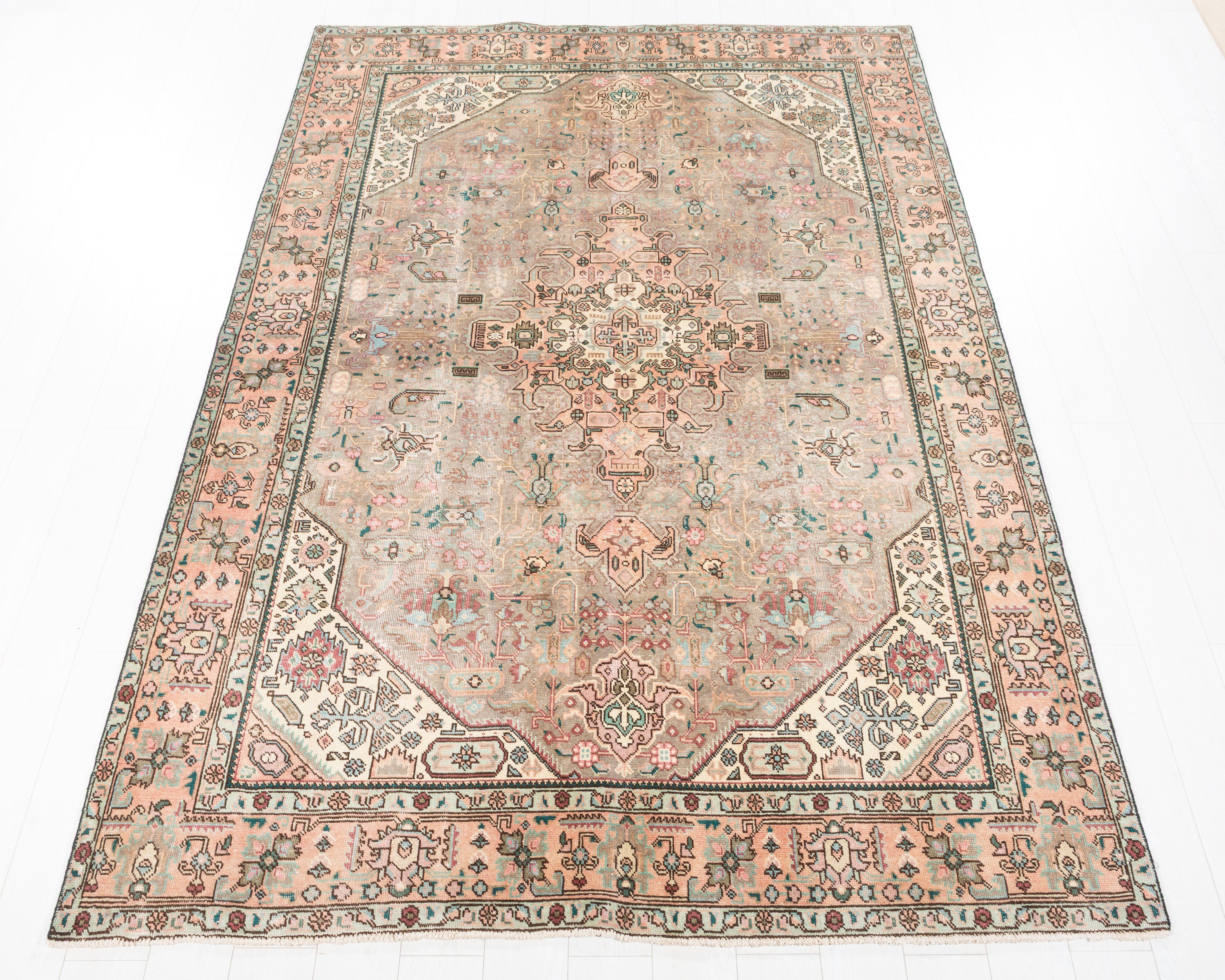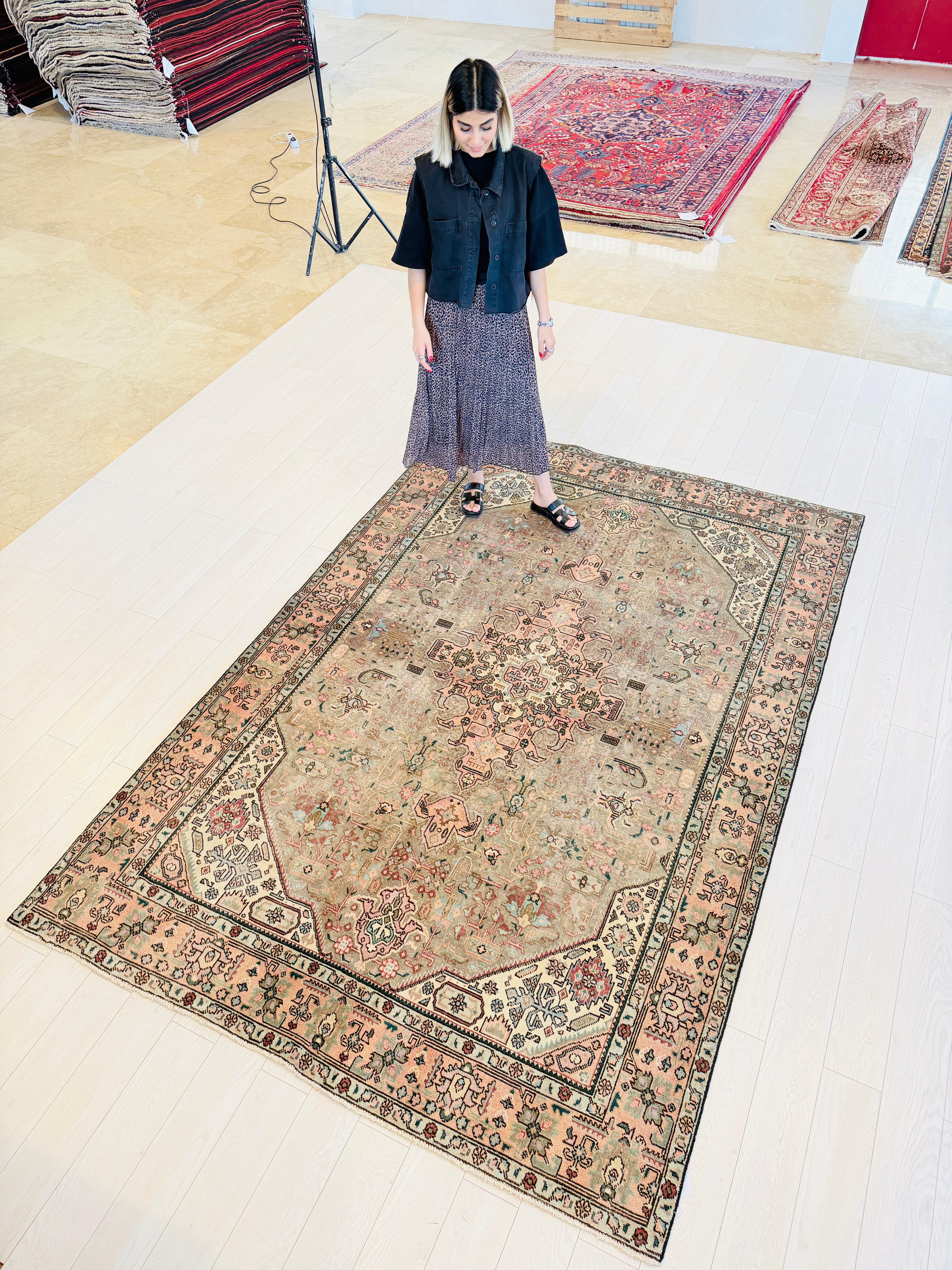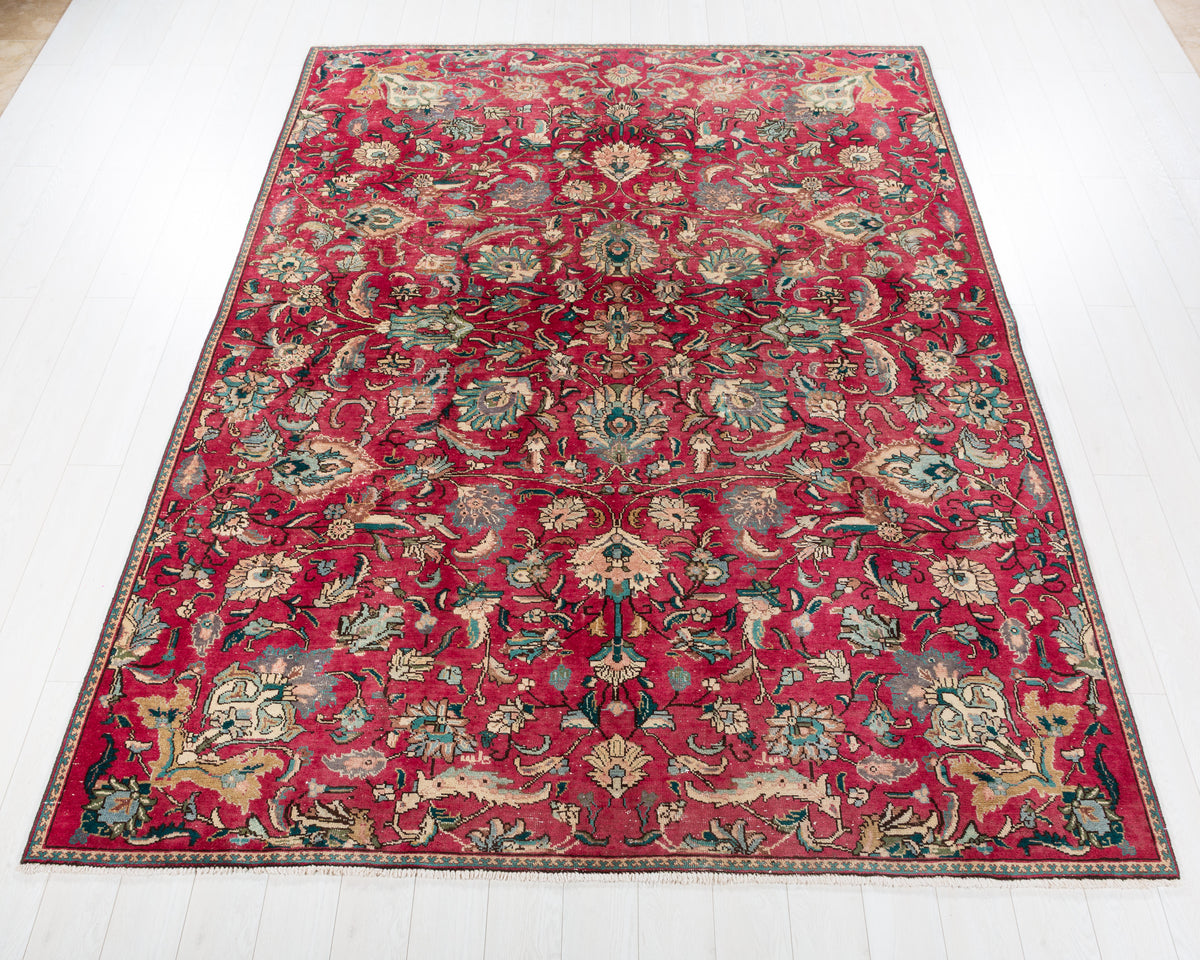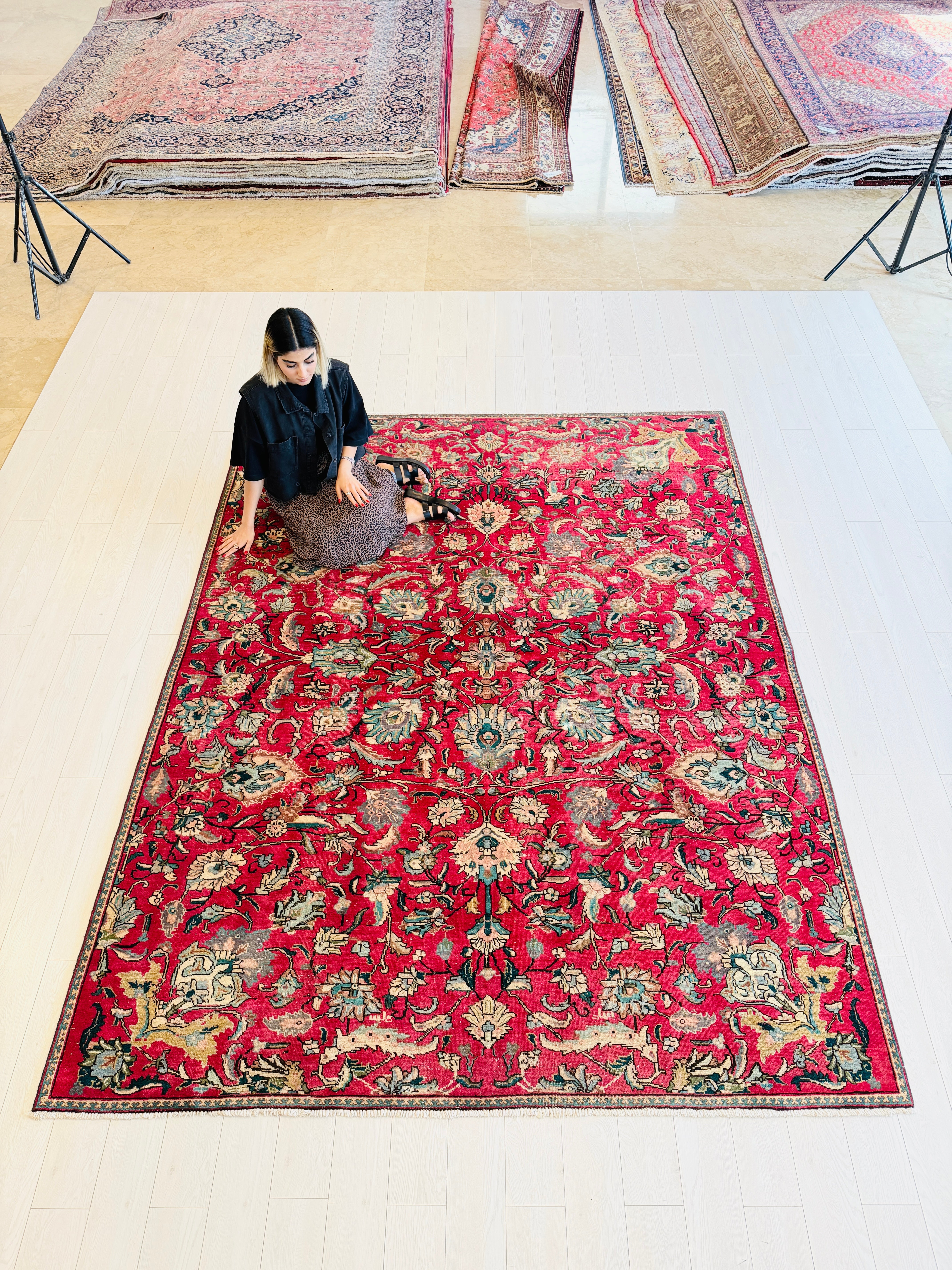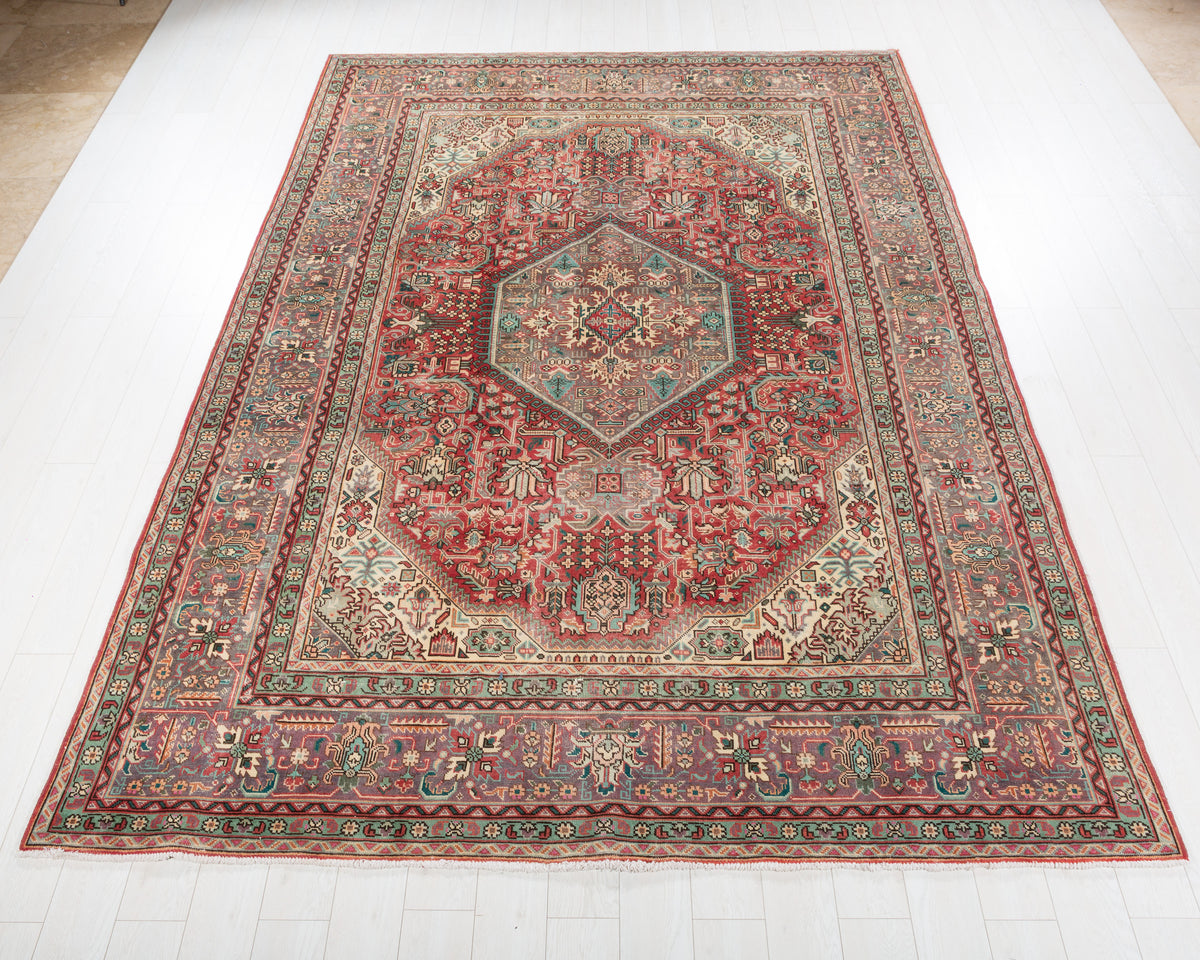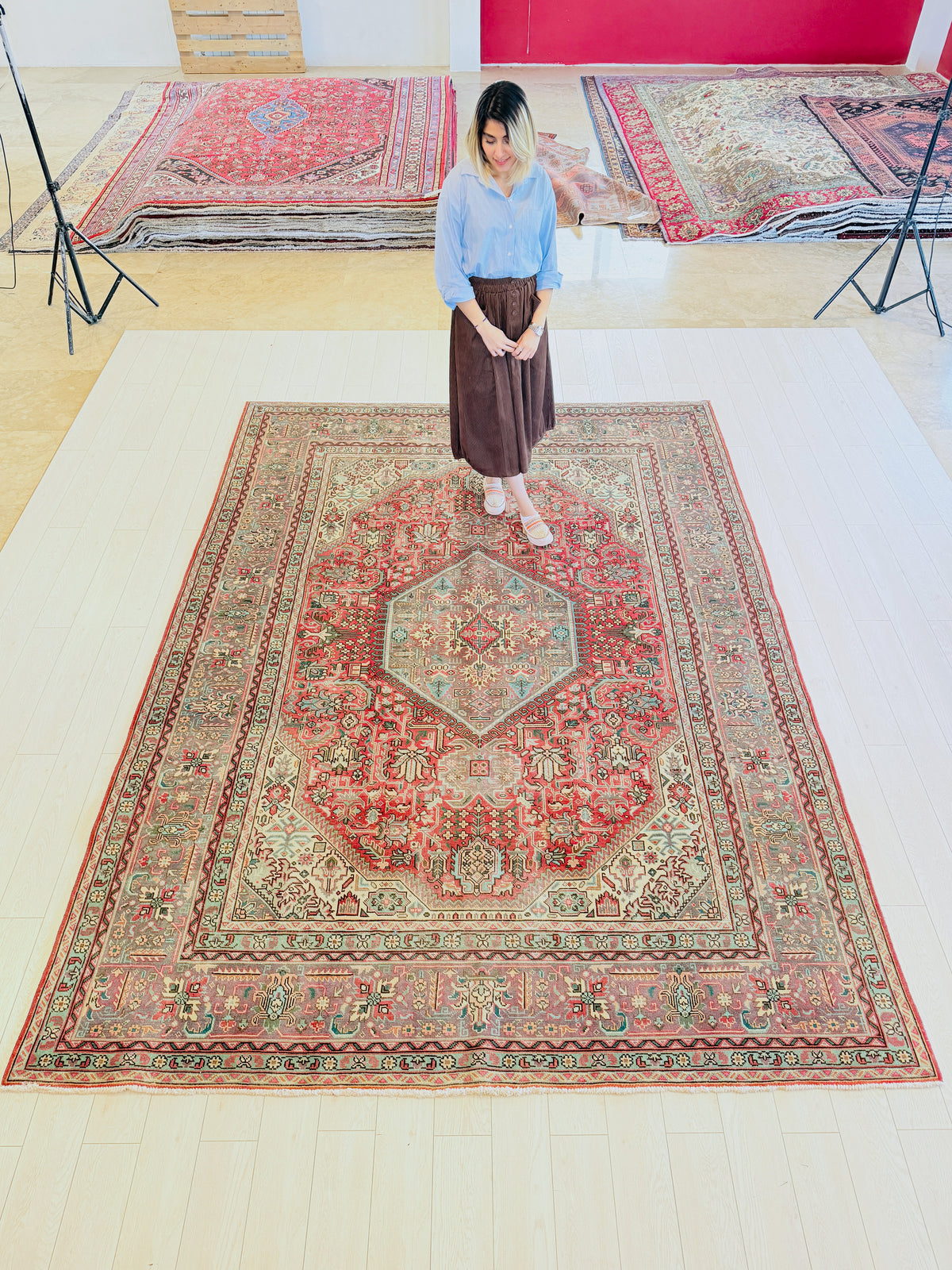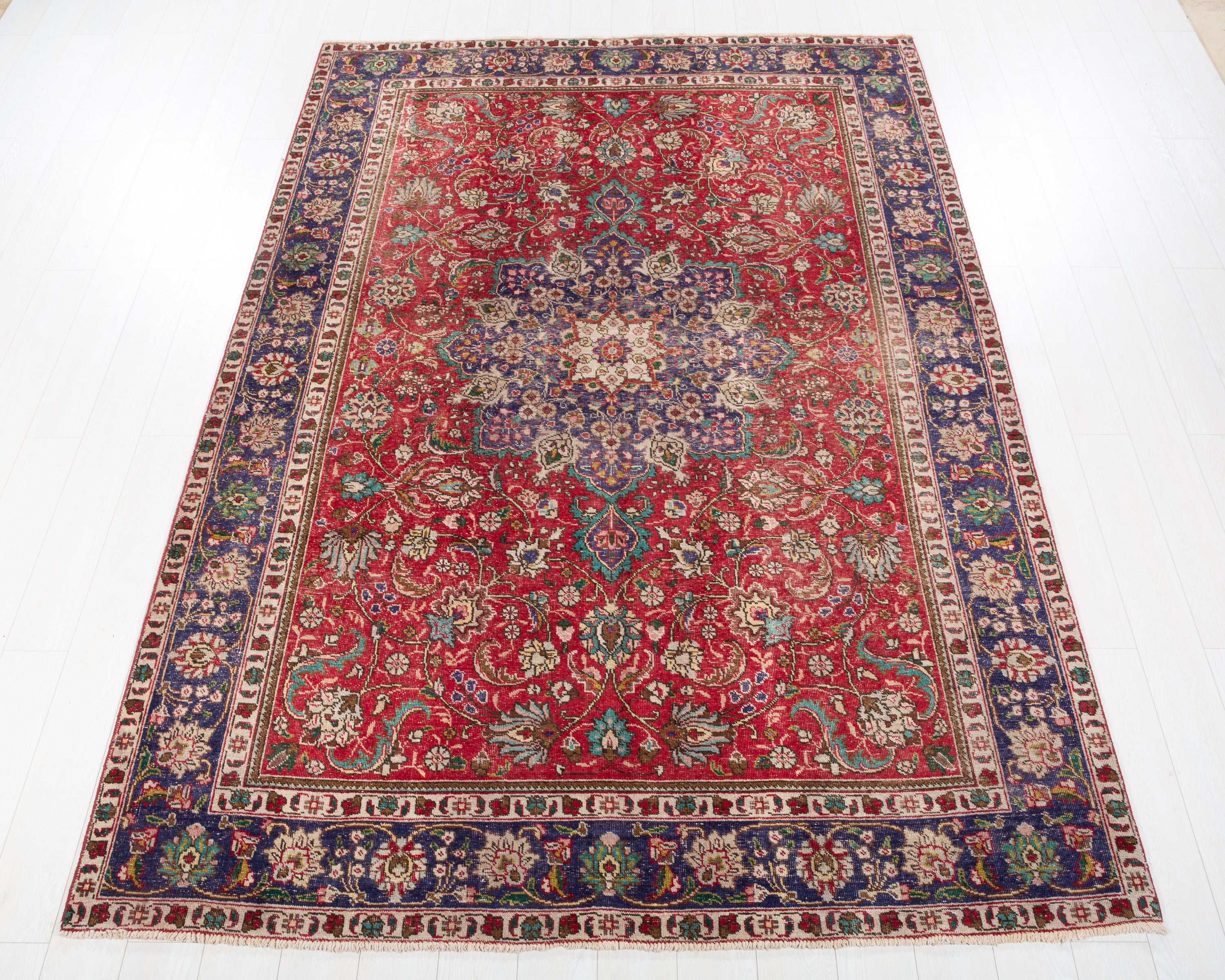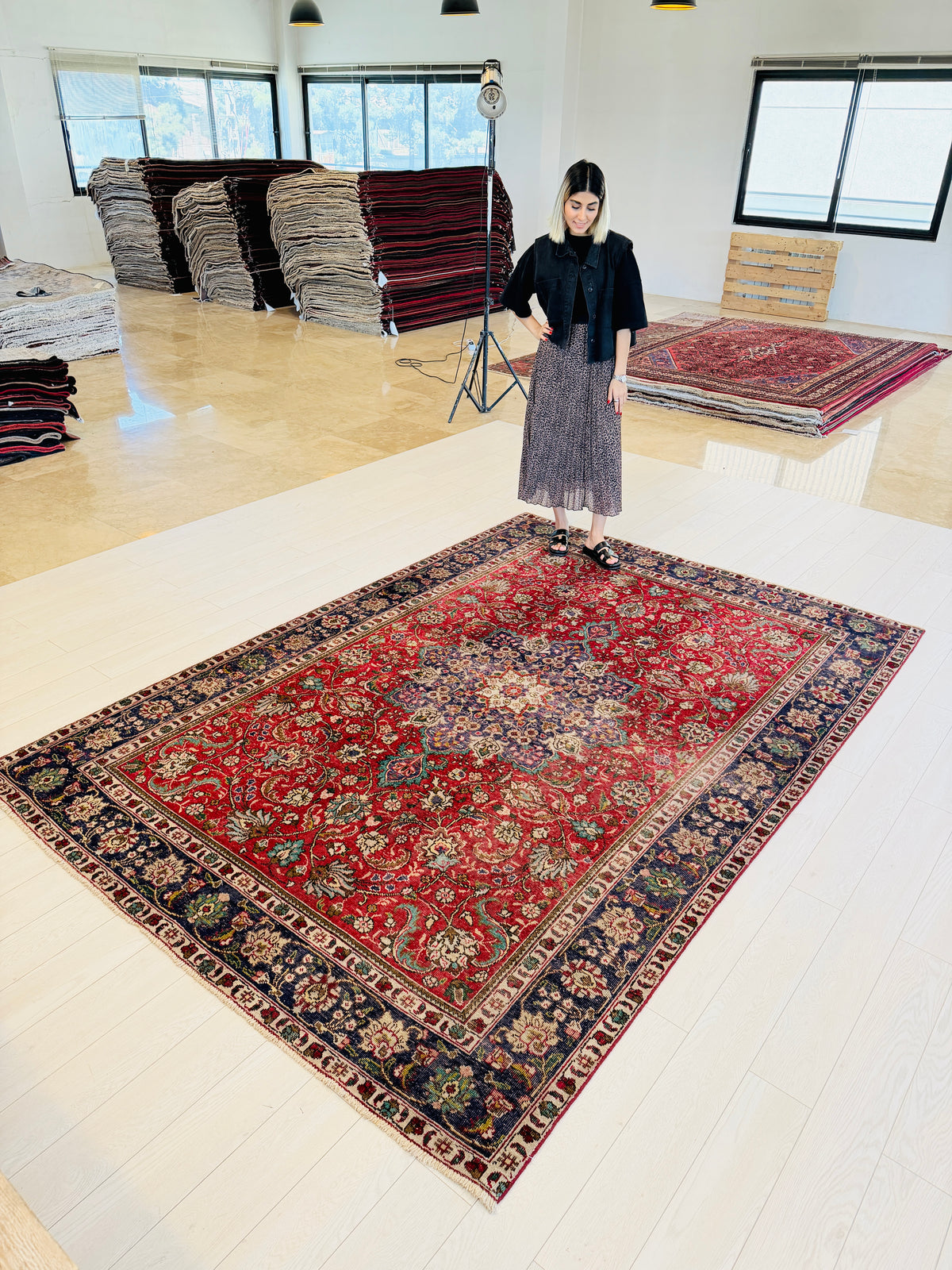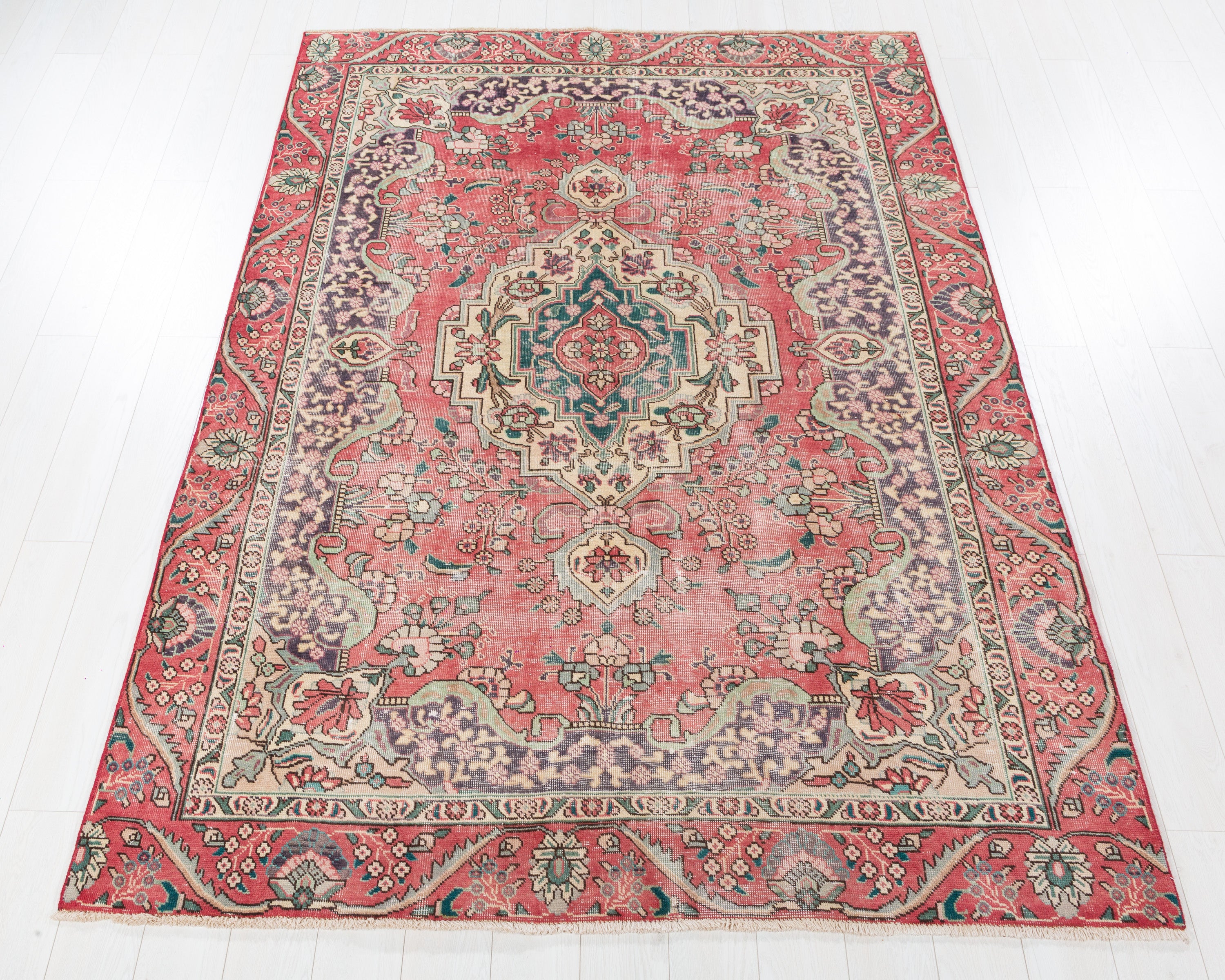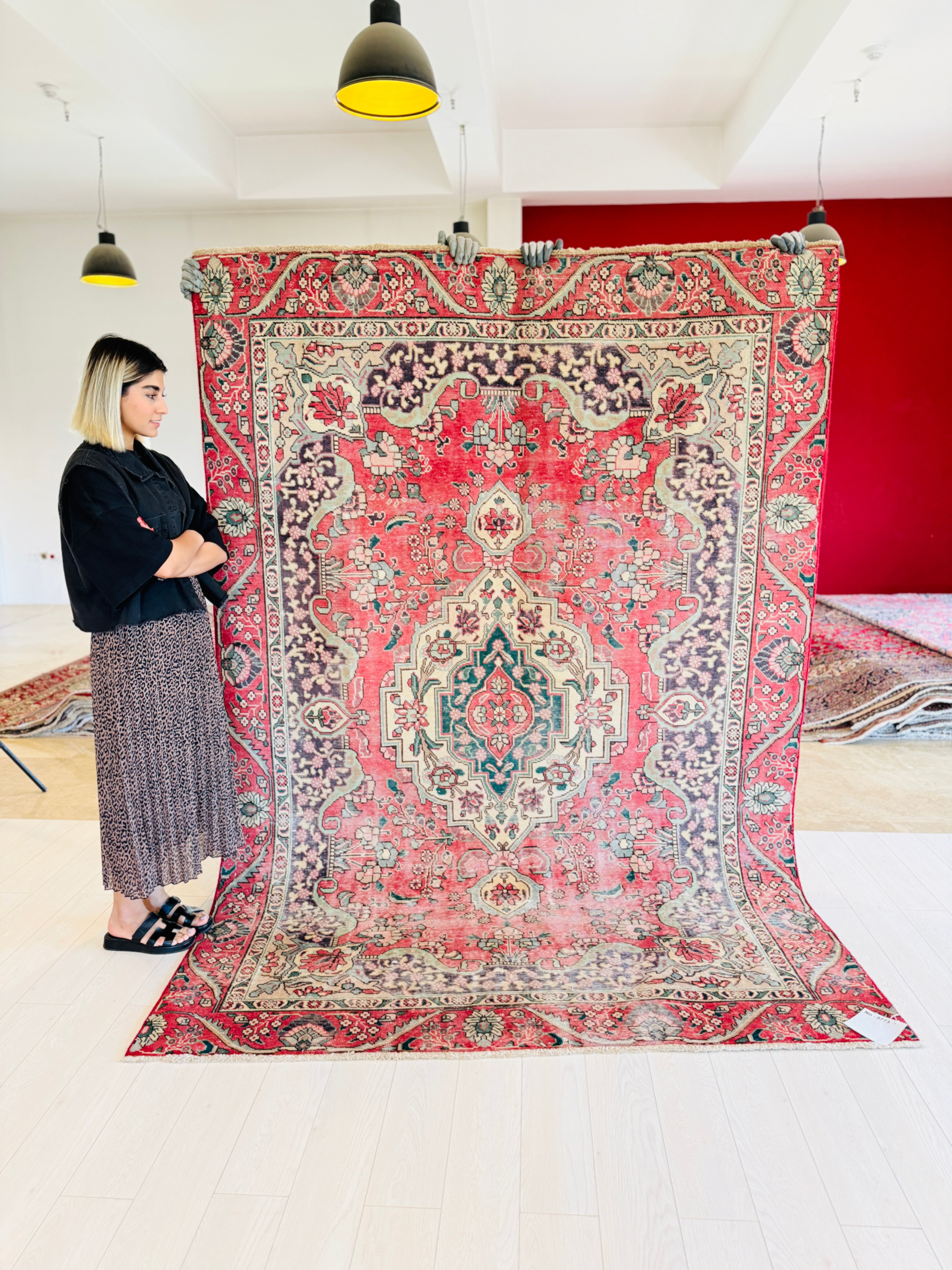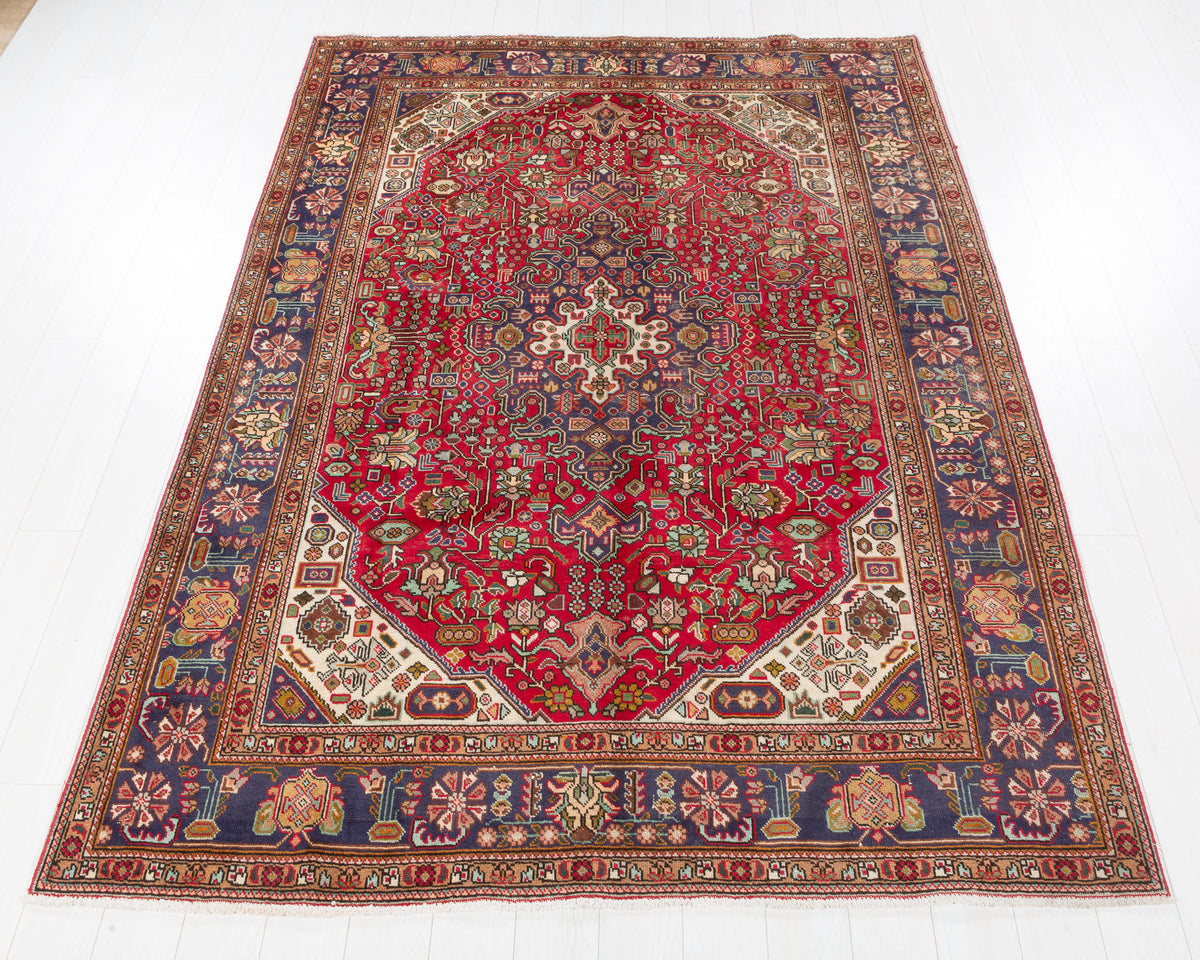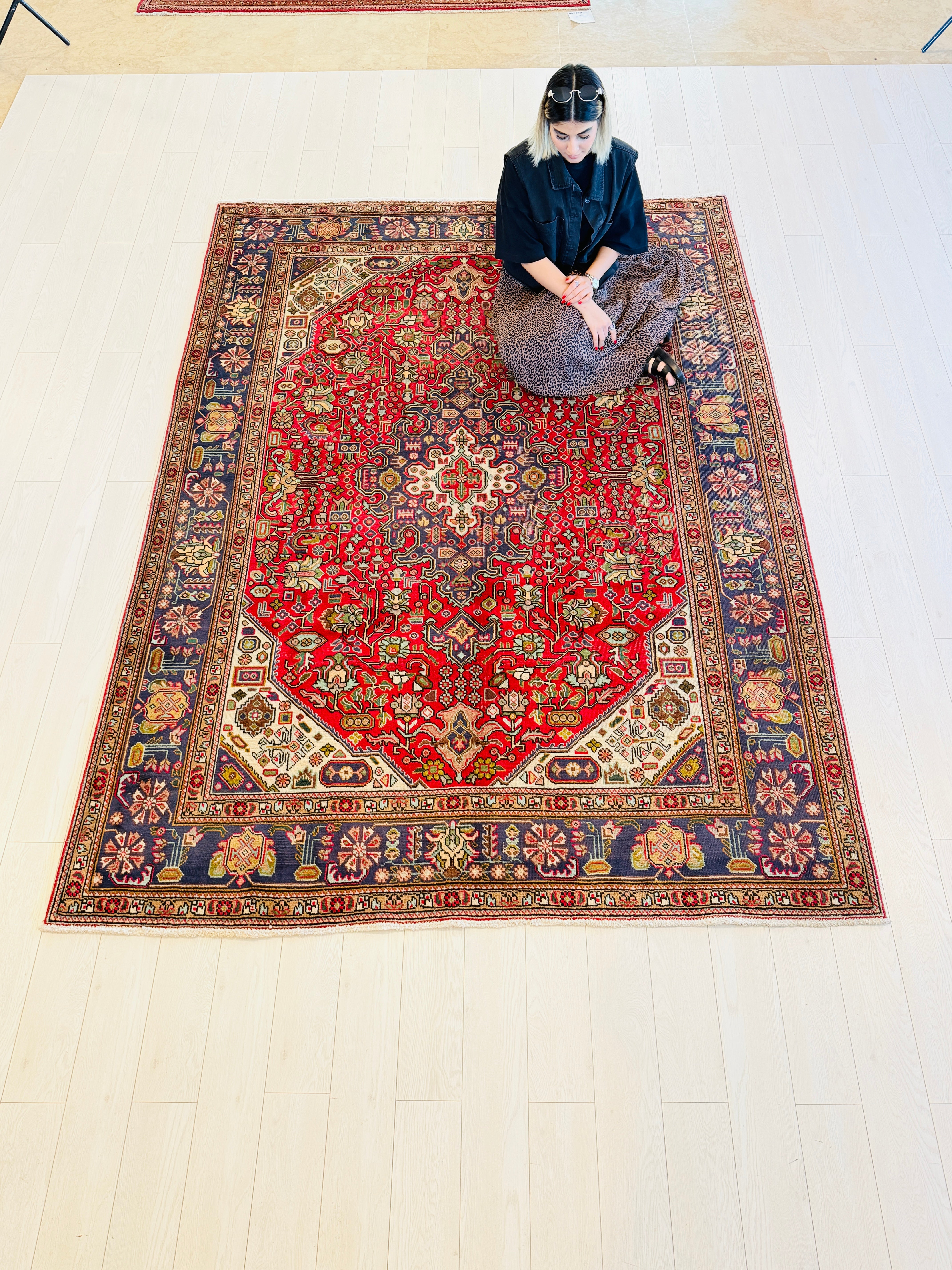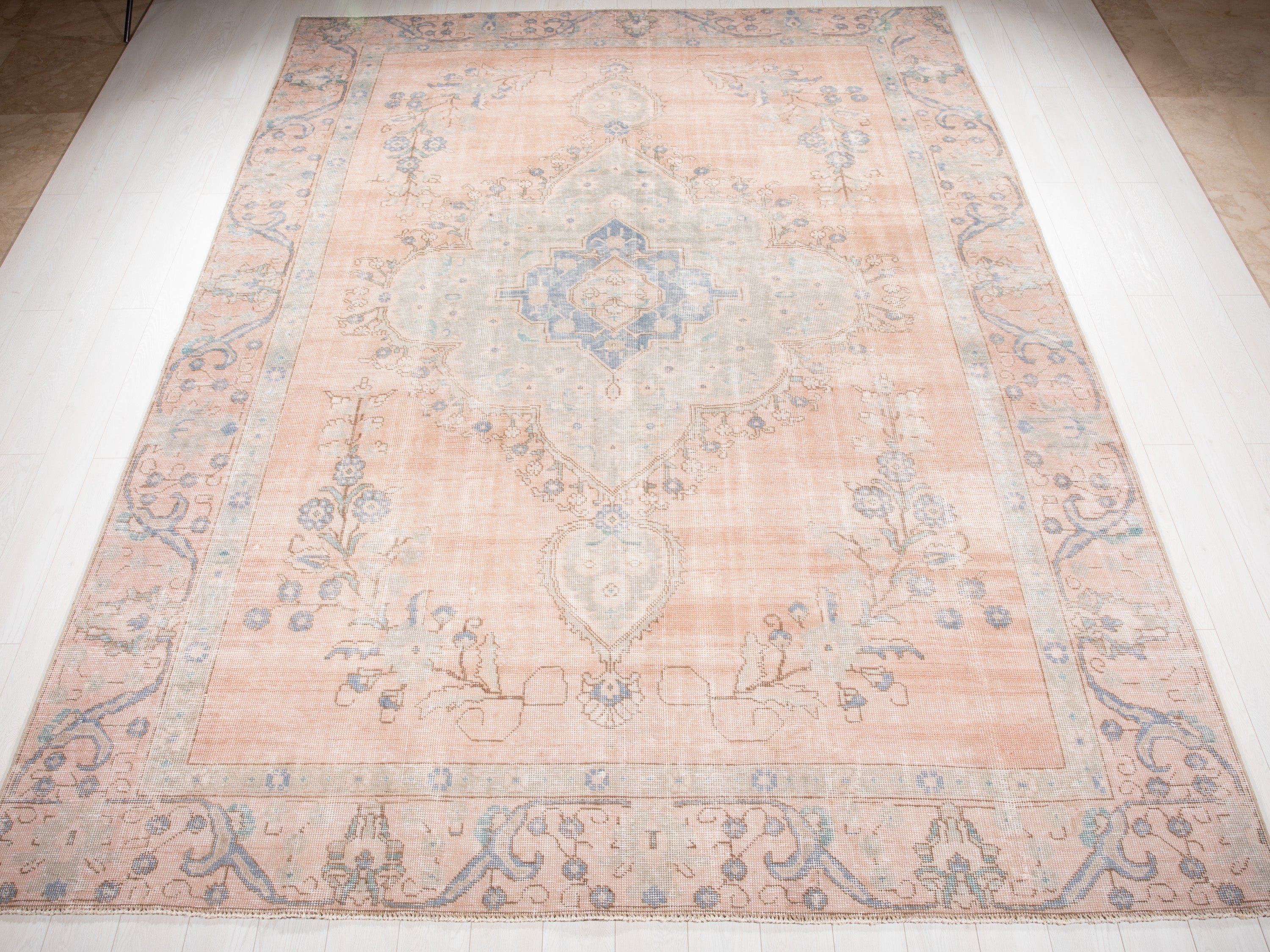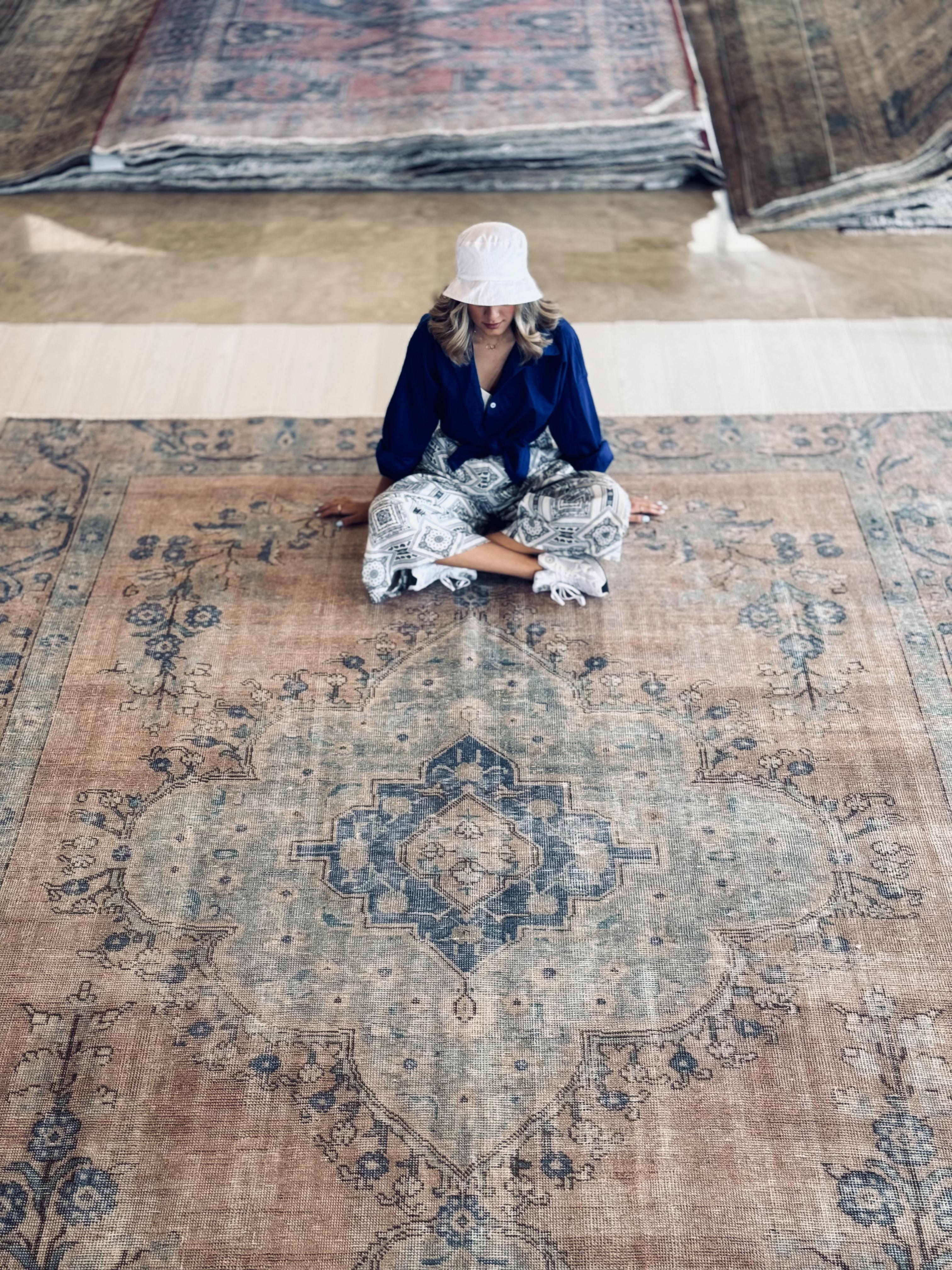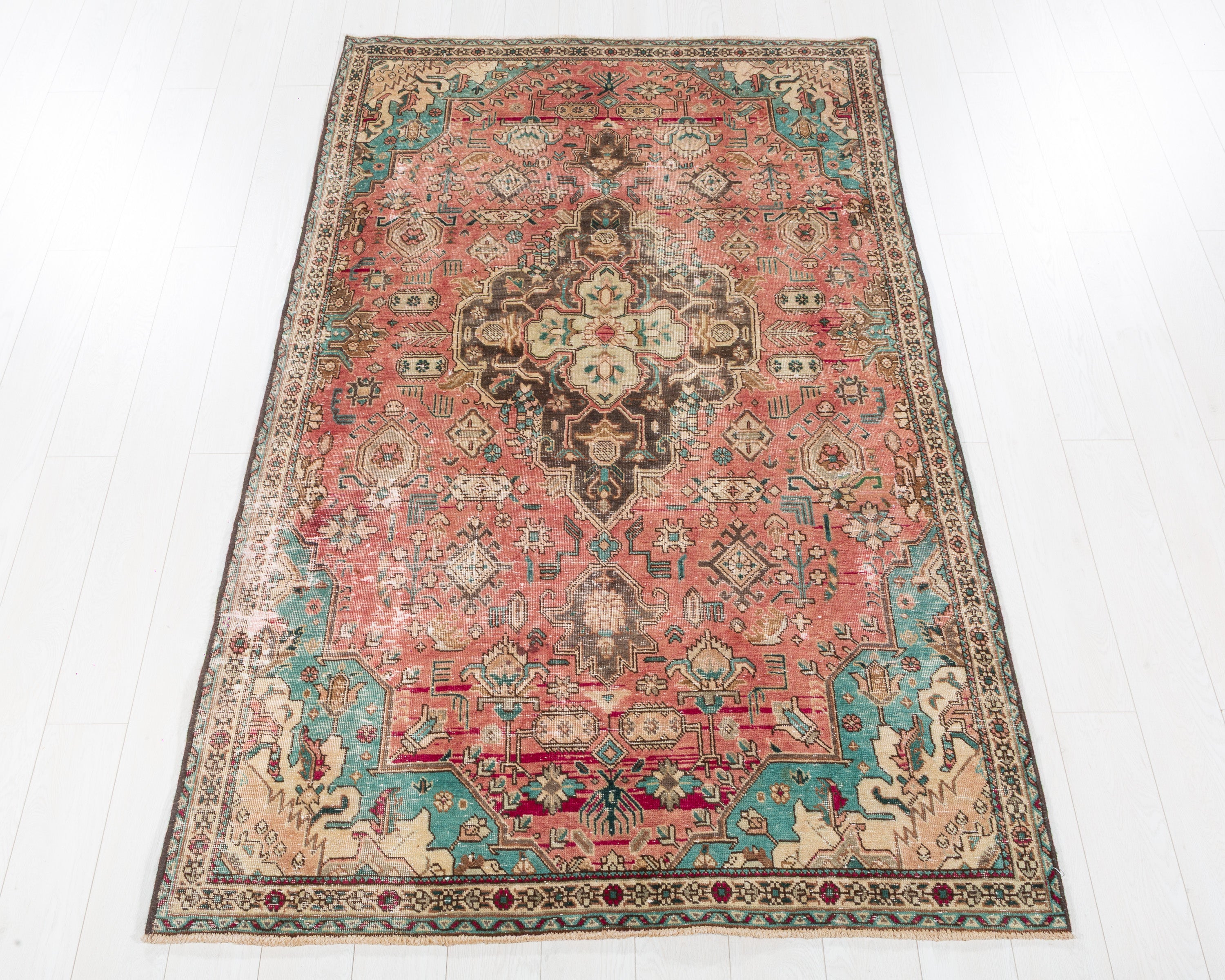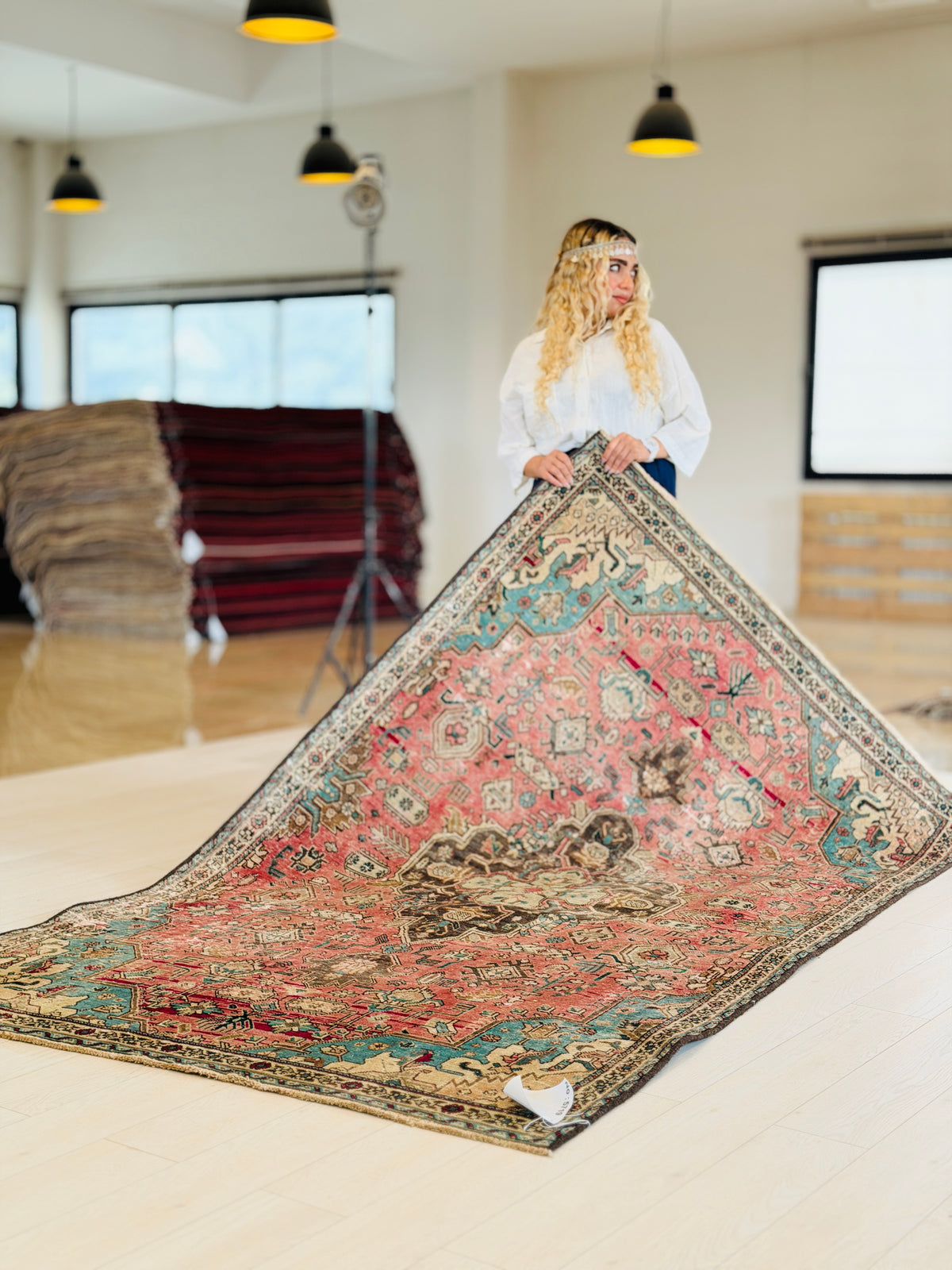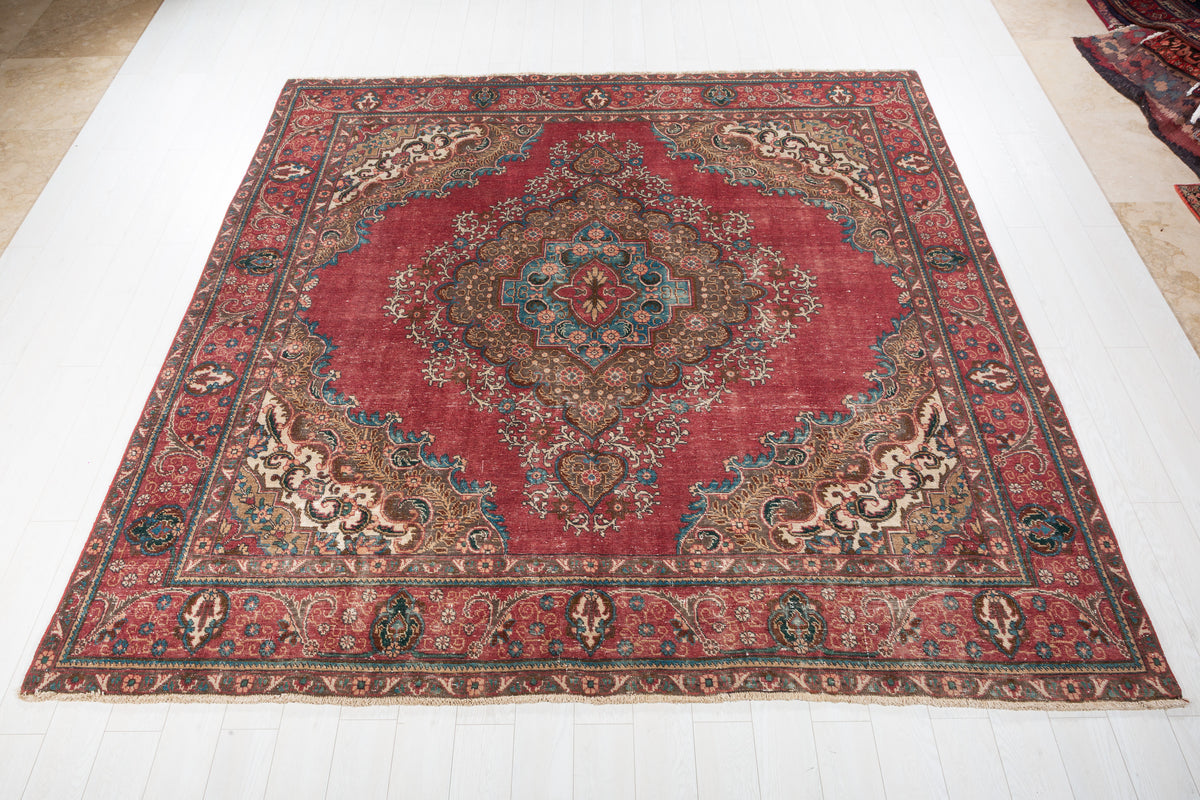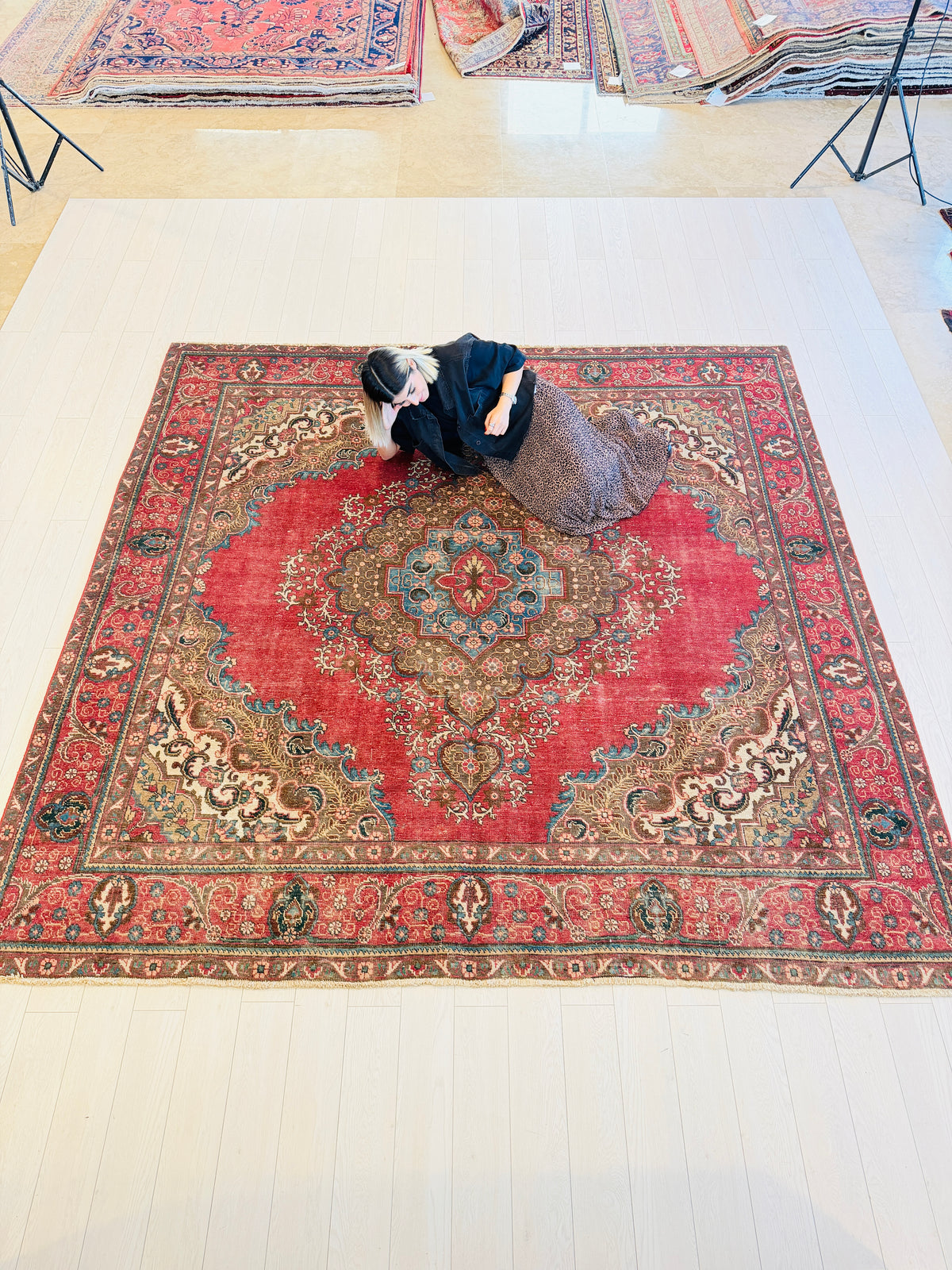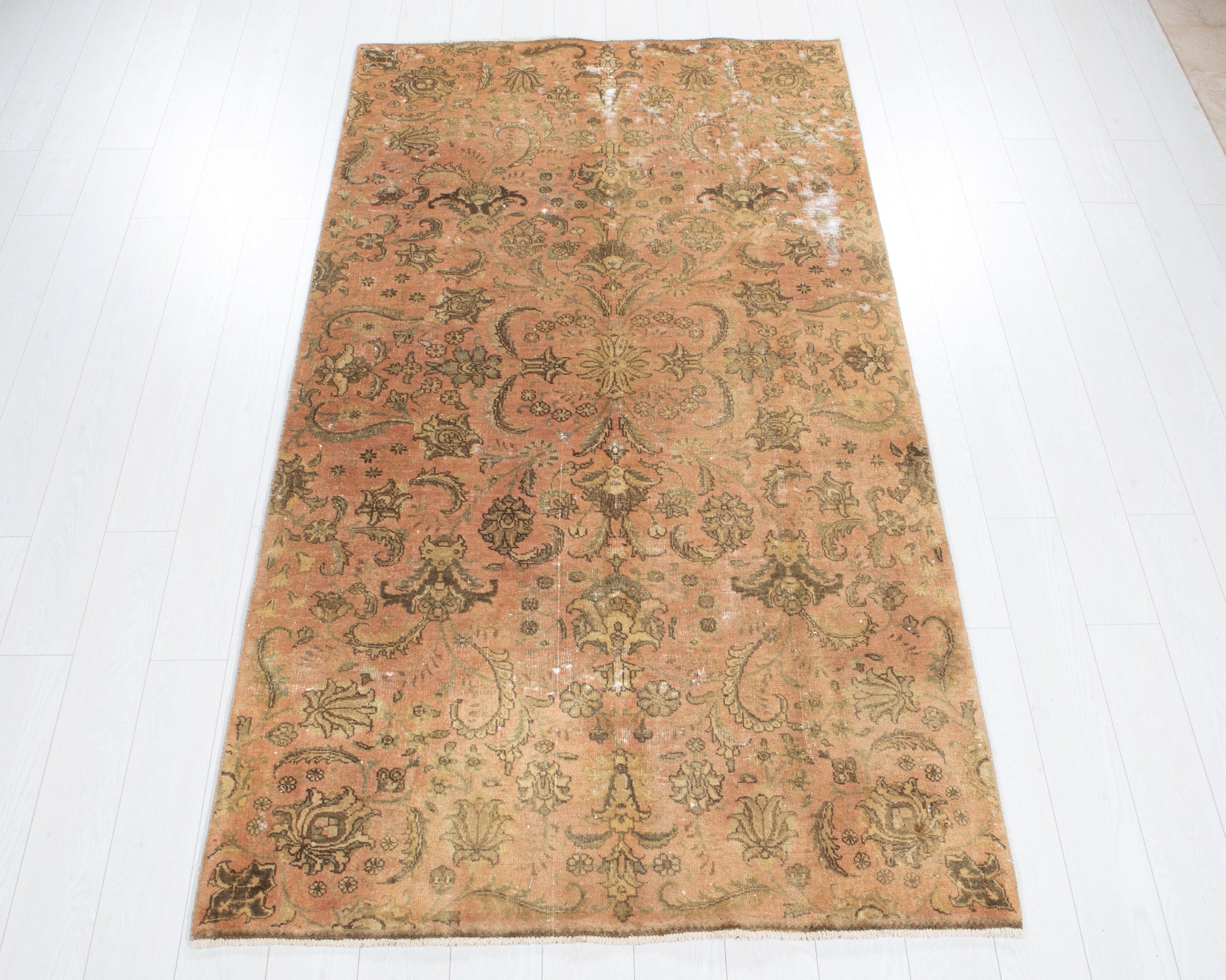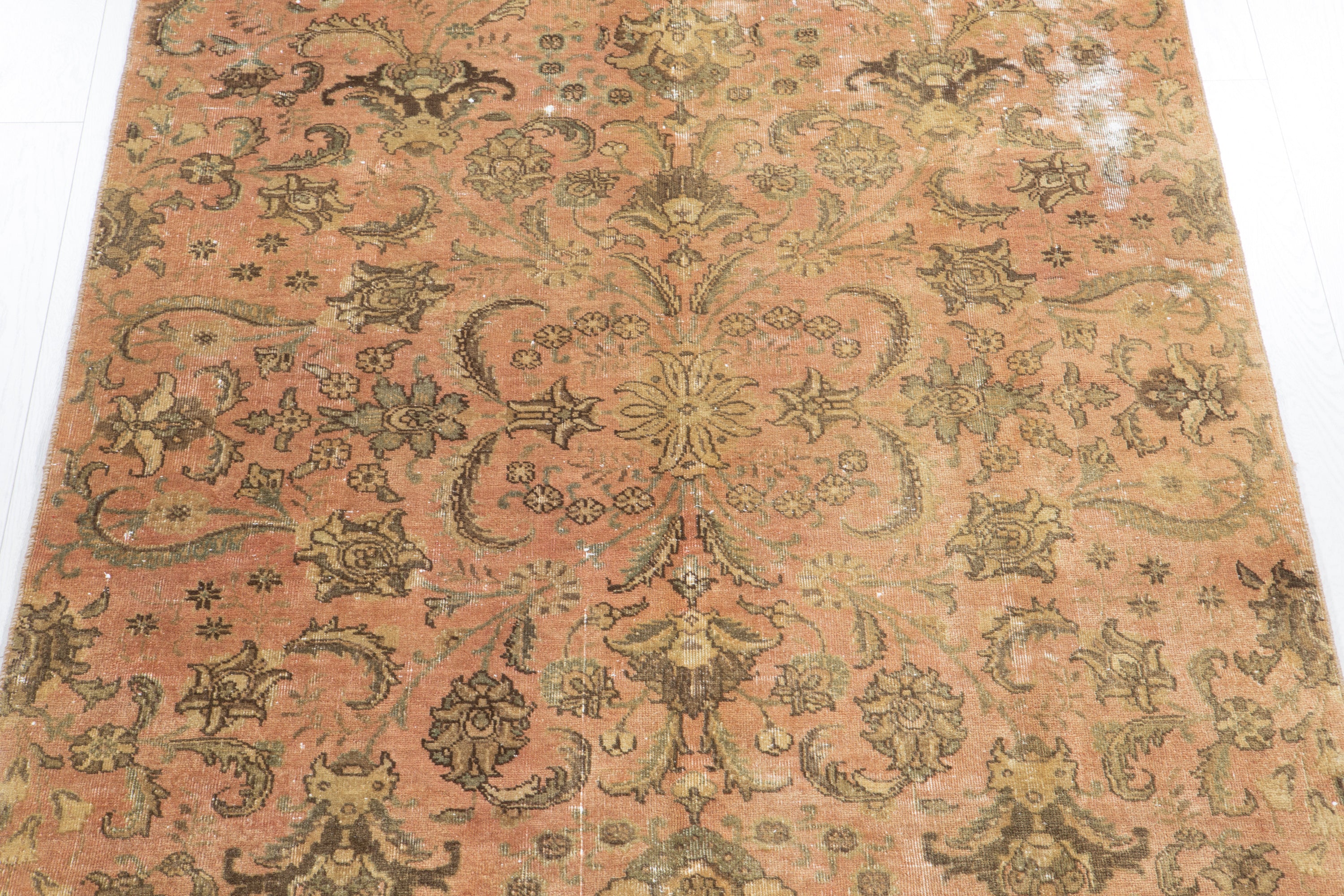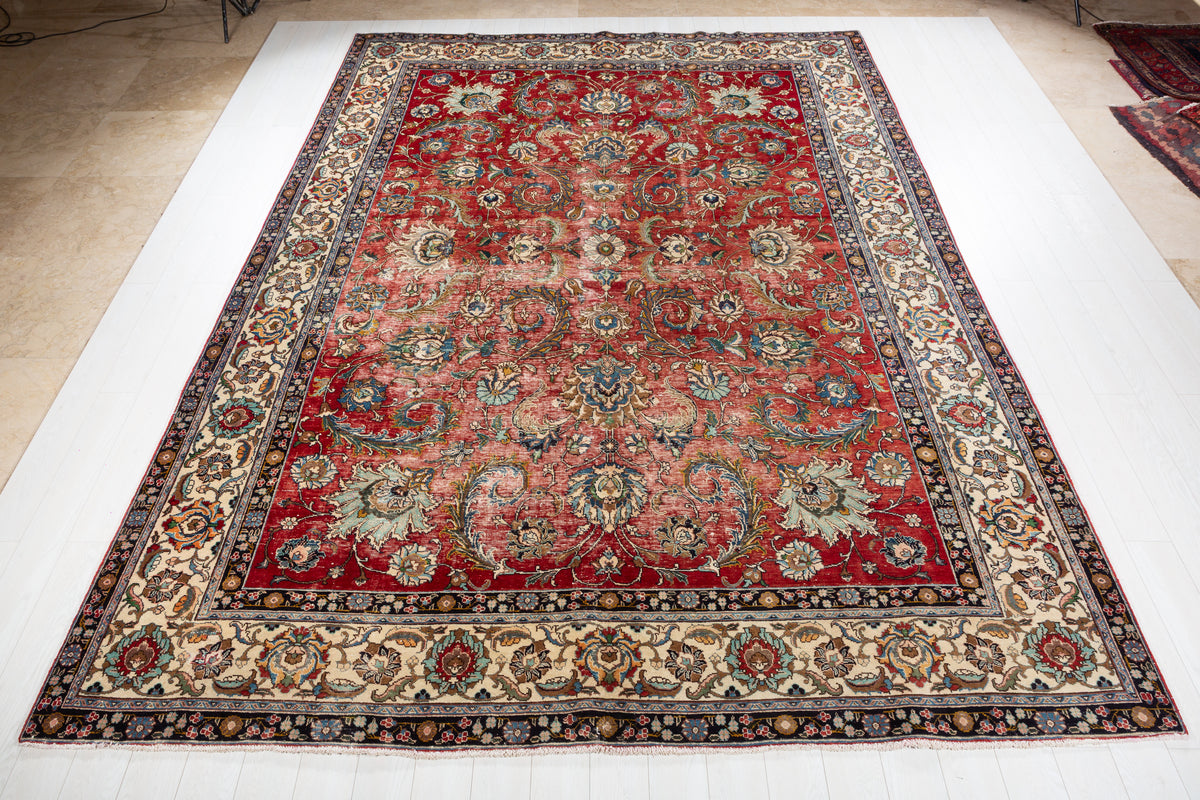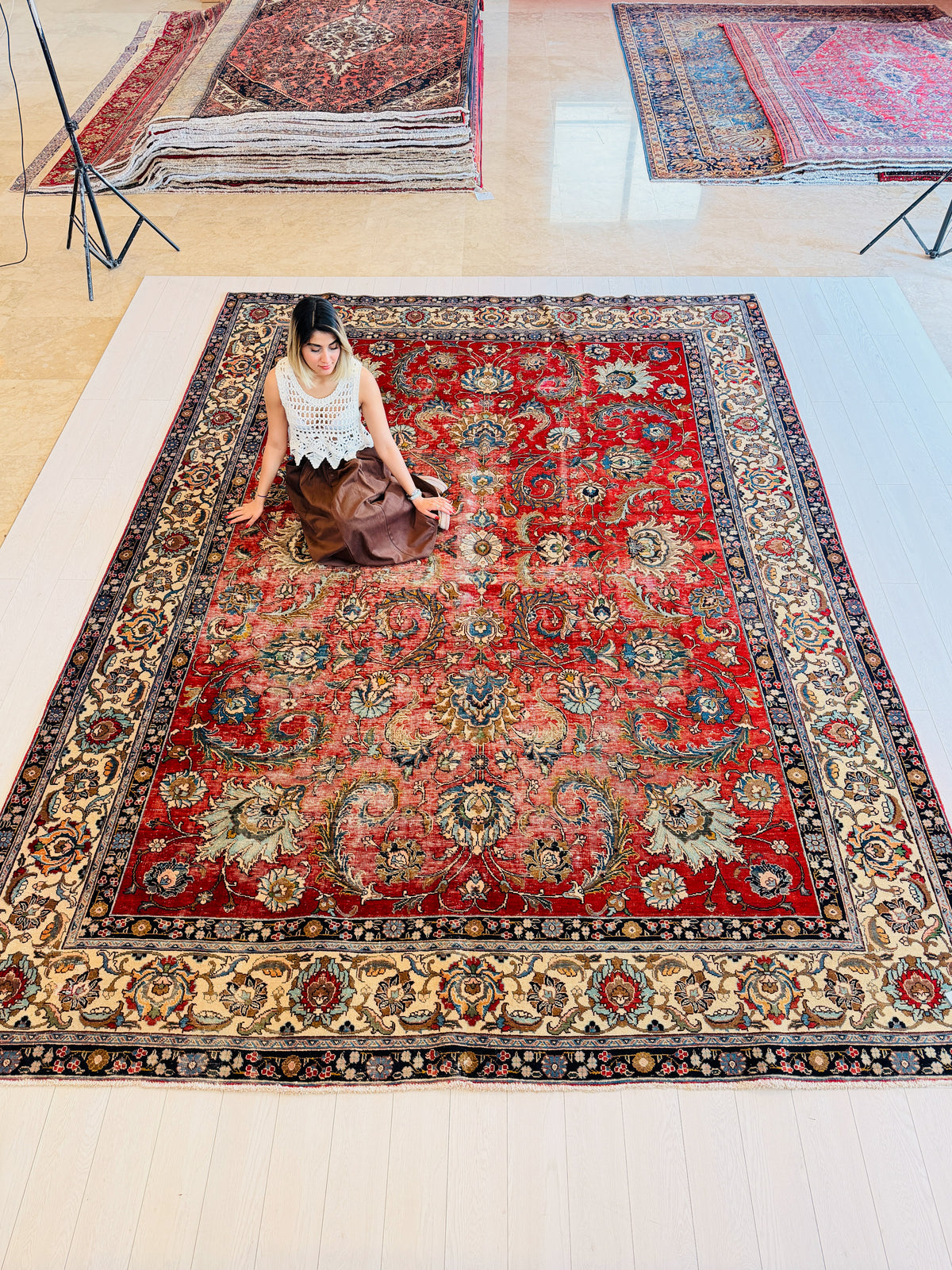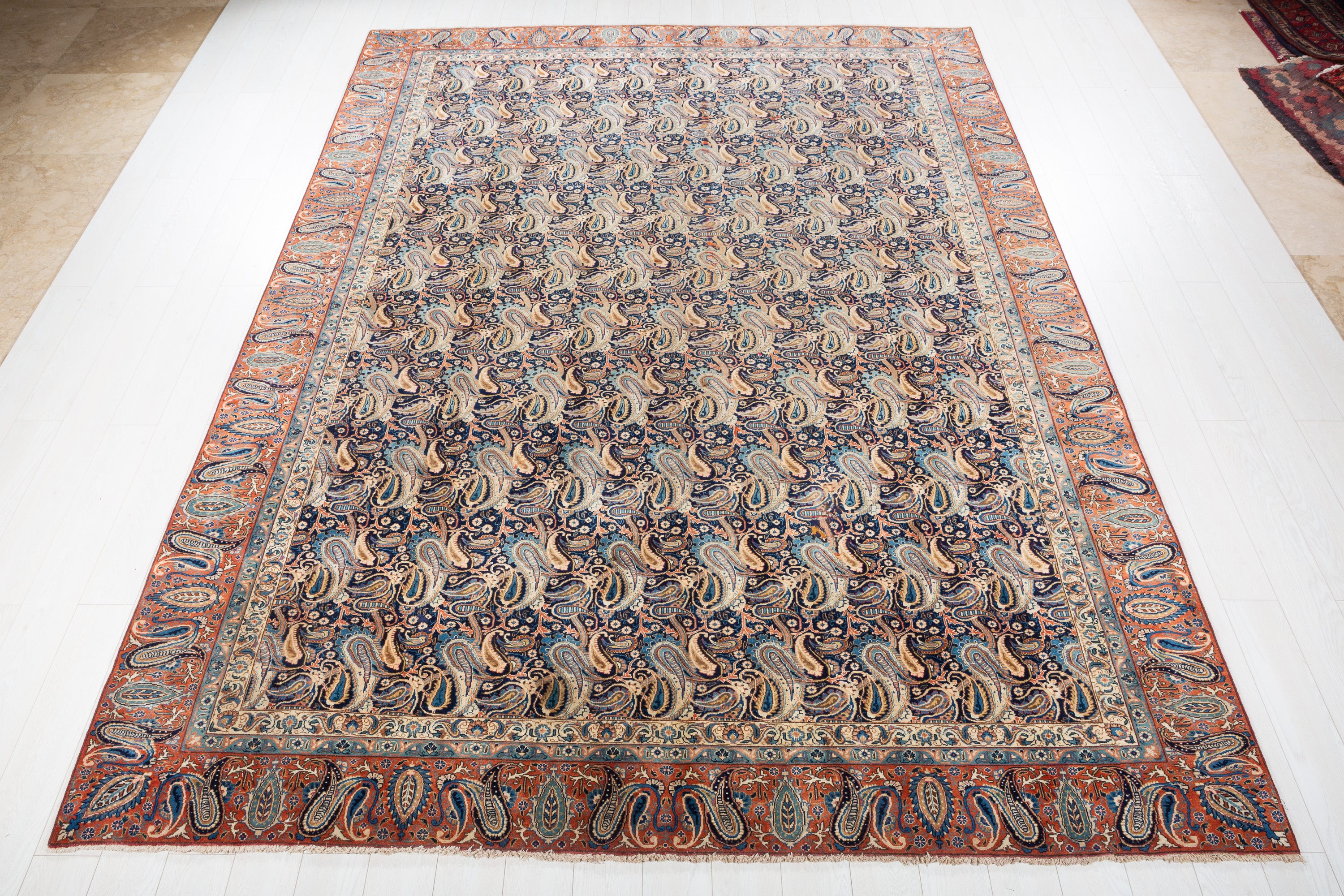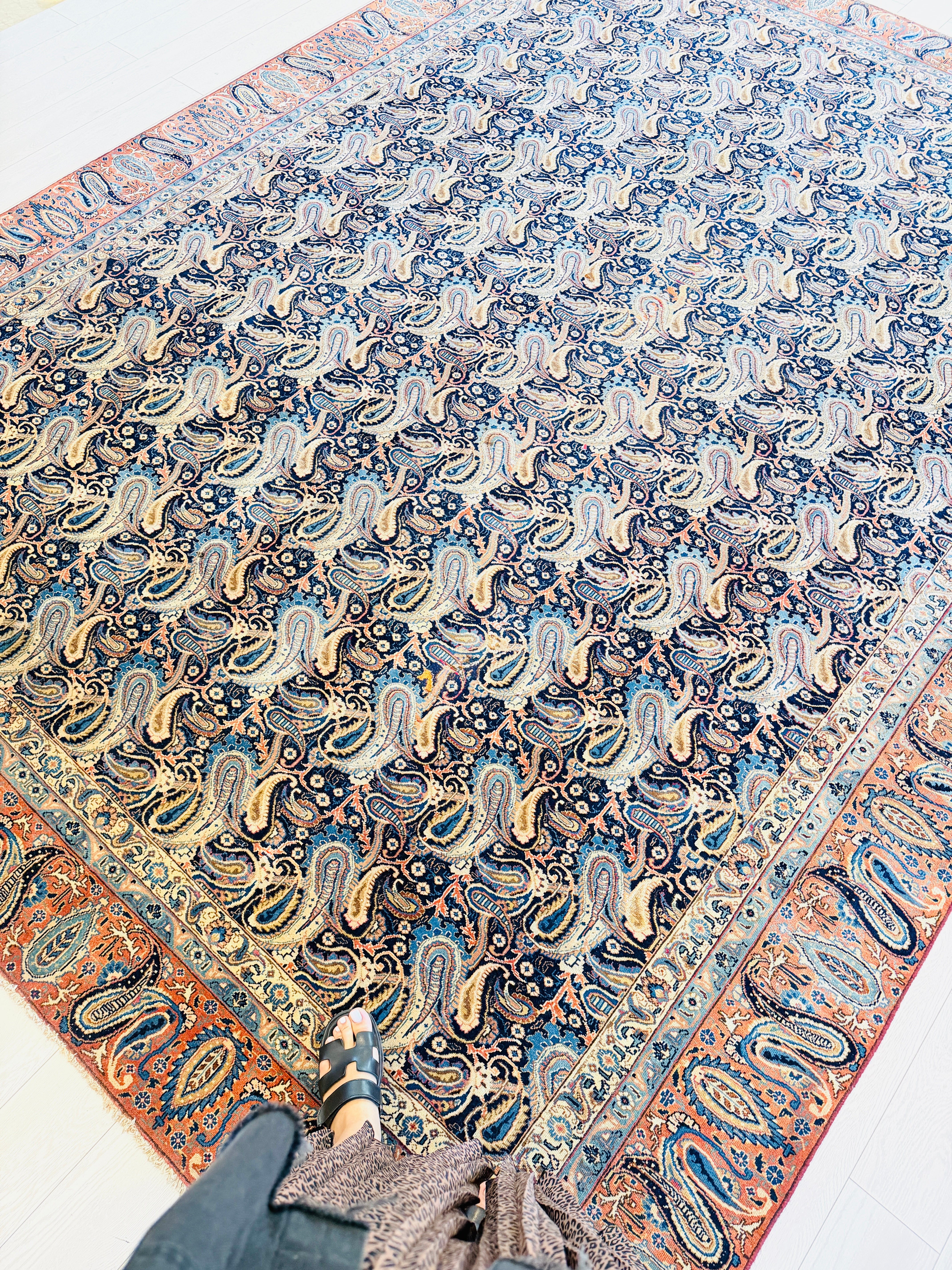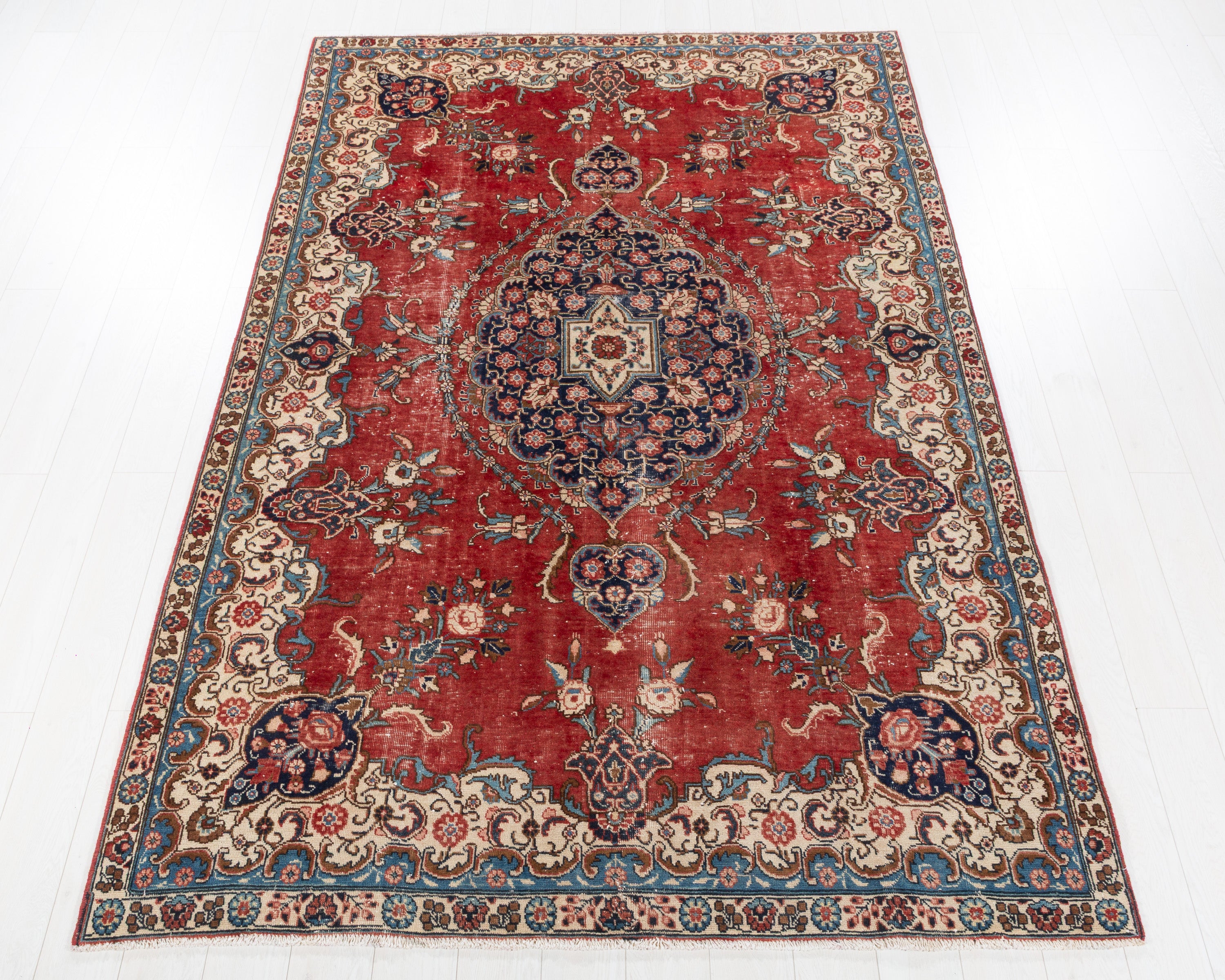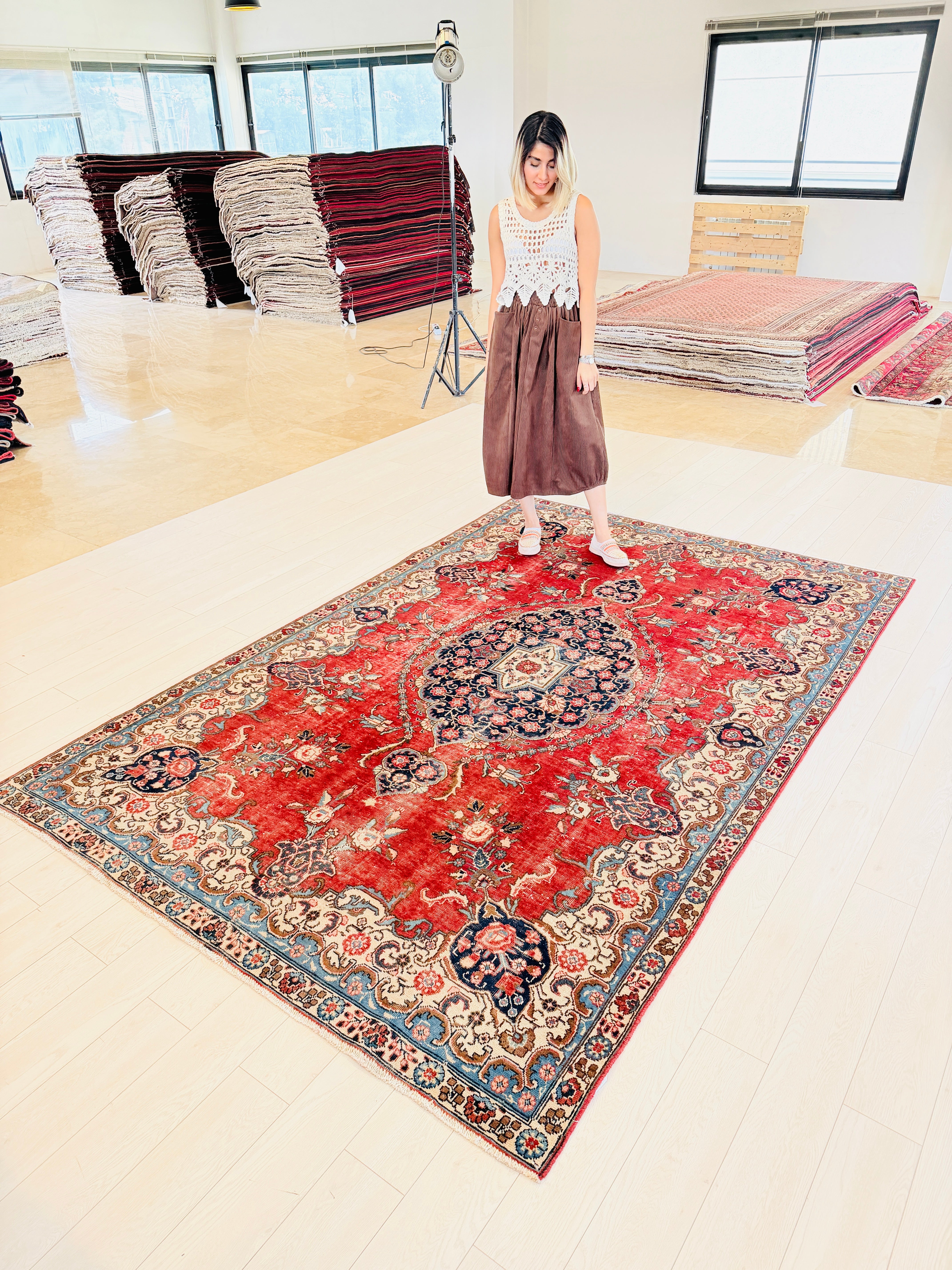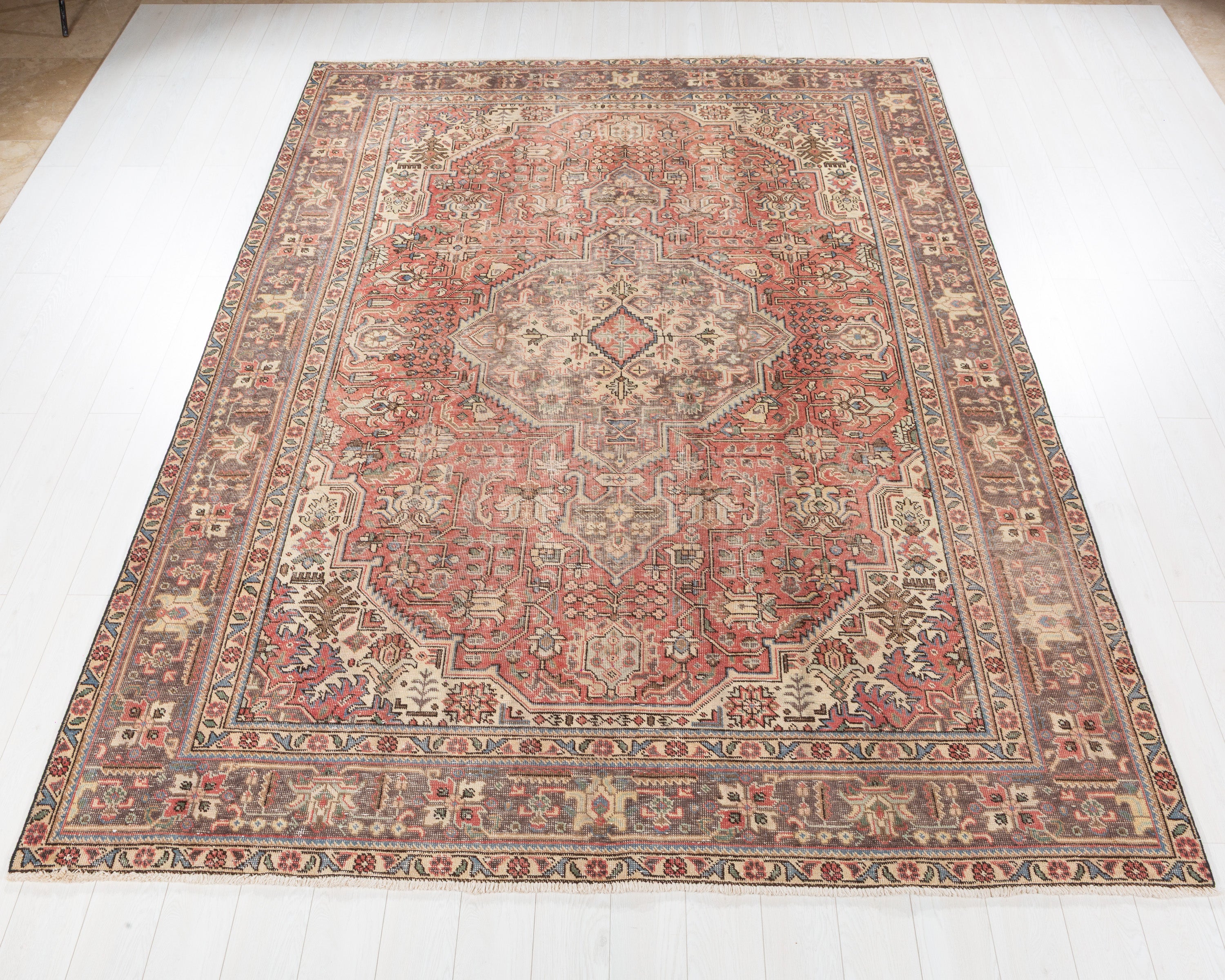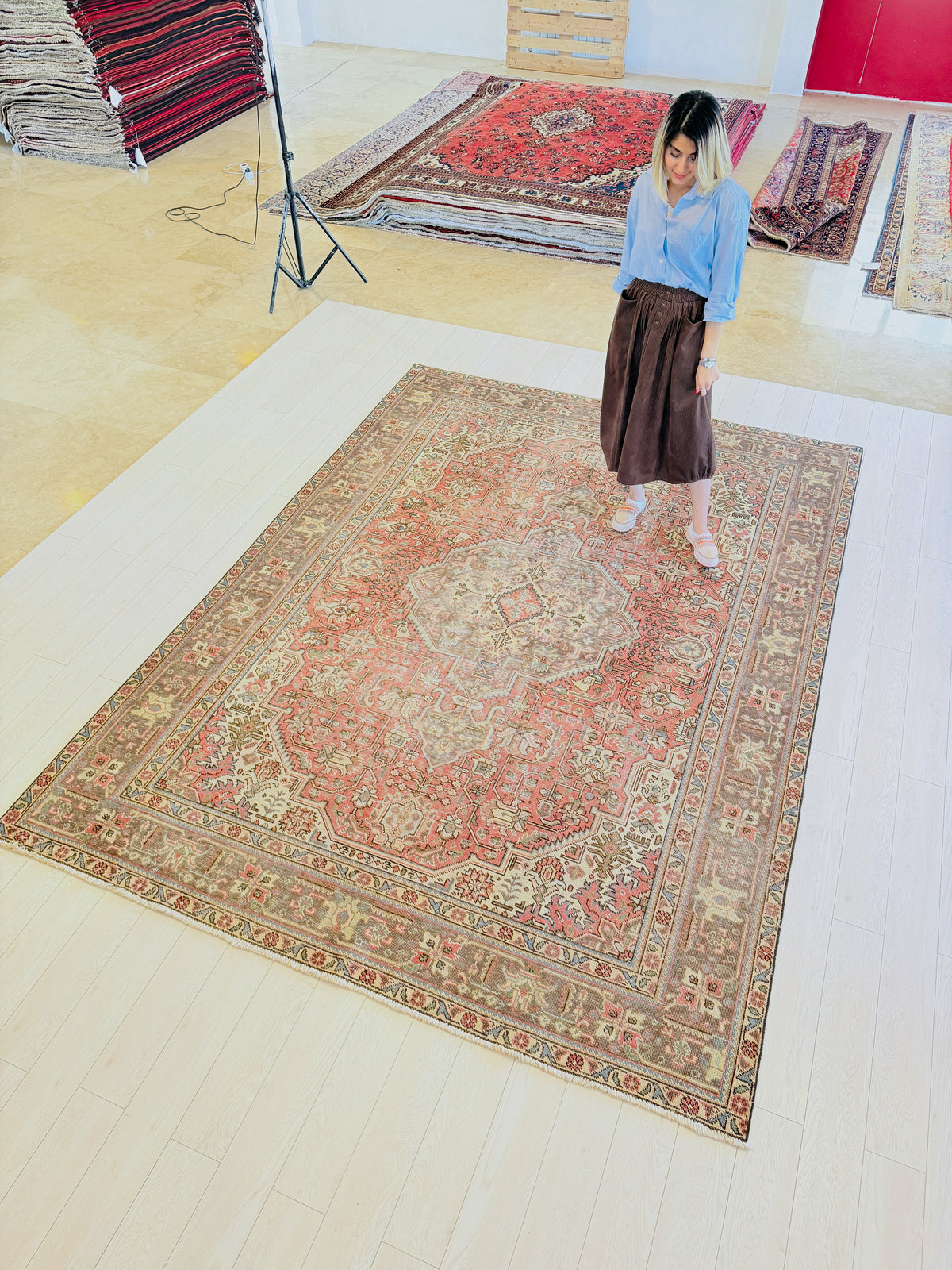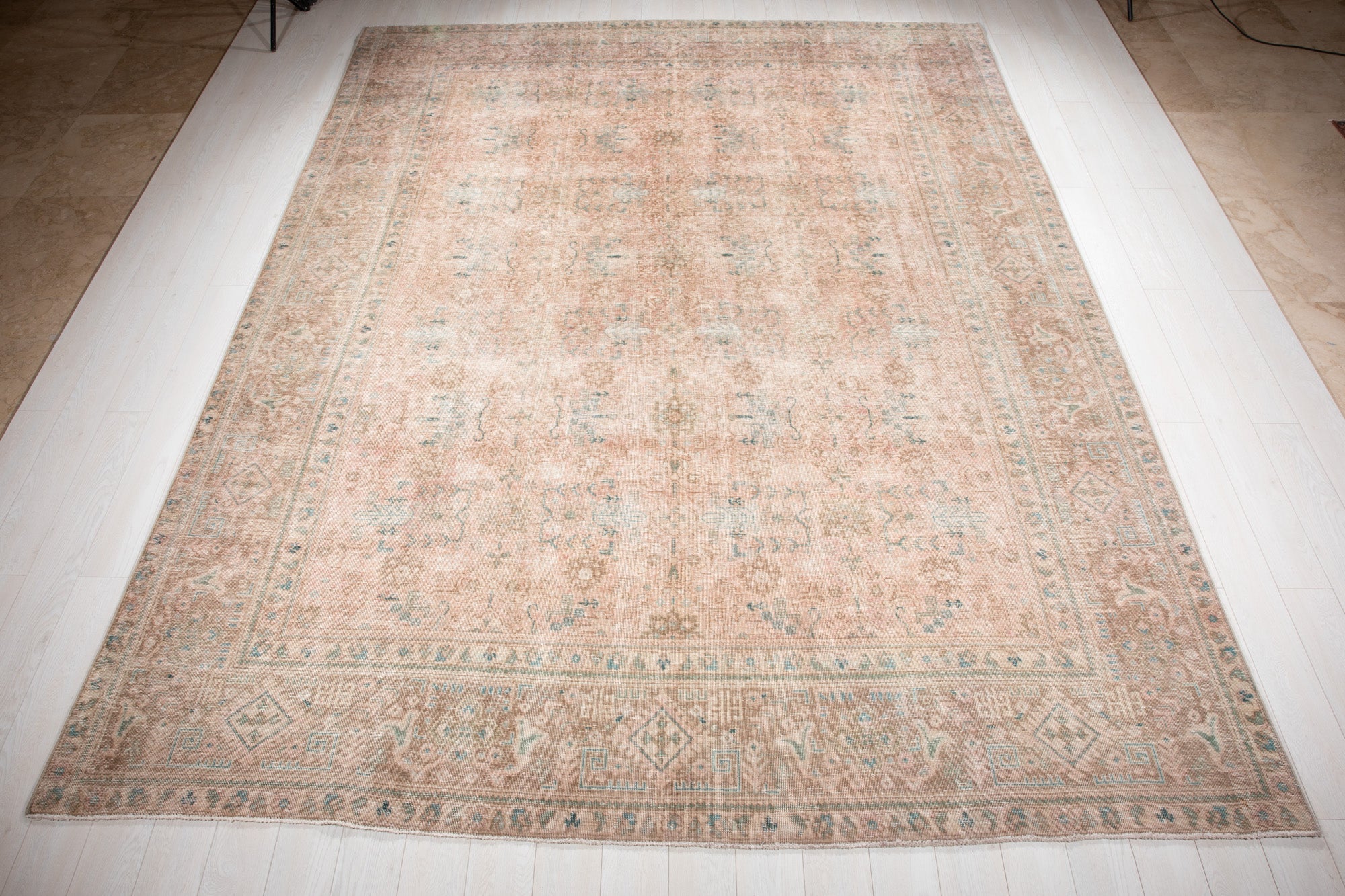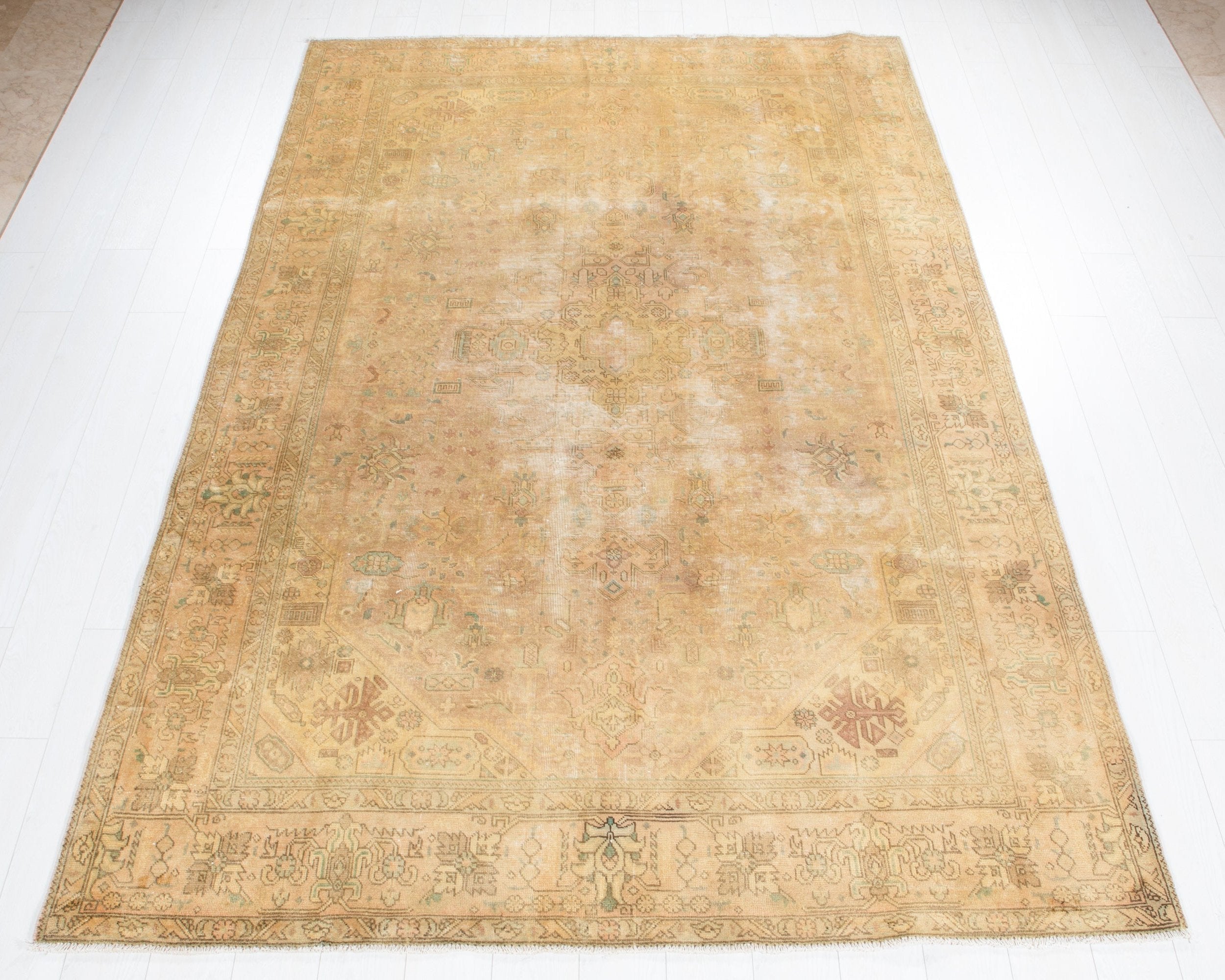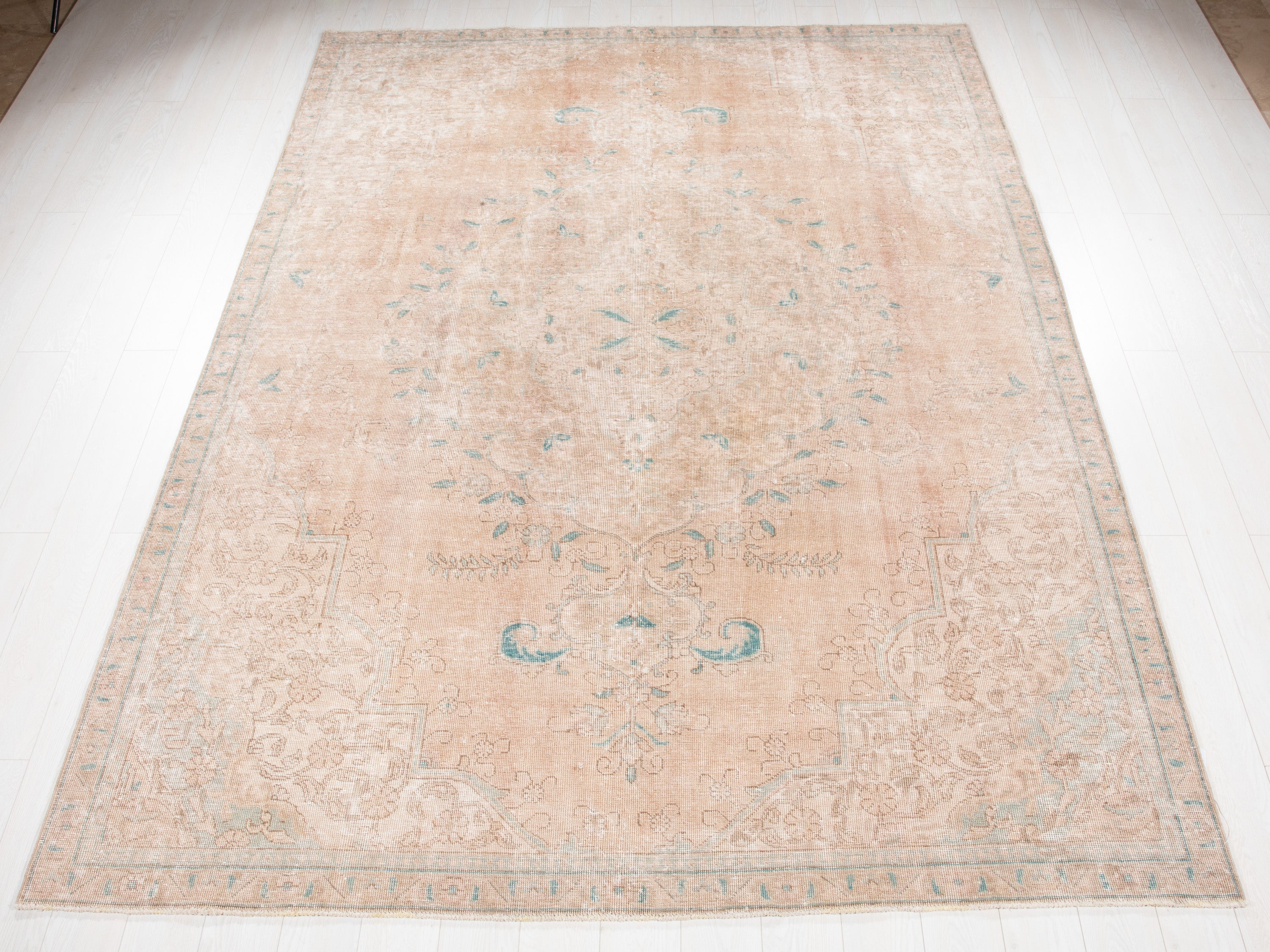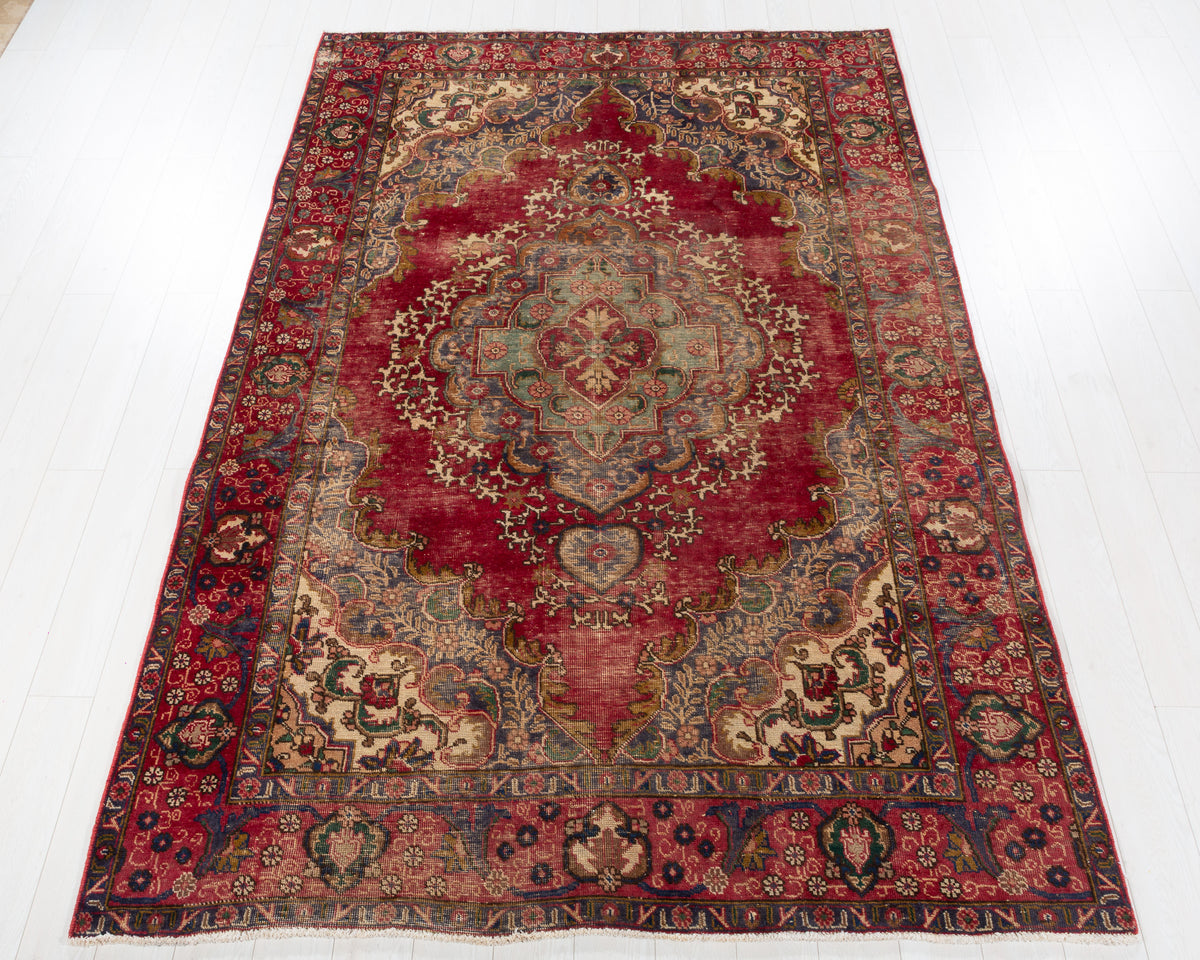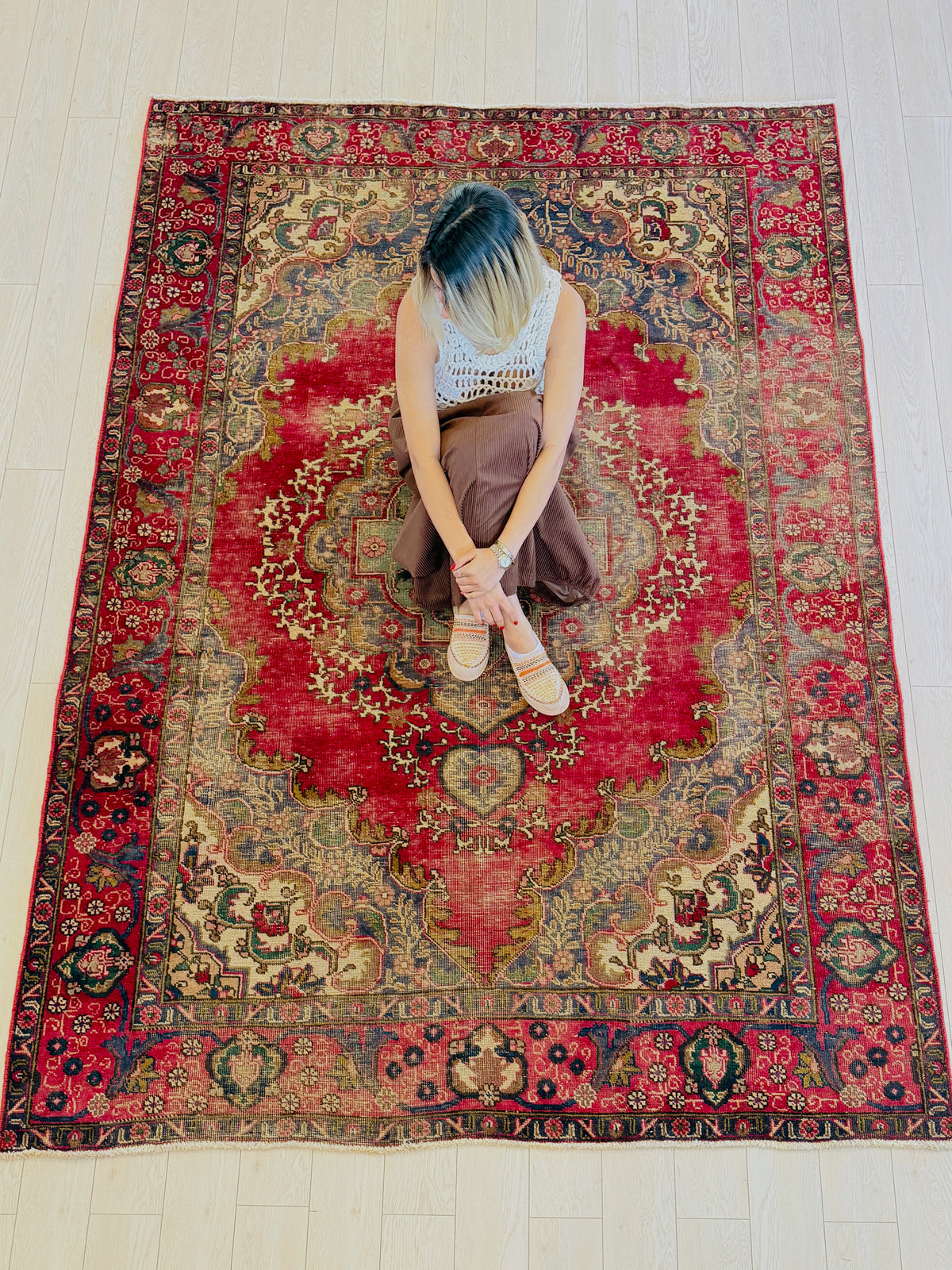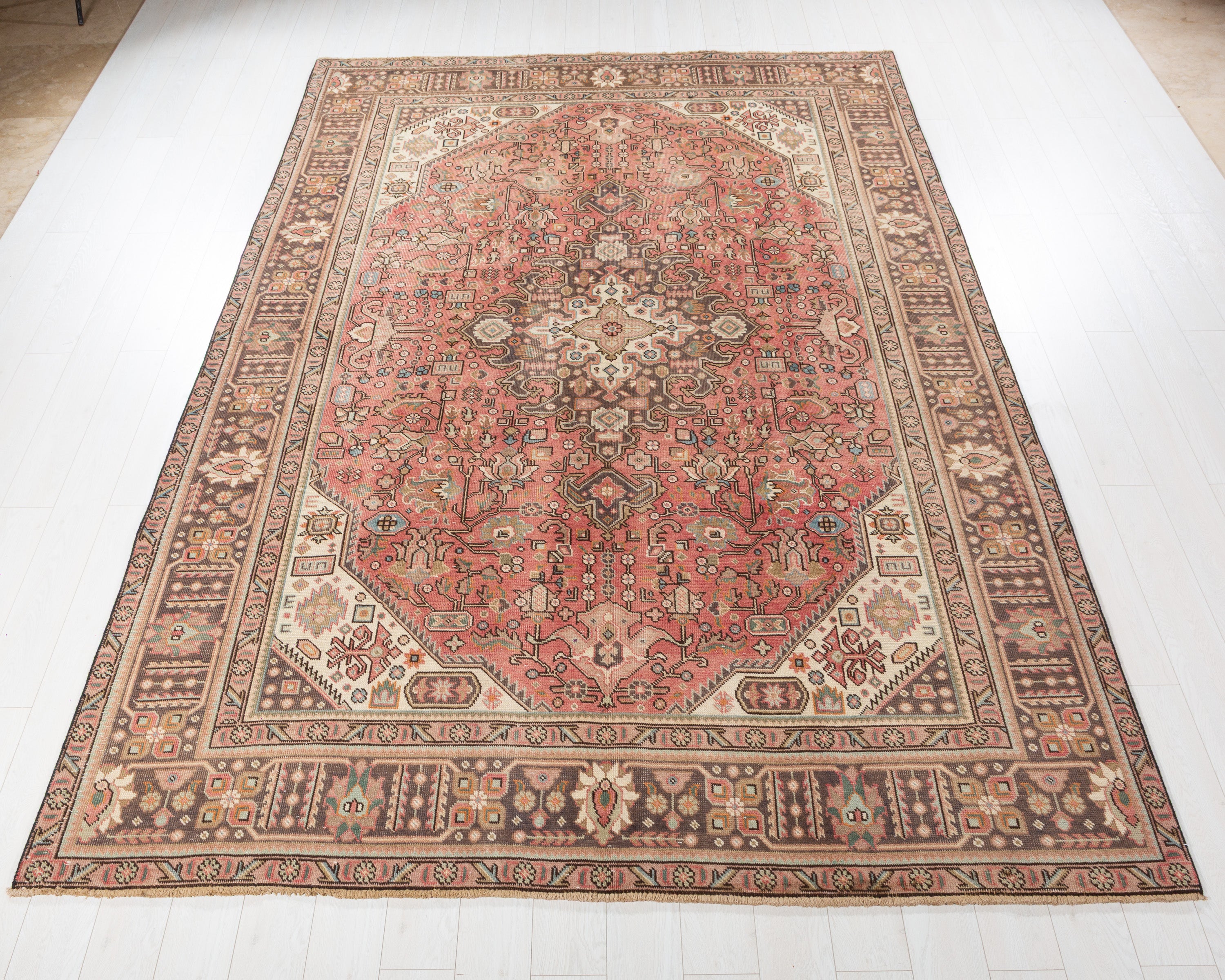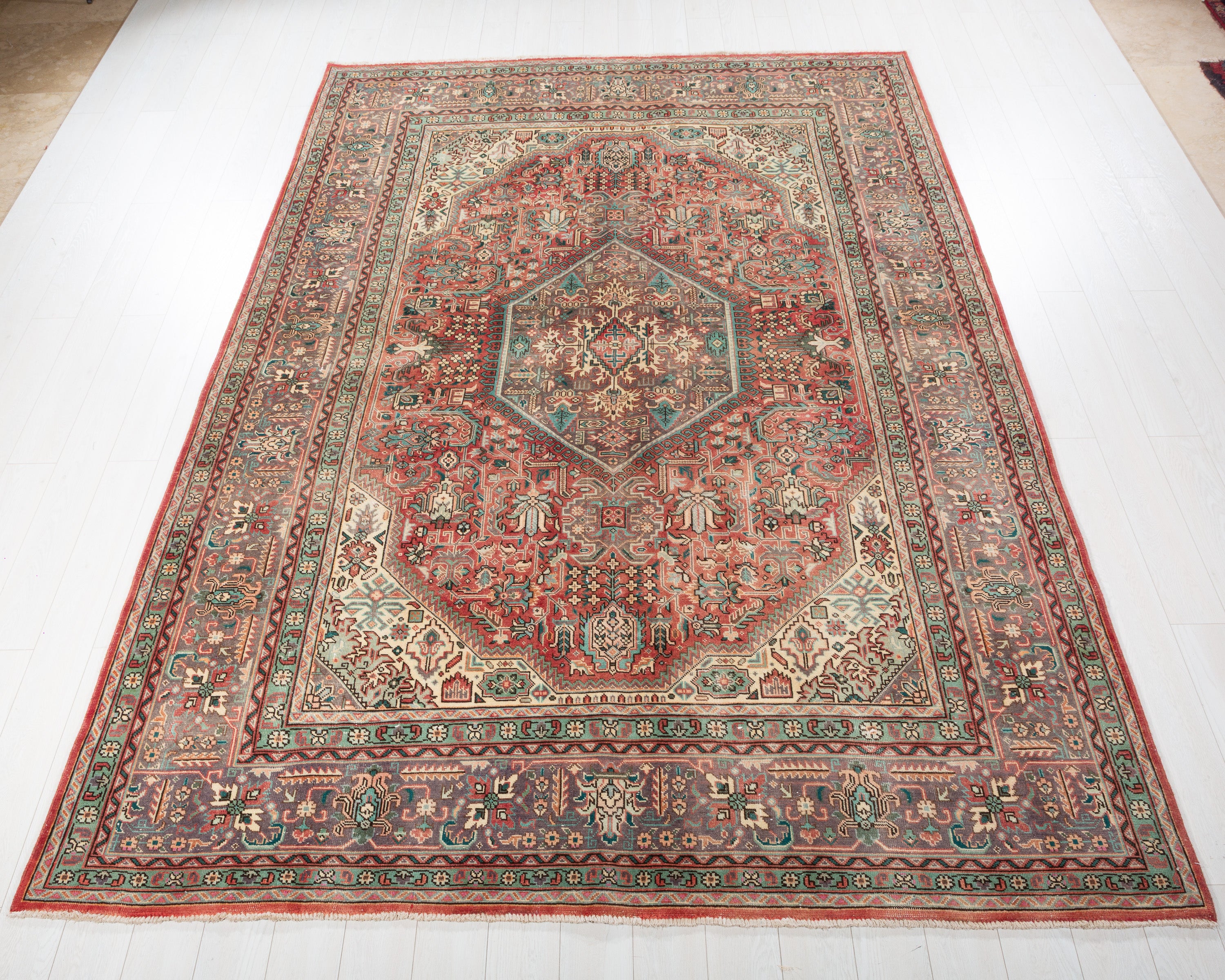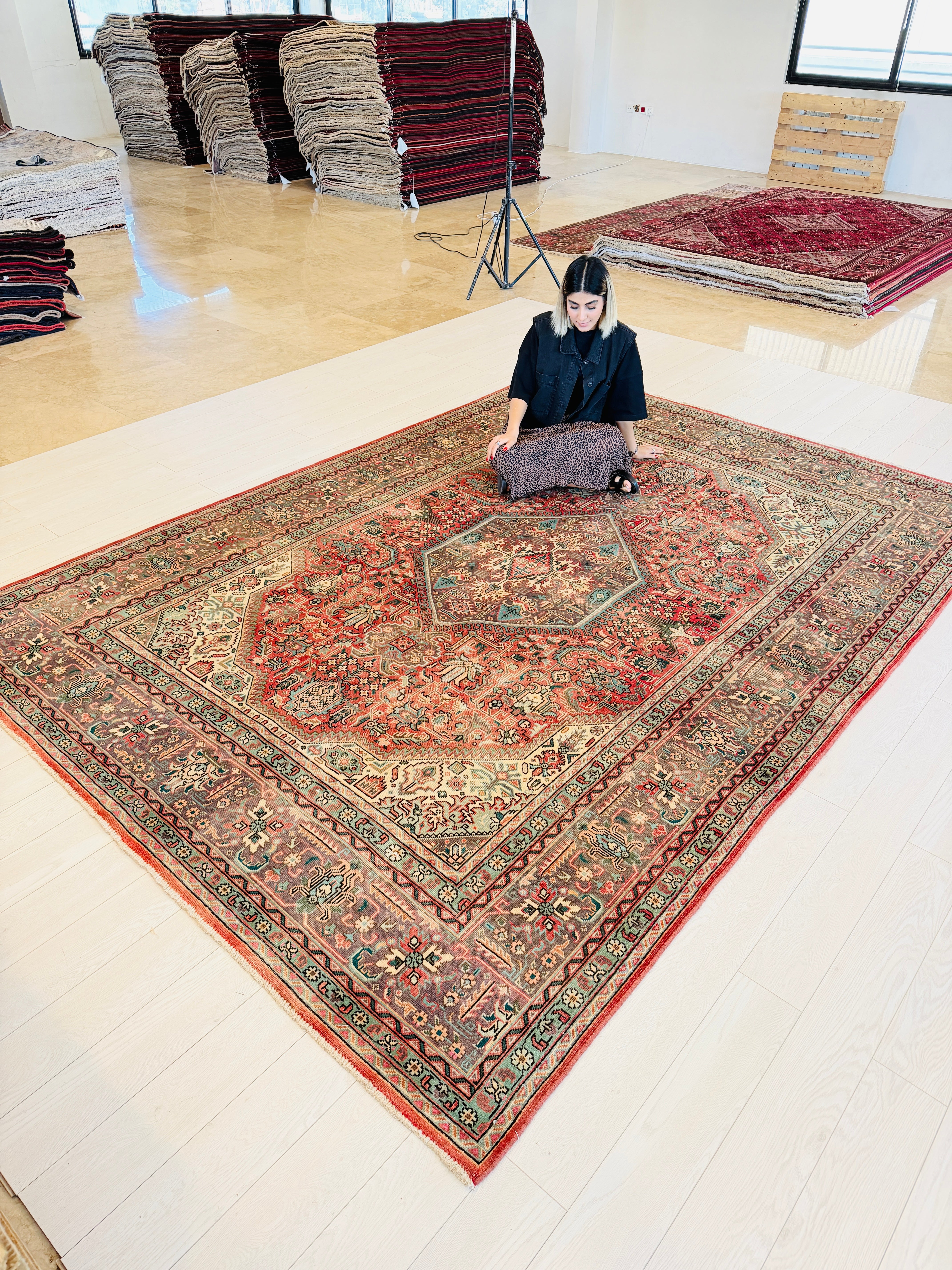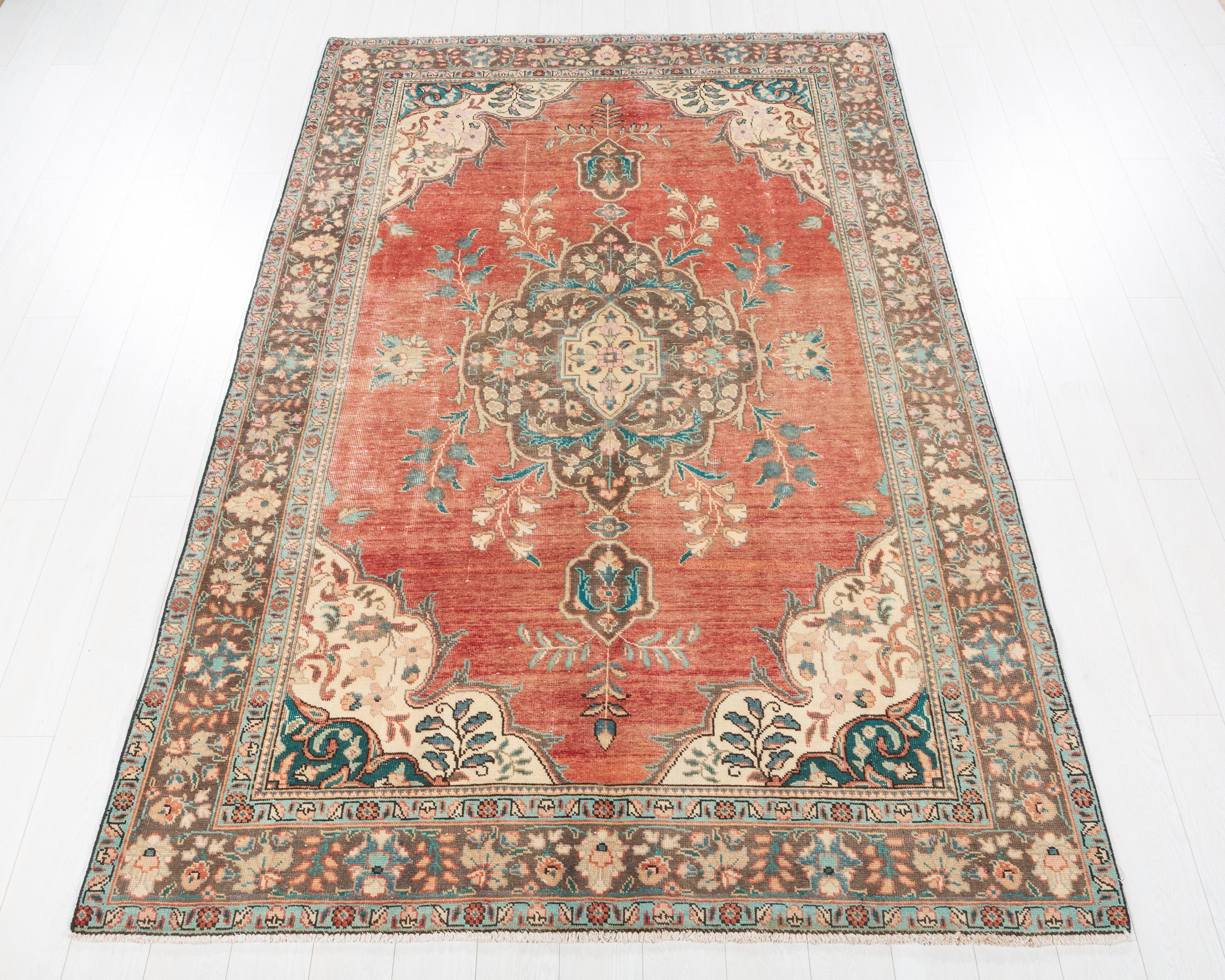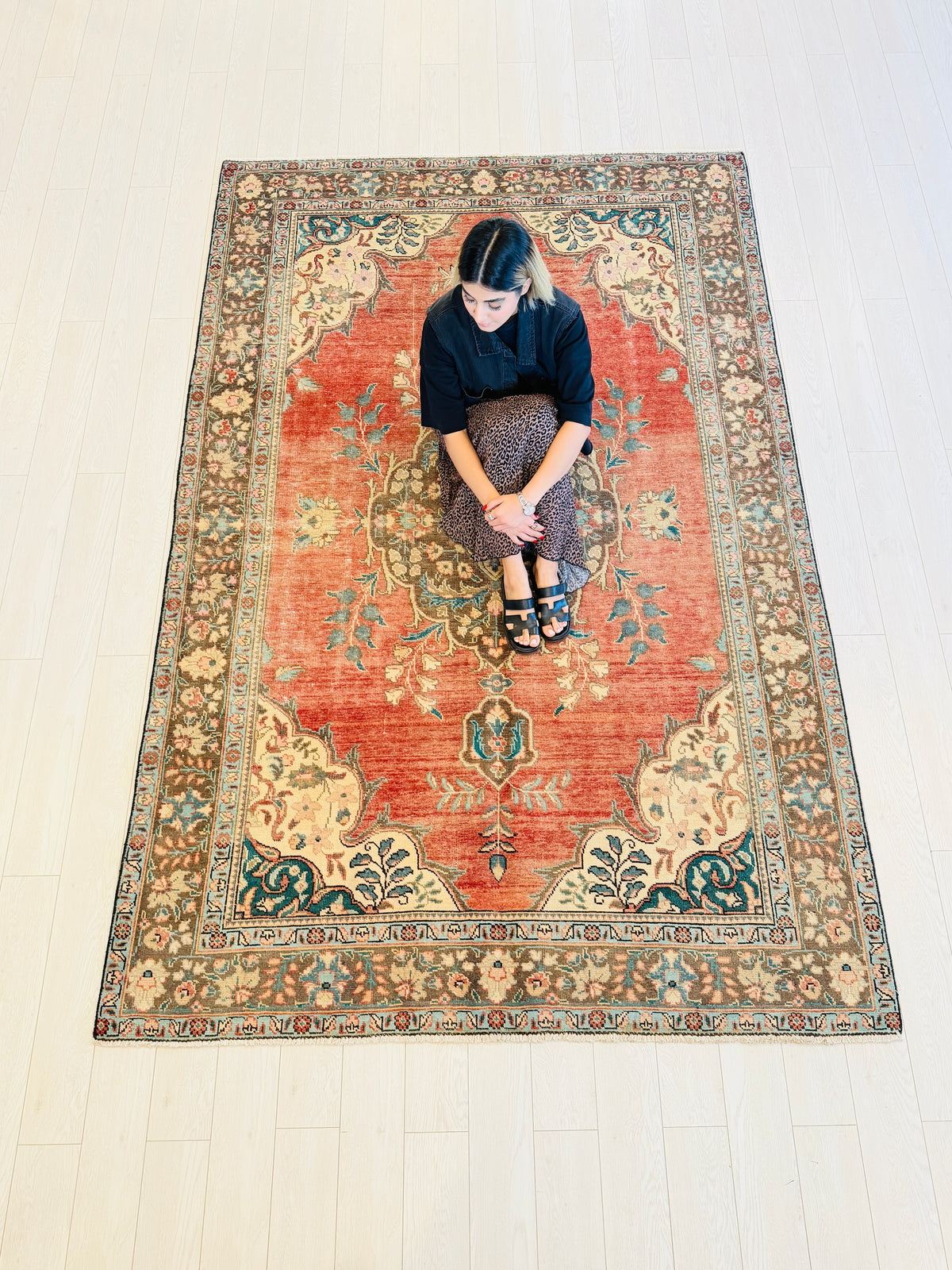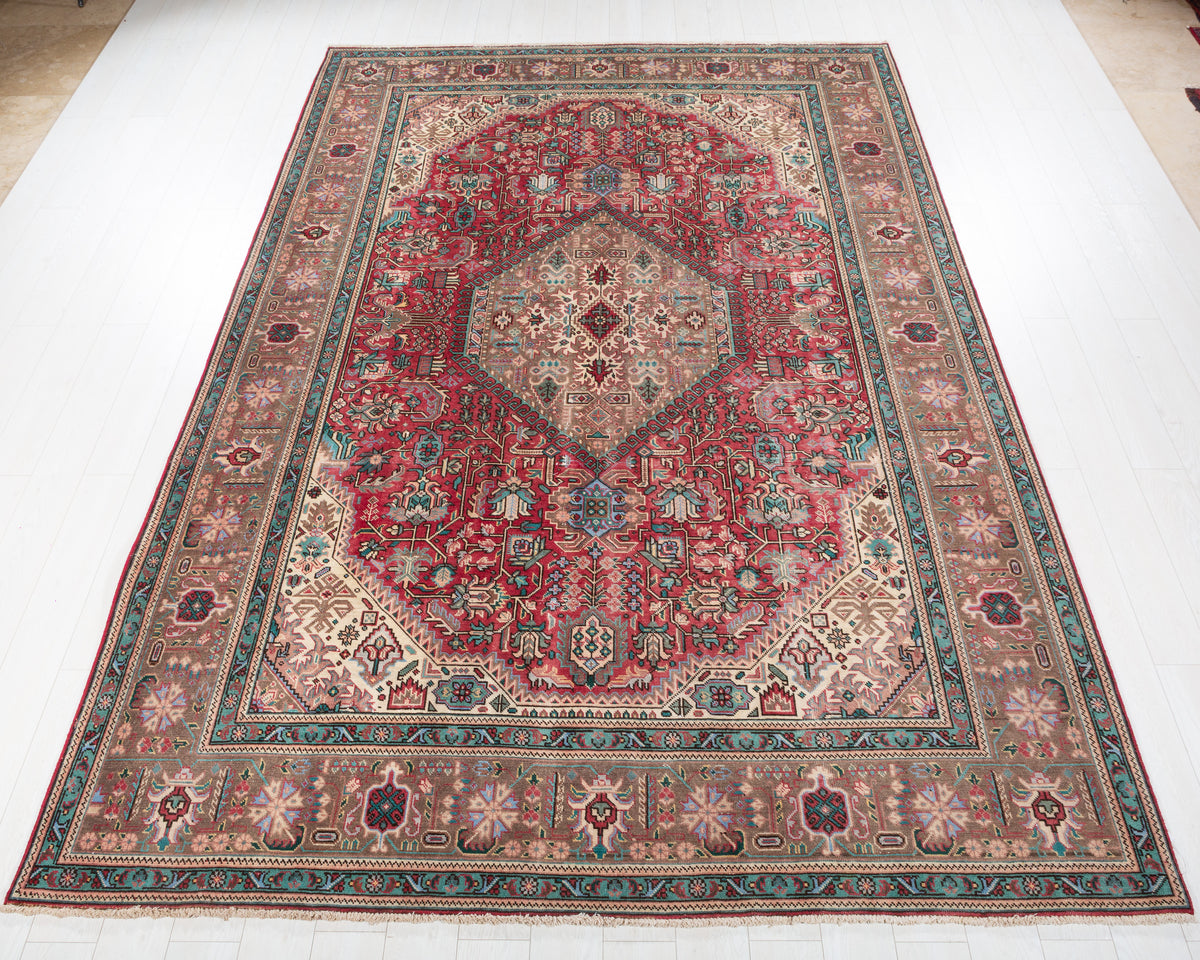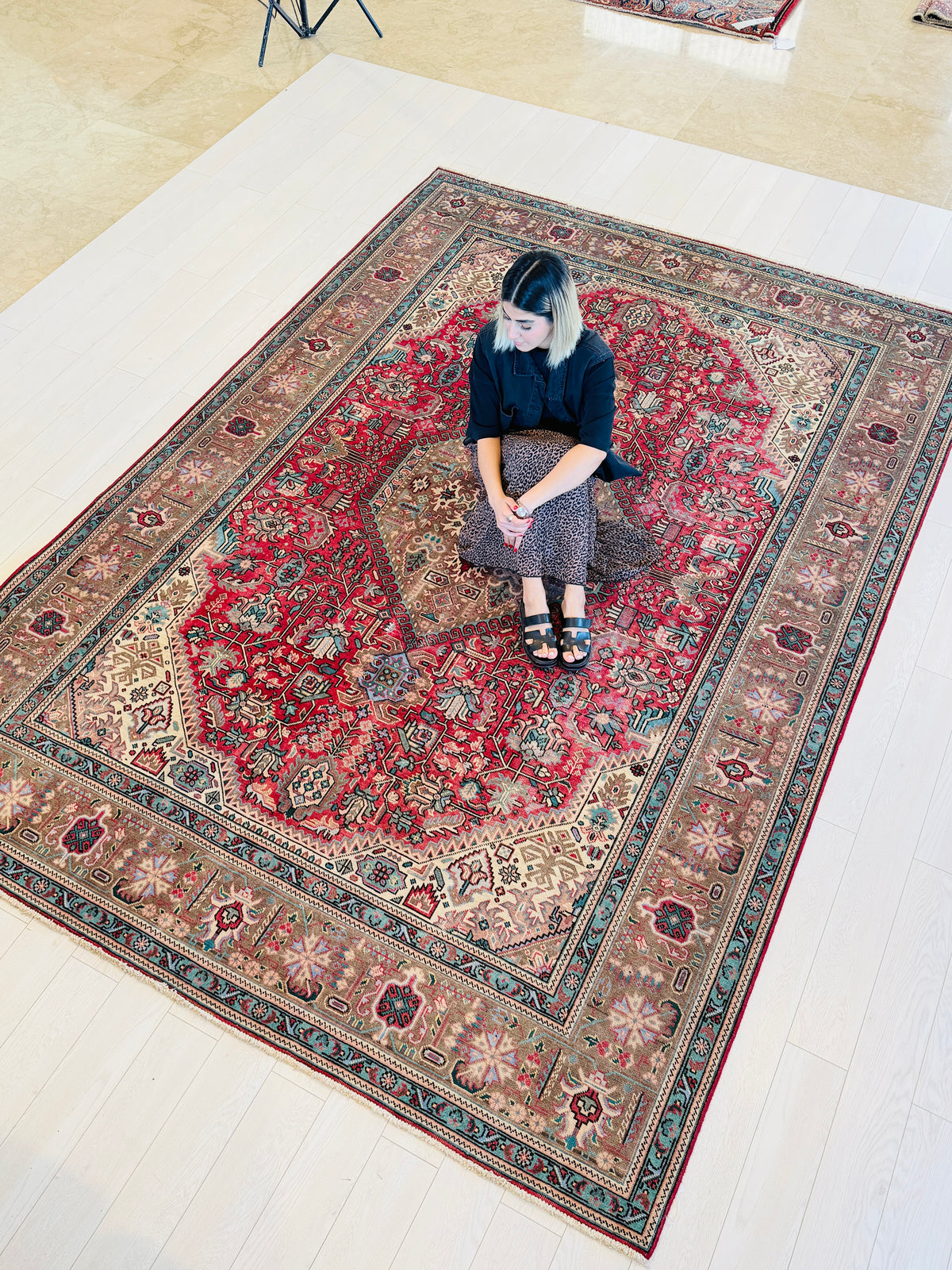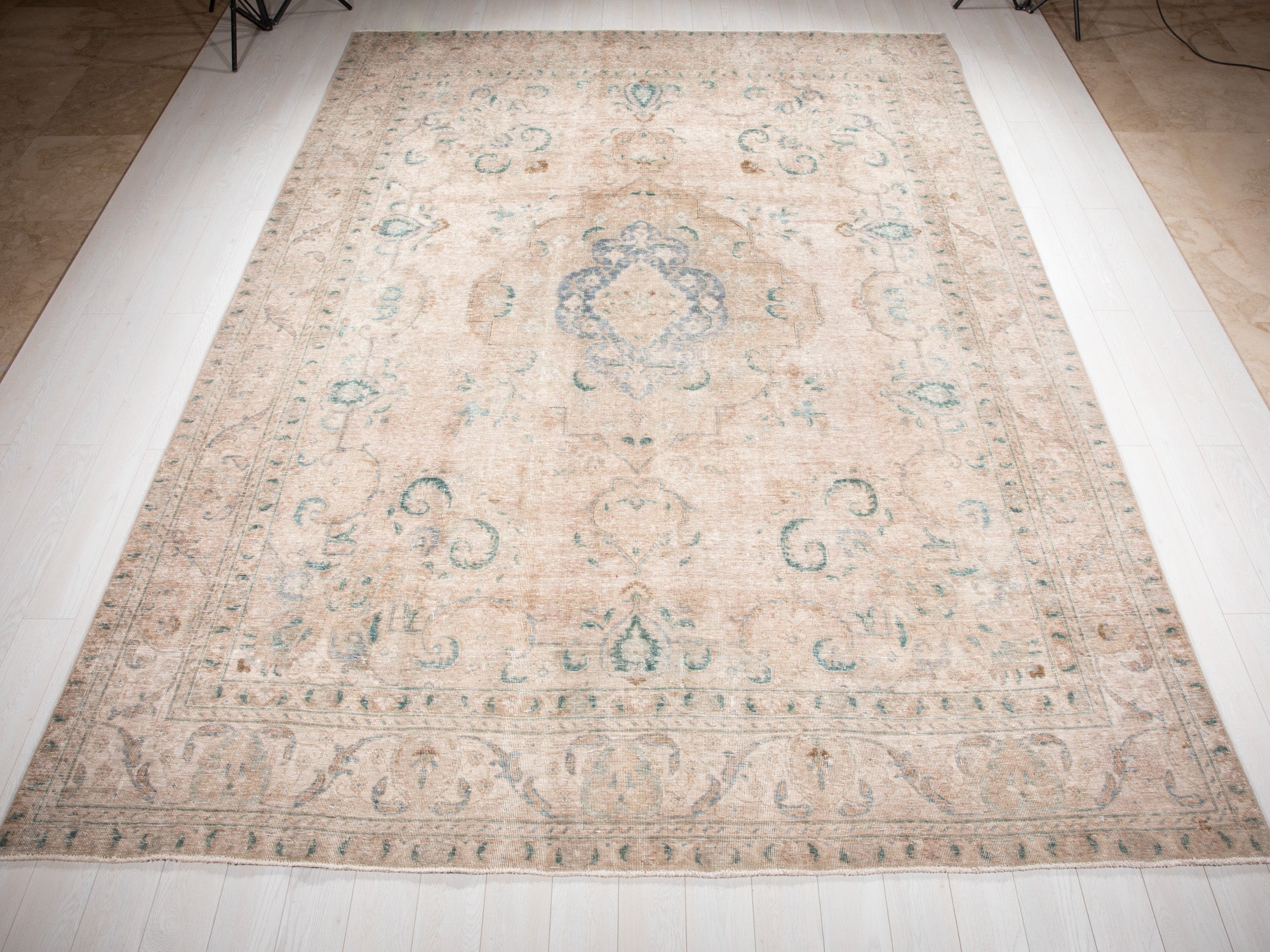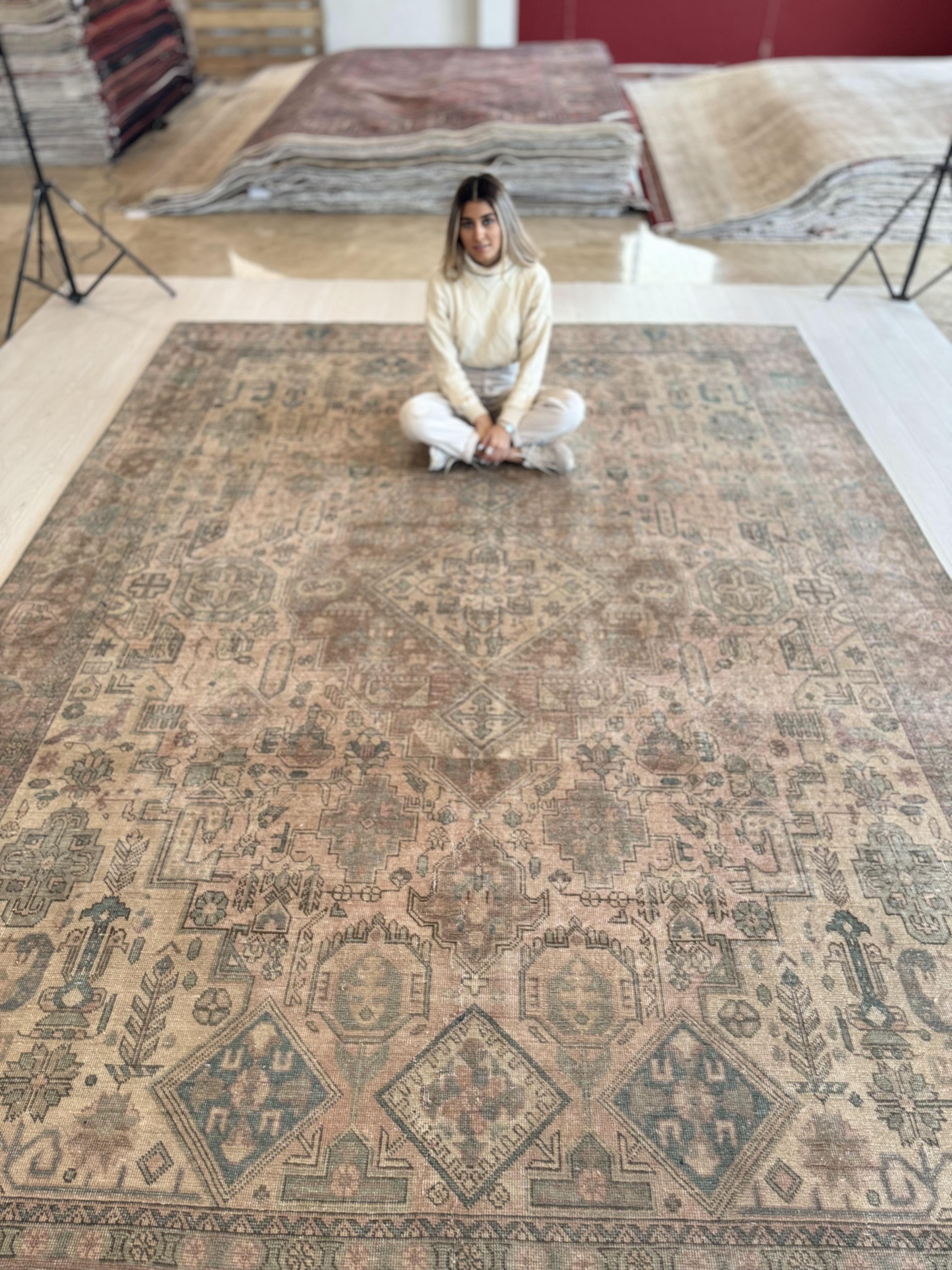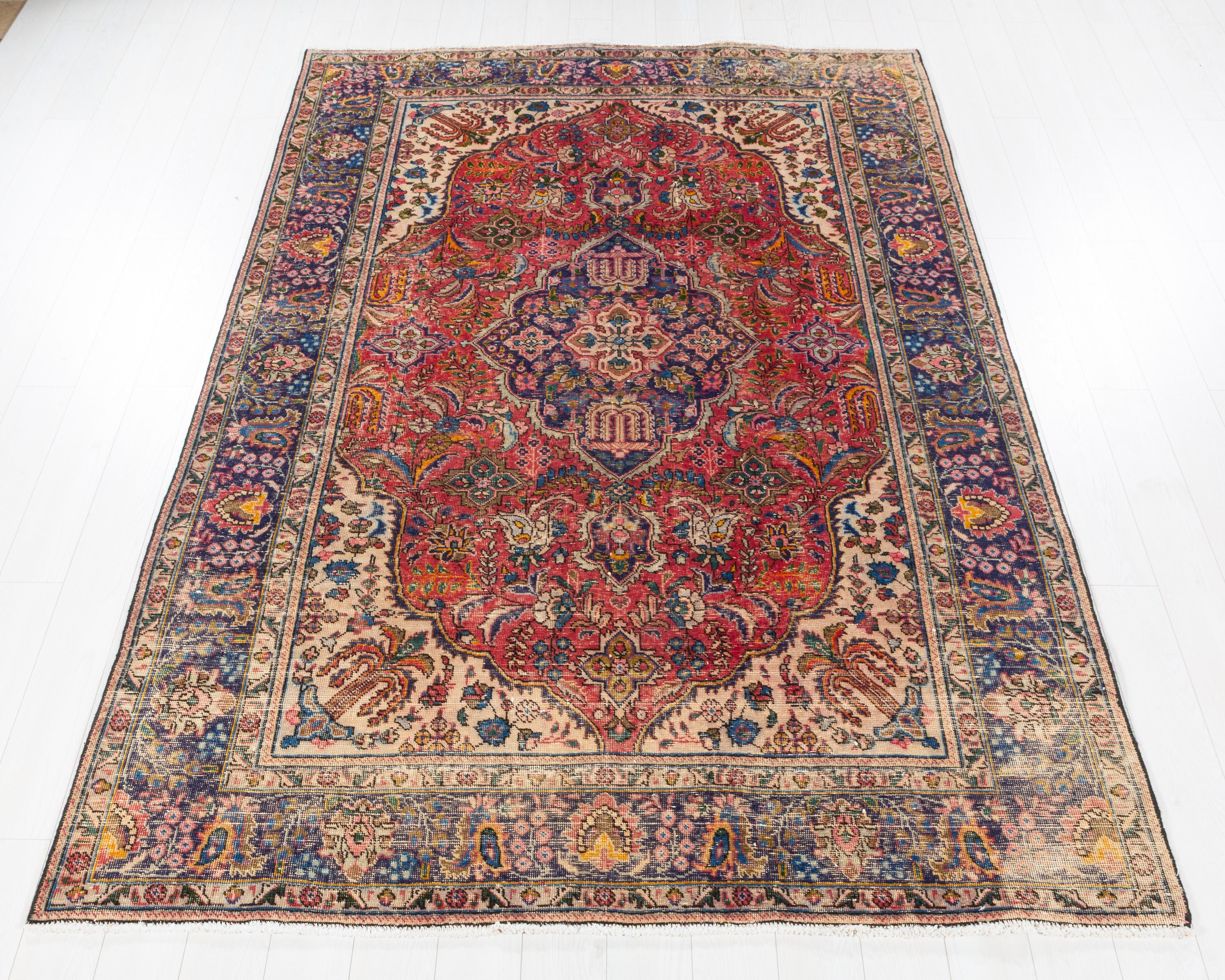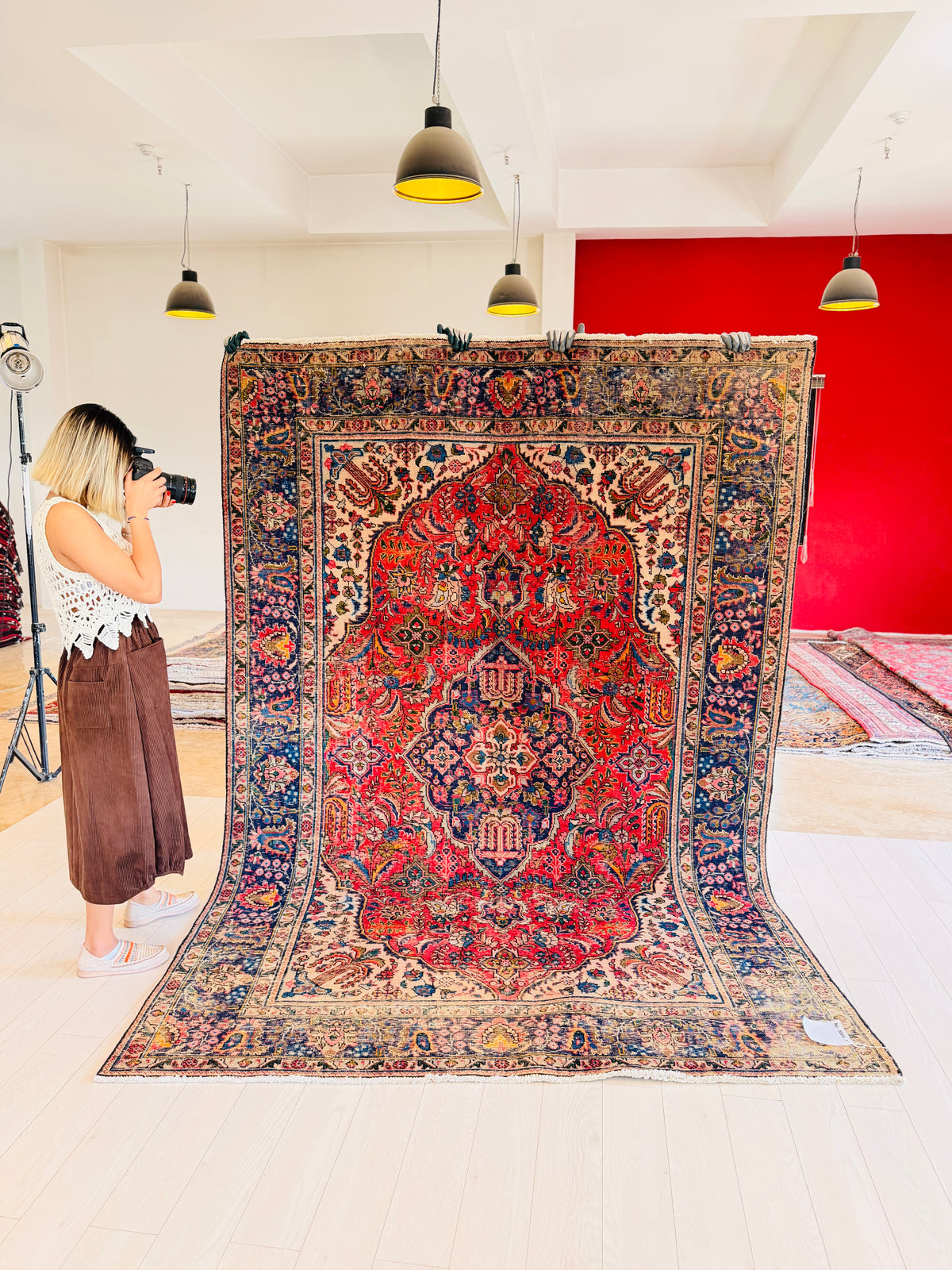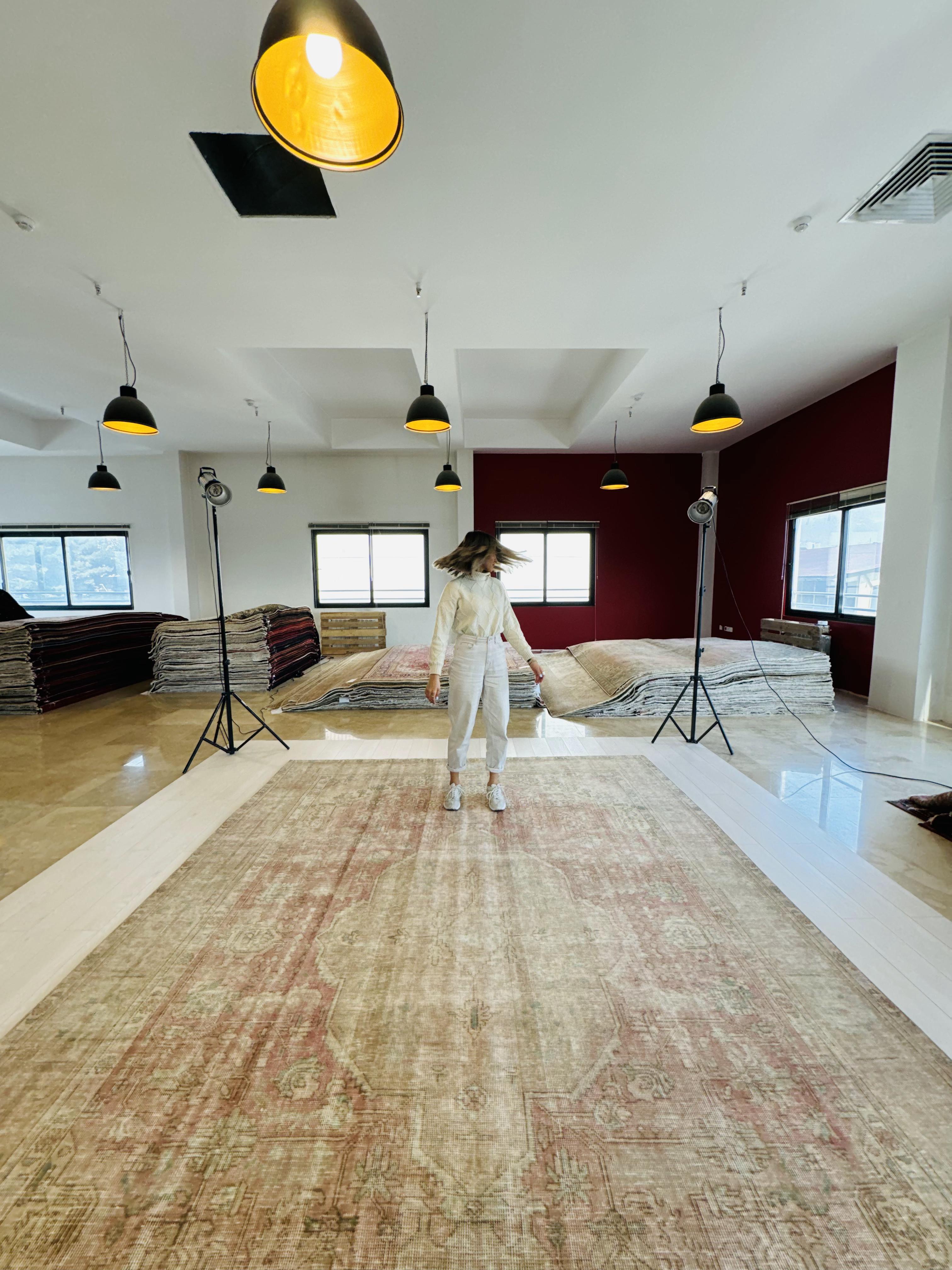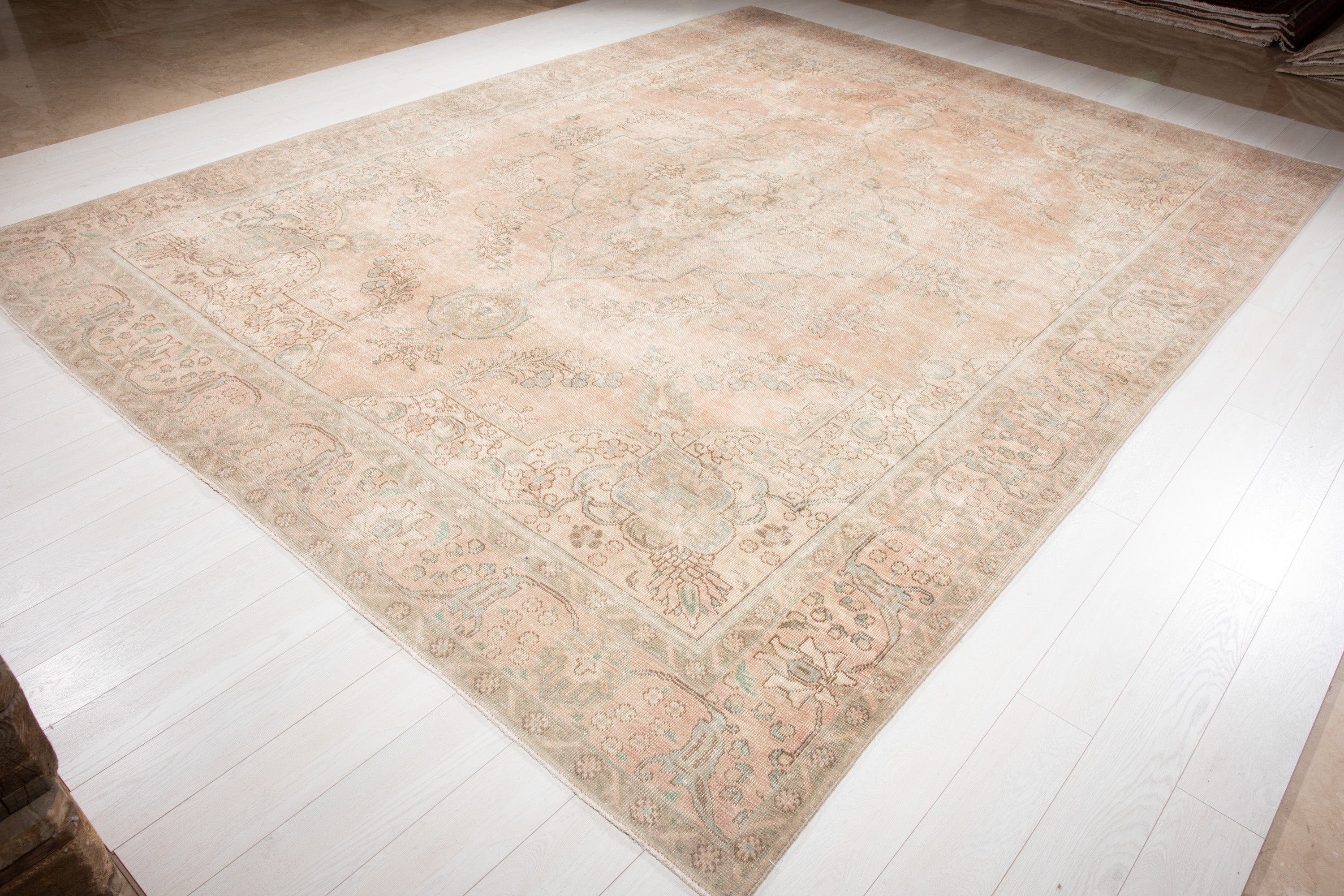
Tapis persans Tabriz – Vintage et anciens noués à la main
Tapis Tabriz vintage noués à la main, reconnus pour leur finesse de tissage, leurs médaillons aux lignes courbes et le savoir-faire raffiné des ateliers urbains.
The Tabriz Weaving Tradition
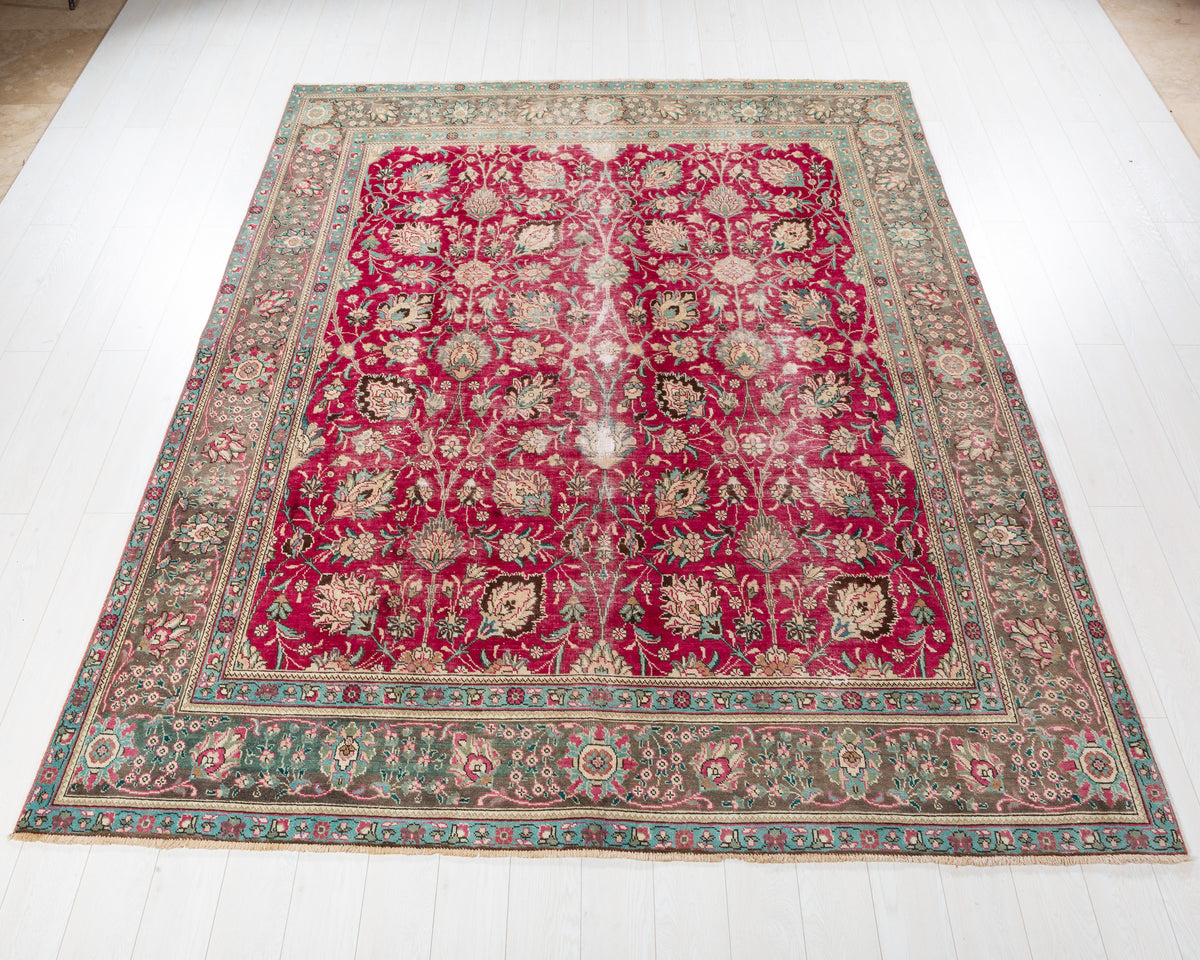
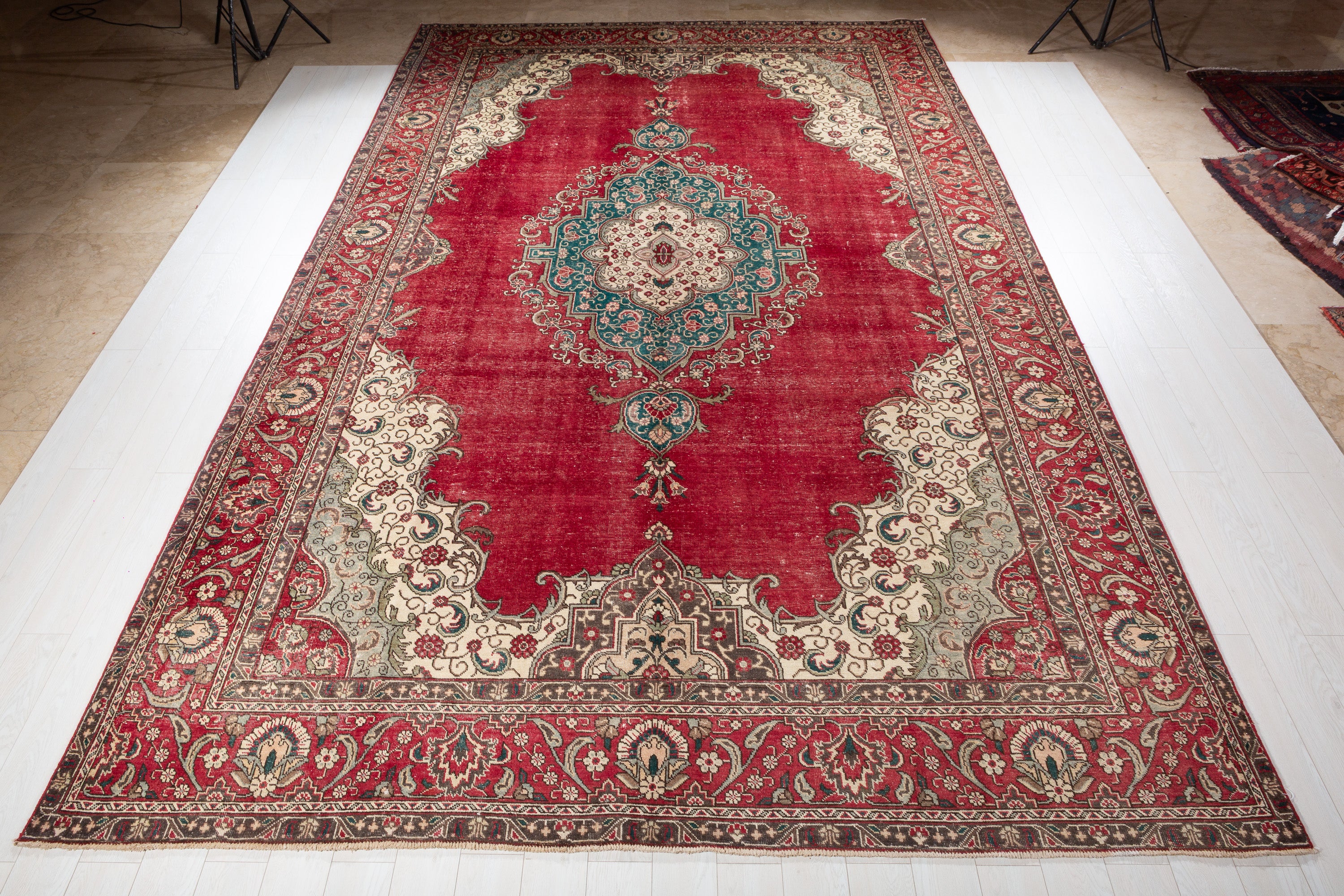
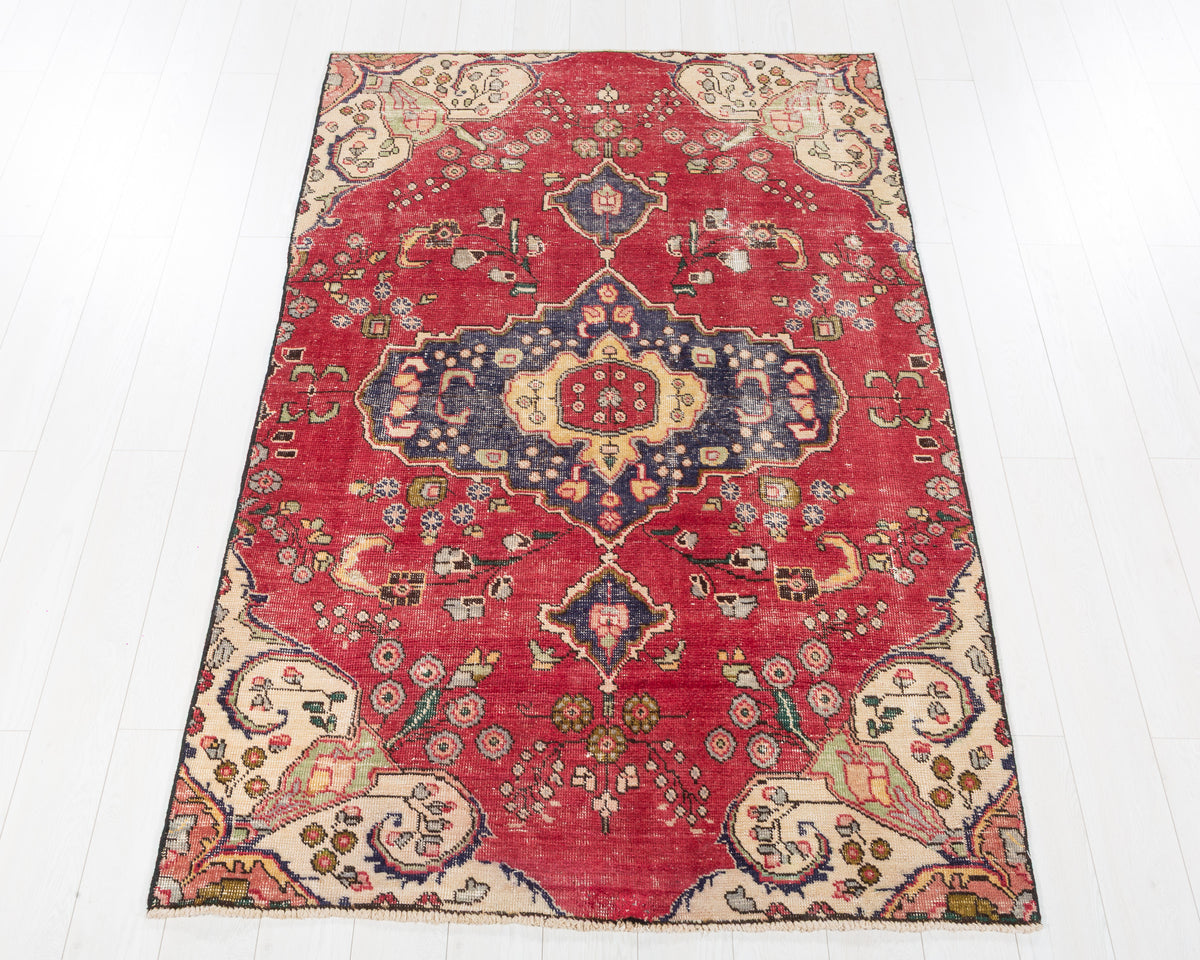
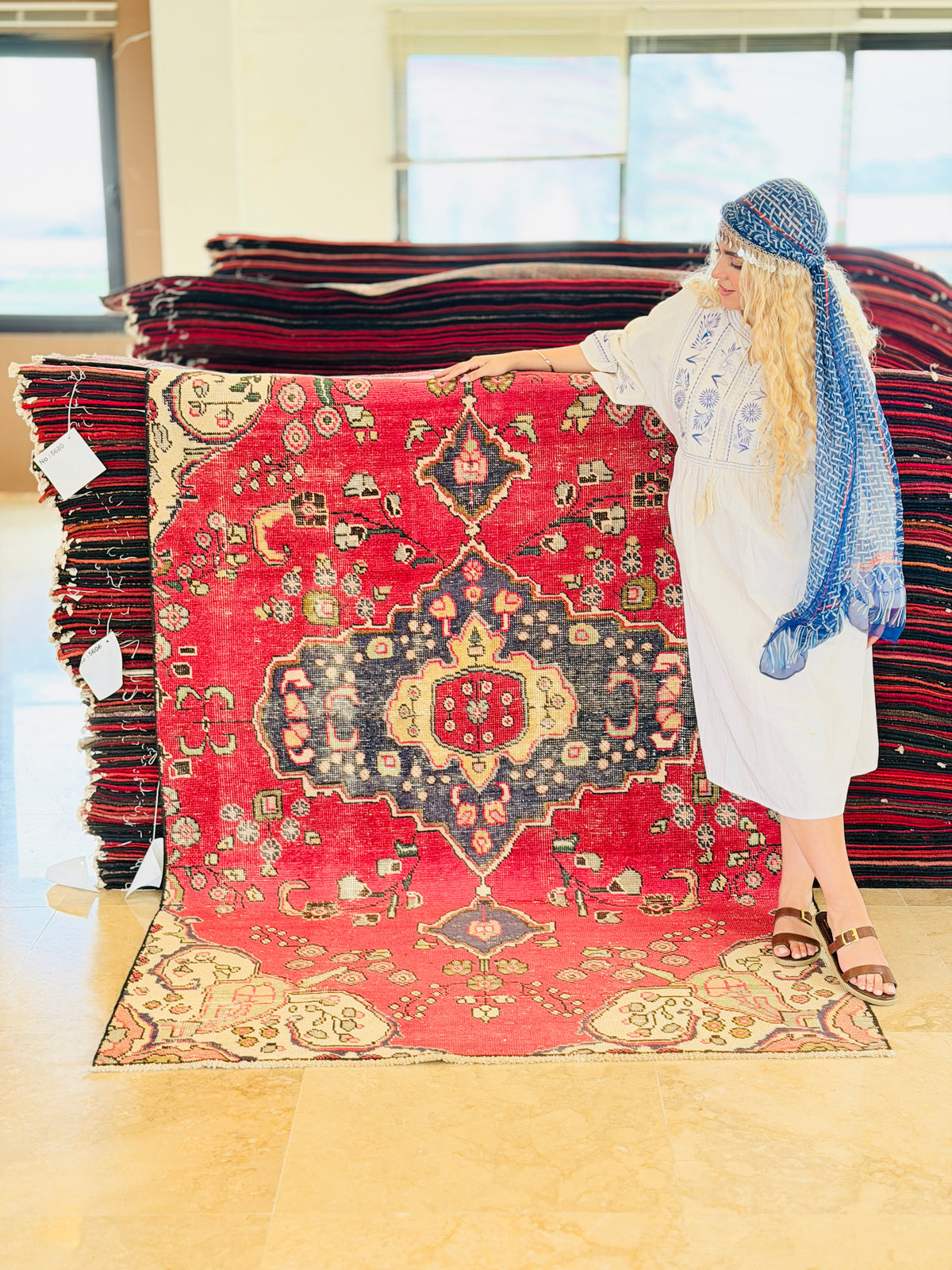
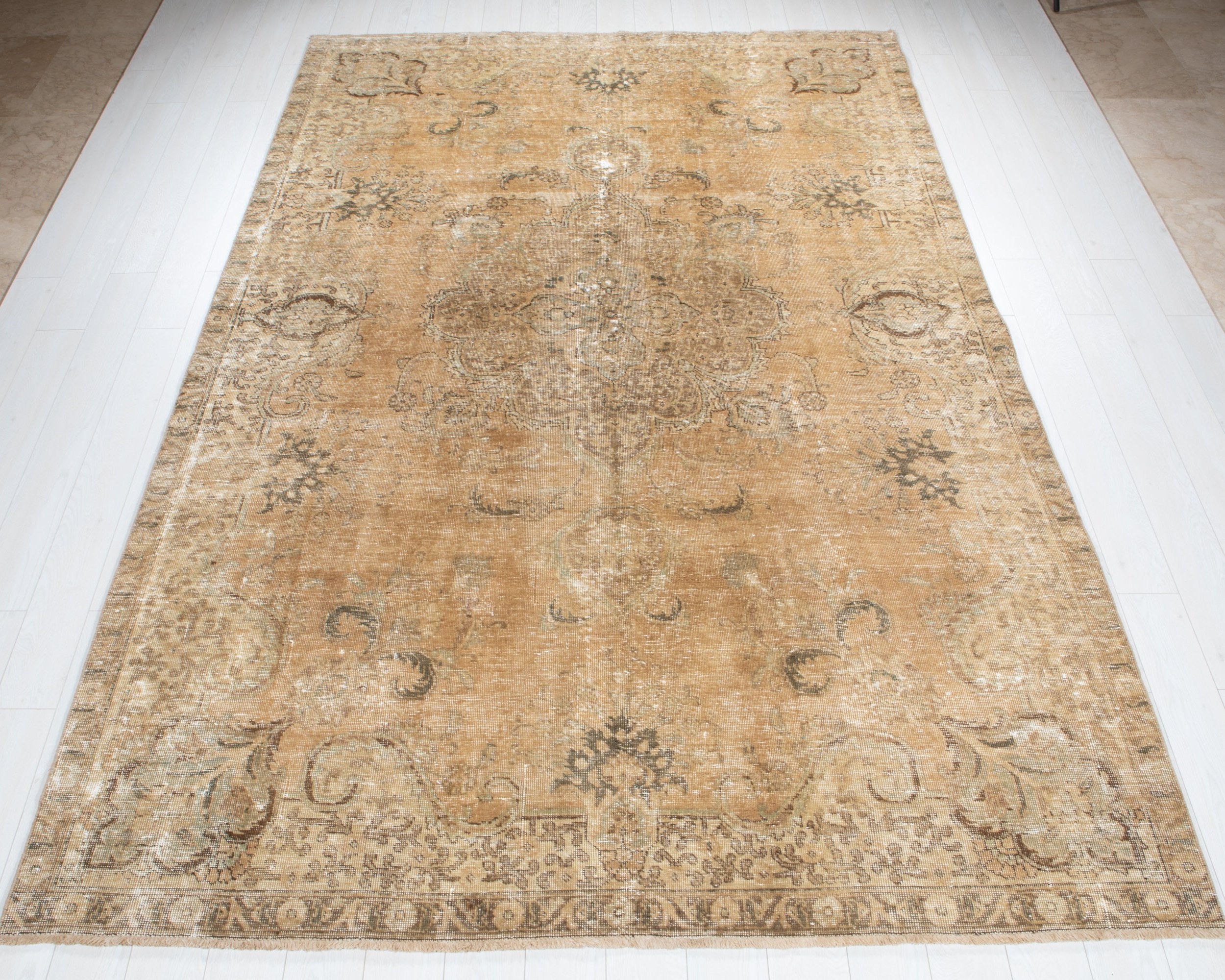
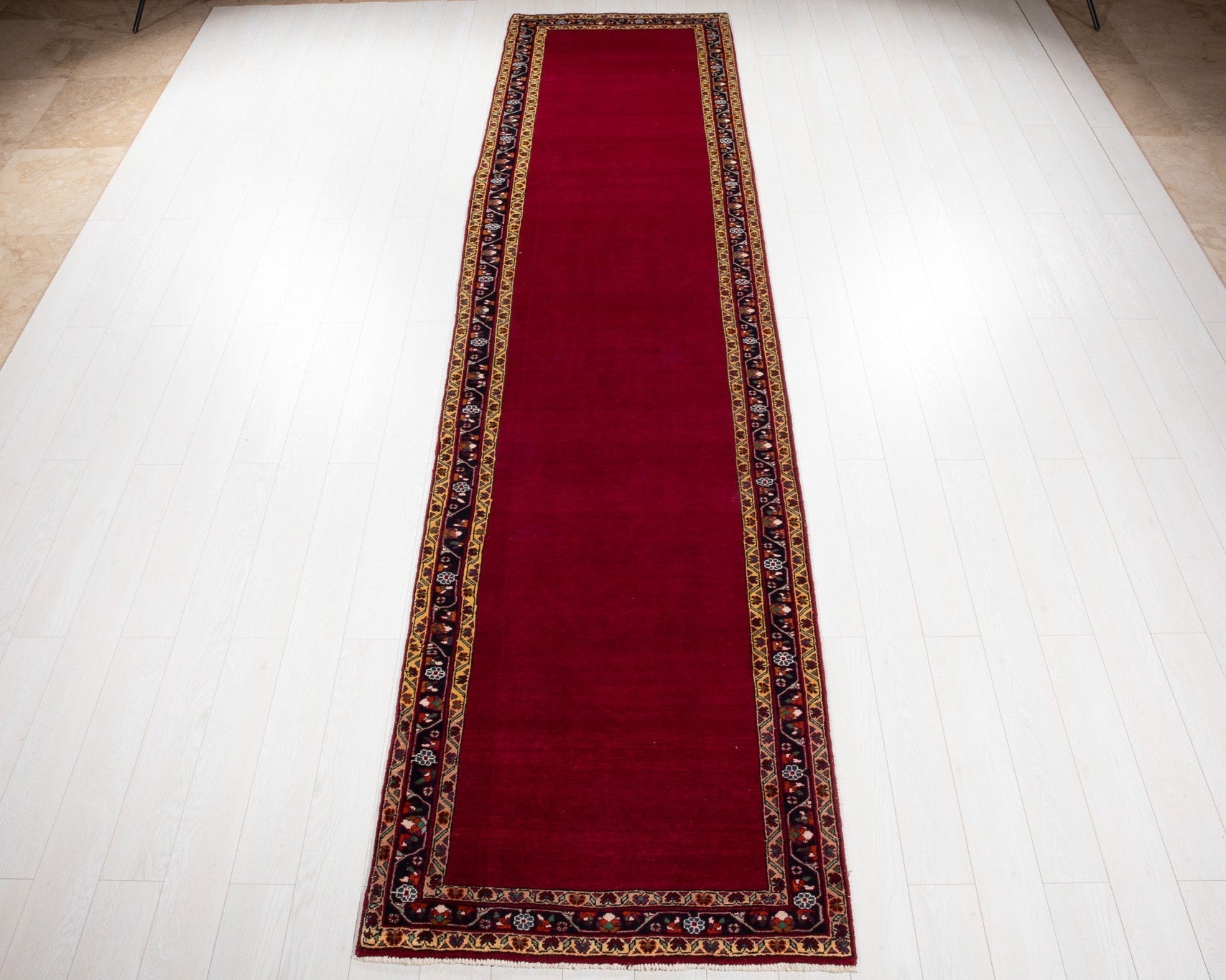
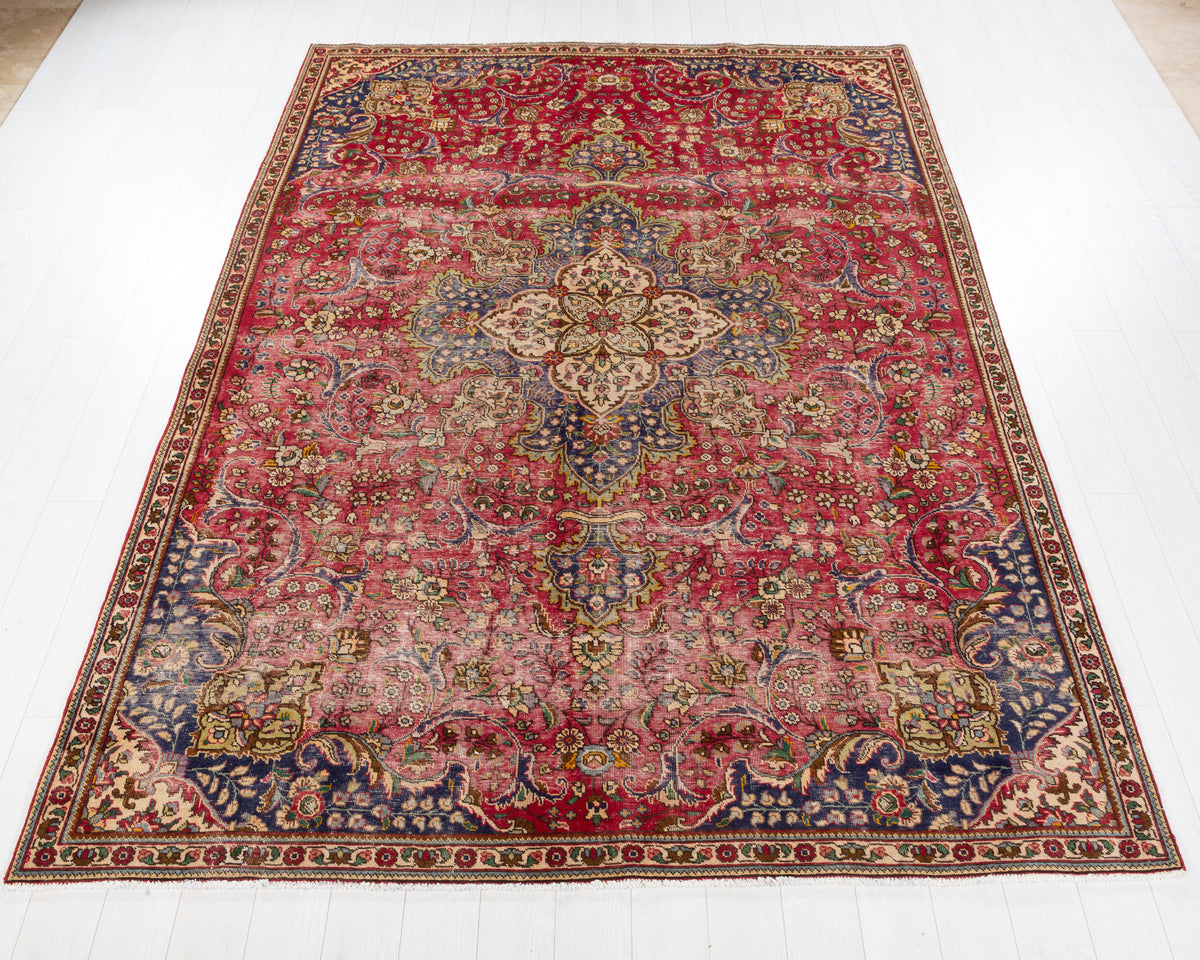
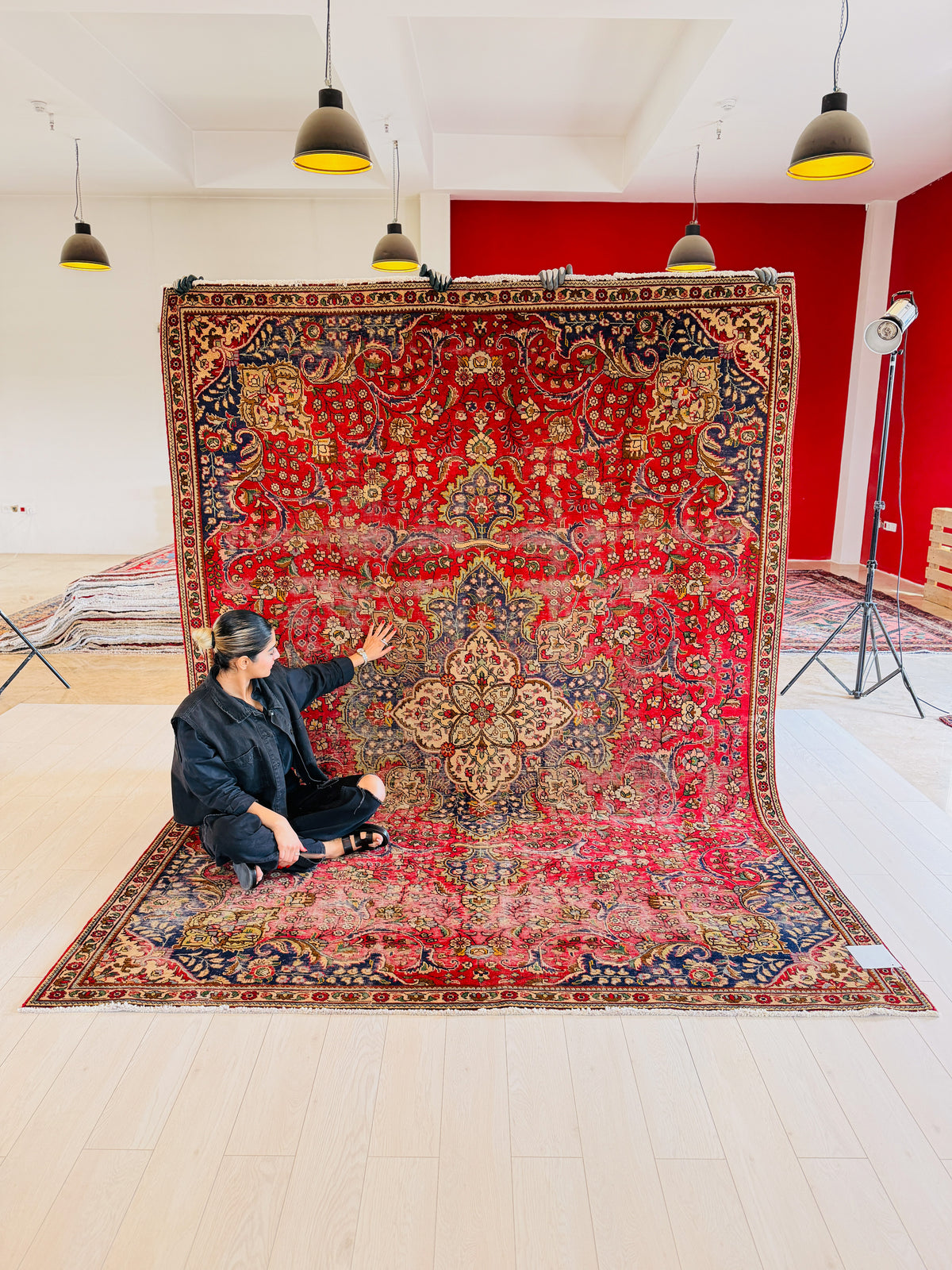
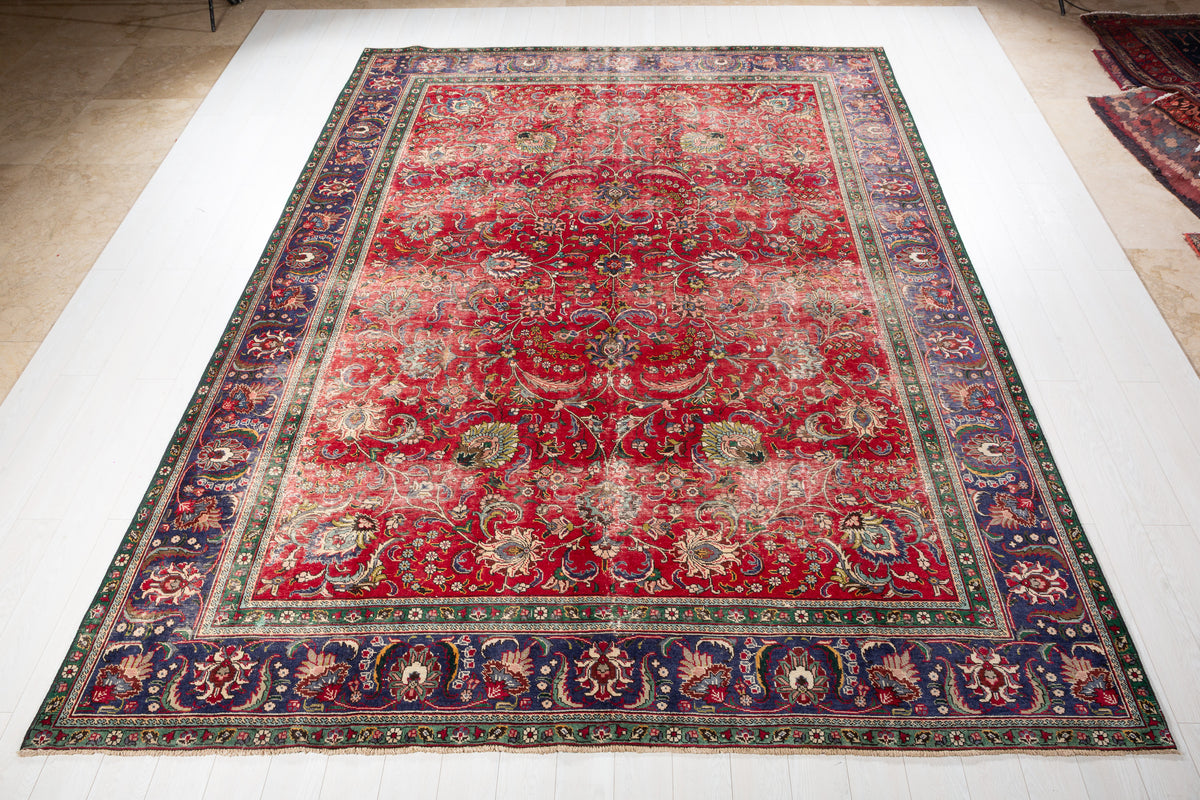
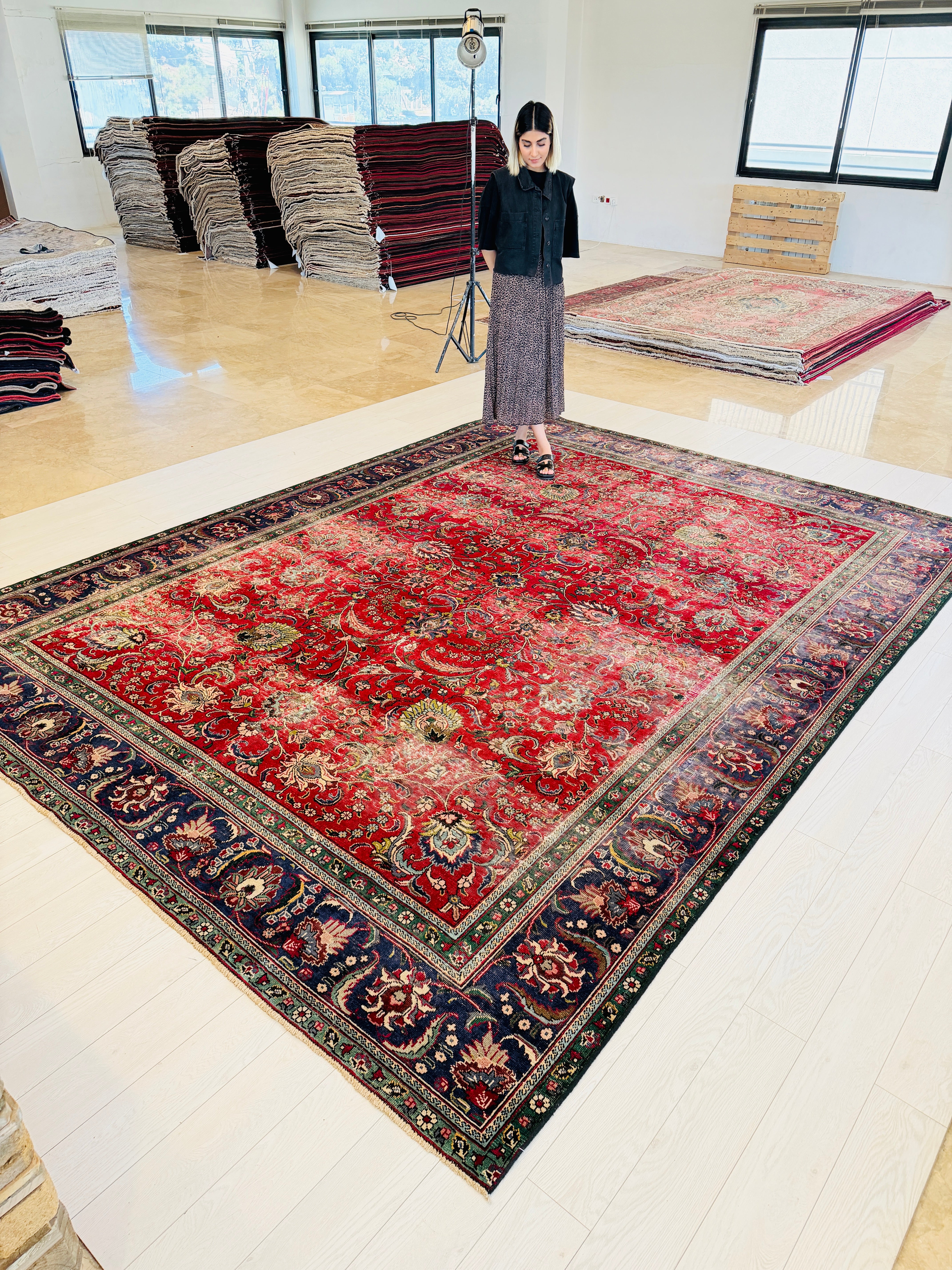
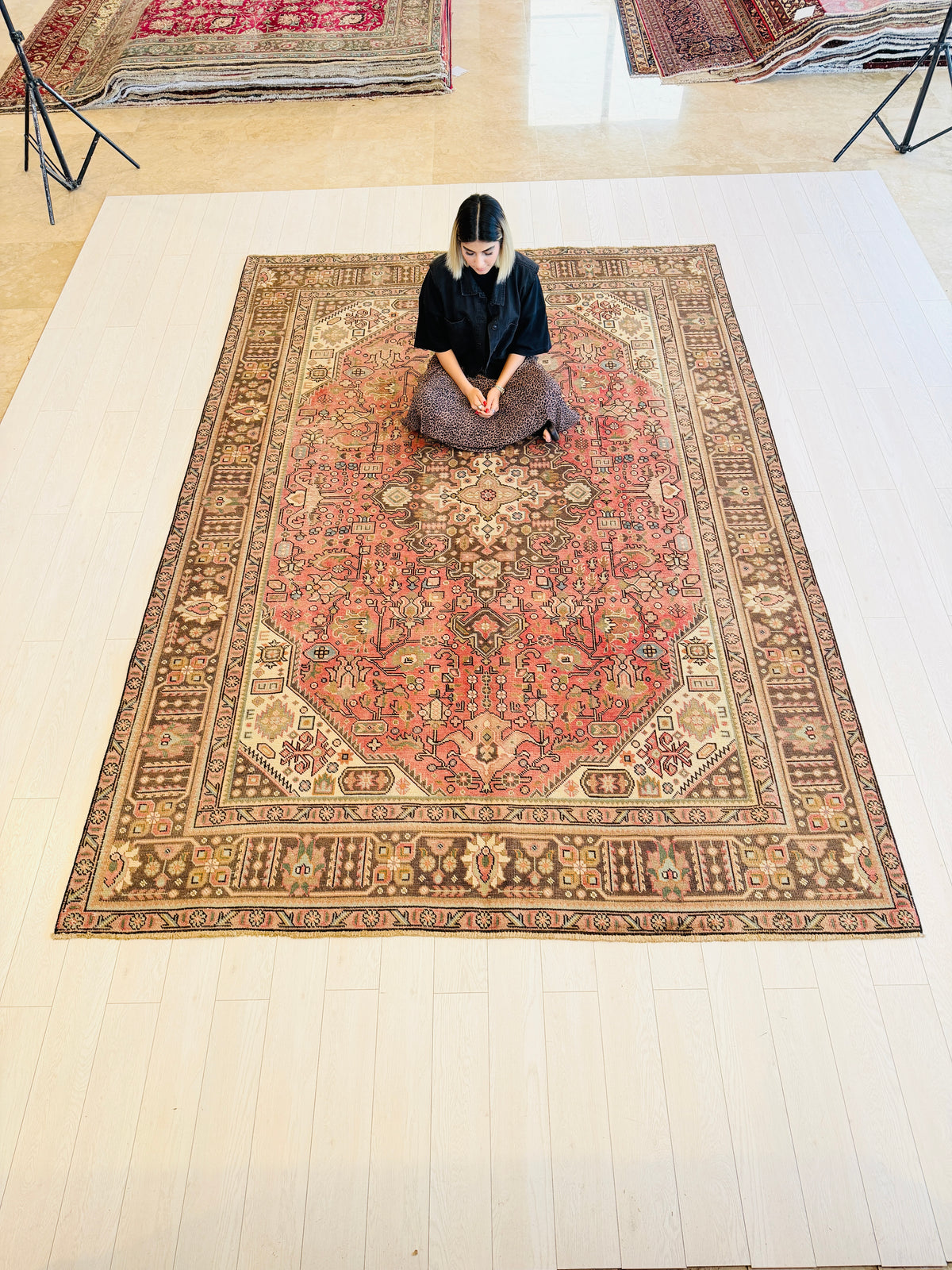
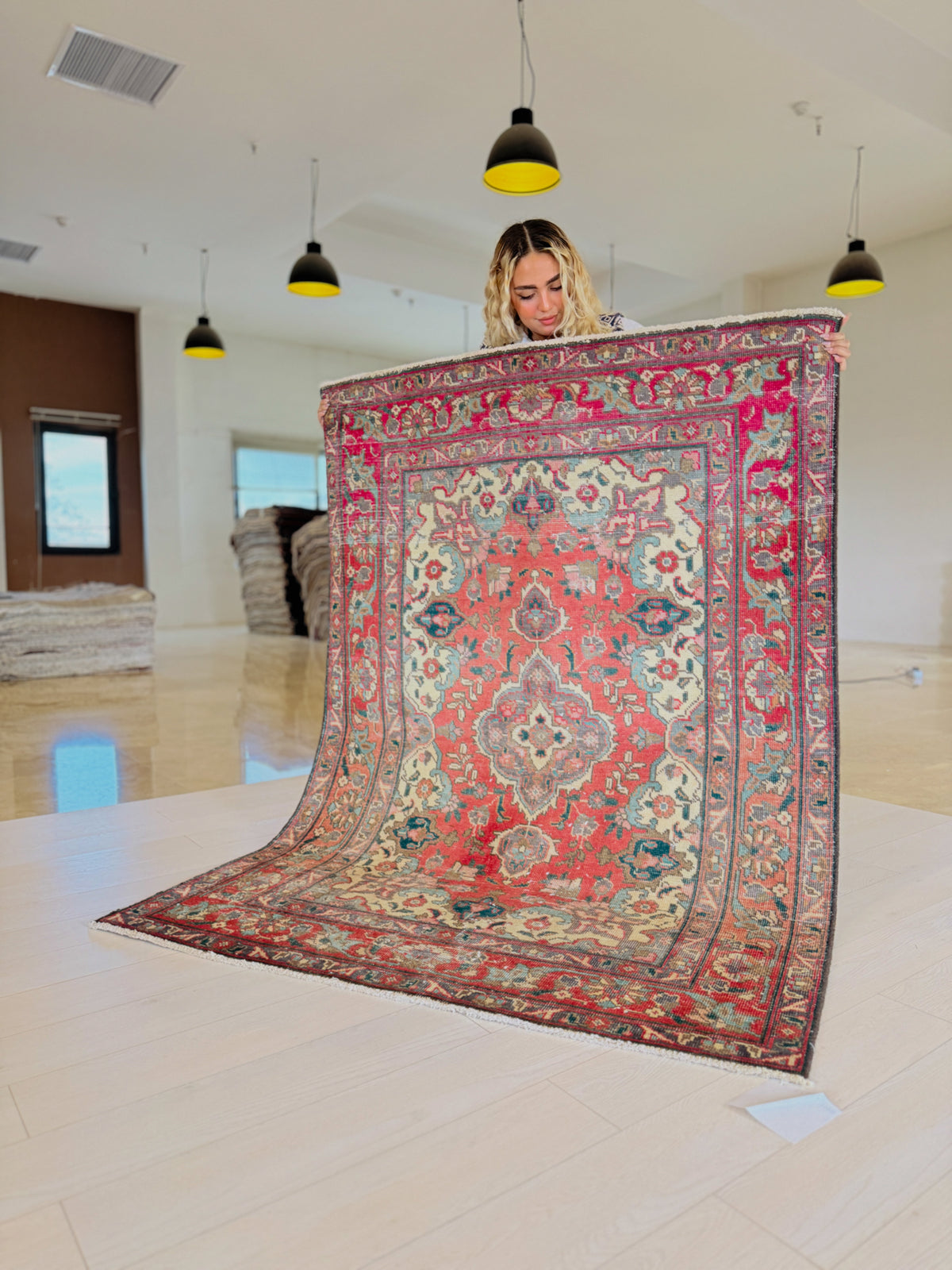
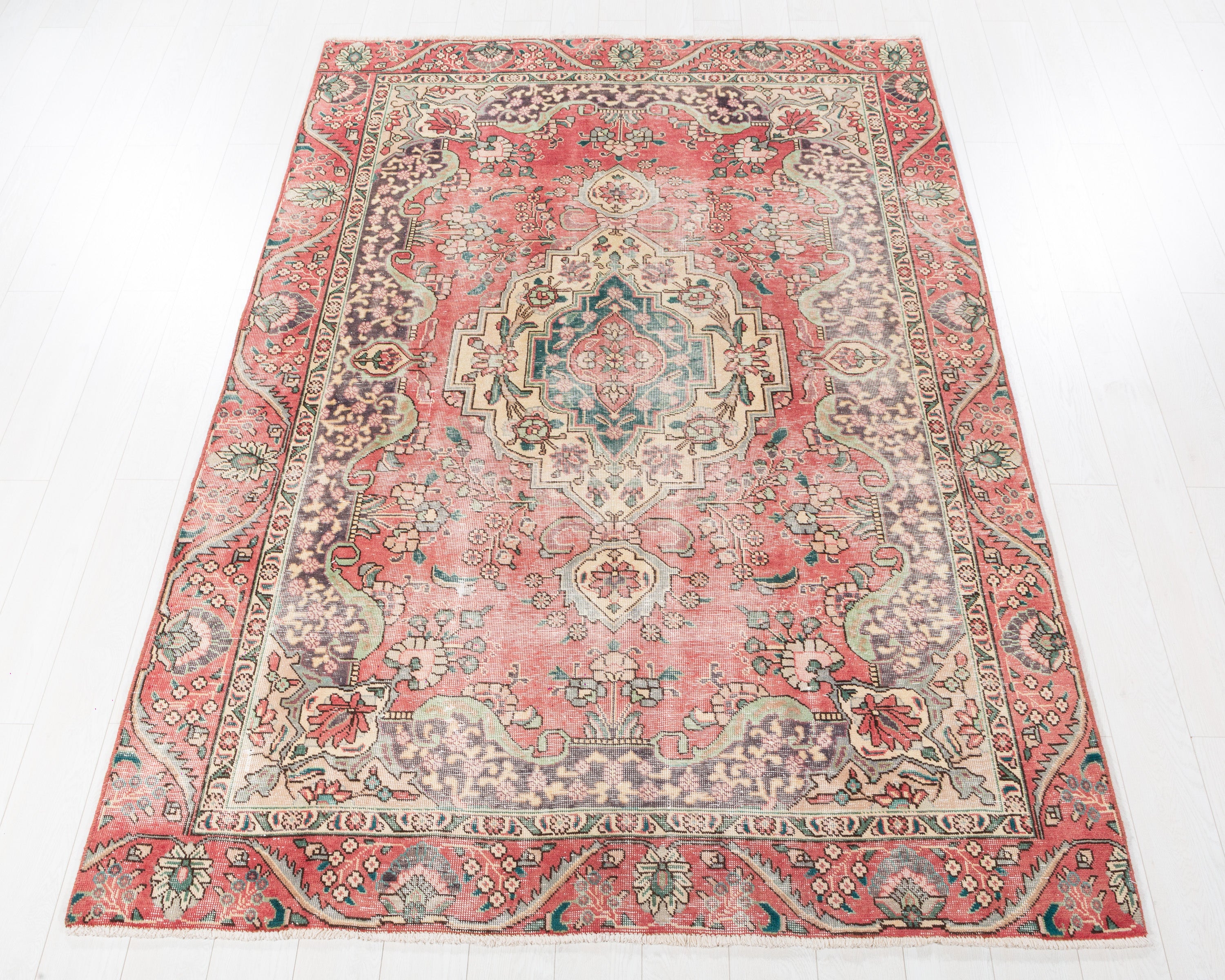
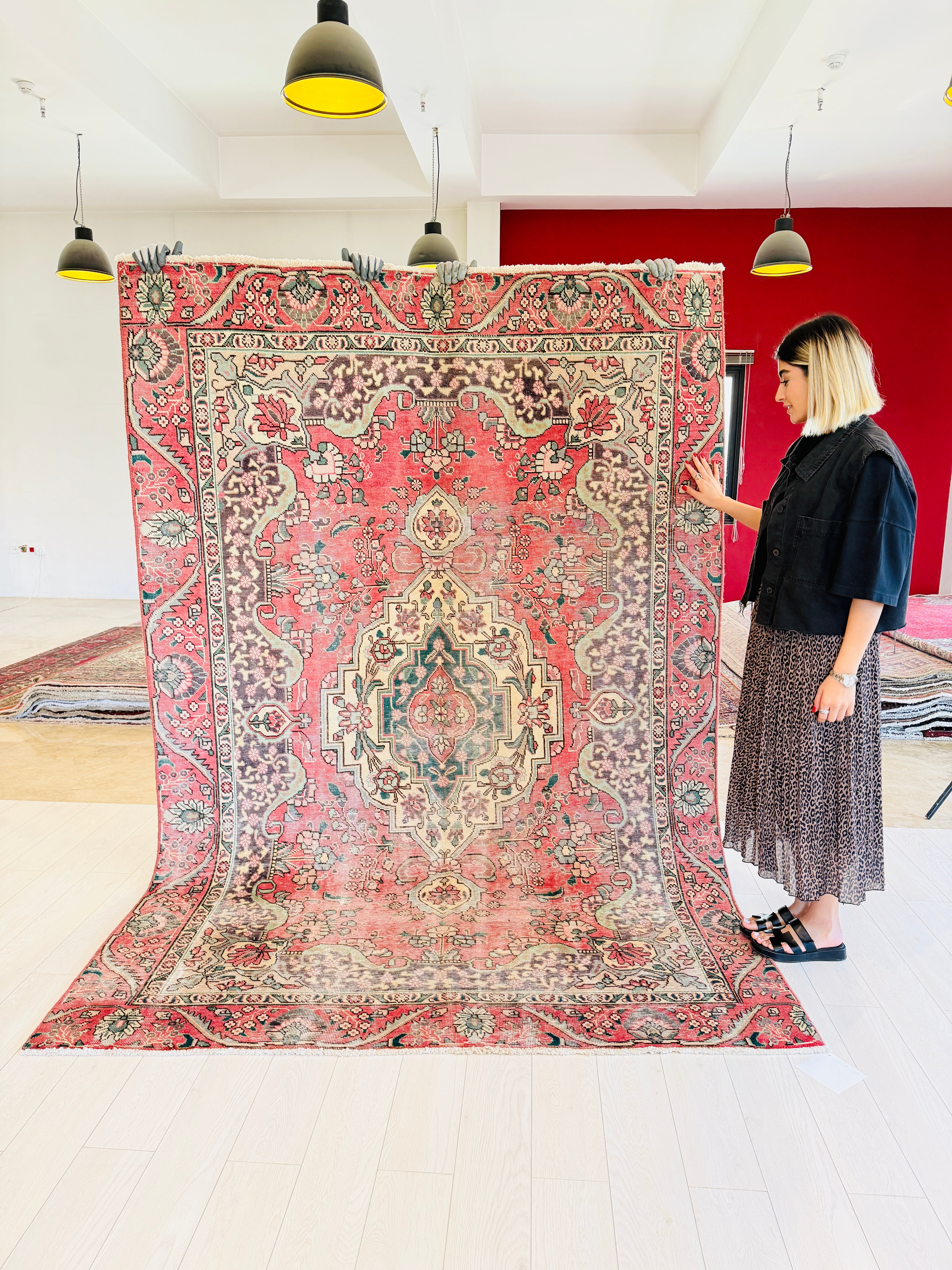
Tabriz is one of Persia's oldest and most historically significant rug-weaving cities, located in the East Azerbaijan province and long established as a major hub on the Silk Road trade routes. Unlike the village and tribal weaving traditions that produced rugs primarily for daily household use, Tabriz developed as a true workshop city — professional master weavers working from detailed cartoons (paper patterns) rather than memory, which allowed for the fine, curvilinear medallion and floral designs the city became famous for. That workshop tradition shows up directly in construction. Tabriz Persian rugs are typically double-wefted on a cotton foundation, a more labor-intensive technique than the single-wefted village weaves of regions like Hamadan, and one that allows for significantly higher knot density. The result is a rug capable of rendering intricate, curving detail — sweeping vine work, refined corner medallions, elaborate borders — with a level of precision that geometric tribal weaves simply aren't built for. Because Tabriz has functioned as a major weaving center for centuries, quality within the group varies more than in smaller regional traditions — from well-made commercial pieces to exceptionally fine examples with silk highlights and museum-level knot counts. What unites genuine vintage Tabriz Persian rugs is that same foundation of technical skill: elegant, restrained designs built to reward close inspection, made to last for generations rather than a single decade. Every piece in this collection is a genuine vintage Persian rug, hand-selected for structural soundness and authentic craftsmanship — no two are alike.